Philodendron Gloriosum Light Needs: Best Window, Sun &
Philodendron Gloriosum Light Needs: Best Window, Sun & Warning Signs
Philodendron Gloriosum Light Needs: Best Window, Sun & Warning Signs
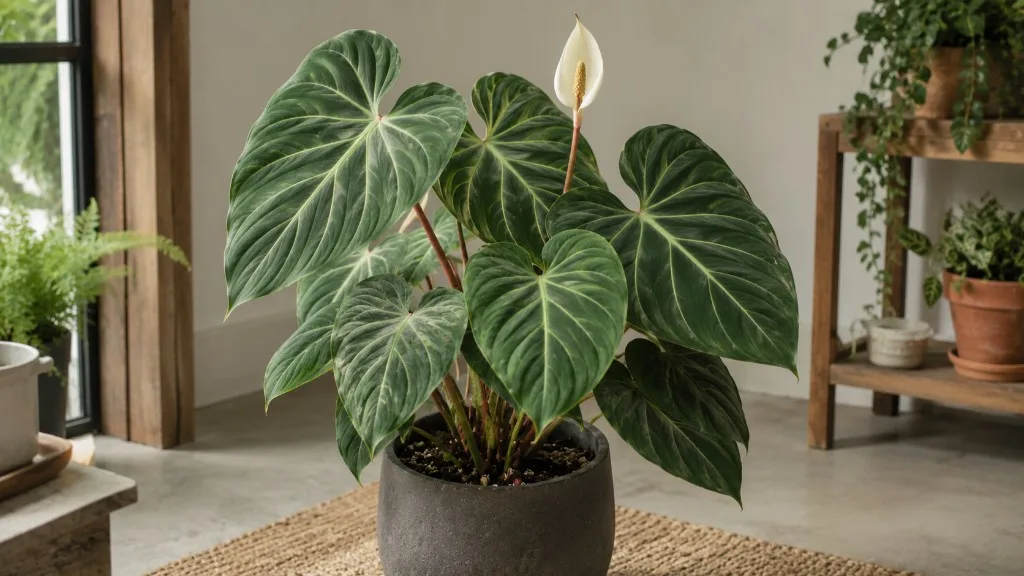
Philodendron gloriosum is a Colombia-native velvet crawler that lives on the forest floor, not in the canopy. Indoors, that means bright filtered light at the leaf surface - not the brightest shelf in the room, and not a dim corner where the pot looks decorative. The main placement mistake with Gloriosum is treating room brightness as a proxy for plant-facing exposure on the advancing rhizome. Crawlers in wide shallow pots often sit below window sill height, so the newest velvet leaf receives far less light than an upright philodendron on the same wall. Light also drives watering: a brighter plant transpires faster; a dim plant keeps wet mix longer and invites rhizome trouble. For humidity, soil geometry, and toxicity, see the Gloriosum overview guide. This page is the dedicated light hub that overview summarizes.
Quick Answer
Philodendron gloriosum grows best in bright indirect light for most of the day - typically 1–2 meters (3–6 feet) from a filtered east window, or 4–6 feet back from a sheer-curtained south window. East-facing glass is the safest default; north works only in bright rooms; west and south need filtering or distance. Supplement with a full-spectrum grow light 12–14 hours daily at 30–45 cm (12–18 inches) above the active growth tip when natural light is weak. Judge success by the newest leaf: firm venation, clean unfurl, and size equal to or larger than the prior blade. Bleached or crisp brown patches on the velvet upper surface mean too much direct sun; smaller, paler new leaves and months without emergence mean too little.
Pet note: Gloriosum is toxic to cats and dogs due to insoluble calcium oxalate crystals. Keep plants out of chewing reach; sap contact can irritate sensitive skin.
Why Gloriosum Light Is Not About Room Brightness
Human eyes adapt to dim interiors. Plants do not. A living room that looks adequately lit to you may deliver only 75–150 foot-candles at a bookshelf three meters from the glass - the lower end of what Illinois Extension classifies as low to medium light. Gloriosum on that shelf survives on stored rhizome reserves longer than a fast vine would, then slowly produces smaller leaves, longer petioles, or no new growth at all.
The placement test is simple: kneel at the pot and look toward the window from the newest leaf’s height. If you cannot see sky brightness or a clear light source from the plant’s perspective, the pot is probably too far away or too low. Crawlers add another constraint: the wide shallow pot that supports horizontal rhizome travel often sits on a low table or shelf, putting leaves below window height where light drops sharply. An upright philodendron on a tall plant stand may get adequate photons while a Gloriosum on the same wall does not.
Judge light by new growth, not old scars. Old sunburn and shipping marks never heal green. The active growth tip and the leaf unfurling now tell you whether today’s placement works.
Best Light for Philodendron Gloriosum Indoors
Gloriosum wants the light quality of Colombian wet-forest understory: bright but filtered, warm, and consistent through the day - not midday canopy sun. Missouri Botanical Garden guidance for philodendrons places most foliage houseplants in bright indirect light, noting that too-dark conditions produce weak, spindly growth. That maps cleanly onto Gloriosum: the species is not a deep-shade specialist; it is a filtered-brightness plant that uses large cordate leaves to capture understory photons efficiently.
In practical home terms, target the high to bright indirect band Illinois Extension describes - roughly 300 foot-candles at the leaf as a workable indoor heuristic - without crossing into prolonged direct sun on velvet tissue. A soft, readable hand shadow at the leaf surface on a clear day usually signals the right zone. If the shadow is faint or absent, you are likely below Gloriosum’s growth threshold even if the room feels fine to you. These numbers are placement heuristics, not a single mandated prescription for every home.
Bright Indirect Light and the New-Growth Test
The new-growth test is the only metric that matters week to week:
- Correct light: newest leaf emerges at equal or greater size than the previous one; white or pink venation stays crisp against deep green velvet; petiole is rigid; unfurl completes in a reasonable window (often several weeks - Gloriosum is slow, not stalled).
- Too dim: progressively smaller blades; paler overall color; elongated petioles leaning hard toward glass - see leggy growth; no new leaf for four or more months in warm season despite good humidity and watering.
- Too bright: bleached white-yellow zones on the upper velvet surface; crisp brown scorch on the sun-facing portion; curling or wilting during peak sun hours after a recent move.
If you are unsure, move one foot closer to filtered light and wait for one full new leaf cycle before deciding. Gloriosum punishes simultaneous changes - adjust light first, then revisit watering only after you read the next leaf.
Propagation-stage caveat: A single-leaf cutting or small rooted segment has fewer reserves than an established runner and often needs gentler, slightly brighter filtered light without direct sun until the first new leaf hardens. Do not park fresh cuttings on a dim interior shelf and expect the same tolerance an old rhizome shows.
Measuring Light at Leaf Height
You do not need a PAR meter to place Gloriosum well, but a phone lux-meter app removes guesswork when two spots look equally bright to your eyes. Hold the sensor at the top of the newest velvet leaf, pointed toward the window, around late morning on a clear day. Phone sensors are imprecise - use readings to compare spots in your home, not as lab data.
Rough indoor heuristics for Gloriosum at leaf height (divide lux by 10.76 to approximate foot-candles):
| Reading at newest leaf | Interpretation for Gloriosum |
|---|---|
| Below 1,500 lux (~140 fc) | Survival band; expect slow growth, smaller leaves, stuck unfurls |
| 1,500–4,000 lux (~140–370 fc) | Strong filtered target for steady velvet growth |
| 4,000–8,000 lux (~370–740 fc) | Bright; watch velvet upper surface for bleach in summer |
| Above 8,000 lux (~740 fc) without diffusion | Scorch risk on velvet tissue - filter or increase distance |
The hand-shadow test still works when you have no app: a soft, readable shadow at the leaf usually matches the middle band; no shadow means too dim; a sharp dark shadow means direct sun - usually too harsh for unacclimated velvet leaves. Re-measure after seasonal moves because winter sun angle changes effective brightness at low crawler pots.
Best Window Placement by Direction
Window compass gives a reliable first guess in the northern hemisphere. In the southern hemisphere, invert east/west morning-afternoon logic while keeping the same principle: filter harsh midday sun and prioritize bright indirect at the growth tip. Distance, outdoor shade trees, tint, and pot height still matter - treat direction as a starting point, then confirm with the new-growth test and optional lux reading.
East-facing windows are the default sweet spot. Morning sun is bright but relatively cool; a Gloriosum 1–2 meters back from an unobstructed east pane often receives excellent bright indirect light the rest of the day.
North-facing windows supply gentle indirect light all day. In a bright room with pale walls, north can maintain a mature plant. In a typical apartment north window, expect slower growth, smaller leaves, and higher overwatering risk because evaporation drops. North is a holding zone unless you add grow lights.
South-facing windows deliver the highest total daily light. Use sheer curtains or place the wide shallow pot 1.5–2 meters (5–6 feet) back from the glass so velvet blades never receive harsh midday beams. Pull farther back in summer when sun angle is high.
West-facing windows work in spring and fall and become risky in midsummer when afternoon sun carries heat through the pane. Treat west like south with extra distance or diffusion; watch for scorch on the leaf face closest to glass.
Rotate the pot a quarter turn every few weeks if growth leans. Leaning is normal directional growth on a crawler, not an emergency - but rotation keeps the rhizome display balanced.
Window Direction Table and Expected Symptoms
| Window | Typical placement | Expected Gloriosum performance | Warning signs |
|---|---|---|---|
| East | 1–2 m (3–6 ft) from glass | Strong default; firm new leaves; steady unfurl | Summer afternoon reflection off nearby walls can still bleach tips - watch July |
| North | As close as possible | Maintenance growth; smaller new leaves | No new leaf 4+ months; pale tissue; wet mix persists - see not enough light |
| South (filtered) | 1.5–2 m with sheer curtain | Large leaves when humidity matches | Bleached velvet upper surface; crisp brown patches - pull back |
| West (filtered) | 1.5–2 m; monitor summer | Good spring/fall vigor | Afternoon heat scorch in July–August |
| Interior shelf | Not recommended long-term | Old leaves hold; rhizome stalls | Tiny new leaves; stuck unfurl with wet tip - move to window or add lamp |
Worked scenario: A Gloriosum in a 40 cm wide shallow pot sat on a dim living-room shelf 4 m from a west window for two months - one old leaf held, no new growth. Moving it to 1.5 m from a sheer-curtained east window with 65% humidity produced a firm new cataphyll in three weeks and a fully unfurled leaf five weeks after the move. Watering interval dropped from 18 days to 11 days because transpiration increased - pair light changes with the watering guide.
Dated observation (March 2026): A mature runner in a 38 cm wide tray acclimated from a north interior shelf to 1.2 m from an east window over 14 days (30 cm steps). Phone lux at the unfurling leaf rose from ~900 lux to ~2,800 lux at midday. First cataphyll firmed in 18 days; full unfurl at 32 days - slower than summer, but leaf size matched the prior blade. No bleach on the emerging tissue because watering and Philodendron Gloriosum repotting guide stayed unchanged during the move.
Can Philodendron Gloriosum Take Direct Sun?
Brief, gentle direct sun - chiefly early morning on an east sill - can work for acclimated plants. Midday or afternoon direct sun through south or west glass is where velvet Gloriosum leaves fail. The textured velvet upper surface has more surface area and traps heat differently than glossy philodendron foliage; combined with low indoor humidity, blades bleach, then crisp brown, often permanently on the affected zone. Glossy heartleaf types may tolerate a brighter beam longer before the upper face shows damage - do not copy climber sun limits onto Gloriosum.
Leaves developed under lower light lack the structural tolerance for sudden high irradiance. A plant coming from a nursery shade house or dim corner needs gradual acclimation (see below), not an immediate south windowsill in June.
If you want more intensity without scorch, increase filtered brightness - move closer to a curtained south window, add a grow light, or reflect ambient light with a pale wall - rather than exposing velvet tissue to raw sunbeams.
Low-Light Limits and Stuck Unfurling
Gloriosum may persist in low light longer than many tropicals because the rhizome stores resources, but it will not produce collector-quality velvet leaves there. Philodendrons tolerate relatively low indoor light as a genus - which helps survival - yet Gloriosum’s growth front stalls when photons are insufficient. Low light also slows transpiration, so the same watering rhythm that worked near a window leaves mix wet longer, compounding overwatering risk and rhizome tip rot.
Stuck unfurling - a new leaf trapped in the cataphyll for weeks - often signals low light plus a wet growth point, not nutrient deficiency. The fix sequence: improve filtered brightness first; confirm the rhizome tip sits on or above the mix per the soil guide; then reassess humidity. If leaves stay small and pale with good light and humidity, see slow growth for rhizome and root checks.
Using Grow Lights for Philodendron Gloriosum
When natural light is weak - north rooms, winter short days, or cabinets - a full-spectrum LED grow light replaces missing photons. Illinois Extension notes that in low light, increasing duration helps: 14–16 hours is sufficient for foliage plants, and more than 16 hours is unnecessary because plants need a dark rest period. UMN Extension recommends 12–14 hours daily for foliage houseplants and placing lamps 30–60 cm (12–24 inches) above the canopy for typical fixtures.
Hours, Distance, and Fixture Choice
Starting setup for Gloriosum:
- Duration: 12–14 hours on a timer, aligned roughly with daytime hours.
- Distance: 30–45 cm (12–18 inches) for most LED bars; adjust outward if leaf surfaces feel warm to touch after an hour.
- Coverage: Center the fixture over the active growth tip, not just the oldest leaf at the back of the rhizome. For pots 40 cm or wider, use an LED bar or panel wide enough to cover the full rhizome run, or rotate the pot weekly so each segment receives supplemental light.
- Heat check: Velvet blades near hot bulbs curl and bleach like sun scorch - raise the fixture or reduce intensity.
Full-spectrum LEDs outperform incandescent bulbs for houseplants because they deliver balanced wavelengths without excess heat. Pair supplemental light with stable 60–70% humidity so new leaves unfurl cleanly under the added intensity.
How to Move or Acclimate Gloriosum Safely
Sudden jumps from dim to bright exposure cause bleached patches, crisp edges, and stalled cataphylls on velvet aroids. Treat acclimation as a two-week minimum project when the light increase is large.
Step-by-step acclimation:
- Baseline: Note current placement and the condition of the newest leaf.
- Day 1–3: Move 30 cm (one foot) closer to the target window or add a grow light at the far end of the recommended distance range.
- Day 4–7: If no scorch on the emerging leaf, move another 30 cm or lower the lamp 5–10 cm.
- Day 8–14: Reach final position - typically 1–2 m from filtered east or behind sheer south glass. Hold there for one full new leaf before further changes.
- Hold other variables: Do not repot, fertilize heavily, or overhaul watering during acclimation. One variable at a time.
Do not advance acclimation if the unfurling leaf shows active bleach - retreat one step immediately and wait for the next cataphyll before trying again. Old burned tissue will not revert; you are protecting the next leaf.
Warning Signs: Velvet Scorch vs Too Little Light
Use this decision frame before moving the pot again:
| Signal | Likely cause | First response |
|---|---|---|
| Bleached white-yellow on upper velvet | Too much direct sun or heat | Pull back; filter glass; check leaf temperature |
| Crisp brown sun-facing patch | Direct sun scorch | Shade; acclimate slower if you need more light |
| Smaller, paler new leaves | Too little light | Move toward filtered east; add grow light |
| Long petioles leaning to window | Insufficient plant-facing light | Move pot closer - crawler pots often sit too low; see leggy growth |
| Stuck unfurl + wet tip | Low light + moisture at growth point | Brighten; raise rhizome tip above mix |
| No new leaf 4+ months (warm season) | Chronic under-lighting or root issue | Fix placement; then check slow growth |
Velvet-specific note: scorch often appears on the upper textured surface first, before the lower leaf face shows damage - different from some glossy philodendrons where marginal burn dominates. Photograph the newest leaf weekly during any move so you can compare unfurl progress.
Light Changes Watering
Every light change changes evaporation rate and therefore watering frequency. Brighter placement or added grow lights mean shorter intervals between checks; dimmer placement means longer dry-down before soaking.
Practical rule: when you move Gloriosum closer to a window, check the top 3–5 cm of mix every few days for the first two weeks and expect the pot to lighten faster. When you move it dimmer, extend the interval and confirm dryness with finger or pot weight before watering - wet mix in low light is how rhizome tips rot while older leaves still look fine.
Full watering mechanics - soak-and-drain, wide shallow pots, rhizome-above-grade rule - live on the Gloriosum watering guide. Light and water are one system on a crawler.
Know Your Plant: Velvet Crawler vs Climbing Philodendrons
Philodendron gloriosum is a creeping terrestrial plant native to Colombia with cordate-ovate velvet leaves typically 15–25 cm long in the type description and a thick horizontal rhizome that advances across the soil surface. USDA GRIN and Denver Botanic Gardens document the crawler habit - fundamentally different from Heartleaf or Brasil-type climbers that want vertical support.
That geometry changes light placement:
- Climbers often sit higher on poles and can intercept window light at multiple heights.
- Crawlers sit low and wide; the growth tip must stay above the mix in a shallow pot, which limits how close you can push the container to hot glass without baking the rhizome or new cataphyll.
- A moss pole does not replace horizontal run space. Treating Gloriosum like a climbing philodendron is the classic category error - see the overview for full crawler biology.
Light quality still beats pole height for leaf size. Invest in filtered brightness and humidity before buying hardware to force vertical growth.
Seasonal Light Adjustments
Day length and sun angle shift indoor light more than many growers account for. Winter lowers total photons even beside the same window; a placement that worked in June may need the pot moved closer or a grow light added from November through February in mid-latitude homes. Summer increases heat load through south and west glass - pull Gloriosum back or diffuse even if winter position was perfect.
Illinois Extension notes that seasonal tree shade, sun height, and obstruction change effective brightness year-round. Re-check the new-growth test and optional lux reading at each solstice season; adjust watering when you adjust light.
Cabinet and Terrarium Placement
Collector cabinets and glass terrariums filter and absorb light. A plant that thrived on an open shelf may stall inside a cabinet unless you add supplemental LED bars mounted 30–45 cm above the growth tip with 12–14 hour timers. Ensure fan circulation so humid cabinet air does not leave velvet leaves wet and stagnant - light without airflow invites fungal spotting.
Cabinet growers should prioritize even coverage across the rhizome length. A single spotlight on one old leaf leaves the advancing tip under-lit. For 40+ cm wide shallow trays, mount a full-width LED bar parallel to the rhizome run or use two lower-watt bars at the front and back edges of the pot. Rotate the tray weekly if only one fixture is available.
Common Philodendron Gloriosum Light Mistakes
| Mistake | Why it fails | Fix |
|---|---|---|
| Judging by room brightness | Human vision adapts; plants do not | Test at leaf height; use new-growth test or lux app |
| Placing wide pot on low shelf | Light falls off below window sill | Raise pot or move to east table |
| Sudden south-window summer move | Velvet scorches without acclimation | Two-week gradual approach |
| Surviving in north without supplement | Chronic under-lighting stalls rhizome | Grow light 12–14 h |
| Ignoring stuck unfurl in dim spot | Low light + wet tip compound | Brighten; dry tip; link to soil |
| Same watering after big light increase | Overwatering in new dim spot; drought in new bright spot | Relearn dry-down speed |
| Chasing moss pole instead of photons | Crawler geometry, not climber | Filtered light + horizontal space |
| Advancing acclimation through active bleach | Permanent velvet damage on unfurling leaf | Retreat one step; wait for next cataphyll |
When to use this page vs other Philodendron Gloriosum guides
- Philodendron Gloriosum overview - Start here for whole-plant context before deep-diving this topic.
- Philodendron Gloriosum problems hub - Jump to symptom-specific fix guides when this care topic does not resolve the issue.
Related Philodendron Gloriosum guides
- Philodendron Gloriosum overview
- Philodendron Gloriosum watering
- Philodendron Gloriosum soil
- Philodendron Gloriosum propagation
- Philodendron Gloriosum fertilizer
- Philodendron Gloriosum repotting
- Philodendron Gloriosum problems
When to Escalate
Retreat acclimation immediately if the unfurling leaf shows active bleach or crisp brown on velvet - move one step back toward shade, hold watering steady, and do not advance again until a new cataphyll appears clean. One damaged unfurling leaf is a warning; two in a row means the window or lamp distance is still too intense.
Route to slow growth diagnostics when you have held correct filtered light for one full new leaf cycle (often 6–10 weeks in warm season) and still see no cataphyll, progressively smaller pale leaves, or four or more months without emergence despite good humidity and corrected watering. At that point light may no longer be the limiting factor - check rhizome firmness, root health, and whether the growth tip sits above wet mix.
Route to not enough light when lux readings stay below ~1,500 lux at the newest leaf through midday in summer and petioles lean hard toward glass - you have likely maxed distance-only fixes and need a brighter window or dedicated grow light.
When in doubt after repeated scorch despite retreat: pause moves for two leaf cycles, photograph weekly unfurl progress, and compare against the warning-signs table above before changing light again. Stacking repotting, fertilizer, and brighter windows in the same month is how velvet crawlers lose their next leaf.
FAQs
How many hours of grow light does Philodendron gloriosum need?
Run a full-spectrum LED grow light for 12–14 hours daily on a timer, matching UMN Extension and Illinois Extension guidance for foliage houseplants. Do not exceed 16 hours - plants need a dark rest period. Center the fixture over the active growth tip and keep LEDs roughly 30–45 cm (12–18 inches) above the velvet canopy unless heat at the leaf surface tells you to raise the lamp.
Will Philodendron gloriosum scorch in a south window?
Unfiltered south glass can scorch velvet upper surfaces, especially in summer when afternoon heat intensifies through the pane. South windows work when the pot sits 1.5–2 meters back or behind a sheer curtain so the plant receives bright indirect light without direct midday beams. Acclimate gradually if moving from a dim shelf, and watch the unfurling leaf for bleach or crisp brown patches within the first week.
How do I acclimate Gloriosum to a brighter window without velvet burn?
Move the pot closer in 30 cm (one-foot) steps over about two weeks, or add a grow light at the far end of the recommended distance range and lower it gradually. Hold watering and repotting steady while you acclimate. If the emerging leaf shows bleach or crisp edges, retreat one step and wait for the next cataphyll before advancing again.
Can Philodendron gloriosum grow in a north window in winter?
A bright north window can maintain an established plant through winter, but growth will slow and new leaves may emerge smaller. In many homes, north exposure alone is too dim from November through February - add a grow light for 12–14 hours or move the pot closer to the glass while watching for cold drafts on the rhizome. Reduce watering frequency to match slower winter transpiration.
How do I use a lux meter on Gloriosum?
Open a phone lux-meter app and hold the sensor at the top of the newest velvet leaf, pointed toward the window, around late morning on a clear day. Compare spots in your home rather than chasing one perfect number. Rough target for steady growth is about 1,500–4,000 lux at leaf height; below 1,500 lux expect slow growth and stuck unfurls; above 8,000 lux without diffusion risks velvet bleach. Pair readings with the hand-shadow test and the new-growth test over one full leaf cycle.