Philodendron Gloriosum Fertilizer: When, How & Mistakes
Philodendron Gloriosum Fertilizer: When, How & Mistakes
Philodendron Gloriosum Fertilizer: When, How & Mistakes
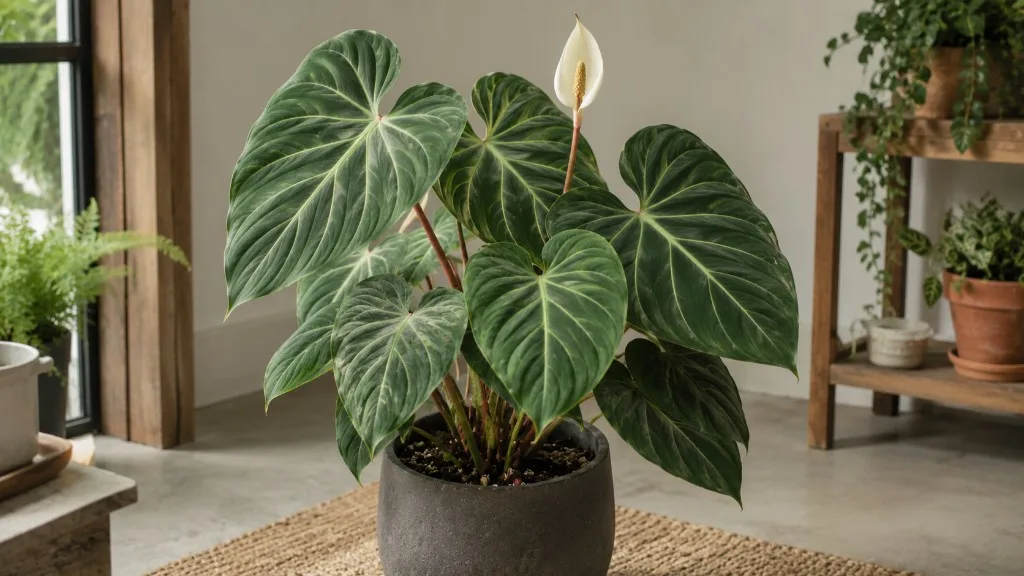
Philodendron gloriosum fertilizer decisions start with one biological fact: this is a slow rhizome crawler, not a fast vining philodendron. Philodendron gloriosum is a Colombia-native terrestrial species that pushes one large velvet heart leaf at a time from a horizontal rhizome creeping across the soil surface. That pace means nutrient demand stays low relative to pot volume - especially in the wide, shallow containers Gloriosum needs. Feed it like a Brasil or a pothos on a monthly full-strength schedule and you will see crispy velvet margins, white salt crust, and a firm rhizome that suddenly stalls - classic fertilizer burn on a slow crawler.
The goal is lean, check-based feeding: half-strength balanced liquid every 4–6 weeks during active growth, pause in winter, never feed dry soil, and flush salts in spring if you feed regularly in a wide pot. This guide covers when Gloriosum actually needs nutrients, how rhizome biology changes the schedule, what success and burn look like on velvet leaves, step-by-step application, wide-pot salt dynamics, mistakes, recovery, and pet safety.
Why Gloriosum Needs Less Fertilizer Than Most Philodendrons
Climbing philodendrons produce leaves along long stems every few weeks in bright conditions. Gloriosum produces one leaf per rhizome advance, often with four to six weeks between fully hardened leaves in typical indoor light. Lower leaf turnover means lower nutrient draw from the same pot of mix. Penn State Extension notes that soluble salts damage roots when fertilizer is applied repeatedly with little leaching - a perfect description of what happens in a 40 cm wide shallow pot watered every 10–14 days without periodic flushing.
Gloriosum also stores some energy in its thick rhizome. It can finish a leaf from reserves during a brief feed gap. That resilience tempts growers into thinking the plant is “hungry” when it is actually still processing the last dose. Judge feeding by new leaf emergence, not by guilt when a month passes without fertilizer.
Wide Shallow Pots Concentrate Salts
The rhizome crawls across a broad, low container. When you water infrequently, evaporation concentrates salts at the soil surface - exactly where the growth tip sits. White crust on the mix rim is a warning sign before velvet edges crisp. Spring flushing - running plain water through the pot twice until it drains freely - prevents slow buildup when you feed every 4–6 weeks through summer.
When to Fertilize Philodendron Gloriosum
Feed during active spring and summer growth when the rhizome is advancing and at least one leaf is unfurling or recently hardened. That window is roughly April through September in temperate indoor climates, adjusted for your room’s light and heat.
Do not feed when:
- The top 3–5 cm of mix is dry - UMN Extension warns that fertilizer on dry soil concentrates salts at the root zone
- The plant is stressed from recent Philodendron Gloriosum repotting guide, pest treatment, or drought
- No new growth has appeared for six or more weeks in dim winter conditions
- You already applied slow-release granules in the mix this season - Penn State advises not combining slow-release with soluble fertilizer
Resume feeding when you see a firm rhizome tip, moist soil from a normal watering, and visible new leaf production.
Active Growth vs Winter Rest
In winter, shorter days and cooler rooms slow rhizome advance to a crawl. The plant is resting, not starving. Pausing fertilizer prevents salt accumulation on a plant that cannot use nutrients. Exception: Gloriosum under strong grow lights with continuous new leaves may need one half-strength feed every 6–8 weeks through winter - still leaner than summer.
How Often and How Much to Apply
Default schedule: balanced liquid fertilizer (10-10-10 or 20-20-20) at half the label strength, every 4–6 weeks during active growth, applied to already-moist soil after a normal watering cycle.
That interval aligns with the site’s fertilizer-burn troubleshooting page for slow crawlers. Monthly full-strength feeding is too much for a plant pushing one leaf per month in average home light.
Application steps:
- Confirm soil is moist at 3–5 cm depth - not soggy, not bone dry
- Dilute fertilizer to half strength in your watering can
- Apply slowly across the pot surface, avoiding direct pour on the rhizome tip
- Water until a small amount drains from the bottom; empty the saucer
- Mark the date and watch the next leaf’s margins for two weeks
If the next velvet leaf opens with clean edges and strong white veins, the dose was appropriate. If tips crisp within 10 days, skip the next scheduled feed and consider a salt flush.
Signs You Are Feeding Correctly
Success on Gloriosum is subtle because the plant is slow - look for quality of new leaves, not explosive size:
- New heart-shaped leaves unfurl fully without stuck tips or torn velvet
- White primary veins stay crisp against deep green - not washed out or bleached
- Rhizome tip stays firm and green, advancing horizontally above the mix
- Steady but slow pace - one new leaf every four to eight weeks in good conditions
- No white crust accumulating on the soil surface between feeds
- Petioles stay rigid without sudden yellowing after feeding
Gloriosum does not have “variegation” to monitor - it has velvet texture and vein clarity. Those are your feed report card, not leaf count alone.
Signs of Over-Fertilizing and Salt Burn
University of Maryland Extension lists browning or dieback of leaf tips and margins, reduced growth, lower leaf yellowing, and wilting despite wet soil as fertilizer toxicity symptoms. On Gloriosum velvet, burn shows dramatically:
- Crispy brown tips and margins on one or more leaves within 1–2 weeks of feeding
- Damage along pale vein edges where tissue is thinnest
- White or tan crust on mix surface, pot rim, or clay pot exterior
- Wilting with damp soil when salts damage root and rhizome tips
- Stalled rhizome - firm today, soft at the growth point after repeated heavy feeding
See the dedicated fertilizer burn guide for flush and recovery steps. Early burn is recoverable; chronic overfeeding with a buried soft rhizome may not be.
Common Gloriosum Fertilizer Mistakes
- Monthly full-strength feed copied from fast vines. Fix: half strength every 4–6 weeks only during active leaf production.
- Feeding dry soil after a missed watering. Fix: water first, or skip feed until the next moist cycle.
- Slow-release spikes plus liquid feed in a wide pot. Fix: choose one delivery method per season.
- Winter feeding in a dim room with no new leaves. Fix: pause until spring growth resumes.
- Chasing “bigger leaves” with extra nitrogen. Fix: improve light and humidity; nitrogen excess burns velvet margins.
- Ignoring salt crust because the plant “looks fine.” Fix: flush with plain water before the next feed.
- Feeding immediately after repotting. Fix: wait 4–6 weeks until roots re-establish and new growth appears.
Recovery After Over-Fertilizing
Stop all fertilizer immediately. Flush the pot with room-temperature plain water until it runs freely from drainage holes. Empty the saucer. Repeat once more within three days. Do not repot unless the rhizome is soft - repotting adds stress on top of salt shock.
Wait for the next leaf to unfurl. Trim fully dead crispy edges for appearance if you prefer, leaving a thin brown margin to protect living tissue. Resume feeding at half strength no sooner than six weeks after flush, only if the new leaf shows clean margins and the rhizome is firm.
Pet Safety When Fertilizing
Like all philodendrons, Gloriosum contains insoluble calcium oxalate crystals that irritate mouth and digestive tissues. The ASPCA lists philodendron as toxic to cats and dogs. Fertilizer does not change toxicity, but salt crust and spilled liquid attract curious pets. Wipe saucers, store fertilizer out of reach, and call ASPCA Animal Poison Control at 888-426-4435 plus your veterinarian if ingestion is suspected.
When to use this page vs other Philodendron Gloriosum guides
- Philodendron Gloriosum overview - Start here for whole-plant context before deep-diving this topic.
- Philodendron Gloriosum problems hub - Jump to symptom-specific fix guides when this care topic does not resolve the issue.
- Fertilizer Burn on Philodendron Gloriosum - Escalate here when fertilizer adjustments are not enough.
Related Philodendron Gloriosum guides
- Philodendron Gloriosum overview
- Philodendron Gloriosum watering
- Philodendron Gloriosum light
- Philodendron Gloriosum soil
- Philodendron Gloriosum propagation
- Philodendron Gloriosum repotting
- Fertilizer Burn on Philodendron Gloriosum
- Philodendron Gloriosum problems
Conclusion
Philodendron gloriosum fertilizer succeeds when you match dose to rhizome speed, not to a generic monthly houseplant calendar. Feed half-strength balanced liquid every 4–6 weeks during active leaf production, never on dry soil, pause in winter, and flush wide pots in spring if you feed through summer. Velvet leaves with clean margins and a firm advancing rhizome mean your lean schedule works. Crispy tips, white crust, and wet-soil wilt mean stop, flush, and wait for the next unfurling leaf before you feed again.