Best Soil for Philodendron Gloriosum: Mix, Drainage &
Best Soil for Philodendron Gloriosum: Mix, Drainage & Repotting
Best Soil for Philodendron Gloriosum: Mix, Drainage & Repotting
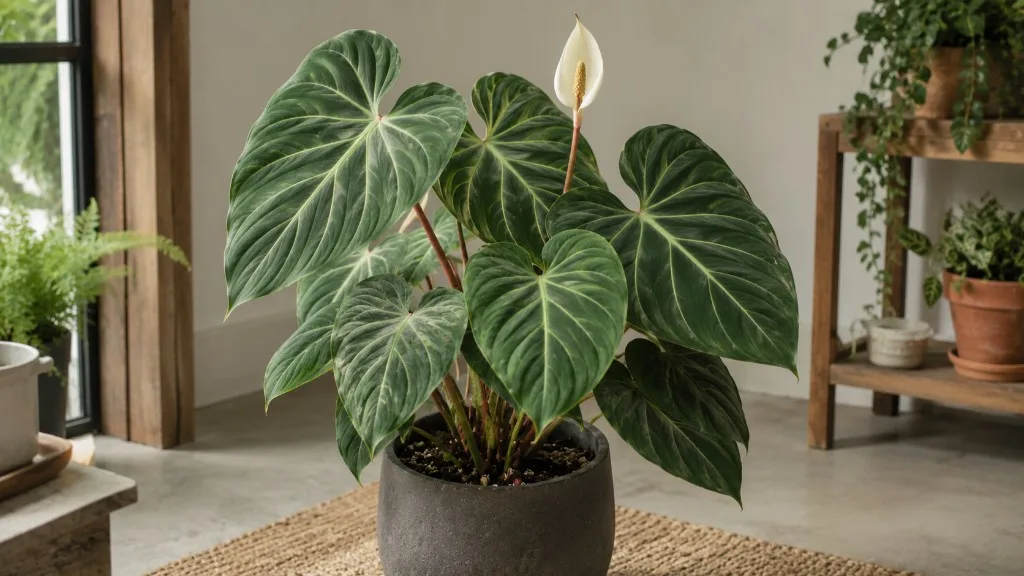
Philodendron gloriosum soil is where this velvet crawler diverges from almost every other philodendron on the shelf. Philodendron gloriosum is a creeping terrestrial species native to Colombia that advances on a horizontal rhizome across the forest floor-not up a tree trunk. Indoors, that biology means the mix must stay chunky and fast-draining while the pot must be wider than it is deep, and the newest growth point must sit above the mix line, not buried in wet peat. Get those three things wrong and even careful watering on the Gloriosum watering guide fails.
Soil is the system that decides how much air, moisture, and recovery time the rhizome and roots get after every drink. Heavy store mix compacts within a season, traps stagnant moisture against velvet tissue, and produces the sour anaerobic conditions that precede root rot on slow crawlers. This page is your mix-and-diagnostics hub: recipe ratios, mixing steps, drainage tests, wide-pot geometry, rhizome potting workflow, and links to the full repotting guide when you need procedural detail beyond soil refresh.
Quick Answer: Chunky Aroid Mix in a Wide Shallow Pot
For most indoor Philodendron Gloriosum in a 25–30 cm (10–12 inch) wide shallow pot with a drainage hole, start with equal parts by volume:
| Component | Share | Role |
|---|---|---|
| Peat- or coco-based indoor potting mix | ⅓ | Moisture and nutrient buffer |
| Perlite | ⅓ | Aeration, faster dry-down |
| Medium orchid bark | ⅓ | Chunky pore channels, anti-compaction |
Pre-moisten, blend thoroughly in a tub, and confirm water exits the drainage hole within 30–90 seconds of a full soak. Target pH 5.5–7.0 - a practical indoor range for aroids that aligns with NC State philodendron guidance on well-drained, organic-rich mix and the RHS slightly acidic philodendron range.
Pot shape: choose a bulb pan, rectangular trough, or low wide container - not a tall decorative cylinder. Orient the rhizome horizontally with the active tip toward open space and above grade. Top-dress with coarse bark or perlite if the tip sinks after watering.
Why Gloriosum Soil Is Different From Generic Philodendron Advice
Most philodendron soil articles assume a climbing or self-heading plant whose roots fill vertical depth. Gloriosum is a crawler: the stem travels across the mix surface, producing one large cordate-ovate velvet leaf at a time from an advancing rhizome. Treating it like a Brasil or a Pink Princess - deep pot, moss pole, buried stem - is the classic setup failure.
The soil job for Gloriosum is twofold: keep oxygen at the rhizome and root zone between waterings, and give the runner forward travel space without forcing the growth tip under an unnecessary volume of wet mix. A tall narrow pot holds a deep cylinder of substrate that stays saturated at the bottom while the rhizome lives near the surface - exactly the profile that extension container guides warn against when water must drain freely so roots have adequate air.
Velvet Crawler Rhizome Biology and Colombia Native Context
In habitat, Gloriosum grows as a terrestrial crawler on the forest floor of Colombian lowland forest. Kew POWO describes it as a creeping terrestrial plant with cordate-ovate leaves - biology that maps indoors to surface-running rhizomes, not buried caudex-style stems. The velvet leaf surface marks easily and punishes stale humid air faster than smooth green philodendrons, but the first soil failure mode is still mechanical: wet mix packed against the leading growth edge.
As the rhizome advances horizontally, the active uptake zone shifts with it. Older sections behind the tip may have anchored roots in mix that is slowly compacting while the growth front sits in fresh bark - another reason wide shallow pots plus periodic refresh outperform “set and forget” peat-heavy store blends. For full species context - humidity, light, toxicity - see the Gloriosum overview guide.
Best Soil Mix for Philodendron Gloriosum (Recipe Card)
The reliable baseline is equal thirds potting mix, perlite, and orchid bark by volume - the same starting heuristic documented on the overview and consistent with extension guidance to grow philodendrons in all-purpose potting soil amended for container drainage.
Standard batch (enough for one 28 cm wide repot):
- 4 liters (1 gallon) indoor potting mix
- 4 liters perlite
- 4 liters medium orchid bark
Texture target: squeeze a handful - it should hold shape briefly, then crumble. Not a wet brick, not dusty rubble.
Starter cutting vs established runner: a single-leaf cutting with a short rhizome fits a smaller wide pan (15–18 cm) with the same ratio - do not use deep seedling pots “until it grows.” An established runner filling a 25 cm pan may need the chunky upgrade below when bark has decomposed into fines.
Avoid raw garden soil, pure peat, or straight cactus mix as the whole recipe. NC State’s container handbook recommends soilless substrates with perlite and bark components rather than field soil for houseplants.
Optional Add-Ins: Coco Coir, Charcoal, and Pumice
Once the equal-thirds base works in your room, optional upgrades improve long-term structure:
| Add-in | Typical share | When it helps |
|---|---|---|
| Coco coir (replace up to ⅓ of peat base) | 10–20% of total mix | Dry indoor air; slightly slower dry-down than perlite alone |
| Horticultural charcoal | 5–10% | Humid cabinets; mild odor and salt buffering |
| Pumice (swap for half the perlite) | 15–20% | Heavy-handed waterers; adds weight so mix stays put when watering |
Do not stack every add-in at maximum on the first repot. Change one variable, run the drainage test, then adjust. In dim, cool rooms, extra bark without matching light on the light guide can dry the mix faster than the rhizome can drink - watch leaf firmness, not the calendar.
Mixing Your Aroid Blend Step by Step
- Measure by volume, not weight - use a scoop or bucket, not a kitchen scale.
- Pre-moisten potting mix and bark in separate tubs until evenly damp (not dripping). Dry perlite dust is irritating; wet it down per NC State handling guidance on perlite in soilless mixes.
- Combine potting mix, perlite, and bark in a large tub. Mix with gloved hands until perlite and bark are distributed - no white or brown streaks.
- Test a batch before potting: fill a small cup with the blend, water until runoff, and confirm drainage within one minute.
- Fill the wide pot to one-third depth with loose mix - do not tamp.
- Position the plant (see rhizome section below), backfill lightly, water once to settle, top up if subsided.
- Discard unused dry blend within a few weeks or seal the bag - stale peat can turn hydrophobic.
Drainage Speed and the One-Minute Drainage Test
Drainage is a performance metric, not a marketing label. Test after every repot and whenever new velvet leaves stall despite reasonable watering checks.
Full-soak test: water until runoff exits the drainage hole. On fresh Gloriosum mix in a proportional wide pot, excess water should leave within 30–90 seconds and the surface should not hold a glossy puddle beyond a few minutes. If water pools for ten minutes, add perlite or bark before the next repot - waiting longer between drinks does not fix structure.
Wide-pot note: because the container is shallow, the entire root zone dries more evenly than a tall cylinder - but the center can still stay wet if mix compacted or a cachepot holds runoff. Always empty saucers and outer shells.
Root-Zone Smell Test and Compaction Checks
Smell test: healthy mix smells earthy. Sour, swampy, or stagnant odor at the drainage hole means anaerobic breakdown - roots may already be stressed while velvet leaves still look acceptable. Pair smell with inspection if you see fungus gnats, persistent wet pot weight, or soft rhizome tissue. See mold on soil when surface growth appears.
Compaction check: yearly, probe with a bamboo skewer. Sudden resistance or mud smeared on the stick means peat collapsed - top-dressing alone will not fix a compacted core. Plan full refresh per compacted soil recovery.
Hydrophobic dry pockets: if water runs down the sides while the core stays dry, read dry hydrophobic soil before assuming underwatering.
Pot Choice: Wide Shallow Containers for Crawlers
Soil and pot shape are one system on Gloriosum. The right mix in a tall narrow cylinder still traps the rhizome against a deep wet column; the right wide pot with exhausted peat still fails.
Choose a container 2–5 cm wider than the current rhizome run at repot - not dramatically larger. Iowa State notes philodendrons do well when slightly pot-bound because mix dries predictably between waterings. An oversized wide pan still holds excess wet substrate around unused space.
Drainage holes are non-negotiable. NC State lists philodendrons as container plants requiring good drainage. Decorative pots without holes are cachepots only - plant in a liner that drains, then empty the outer shell every time.
Good shapes: bulb pans, rectangular troughs, low azalea bowls, bonsai trays with holes. Poor shapes: tall floor cylinders, narrow cachepots deeper than they are wide, closed glass terrarium bases without drainage.
Wide Shallow vs Tall Narrow: Drainage Physics for Horizontal Rhizomes
| Factor | Wide shallow pot | Tall narrow pot |
|---|---|---|
| Rhizome travel | Tip advances along surface with open space | Tip hits pot wall or gets buried deeper |
| Saturation profile | Thin mix layer dries more evenly top to bottom | Bottom stays wet while surface looks dry |
| Salt accumulation | Salts concentrate in the thin layer you flush regularly | Salts sink to deep bottom away from rhizome |
| Stability | Low center of gravity; rhizome lays naturally | Tipping risk; growers bury rhizome “for stability” |
| Best for Gloriosum | Yes - default choice | Avoid except as temporary quarantine |
The classic mistake is packing mix over the creeping stem for stability. Stability comes from horizontal orientation and root attachment, not depth. A buried tip in wet mix is a rot invitation.
pH, Minerals, and Salt Management in Wide Pots
Philodendron Gloriosum usually does best when the mix stays in a normal houseplant pH band around 5.5–7.0 - slightly acidic to neutral. Most peat-based indoor mixes arrive in range without adjustment. The RHS philodendron guide recommends a loose, free-draining compost slightly acidic for philodendrons - a useful cross-check, not a mandate to lab-test every bag.
Wide-pot salt dynamics: because the soil volume is spread horizontally rather than stacked deeply, fertilizer salts and hard-water minerals concentrate in the upper 5–8 cm where you water and feed. That is where the rhizome lives. If leaf tips burn, white crust rings the pot, or new velvet leaves emerge smaller despite good light, flush the mix with room-temperature water until 2–3 pot volumes exit the drainage hole, then drain fully. If crust returns within weeks and drainage has slowed, refresh mix at repot instead of flushing repeatedly.
Apply fertilizer only to already-moist soil on the fertilizer guide - dry chunky mix + full-strength feed concentrates salts at the rhizome.
When to Refresh or Repot the Mix
Refresh Gloriosum mix when structure fails, not on a rigid calendar alone.
Refresh triggers:
- Water channels down the sides while the core stays dry
- Mix smells sour at drainage holes
- Skewer meets compacted mud in the center
- Salt crust and tip burn despite conservative feeding
- Rhizome reaches the pot lip with nowhere to advance
- Visible breakdown - no perlite or bark particles, uniform peat mud
Top-dress vs full repot: replacing the top 3–5 cm with coarse bark or perlite helps when the growth tip sinks after watering but the root ball is still healthy. It does not fix a compacted core - see the decision tree on compacted soil.
Full repot: plan every one to two years for active plants, or two to three years for slow mature specimens - aligned with the repotting guide. Best timing is spring through early summer when light and temperatures rise (UMN spring houseplant care). Avoid winter repot unless mix is actively failing or rot is present.
| Situation | Action |
|---|---|
| Tip sinking, mix otherwise healthy | Top-dress with bark/perlite |
| Slow drainage, sour smell | Full repot into fresh equal-thirds mix |
| Rhizome at pot edge | Repot one size wider, same depth class |
| Only surface mold, no smell | Scrape top layer; fix overwatering |
Potting a Crawler: Rhizome Placement Without Burying the Tip
This is the procedural core the old template skipped. When repotting or potting a new purchase:
- Water lightly the day before so the rhizome is pliable, not brittle.
- Choose a clean wide pot 2–5 cm wider with drainage; pre-moisten fresh mix.
- Mound mix at the bottom - do not fill to the rim.
- Lay the rhizome horizontally with the active tip facing the open side of the pot where it can advance.
- Keep the growth point on or just above the mix surface - visible, not buried.
- Backfill lightly around roots and older rhizome sections; do not pack mix over the leading edge.
- Top-dress with coarse bark or perlite if the tip sits below grade after the first watering.
- Water once to settle, drain fully, keep bright indirect light, hold fertilizer for 3–4 weeks.
If the tip was buried in the nursery pot, expose it during repot even if that feels unstable - a small stake or bark wedge supports the rhizome until roots anchor. Stability from depth kills crawlers faster than a wobble.
For propagation-rooted cuttings transitioning from moss, follow the same geometry on the propagation guide - horizontal orientation, tip above grade.
Common Philodendron Gloriosum Soil Mistakes
Using heavy peat store mix straight from the bag. Compresses within one season; velvet crawlers stall before leaves yellow. Amend or rebuild with the equal-thirds recipe.
Burying the rhizome or growth tip “for stability.” Wet peat against the leading edge causes rot within days in warm humid rooms.
Gravel or pot shards in the bottom. Penn State Extension debunks this: a layer of coarse material at the bottom hinders rather than helps drainage by creating a saturated perched water table above the interface. Use the same airy mix from top to bottom.
Oversized wide pot. Extra horizontal volume still holds wet mix the root system cannot use - same mechanism as oversized deep pots on other philodendrons.
Treating Gloriosum like a climber. Moss poles and vertical depth do not replace horizontal travel space.
Cachepot water traps. Outer decorative shells that hold runoff recreate bog conditions. Empty after every watering per Illinois container drainage guidance.
Changing light, fertilizer, and soil simultaneously when leaves stall. Inspect mix drainage and rhizome placement first - Iowa State advises checking root damage before changing light or fertilizer.
Gloriosum vs Climbing Philodendrons: Soil Differences
| Trait | Philodendron Gloriosum (crawler) | Climbing philodendrons (e.g., Brasil, Micans) |
|---|---|---|
| Growth direction | Horizontal rhizome across surface | Vertical vine with nodes |
| Pot priority | Wide and shallow | Moderate depth; hanging baskets common |
| Stem placement | Rhizome above grade | Nodes may root along buried sections |
| Support | Open horizontal space | Moss pole or trellis |
| Mix emphasis | Maximum aeration at surface | Moisture buffer + perlite; bark optional |
| Typical failure | Buried tip rot | Compacted core in hanging basket |
Same aroid family, different geometry - swappable soil templates miss the rhizome-above-mix requirement that defines Gloriosum culture.
Troubleshooting: Wrong-Soil Symptom Diagnostic
| Symptom | Likely soil cause | First fix |
|---|---|---|
| New leaf stalls before unfurling | Tip buried or mix too wet at surface | Expose tip; top-dress; reduce watering frequency |
| Velvet yellowing, wet pot weight | Compacted peat / poor drainage | Inspect roots; repot into fresh chunky mix |
| Water runs down sides | Hydrophobic or compacted mix | Bottom-water once; plan full refresh |
| Sour smell, gnats | Anaerobic mix | Stop watering; repot; trim mushy roots |
| Small new leaves, crust on rim | Salt buildup in wide shallow layer | Flush or refresh mix; pause fertilizer |
| Rhizome soft at base | Chronic wet mix against stem | Cut rot; repot with tip above grade |
When two or more rows match, fix the root zone before adjusting light or feed.
When to use this page vs other Philodendron Gloriosum guides
- Philodendron Gloriosum overview - Start here for whole-plant context before deep-diving this topic.
- Philodendron Gloriosum problems hub - Jump to symptom-specific fix guides when this care topic does not resolve the issue.
- Compacted Soil on Philodendron Gloriosum - Escalate here when soil adjustments are not enough.
- Root Rot on Philodendron Gloriosum - Escalate here when soil adjustments are not enough.
Related Philodendron Gloriosum guides
- Philodendron Gloriosum overview
- Philodendron Gloriosum watering
- Philodendron Gloriosum light
- Philodendron Gloriosum propagation
- Philodendron Gloriosum fertilizer
- Philodendron Gloriosum repotting
- Compacted Soil on Philodendron Gloriosum
- Root Rot on Philodendron Gloriosum
- Philodendron Gloriosum problems
Conclusion
Philodendron gloriosum soil succeeds when mix, pot shape, and rhizome placement work as one system: equal parts potting mix, perlite, and orchid bark in a wide shallow pot, with the growth tip above the mix line and drainage confirmed by a one-minute soak test. Refresh tired peat when water channels, odors turn sour, or the rhizome runs out of horizontal space - typically every one to two years for active plants.
Build the blend once, test it honestly, and adjust perlite or bark only when your room’s dry-down speed demands it. Pair this foundation with check-based watering, appropriate light, and the full repotting guide when structure fails beyond a simple top-dress. Aerated mix and correct rhizome geometry are what let Gloriosum produce the large velvet hearts that justify the extra pot width on your shelf.