Compacted Soil on Philodendron Gloriosum: Causes, Checks &
Quick answer
Compacted soil on Philodendron Gloriosum chokes roots and traps moisture around the creeping rhizome. First step: slide the plant out and press the root ball-if the mix is dense, wet, and crumbles into clumps rather than loose particles, repot one size up in fresh chunky aroid mix with the rhizome on the surface.
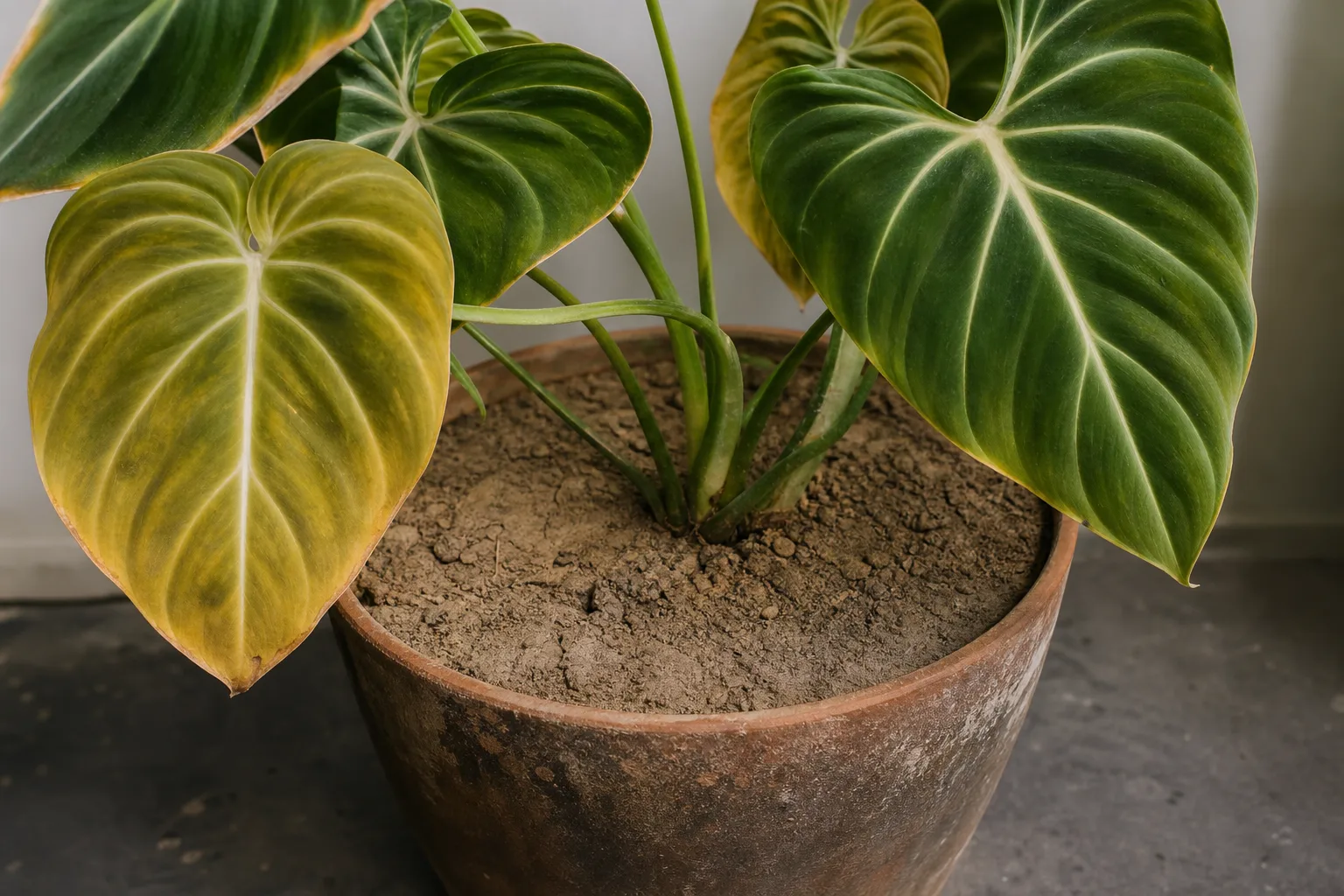
Compacted Soil on Philodendron Gloriosum: Causes, Checks & Fixes
This guide covers compacted soil on Philodendron Gloriosum. See also the general Compacted Soil guide, watering, and light pages for this plant.
Compacted Soil on Philodendron Gloriosum: Causes, Checks & Fixes
Quick answer
Compacted soil on Philodendron Gloriosum means the potting mix has lost the air pockets roots and the creeping rhizome need-often after years without Philodendron Gloriosum repotting guide, peat breakdown, or salt buildup from tap water and fertilizer. First step: gently unpot and press the root ball between your fingers. If the mix is dense, wet, and crumbles into clumps rather than loose particles with visible bark and perlite, compaction is confirmed. Repot one size up in fresh chunky aroid mix during active spring growth, keeping the rhizome on or slightly above the surface-not buried in wet substrate.
What compacted soil looks like on Philodendron Gloriosum
Above the rim, compaction rarely announces itself as a soil problem. Owners often see stalled velvet leaves, yellow lower foliage, or a rhizome that stops advancing-and blame watering or humidity first. On Gloriosum, the pattern is easy to miss because this terrestrial crawler already grows slowly; a root-zone failure can hide for months behind one impressive old leaf.
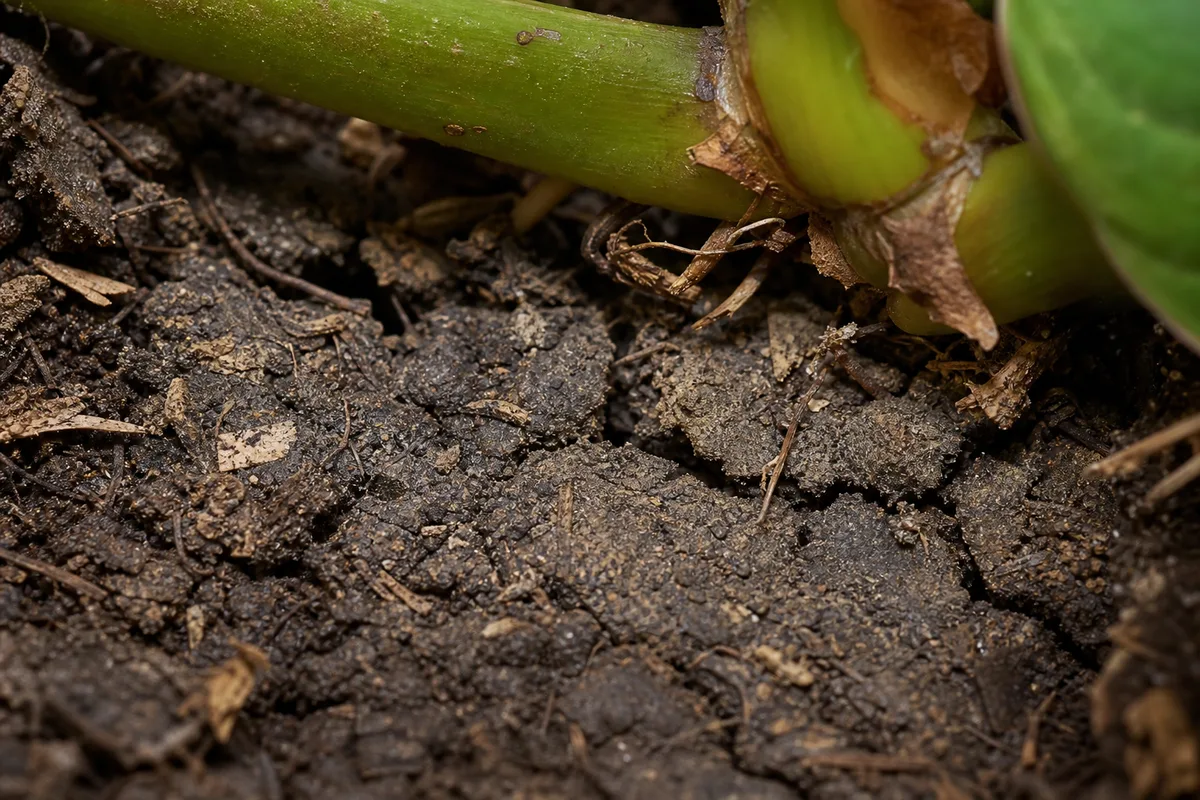
Compacted Soil symptoms on Philodendron Gloriosum - compare with healthy tissue on the same plant.
Common above-soil signs include:
- Water behavior - liquid pools on the surface, or pours through the drain hole in seconds without the mix absorbing it (hydrophobic or root-mat compaction)
- Slow dry-down - the wide shallow pot stays heavy and wet for a week or more after one watering, even in Philodendron Gloriosum light guide
- Stalled unfurling - new velvet leaves fail to open cleanly or emerge smaller because roots cannot access oxygen or nutrients reliably
- Yellowing pattern - lower leaves yellow while the mix feels oddly soggy throughout, not just at the bottom
- Surface crust - white or tan mineral film on soil or pot rim from repeated fertilizer and hard water
- Rhizome stall - the creeping stem stops advancing across the pot surface even though light and humidity seem adequate
Gloriosum’s large heart-shaped velvet leaves need steady resources from an open root zone. When the mix collapses, the plant cannot hold moisture evenly-so you get alternating wilt and sogginess that mimics a watering mistake around the rhizome.
Why Philodendron Gloriosum gets compacted soil
Like other aroid houseplants, Gloriosum depends on airy, well-draining mix-not dense garden soil. Philodendrons grow best in porous media that holds moisture without staying waterlogged. Gloriosum’s slow growth means owners often skip repotting for three or more seasons, letting peat-heavy nursery mix break down until structure fails.
Typical causes on Philodendron Gloriosum overview:
- Aging peat mix - organic components decompose over two to three years, collapsing air spaces roots need for respiration
- Never leaving the nursery container - decorative cache pots hide the same depleted mix while the rhizome creeps toward the pot edge
- Salt and mineral buildup - tap water and fertilizer leave crust that binds soil particles and stresses fine roots
- Wrong mix from the start - all-peat blends without perlite or bark, or garden soil added “for nutrients,” compacts and drains poorly indoors
- Over-packing at repot - pressing mix firmly around the rhizome reduces porosity and traps water, robbing roots of oxygen
- Oversized pots with excess soil - extra mix holds moisture the root mass cannot use; Missouri Botanical Garden advises going up only one pot size at a time so fresh soil does not stay soggy for long periods
Gloriosum tolerates a slightly snug wide pot when mix is fresh, but compaction is different from healthy binding: the entire root zone becomes a dense plug with little usable bark or perlite, and the rhizome sits in stagnant moisture even when you water lightly.
How to confirm the cause
Do not repot on leaf symptoms alone. Confirm in this order:
- Water test - Slowly pour a small amount onto dry soil. If it beads and rolls off, the surface is hydrophobic. If it runs straight out the drain hole in seconds, the root mat may have replaced most mix.
- Moisture probe - Stick a finger or skewer 5–8 cm deep. Compacted mix often feels uniformly wet and dense, not the normal dry-top / slightly moist-below pattern Gloriosum prefers between drinks.
- Pot weight - A mature plant in a wide shallow pot that stays heavy for many days after watering suggests poor drainage and collapsed structure, not healthy moisture retention.
- Unpot inspection - Water lightly the day before, then slide the plant out. Healthy mix crumbles loosely around pale roots. Compacted mix forms a solid brick; you may see little perlite and a dense root mat circling the rhizome.
- Rhizome and root texture - Musty sour odor or brown mushy roots point to root rot from oxygen-deprived wet mix-compaction plus overwatering-not compaction alone. Firm rhizome tissue with dense but not rotting roots confirms compaction without advanced decay.
- Light and humidity cross-check - Leggy, pale new growth in a dim corner mimics stall, but the root ball may still be loose with visible bark. Fix placement first if light was clearly inadequate before blaming mix failure.
Underwatering in an oversized pot shows the opposite: a heavy pot with dry pockets only at the edges and firm white roots surrounded by empty, non-compacted mix.
First fix for Philodendron Gloriosum
Unpot to confirm dense depleted mix, then repot one size up in fresh chunky aroid mix during spring or early summer-keeping the rhizome on the surface.
Water the day before so the root ball holds together. Tilt the wide shallow pot and support the base; tap plastic sides or run a knife around terra-cotta edges. Once out, gently break up the outer compacted layer with your fingers-do not bare-root the entire ball unless rot requires it.
Choose a clean pot only 2–5 cm wider than the current one with open drainage. For Gloriosum use indoor potting mix plus perlite and orchid bark in roughly equal parts to the base mix-matching porous medium guidance for philodendrons. Firm the mix gently-it should not be so compacted that water and air cannot move through the pot.
Position the creeping rhizome on or slightly above the mix surface with the active growth tip facing the open side of the pot where it can advance. Do not bury the rhizome deep for stability-that traps moisture against tissue meant to crawl above the forest floor.
If white salt crust covers the surface, scrape the top 2–3 cm before repotting or replace mix entirely. Set the plant at the same rhizome depth, backfill lightly, and water until a small amount drains. Empty saucers completely. Keep bright indirect light and 60–70% humidity-hold fertilizer for at least a month while roots settle into open mix.
Step-by-step recovery
- Water lightly the day before repotting.
- Unpot and confirm brick-like mix or depleted structure; trim only dead or mushy roots with sterilized scissors.
- Loosen the outer root zone and remove the worst compacted crust; leave the center intact if roots are healthy.
- Repot one size up with fresh chunky aroid mix; position the rhizome on the surface with room to creep forward.
- Water once lightly, then wait until the top 3–5 cm dries before the next drink.
- Skip fertilizer until a new velvet leaf unfurls cleanly-Gloriosum leaves typically open over two to four weeks.
- Trim yellow lower leaves after two weeks if the root zone stays stable and dry-down normalizes.
If the main rhizome is healthy but growth has stalled for seasons, a spring repot alone often restarts the crawl. If only a firm side section remains after trimming rot, propagate that section rather than waiting on a hollow stem.
Recovery timeline
Mild compaction corrected in spring often shows the first new velvet leaf within four to eight weeks. Temporary wilt or a brief pause in unfurling for one to two weeks after repot is normal transplant stress-not compaction returning.
Judge recovery by new growth from the advancing tip, not old leaves. Yellow or damaged velvet foliage will not revert; fresh leaves should regain size and clean unfurling if light and humidity are adequate. Full root re-establishment in refreshed mix typically takes six to eight weeks in warm bright conditions.
If wilting persists beyond three weeks with sour soil smell, unpot again and inspect for rot from overwatering in the new mix.
Lookalike symptoms
- Root bound - Water runs through fast, pot dries in a few days, dense white root mat with little soil but mix still crumbly when teased apart
- Root rot - Mushy brown roots or soft rhizome, sour smell, wilting with constantly wet mix regardless of structure
- Overwatering on fresh mix - Soggy pot with loose airy soil and firm roots turning soft at tips
- Low light stall - Small pale new leaves, but loose root ball with bark still visible
- Low humidity browning - Crispy leaf margins without sour soil smell or dense root ball
- Dry hydrophobic soil - Water beads on surface with very light pot and firm roots-opposite of chronic wet compaction
Causes to rule out
Before blaming compaction, rule out a watering calendar that no longer matches how the wide pot dries, blocked drainage holes, or recent dim placement. Gloriosum’s velvet leaves need bright indirect light and 60–70% humidity to fuel new tissue; a light-limited plant in fresh mix will still stall.
Chronic overwatering can compact mix indirectly by breaking down structure and killing fine roots-fix the Philodendron Gloriosum watering guide after repotting, not just the soil recipe. Buried rhizomes in wet mix mimic compaction symptoms but need repositioning, not only fresh bark.
Mistakes to avoid
Do not respond to surface dryness by pouring water daily when the core of the pot stays wet-that worsens oxygen loss around the rhizome. Do not jump two pot sizes “so you never repot again.” Do not add garden soil or heavy top-dressing to “refresh” the surface. Do not fertilize immediately after repotting to “boost” a stressed plant. Do not pack mix firmly around the creeping stem-roots and rhizome need air channels. Do not mount Gloriosum on a moss pole; it is a crawler, and forcing it upright can bury the rhizome in wet mix.
Philodendron Gloriosum care cross-check
Compaction prevention aligns with bright indirect light, checking dryness at 3–5 cm depth, and refreshing mix every two to three years in spring. A Gloriosum that never dries out despite sparse watering likely needs open mix-not less water alone. Pair repot with a rhizome check: the growth tip should sit above stagnant moisture, not buried where velvet leaves stall before unfurling.
How to prevent compacted soil next time
Schedule a spring soil check every two to three years even if one large leaf still looks impressive. Refresh mix or repot when water behavior changes, crust builds up, or the root ball feels dense when you lift the plant out. Use chunky aroid mix with perlite and bark in a wide shallow pot with drainage. Flush the pot occasionally by watering deeply until excess runs from holes if you use tap water and fertilizer regularly. Avoid keeping the same nursery mix for multiple growing seasons just because slow growth masks root-zone decline.
When to worry
Escalate if soil smells sour, the rhizome or growth tip feels soft, roots are mostly brown and mushy, or new leaves abort repeatedly despite corrected repotting. Early compaction with firm rhizome tissue and pale roots is a routine spring refresh. Take rhizome cuttings with nodes before repotting if the root mass is mostly gone or the active tip collapses.
Conclusion
Compacted soil on Philodendron Gloriosum means the potting mix has collapsed and no longer supplies air, water, and nutrients evenly around the creeping rhizome-not a mysterious stall. Confirm by unpotting, repot one size up with fresh chunky aroid mix in active growth season, and keep the rhizome on the surface. Prevent recurrence with periodic mix refresh, gentle backfill, and watering only after the top 3–5 cm dries.
When to use this page vs other Philodendron Gloriosum guides
- Philodendron Gloriosum watering guide - Use for routine moisture checks before assuming compacted soil is the main issue.
- Philodendron Gloriosum problems hub - Browse all 22 common issues on this species.