Bacterial Wilt on Philodendron Gloriosum: Causes, Checks &
Quick answer
Bacterial wilt on Philodendron Gloriosum often shows as limp velvet leaves on damp soil, water-soaked spots on heart-shaped foliage, or a foul odor from soft tissue at the crawling rhizome. First step: isolate the plant immediately before touching, watering, or repotting.
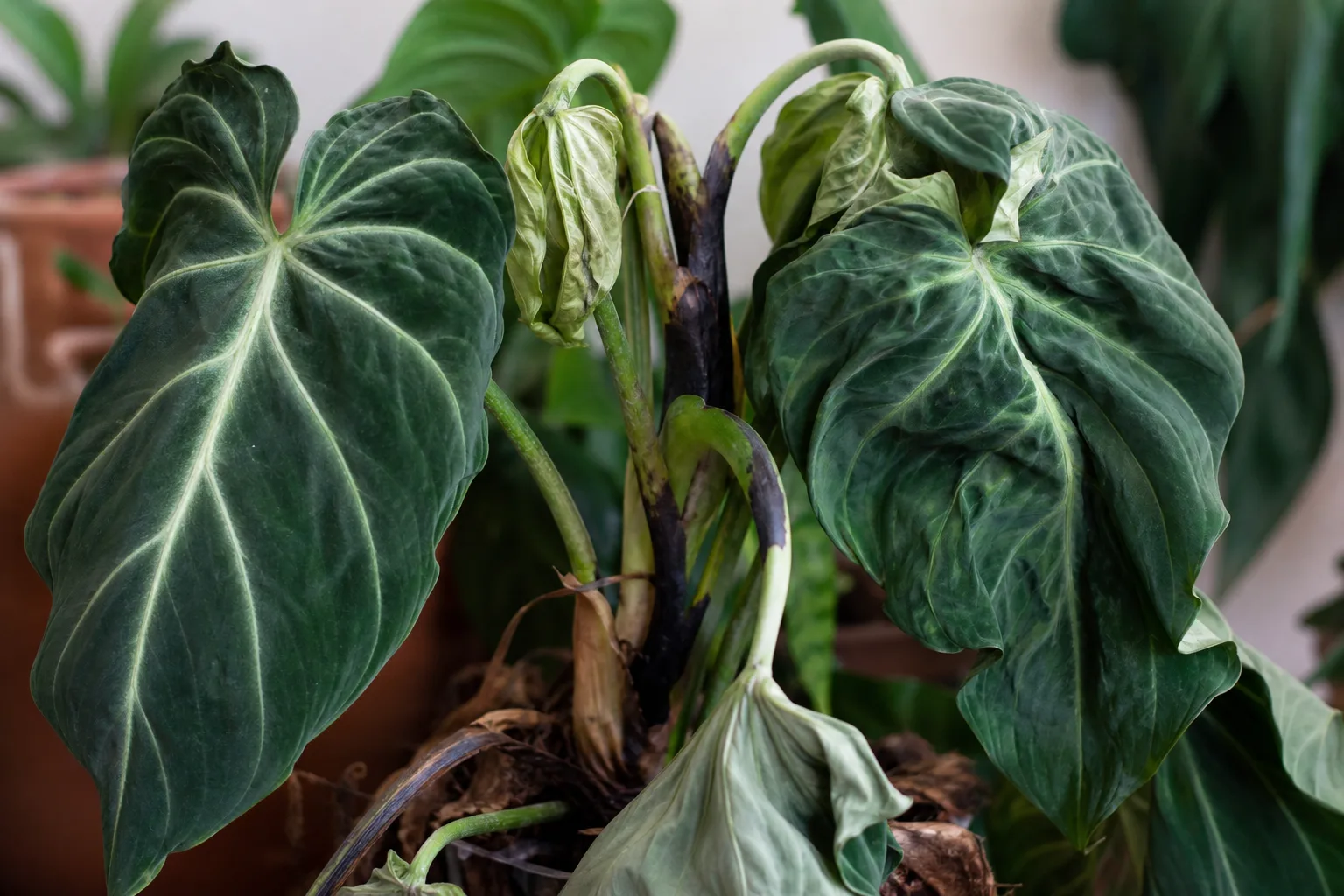
Bacterial Wilt on Philodendron Gloriosum: Causes, Checks & Fixes
This guide covers bacterial wilt on Philodendron Gloriosum. See also the general Bacterial Wilt guide, watering, and light pages for this plant.
Bacterial Wilt on Philodendron Gloriosum: Causes, Checks & Fixes
Quick answer
Bacterial wilt on Philodendron Gloriosum (Philodendron gloriosum) is not the same as ordinary thirst wilt or the wet-soil collapse that rhizome rot causes-though all three can look like limp velvet leaves at first glance. True bacterial problems on this creeping terrestrial philodendron show up as water-soaked leaf tissue, collapsed petioles, soft mushy rhizome tissue at the soil line, or a foul fishy odor, often while the mix still feels damp.
First step: isolate the plant away from other philodendrons, pothos, and aroids before you touch, water, or prune it. Then inspect the crawling rhizome where it meets the mix before assuming root rot on Philodendron Gloriosum. Adding water to a bacterial soft rot only spreads pathogens through splash.
What bacterial wilt looks like on Philodendron Gloriosum
Gloriosum puts symptoms on the large velvet heart-shaped leaves and the horizontal rhizome you may not see until you lift foliage at the pot edge. Patterns depend on which bacterium is involved:
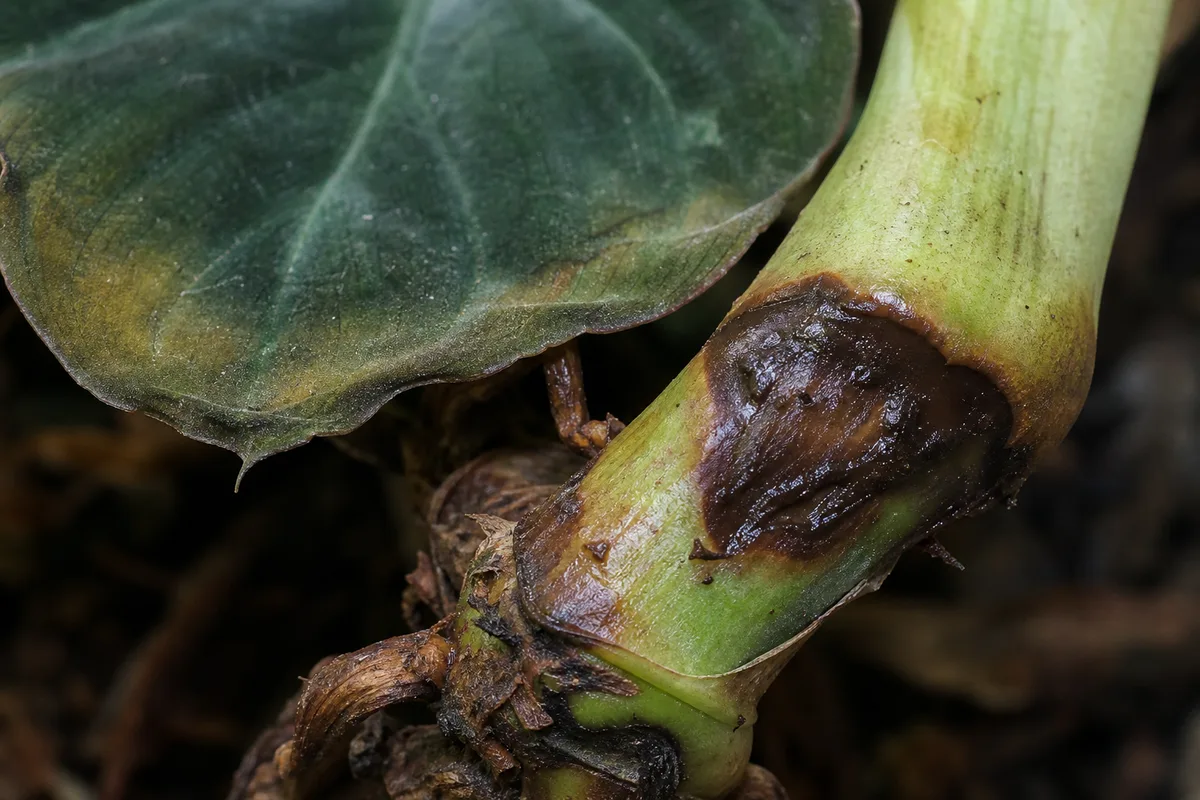
Bacterial Wilt symptoms on Philodendron Gloriosum - compare with healthy tissue on the same plant.
Erwinia soft rot and blight (most common on philodendrons indoors):
- Tiny water-soaked spots on leaves expand into tan to blackened lesions
- Infected velvet leaves collapse into a wet, slimy rot that smells foul
- When bacteria move into petioles, whole heart leaves yellow, soften, and die
- Soft gray-to-tan lesions often start at the rhizome base near the soil line-the exact tissue Gloriosum owners must keep exposed
- Under warm, humid conditions the rot can advance rapidly through stem tissue
Xanthomonas bacterial leaf spot:
- Translucent spots on leaf margins turn reddish-brown with yellow halos
- Large tan irregular spots on dark green velvet foliage stand out against pale veins
- Spots may stay localized before petiole invasion causes partial leaf-cluster collapse
Vascular bacterial wilt (less common indoors, but matches the search symptom):
- One section of leaves along the rhizome wilts while soil is still moist
- Cut petioles may show internal browning; a streaming test in clear water can release milky bacterial ooze
- Rapid wilting while foliage is still green, with vascular dark streaks, can precede plant death when xylem is plugged
On Gloriosum, bacterial damage often starts on one leaf or a cluster near the active growth tip before spreading along the rhizome-unlike whole-plant drought wilt, which hits every leaf at once when the root ball is uniformly dry.
Why Philodendron Gloriosum gets bacterial wilt
Philodendron Gloriosum is a Colombian rainforest crawler that needs high humidity and warm temperatures. That indoor sweet spot-warm rooms, 60–70% humidity, grouped plant shelves-also favors bacteria when velvet leaf surfaces and the exposed rhizome stay wet too long.
Rhizome buried in wet mix
Gloriosum’s thick rhizome should sit at or above the substrate surface, not buried in stagnant moisture. When the growth front is packed under wet mix, Erwinia soft rot often begins at the base of the stem at or below the soil line. This is the Gloriosum-specific trap: treating it like an upright philodendron and burying the runner invites both fungal rhizome rot and bacterial entry through waterlogged tissue.
Overhead watering and misting on velvet leaves
Gloriosum’s large velvety leaves hold water on their surface longer than smooth philodendron foliage. Overhead watering and splashing spread bacteria from soil to leaves and from leaf to leaf. Late-day misting or showering leaves keeps petioles damp overnight, which Erwinia carotovora and E. chrysanthemi exploit on philodendrons.
High humidity without airflow
Gloriosum needs humidity above 50% for healthy velvet texture, but dense placement in humid cabinets traps moisture on leaf undersides. Bacteria require warm, moist conditions and wounds or natural openings to enter. Humidifiers plus zero airflow slow drying after watering and make it easy to handle one sick Gloriosum, then touch a healthy monstera or anthurium with the same hands.
Contaminated tools and stressed tissue
Trimming yellow leaves or taking rhizome cuttings with unsanitized shears moves pathogens node to node. Plants already stressed from overwatering, recent Philodendron Gloriosum repotting guide, or a buried rhizome are more susceptible once bacteria are present. Gloriosum grows slowly-stress from chronic sogginess weakens tissue long before obvious wilt appears.
Xanthomonas on aroid foliage
Xanthomonas species attack philodendron, dieffenbachia, syngonium, and aglaonema. Gloriosum shares the same family habits as other philodendrons, so leaf-spot bacteria that enter through wet margins can later invade petioles and mimic wilt.
How to confirm the cause
Work through these checks in order before repotting or spraying:
- Isolation check - Move the pot away from other plants. Note whether symptoms started on one leaf cluster or spread along the rhizome.
- Rhizome inspection - Gently expose the crawling stem at the mix surface. Soft, mushy, or slippery tissue with odor at the soil line supports bacterial soft rot. A firm rhizome with wet soil may still be oxygen-starved roots.
- Pot weight and moisture - Heavy wet mix with limp leaves could be rhizome rot or bacterial stem invasion. Light dry mix points away from bacterial wilt toward drought.
- Leaf lesion pattern - Water-soaked halos, tan centers, and collapsed petioles fit bacteria. Uniform limp leaves without spots fit drought or root failure better.
- Odor test - A fishy or foul smell from the rhizome or collapsed velvet leaves is a strong Erwinia signal on philodendron.
- Root and rhizome inspection - Unpot only if the rhizome is soft or smell is present. Brown mushy rhizome with sour mix suggests fungal rot; firm rhizome with rotting leaves above suggests bacterial movement in petioles.
- Streaming test - Cut a wilted petiole above the base, place the cut end in clear water, and watch for milky ooze within a few minutes if vascular wilt is suspected.
- Spread pattern - Pathogens often affect one leaf or stem first before spreading across the plant. Whole-plant wilt on firm rhizome tissue more often traces to abiotic stress.
If streaming is positive or soft rot odor is obvious, treat the plant as infected even without lab confirmation.
First fix for Philodendron Gloriosum
Isolate the plant immediately. Move it to a separate room or at least several feet from other aroids, shared saucers, and propagation trays. Wash hands and change gloves before touching healthy plants.
This single step comes before watering, bactericide sprays, or repotting. Systemic bacterial diseases spread through contaminated hands, tools, and splashing water, and discarding infected plants is often the best approach once infection is advanced.
Step-by-step recovery
After isolation, match severity to action:
- Mild leaf spots only - Remove infected leaves with clean scissors. Bag and trash them; do not compost indoors. Sterilize tools with alcohol before the next cut.
- Stop wetting foliage - Switch to soil-level watering. Skip misting until new growth stays clean for several weeks.
- Expose the rhizome - If the crawling stem is buried, gently reposition it at the mix surface without packing wet soil around the growth tip.
- Improve airflow - Space pots apart and let velvet leaves dry before evening. A low fan helps humid cabinets without leaving foliage permanently damp.
- Moderate watering - Allow the top 3–5 cm of mix to dry before watering again; do not keep soil soggy while the rhizome is soft.
- Severe soft rot - If the rhizome is mushy or odor is strong, discard the plant and soil. Recovery is unlikely once Erwinia colonizes much of the crawling stem.
- Salvage rhizome cuttings - If firm rhizome sections remain above clean tissue, take cuttings with at least one node and root in fresh sphagnum or water using clean vessels. Only take cuttings from tissue that shows no water-soaked lesions or odor.
- Hold fertilizer - Do not feed until new velvet leaves are firm and spots have stopped spreading.
Recovery timeline
Localized Xanthomonas leaf spots can stop spreading within one to two weeks after infected leaves are removed and foliage stays dry. Erwinia soft rot that reaches the rhizome rarely reverses; affected tissue collapses within days under warm, humid conditions.
Unlike drought wilt-which can perk within hours after one thorough drink-bacterial collapse on moist soil does not improve with watering. Judge success by clean new leaves at the active growth tip, not by old collapsed velvet leaves re-firming. Gloriosum’s slow growth means new leaves may take weeks to appear even after conditions stabilize.
If wilting spreads to additional leaf clusters along the rhizome while you keep foliage dry, assume the plant will not recover in place.
Lookalike symptoms on Philodendron Gloriosum
| Pattern | Likely cause | Key difference |
|---|---|---|
| Limp velvet leaves, wet soil, soft rhizome, sour smell | Rhizome / root rot | Mushy rhizome; usually no water-soaked leaf halos or fishy stem odor |
| Limp leaves, dry light pot, firm rhizome | Underwatering | Perks after one thorough soak and drainage |
| Limp leaves, wet soil, water-soaked spots, foul rhizome odor | Bacterial soft rot / blight | Collapsed leaves with slimy tissue; spreads along petioles |
| Margin spots with yellow halos, partial cluster collapse | Xanthomonas leaf spot | Spots precede wilt; avoid overhead watering |
| Partial afternoon wilt, moist soil, milky streaming | Vascular bacterial wilt | Internal petiole discoloration; positive water test |
| Temporary wilt on hot afternoons, firm rhizome | Heat / light stress | Recovers overnight; no lesions or odor |
The Gloriosum-specific trap is wet wilt from rhizome rot, which mimics bacterial wilt because velvet leaves droop while soil is moist. Rhizome rot lacks the water-soaked leaf margins, fishy Erwinia odor, and rapid petiole collapse that bacterial blight shows on philodendron.
What not to do
Do not mist or shower a suspect Gloriosum hoping humidity will help-wet velvet foliage fuels bacterial spread.
Do not apply fungicide alone for soft rot; chemical control is not effective once bacteria are inside tissues.
Do not compost infected leaves or reuse mix from a discarded pot.
Do not handle soil from a sick plant and then touch healthy philodendrons without washing hands.
Do not take rhizome cuttings from mushy or odorous tissue-only from firm sections above visible damage.
Wear gloves when cutting collapsed tissue-philodendrons contain insoluble calcium oxalate crystals toxic to cats and dogs.
Philodendron Gloriosum care cross-check
Prevention sits on the same basics that keep Gloriosum healthy:
- Rhizome placement - Keep the crawling stem at or above the mix surface in a wide shallow pot so the growth tip never sits in stagnant moisture.
- Light - Philodendron Gloriosum light guide helps velvet leaves dry quickly after watering.
- Water - Allow the top 3–5 cm of chunky aroid mix to dry between drinks; water at the soil line, not over leaves.
- Humidity - Target 60–70% humidity, but pair it with gentle airflow so leaves are not permanently damp.
- Sanitation - Wipe pruners with alcohol between plants when trimming or propagating rhizome sections.
- Quarantine - Hold new Gloriosum purchases away from the collection for two to three weeks, the same window extension guides recommend for new houseplants.
How to prevent bacterial wilt next time
Water at soil level and skip late-day misting on velvet leaves. Space pots so foliage from one Gloriosum does not rest on another’s leaves. Sterilize tools before taking rhizome cuttings or removing damaged leaves.
Buy clean stock without water-soaked spots or collapsed lower leaves. When one Gloriosum in a cluster shows bacterial symptoms, isolate it before shared pruning spreads Erwinia or Xanthomonas to pothos and monstera neighbors.
Keep the rhizome exposed and the top 3–5 cm of mix drying between drinks so tissue stays oxygenated-chronic sogginess around a buried runner weakens Gloriosum long before bacteria arrive.
When to worry
Escalate immediately if soft rot odor appears, multiple leaf clusters collapse on moist soil within a few days, or more than one aroid on the same shelf develops matching water-soaked lesions. Severely infected philodendrons should be destroyed rather than nursed indefinitely.
Contact your local extension plant diagnostic clinic if you need lab confirmation-especially in collections where many philodendrons share benches or propagation trays. Suspected Ralstonia bacterial wilt should be diagnosed promptly because certain strains are federally regulated.
Conclusion
Bacterial wilt on Philodendron Gloriosum is a sanitation and rhizome-placement problem as much as a disease name. The tell is limp velvet leaves paired with water-soaked tissue, petiole collapse, or foul odor at the crawling rhizome-not simple dry wilt. Isolate first, distinguish bacterial soft rot and leaf spot from the more common wet-soil rhizome rot, remove or discard infected tissue, and restart from clean rhizome cuttings only when firm nodes remain above the damage.
When to use this page vs other Philodendron Gloriosum guides
- Philodendron Gloriosum watering guide - Use for routine moisture checks before assuming bacterial wilt is the main issue.
- Philodendron Gloriosum problems hub - Browse all 22 common issues on this species.