Bud Drop on Philodendron Gloriosum: Causes, Checks & Fixes
Quick answer
Bud drop on Philodendron Gloriosum usually means a new leaf sheath aborts before unfurling, most often from low humidity or a wet growth point on the crawling rhizome. First step: measure humidity at the leaves and confirm the active tip sits above-not buried in-moist mix.
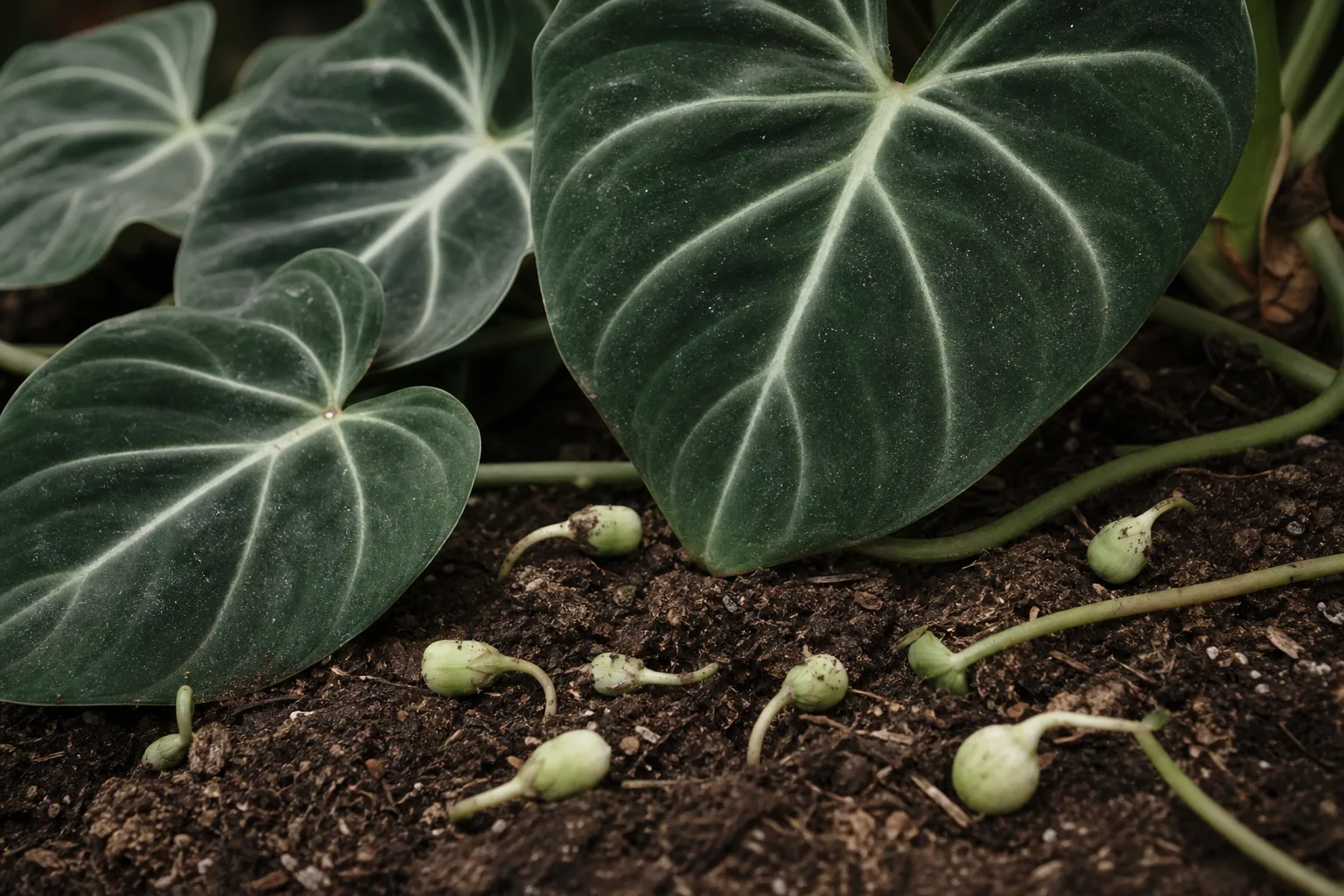
Bud Drop on Philodendron Gloriosum: Causes, Checks & Fixes
This guide covers bud drop on Philodendron Gloriosum. See also the general Bud Drop guide, watering, and light pages for this plant.
Bud Drop on Philodendron Gloriosum: Causes, Checks & Fixes
Quick answer
Bud drop on Philodendron Gloriosum usually means a new leaf sheath-the papery cataphyll at the tip of the crawling rhizome-aborts before the velvet leaf inside unfurls. On this slow-growing crawler, that loss feels dramatic because each new leaf takes weeks to develop and the plant rarely flowers indoors.
The most common triggers are low humidity below 60% and a growth point sitting against wet, poorly aerated mix. Gloriosum evolved on humid Colombian forest floors where new leaves open in moist air while the rhizome crawls across well-drained organic litter-not buried in soggy soil.
First step: measure humidity at the leaves and confirm the active growth tip sits on or above the mix surface, not pressed into wet soil. Do not repot, relocate, or fertilize while a sheath is still developing. Stabilize air moisture and rhizome conditions before trying anything else.
What bud drop looks like on Philodendron Gloriosum
On Philodendron Gloriosum overview, “buds” almost always mean new leaf sheaths, not showy flowers. Mature Gloriosum may produce aroid inflorescences (a spathe wrapped around a spadix), but indoor blooming is uncommon. What owners report as bud drop is typically the terminal cataphyll failing.
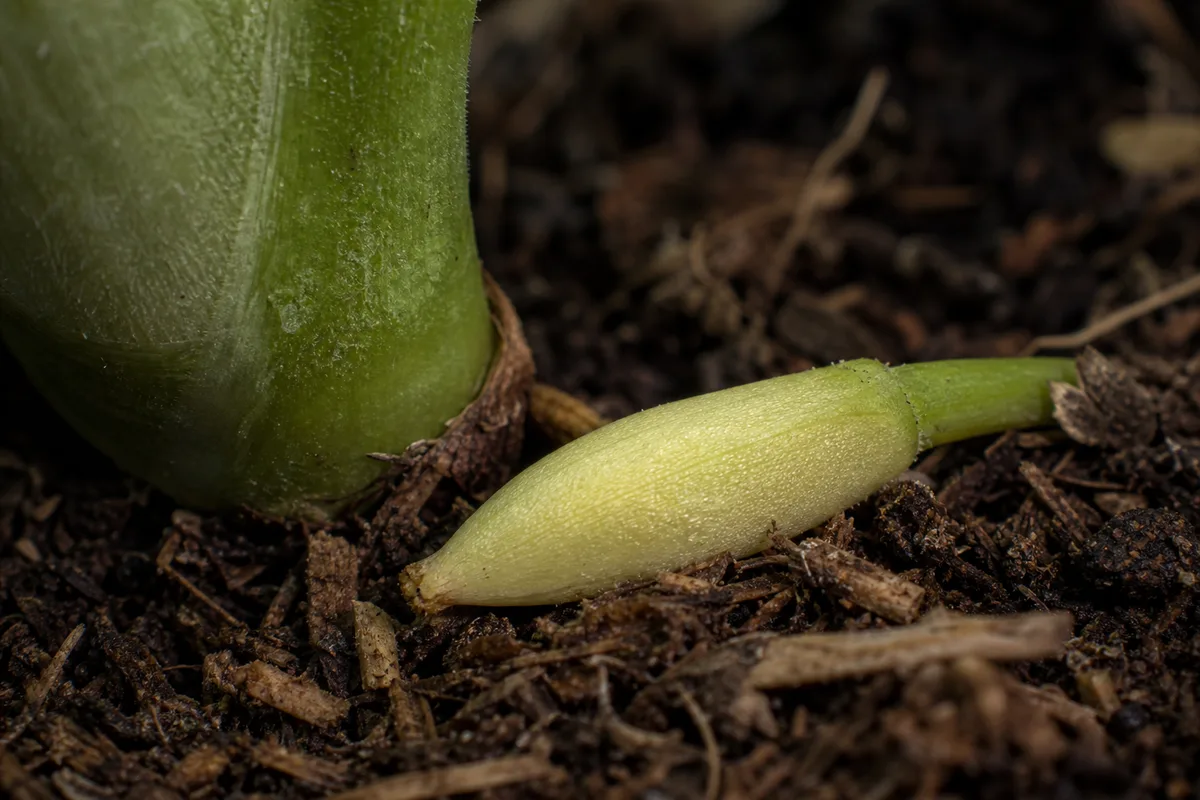
Bud Drop symptoms on Philodendron Gloriosum - compare with healthy tissue on the same plant.
Typical bud-drop signs:
- A swelling sheath at the rhizome tip turns yellow or brown, shrivels, and falls off before the leaf emerges
- The aborted sheath feels dry or papery and detaches with light pressure
- A partially opened leaf stalls, tears, or collapses still inside a stuck cataphyll
- The event often follows a dry spell, cold draft, repot, or a week when soil at the growth point stayed too wet
What bud drop is not:
- Natural old-leaf senescence - Old foliage at the base can yellow and drop as part of the natural cycle; that is normal turnover, not premature bud abortion
- No new growth ever - That points to insufficient light, a damaged growth point, or chronic root stress-not bud drop mid-cycle
- Post-bloom fade - Relevant only if a mature plant actually produced an inflorescence; most indoor Gloriosum never reach that stage
Because Gloriosum is slow, losing one sheath can mean waiting another month or more for the next attempt. The pattern matters more than the count: repeated abortion at the same tip while the rhizome stays firm strongly suggests fixable environmental stress.
Why Philodendron Gloriosum gets bud drop
This velvet crawler is sensitive at two points-the unfurling leaf and the exposed rhizome tip. Bud abortion happens when either zone loses the stable tropical conditions the species expects.
Low humidity during unfurling
Gloriosum performs best at 60–70% relative humidity. Winter heating and air conditioning often hold rooms below 30%-well under what most houseplants tolerate-according to Illinois Extension. Dry air pulls moisture from tender cataphyll tissue faster than the plant can replace it, and new velvet leaves need humid air to expand without tearing. When humidity drops, the plant sheds the developing sheath rather than invest energy in a leaf that cannot open cleanly.
Wet or buried growth point
Unlike climbing philodendrons, Gloriosum spreads horizontally via a creeping rhizome. The rhizome should sit on the mix surface with the growth point above stagnant moisture. If Philodendron Gloriosum repotting guide buried the runner, or watering kept the tip constantly wet, the active bud zone rots or aborts. Overwatering sensitivity is a known trait of this species-soggy mix around the rhizome is a primary failure mode.
Inconsistent watering during sheath development
Allowing the top 3–5 cm to go bone dry for days, then soaking heavily, stresses roots while a sheath is swelling. The rhizome stores some moisture, but wild swings during the weeks a new leaf develops can trigger abortion. The same stress that causes drooping leaves on Gloriosum often hits the terminal bud first.
Environmental shock
Repotting, moving to a new room, turning the pot for even growth, or exposure to cold drafts below 16°C (60°F) disrupts the microclimate sheaths need. Retail plants frequently abort their first sheath within two weeks of purchase because humidity and light change abruptly-even when watering looks correct.
Over-fertilizing during bud set
Heavy fertilizer while a sheath is developing can scorch sensitive new tissue and abort the bud. Salt buildup on the mix surface compounds the problem. Hold feeding until new growth stabilizes after environmental correction.
Rare: inflorescence abortion
On the rare mature specimen that initiates an inflorescence indoors, the same humidity and stability rules apply. Dry air or sudden relocation can cause the spathe to wither before the spadix matures. Most owners will never see this; new leaf sheath drop is the practical diagnosis.
How to confirm the cause
Work through these checks in order. You are looking for the stress that preceded sheath loss, not guessing from a single yellow leaf at the base.
- Timeline - Note when the sheath aborted. Within 48–72 hours of a move, dry spell, or cold night points to environmental bud drop.
- Humidity at leaf height - Use a hygrometer beside the foliage, not across the room. Below 50% with crisp older leaf margins strongly supports dry-air abortion.
- Rhizome position - Uncover the top of the runner if mix has shifted. A buried or soggy growth tip confirms moisture-related abortion.
- Soil moisture - Probe the top 3–5 cm. Dusty dry soil during sheath swell suggests underwatering stress; constant wetness with a soft rhizome suggests rot.
- Temperature scan - Feel air at the growth tip overnight. Cold glass, AC blasts, or sub-16°C pockets explain sudden loss.
- Recent changes - Repot, fertilizer spike, or room swap in the past week? Bud drop after disruption is expected until conditions restabilize.
If the rhizome is firm, smells neutral, and only the terminal sheath dropped without mass lower-leaf yellowing on wet soil, the diagnosis is almost certainly cultural-not disease.
The first fix to try
Raise humidity to 60–70% and confirm the growth point is on the mix surface-not sitting in wet soil-without moving the pot.
Run a humidifier within a few feet of the plant, or group it with other aroids on a pebble tray with water below pot level. Check that the rhizome tip and cataphyll are not buried; gently brush back mix so the upper half of the runner stays exposed if needed. Water when the top 3–5 cm dries, letting excess drain fully-do not let the saucer hold standing water.
This single stabilization addresses the two most common bud-drop drivers on Gloriosum. Hold off on repotting, pruning the tip, or relocating until humidity stays above 55% for several days and soil moisture at the rhizome is steady.
Step-by-step recovery
- Set a humidifier to maintain 60–70% near the foliage; run it consistently, not only on watering days.
- Expose the rhizome tip if mix has covered it; ensure the growth point is not pressed into wet soil.
- Resume watering when the top 3–5 cm is dry-avoid drought-soak cycles while the next sheath forms.
- Move the pot away from heating vents and cold window glass only after humidity is addressed-one change at a time.
- Pause fertilizer until a new cataphyll appears and begins swelling without aborting.
- Watch the rhizome tip for four to eight weeks; a new sheath forming confirms recovery.
If soil stayed wet and the rhizome feels soft, stop watering, improve airflow, and inspect the runner before expecting new buds. Rot at the tip needs drying and possible trimming of mushy tissue-not more humidity alone.
Recovery timeline
Gloriosum is slow. After conditions stabilize, the next sheath may take four to eight weeks to appear, and another four to eight weeks to fully unfurl. Aborted sheaths do not reopen; judge success by a new cataphyll that swells and opens into a clean velvet leaf. Winter recovery often takes longer when heating keeps ambient humidity low despite a humidifier.
Lookalike symptoms
| Pattern | Likely cause | Key difference from bud drop |
|---|---|---|
| Single yellow leaf at the back of the runner | Normal senescence | Old leaf only; active tip still healthy |
| New sheath stuck, torn, not dropped | Low humidity mid-unfurl | Sheath still attached; leaf damaged but present |
| Multiple lower leaves yellow on wet soil | Overwatering / rhizome stress | Affects older foliage, sour smell possible |
| No sheath for months | Low light or dead growth point | No swelling at tip at all |
| Tiny upright green spike that withers | Abortive inflorescence | Rare indoors; no leaf inside |
Mistakes to avoid
- Repotting or burying the rhizome deeper while a sheath is developing
- Increasing watering to “fix” dry air-that risks rot without helping unfurling
- Mist-heavy spraying on velvet leaves; water spots and mold add new problems
- Relocating to direct sun to “give it energy”; scorch stresses the plant further
- Fertilizing heavily after bud loss; salts worsen margin and bud damage
- Assuming one lost sheath means the plant is dying; firm rhizome means retry is likely
How to prevent bud drop next time
Target 60–70% humidity year-round with a humidifier in dry seasons. Use a wide shallow pot so the rhizome can advance without the tip sinking into wet mix. Water when the top 3–5 cm dries, keep Philodendron Gloriosum light guide away from dry vents, and avoid repotting while a cataphyll is visible. Inspect new sheaths as they swell-early shriveling is a humidity or moisture warning before full abortion.
When to worry
Escalate beyond humidity correction if:
- The rhizome feels soft, mushy, or smells sour
- The growth point turns brown and wet while soil stays saturated
- New sheaths abort repeatedly for three or more cycles despite stable humidity
- Wilting and yellowing spread up the runner on constantly wet mix
Those patterns need rhizome inspection and possible repot into fresh airy mix-not just a humidifier.
Conclusion
Bud drop on Philodendron Gloriosum is usually a new leaf sheath aborting from low humidity or a wet growth point on the crawling rhizome-not a mysterious disease. Confirm with a dry-air reading below 50%, a shriveled terminal cataphyll, or a buried soggy tip; fix by stabilizing 60–70% humidity, exposing the rhizome, and watering when the top 3–5 cm dries. Prevent recurrence by keeping the growth point above moist-not saturated-mix in a wide pot. Success means the next sheath swells and unfurls into a clean velvet leaf.
When to use this page vs other Philodendron Gloriosum guides
- Philodendron Gloriosum watering guide - Use for routine moisture checks before assuming bud drop is the main issue.
- Philodendron Gloriosum problems hub - Browse all 22 common issues on this species.