Brown Tips on Philodendron Gloriosum: Causes, Checks & Fixes
Quick answer
Brown tips on Philodendron Gloriosum are most often caused by low humidity below 60%, which dries velvet leaf margins faster than smooth philodendron leaves. First step: measure humidity near the plant and add a humidifier or pebble tray to reach 60–70% consistently.
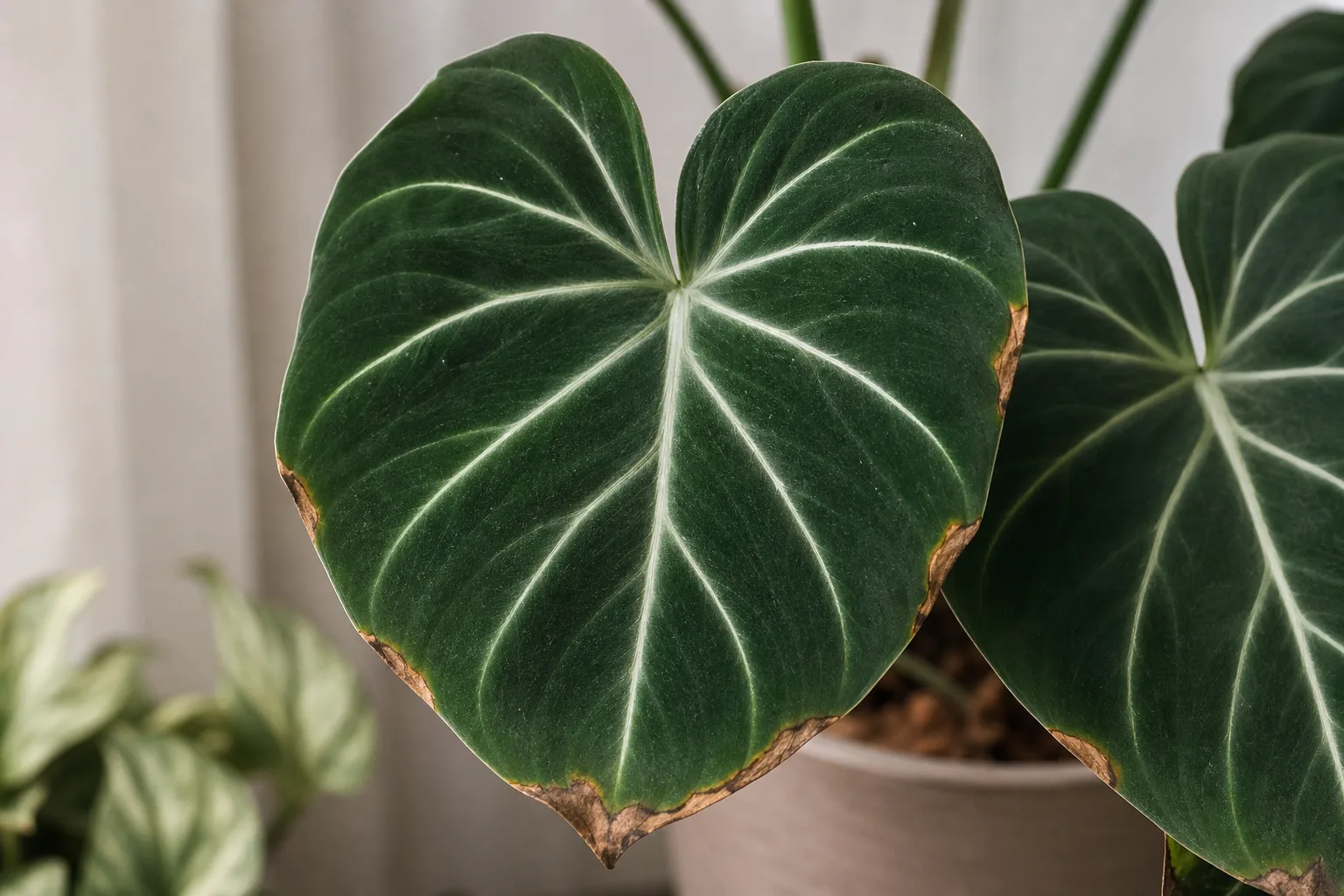
Brown Tips on Philodendron Gloriosum: Causes, Checks & Fixes
This guide covers brown tips on Philodendron Gloriosum. See also the general Brown Tips guide, watering, and light pages for this plant.
Brown Tips on Philodendron Gloriosum: Causes, Checks & Fixes
Quick answer
Brown tips on Philodendron Gloriosum are most often caused by low humidity below 60%, which dries velvet leaf margins faster than smooth philodendron leaves. First step: measure humidity near the plant and add a humidifier or pebble tray to reach 60–70% consistently.
Philodendron Gloriosum carries large, velvety heart-shaped leaves with prominent pale veins. That velvet surface loses moisture quickly when indoor air drops below comfortable tropical levels-especially in winter when heating runs. Brown leaf tips and edges are a classic sign of low air humidity, and on Gloriosum the effect shows on the delicate leaf margins before the rest of the plant declines.
Why Philodendron Gloriosum gets brown tips
Low humidity is the leading cause for Philodendron Gloriosum overview. Gloriosum performs best at 60–70% relative humidity; many homes sit at 30–40% in heated rooms. Iowa State Extension notes that low humidity is the most likely cause of brown leaf tips on indoor plants, and velvet aroids feel the deficit faster than glossy-leaved types because their leaf surface holds less boundary-layer moisture.
Dry air from heating vents, air conditioning, and drafty windows compounds the problem. A Gloriosum placed where it looks best aesthetically-on a shelf near a radiator-often browns at the tips within weeks even when watering is correct. Grouping plants or using a pebble tray helps locally, but a humidifier is the most reliable fix for this humidity-demanding crawler.
Inconsistent watering is the second common trigger. Allowing the mix to dry too long between drinks, then soaking heavily, stresses roots and can produce brown edges from drought cycles. On Gloriosum, underwatering browning often appears with slightly limp petioles and light pot weight, not just tip crispness alone.
Salt buildup from over-fertilizing or fluoride and chlorine in tap water can also scorch margins on sensitive houseplants. If a white crust sits on the mix surface and tips brown despite good humidity, flush the pot with plain water at the next watering and reduce fertilizer until growth stabilizes.
What brown tips look like on Philodendron Gloriosum
On this plant, humidity damage usually starts at the outermost point of the heart-shaped leaf and along the velvet margin, turning tan to light brown and crispy while the central blade stays green. Patterns to watch:
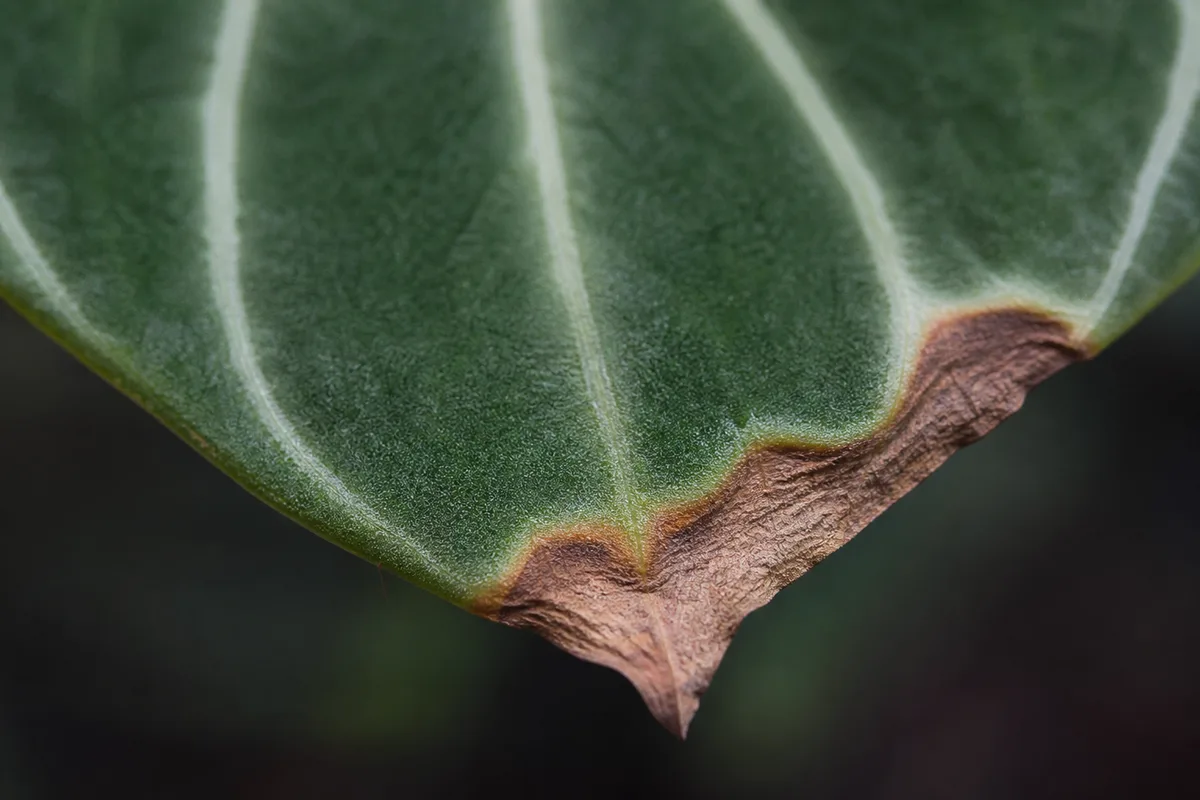
Brown Tips symptoms on Philodendron Gloriosum - compare with healthy tissue on the same plant.
- Dry, papery tips on one or more leaves without yellowing at the base
- New leaves emerging smaller or with rough, incomplete unfurling
- Browning worse on leaves closest to heating vents or sunny windows
- No sour soil smell and a firm rhizome when you check the root zone
- Humidity meter reading consistently below 50% near the foliage
Humidity browning differs from overwatering, which often yellows whole leaves and accompanies a heavy, sour-smelling pot. Sun scorch shows as bleached or brown patches on the sun-facing side of the blade, not just the tip.
How to confirm the cause
Work through this order before trimming or Philodendron Gloriosum repotting guide:
- Humidity reading - Place a hygrometer at leaf height. Below 50% strongly supports low humidity as the cause on Gloriosum.
- Airflow and placement - Note proximity to vents, radiators, and exterior doors.
- Soil moisture pattern - Probe the top 3–5 cm. Chronic dryness suggests underwatering contribution; constant wetness points elsewhere.
- Salt check - Look for white crust on the mix surface and consider recent fertilizing history.
- New growth - If the newest leaf shows tip damage before fully opening, environmental air moisture is the prime suspect.
If humidity is adequate (60%+) and tips still brown with wet soil and yellowing lower leaves, shift diagnosis toward root stress or overwatering rather than dry air.
First fix for Philodendron Gloriosum
Raise humidity to 60–70% and keep it stable. Run a humidifier near the plant-not occasional misting, which does little to change room humidity long-term-or group the Gloriosum with other aroids on a pebble tray with water below pot level. Move the plant away from heating vents while humidity improves.
Make one change at a time. Do not simultaneously repot, fertilize, and relocate to a new window-that makes it impossible to read which adjustment helped.
Step-by-step recovery
- Set a humidifier to maintain 60–70% in the plant’s immediate area; run it consistently, not only on watering days.
- Relocate the pot away from direct dry airflow while keeping Philodendron Gloriosum light guide.
- Resume watering when the top 3–5 cm is dry-avoid drought cycles that add edge browning on top of humidity stress.
- Trim fully brown tips with clean scissors if desired; cut into healthy green tissue only slightly for appearance.
- Watch the next one to two new leaves from the rhizome tip-clean unfurling confirms the fix.
If salt buildup is suspected, water thoroughly until runoff exits the drainage hole twice in succession, allowing the pot to drain fully each time, then pause fertilizer for four to six weeks.
Recovery timeline
Humidity improvements often show in the next new leaf within four to eight weeks-Gloriosum is slow to produce foliage. Existing browned tips will not revert to green; judge progress by unfurling quality and size of new velvet leaves. Winter recovery may take longer if heating keeps ambient humidity low despite a humidifier.
What not to do
- Do not increase watering to “compensate” for dry air-that risks rhizome rot without fixing tips.
- Do not mist heavily onto velvet leaves; water spots can mark the surface and mold can form in stagnant air.
- Do not place the plant in direct sun to “help” it; scorch adds a second brown pattern.
- Do not fertilize heavily while leaves are stressed; salts worsen margin burn.
- Do not assume trimming alone solves the problem-new tips will brown again if humidity stays low.
How to prevent brown tips next time
Target 60–70% humidity year-round with a humidifier in dry seasons. Keep Gloriosum in bright indirect light, water when the top 3–5 cm dries, and flush the pot every few months during active growth to prevent salt accumulation. Position the wide pot where airflow is gentle-not on top of a radiator or in a forced-air path.
Inspect new leaves as they unfurl; early margin crispness is a humidity warning before older leaves show damage.
When to worry
Escalate beyond humidity correction if:
- Browning spreads rapidly inward on multiple leaves within days
- Leaves yellow at the base while soil stays wet and smells sour
- New growth stops entirely for more than two months
- Wilting accompanies brown tips despite moist mix-possible root rot on Philodendron Gloriosum
Those patterns need root-zone inspection, not just a humidifier.
Conclusion
Brown tips on Philodendron Gloriosum are usually an humidity problem on velvet foliage, not a mysterious disease. Confirm with low hygrometer readings and crisp margins on otherwise green leaves; fix by stabilizing 60–70% humidity, correcting placement, and watering when the top 3–5 cm dries. Prevent recurrence with consistent humidification through winter heating. Success means clean new leaves from the rhizome-not repaired old tips.
When to use this page vs other Philodendron Gloriosum guides
- Philodendron Gloriosum watering guide - Use for routine moisture checks before assuming brown tips is the main issue.
- Philodendron Gloriosum problems hub - Browse all 22 common issues on this species.
- Yellow Leaves on Philodendron Gloriosum - Different entry point when symptoms overlap with brown tips.