Yellow Leaves on Philodendron Gloriosum: Causes, Checks &
Quick answer
Yellow leaves on Philodendron Gloriosum usually mean overwatering or rhizome rot when soil stays wet, or underwatering when the pot is light and mix is dusty dry. First step: check top 3–5 cm moisture and rhizome firmness before changing anything else.
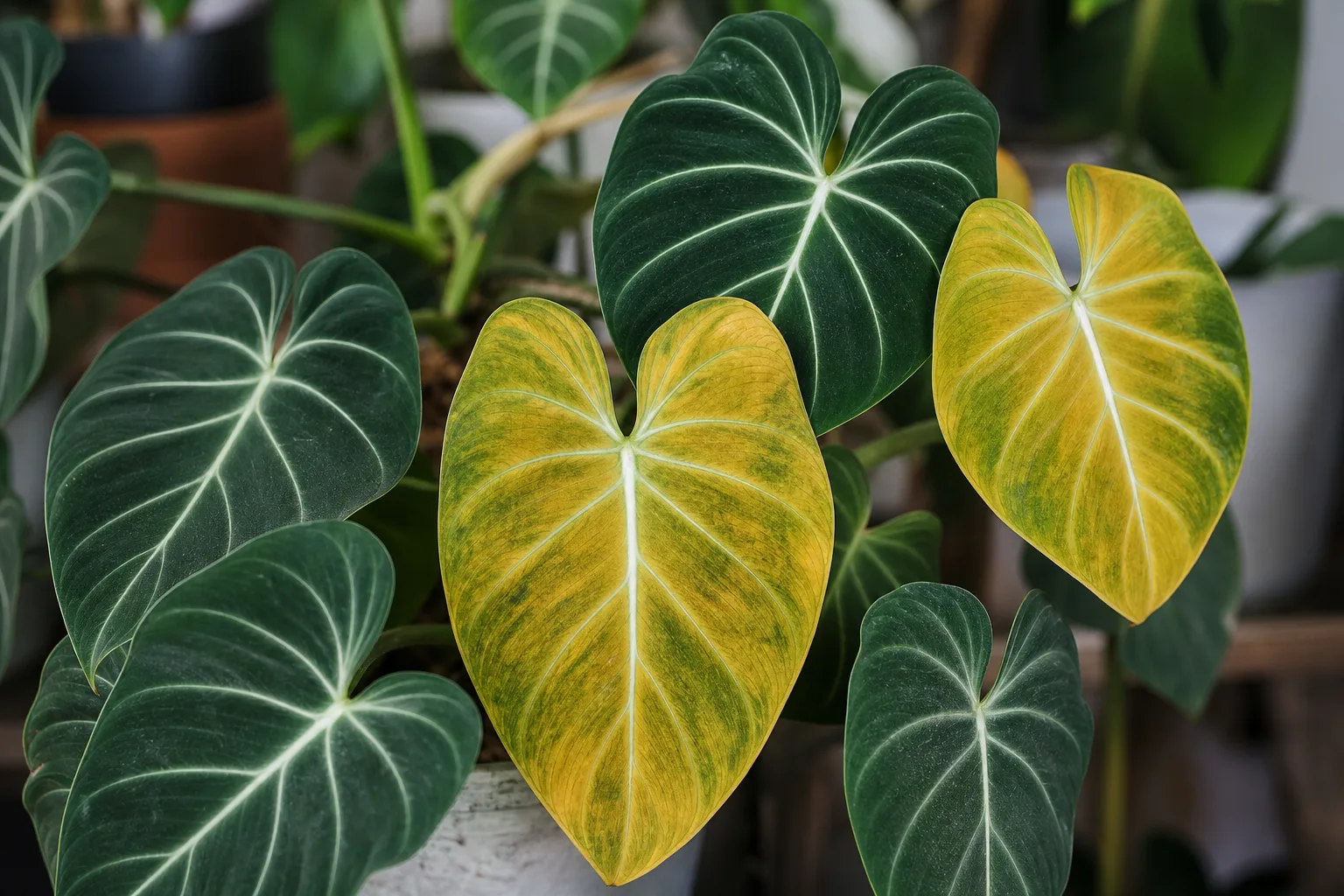
Yellow Leaves on Philodendron Gloriosum: Causes, Checks & Fixes
This guide covers yellow leaves on Philodendron Gloriosum. See also the general Yellow Leaves guide, watering, and light pages for this plant.
Yellow Leaves on Philodendron Gloriosum: Causes, Checks & Fixes
Quick answer
Yellow leaves on Philodendron Gloriosum usually mean overwatering or rhizome rot when soil stays wet, or underwatering when the pot is light and the top 3–5 cm is dusty dry. First step: check top 3–5 cm moisture and rhizome firmness before changing light, humidity, or fertilizer.
Use this page when you need multi-cause triage-wet vs. dry vs. rot vs. light vs. aging on velvet crawler leaves. Use cause-specific siblings when one branch is already confirmed: overwatering for chronic wet mix, root rot when the rhizome is soft or mix smells sour, or underwatering when the pot is light and dry throughout.
Yellowing is one of the most common distress signals on philodendrons grown as houseplants, but the cause differs sharply depending on root-zone moisture. On Gloriosum-a slow terrestrial crawler with a surface rhizome-chronic wetness around the creeping stem is the usual culprit, not random “bad luck.” The same yellow color can also appear when the mix has been dry too long and roots cannot supply the large velvet leaves.
| What you notice first | Likely branch | First move | Read next |
|---|---|---|---|
| Heavy pot + wet top 3–5 cm + sour smell | Active rhizome rot | Stop water; unpot same day | Root rot |
| Heavy pot + damp mix, firm rhizome, no sour odor | Overwatering stress | Dry-back; fix drainage | Overwatering |
| Light pot + dry top 3–5 cm + limp petiole | Underwatering | Thorough soak; drain saucer | Underwatering |
| Pale yellow-green new leaf + long petioles | Low light + excess water use mismatch | Relocate; adjust watering | Not enough light |
| Margin yellowing on dry air days, firm roots | Low humidity stress | Raise RH; check low-humidity guide | This page + humidity sibling |
| One oldest leaf yellow, firm tip, green new leaf | Possible normal aging (grower-observed) | Monitor moisture; do not panic-trim | This page |
| Stippling on velvet + yellow patches | Spider mites | Rinse; open mite workflow | Spider mites |
If the rhizome is already soft or mix smells sour, skip further triage here and open the root-rot guide the same day.
When to use this page vs. sibling guides
| Your main question | Start here | Or use sibling page |
|---|---|---|
| ”Leaves yellow-wet or dry? Rot or aging?” | This page - decision table and five-step checklist | |
| ”Mix stays wet days; rhizome buried” | Rule out rot here, then | Overwatering |
| ”Rhizome mushy, sour smell, multi-leaf collapse” | Root rot | |
| ”Pot light, dusty dry, limp leaf” | Underwatering | |
| ”Pale new growth, stretched petioles” | Not enough light | |
| ”Crisp margins in heated dry rooms” | Low humidity | |
| ”How often should I water?” | Watering guide |
This URL is the yellow-leaf symptom triage hub for Philodendron Gloriosum. Sibling pages go deeper on one confirmed cause; start here when you are not sure whether moisture, light, humidity, or aging is driving the color change.
Why Philodendron Gloriosum gets yellow leaves
Overwatering and rhizome rot
When the top 3–5 cm never dries, or the rhizome sits buried in saturated mix, roots lose oxygen and fail. Overwatering causes yellowing and decline in houseplants, and damaged roots cannot move water-so leaves yellow even while soil feels wet. On Gloriosum, brush mix from the creeping stem: soft black tissue at the growth zone confirms rot over simple overwatering stress. See root rot when tissue is mushy; see overwatering when the rhizome is still firm but the mix chronically damp.
Philodendrons prefer evenly moist but not wet soil-a rule that is easy to violate on a wide shallow crawler pot where the surface rhizome traps moisture against the active node.
Underwatering and fear-of-rot drought
Underwatering produces yellowing too, often with limp petioles and dry, light pot weight. Gloriosum stores some moisture in its rhizome, but extended drought still starves the single active leaf while a new one develops. Growers sometimes underwater out of fear of rot, then see yellow lower leaves from chronic dryness-a drought-yellowing cycle unique to rhizome crawlers where rot anxiety and thirst overlap. Full thirst confirmation lives in the underwatering guide.
Insufficient light slowing water use
Insufficient light slows growth and water use, which indirectly causes yellowing when a summer watering schedule continues into a dimmer season. Philodendrons tolerate relatively low light indoors, but a plant in weak light combined with heavy watering yellows from root stress rather than true shade tolerance. Cool rooms below about 18°C (65°F) have the same effect-roots use less water while the calendar keeps soaking the mix.
Normal senescence on a slow single-tip crawler
Glorosum often supports one to two large leaves at a time from a single growth point. Many keepers report that the previous leaf may yellow and die back naturally when a new one matures-a grower-observed pattern on slow crawlers, not a formal horticultural rule. Treat single old-leaf yellow as aging only when the rhizome tip stays firm, new growth is green, and moisture checks are normal. Older houseplant leaves age and yellow over time, though Gloriosum’s low leaf count makes each yellow blade feel alarming.
Humidity-related margin yellowing
Velvet leaves may yellow from the margin inward when dry air pulls moisture faster than roots replace it-distinct from petiole-base-upward yellowing tied to root failure. Low indoor humidity can brown or yellow leaf margins on houseplants. On Gloriosum, margin-inward yellow with firm roots and normal pot weight often implicates dry air near a heater or AC vent; see the low-humidity guide when that pattern dominates.
Pest and nutrient lookalikes
Yellow with stippling on velvet undersides suggests spider mites. Chronic wet surface mix with hovering flies points to fungus gnats and the same overwatering path that precedes rot. Uniform pale yellow on new growth after heavy feeding without moisture stress may suggest nutrient imbalance-address moisture and roots first before assuming a fertilizer fix.
What yellow leaves look like on Philodendron Gloriosum
Patterns help separate causes:
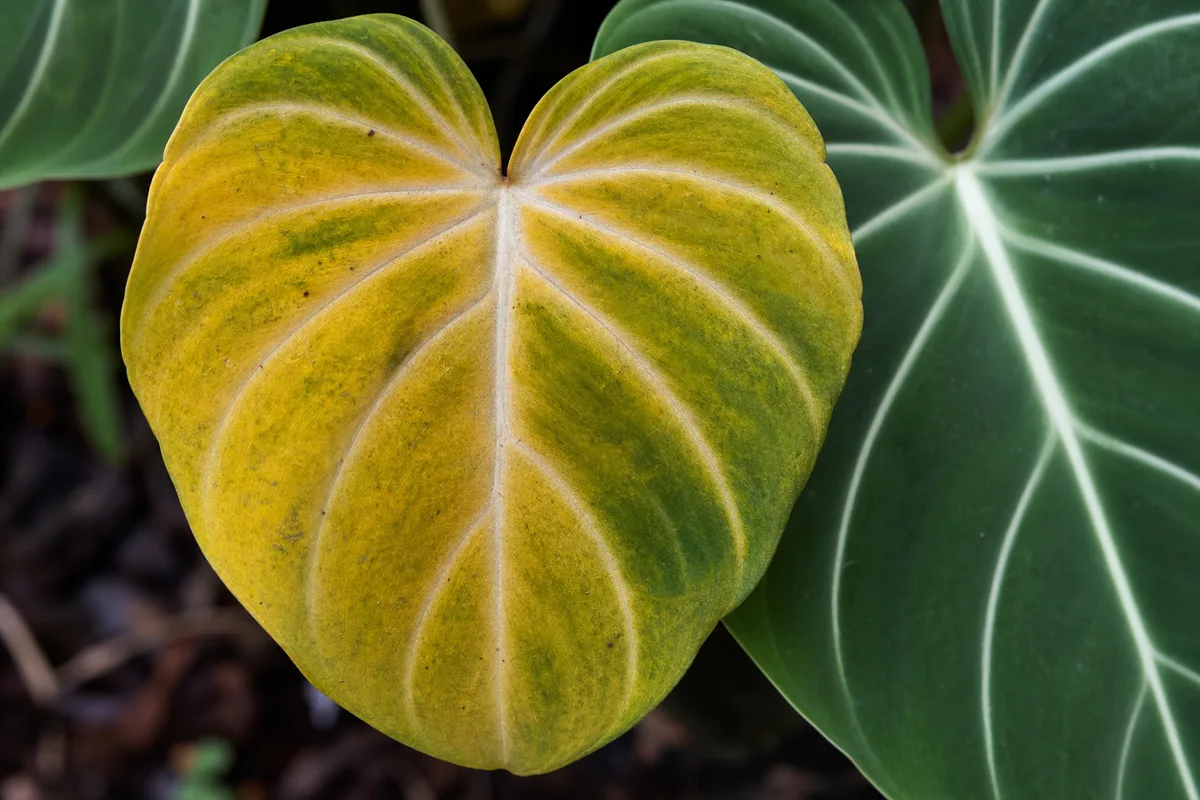
Yellow Leaves symptoms on Philodendron Gloriosum - compare with healthy tissue on the same plant.
- Rot/overwatering: Yellow starts on lower or outer leaves while soil stays damp; petioles may soften; sour smell from pot; fungus gnats at the surface
- Underwatering: Yellow with limp, drooping leaves; pot light; top 3–5 cm bone dry-may overlap with wilting before color fully shifts
- Light stress: Pale yellow-green on newer leaves; elongated petioles; plant far from window
- Normal aging (grower-observed): One oldest leaf yellows uniformly while rhizome tip and newest leaf stay firm and green
- Low humidity: Margin-inward yellow or crisp edge on an otherwise firm plant in a dry heated room
- Pest damage: Yellow with stippling on velvet undersides (mites) without wet-soil smell
Location matters: Margin-inward yellow often tracks dry air; petiole-base-upward yellow often tracks root-zone failure. A single impressive velvet leaf can mask root decline until sudden multi-leaf yellowing-slow growth hides problems until they accelerate.
Documented recovery pattern (field observation)
A common indoor pattern reported by keepers: two-leaf Gloriosum in a wide shallow pot, top mix wet for ten days after calendar watering, lower leaf yellowing from the petiole base while the rhizome tip still felt firm. After same-day unpot, minor soft tissue trimmed, and surface repot with the rhizome above the mix line, new cataphyll activity resumed in roughly six to ten weeks. Older yellow tissue never re-greened. Timelines vary by season and damage depth-use new healthy velvet leaves, not old blade color, as the scorecard.
How to confirm the cause
Use this triage order:
- Pot weight and top 3–5 cm moisture - Heavy and wet suggests overwatering/rot; light and dry suggests drought. Iowa State Extension recommends checking when the top layer is dry rather than watering on a fixed schedule.
- Soil smell - Sour odor strongly supports rot; neutral smell with dry soil supports underwatering.
- Rhizome check - Brush mix from the creeping stem. Firm tissue is reassuring; mushy tissue requires the root-rot protocol.
- Leaf count and age - Single old leaf yellowing alone may be grower-observed aging; multiple leaves or new-growth yellowing is not.
- Light and season - Note recent moves, winter slowdown, and whether you are still watering at summer frequency in dim or cool conditions.
If wet soil and yellow leaves coexist, unpot before assuming the plant needs less light or more fertilizer-damaged roots yellow foliage while mix stays moist.
First fix for Philodendron Gloriosum
Match your first action to moisture status-one branch only on day one:
- If wet with soft rhizome or sour smell: Stop watering. Inspect rhizome and roots the same day per the root-rot guide. Trim mushy tissue and repot dry with rhizome on surface.
- If wet with firm rhizome: Stop watering until top 3–5 cm dries throughout; verify drainage per the overwatering guide.
- If dry: Water thoroughly until runoff, empty the saucer, then resume checking the top 3–5 cm on a regular rhythm per the watering guide.
Do not fertilize yellowing plants until moisture and root health are stable.
Step-by-step recovery
For overwatering/rot path:
- Unpot, rinse rhizome and roots, prune all soft tissue.
- Repot into fresh chunky mix in a wide shallow pot; rhizome on surface per the soil and repotting guides.
- Withhold water one week, then resume when top 3–5 cm is dry.
- Remove fully yellow collapsed leaves after new growth appears.
For underwatering path:
- Soak thoroughly once; ensure drainage holes are clear.
- Increase humidity to 60–70% to reduce moisture loss from stressed leaves.
- Avoid alternating drought and flood-check the top layer consistently per the watering guide.
Watch for a new velvet leaf from the rhizome tip within roughly one to three months as the primary recovery signal-timing varies with light, season, and how much root tissue was lost.
What not to do
- Do not keep watering wet soil because leaves look “thirsty.”
- Do not fertilize to “green up” yellow leaves on stressed roots.
- Do not repot repeatedly without inspecting the rhizome.
- Do not remove the only green leaf unless it is fully collapsed.
- Do not assume all yellowing is normal aging-multi-leaf patterns need root checks.
- Do not treat margin yellowing as rot without checking humidity and vent placement.
How to prevent yellow leaves next time
Water when the top 3–5 cm dries, not on a calendar-philodendrons should not sit in soggy soil or saucers of water. Use bright indirect light, 60–70% humidity, and a wide pot with airy aroid mix. Keep the rhizome above stagnant moisture per the overview crawler section. Reduce watering in winter when growth slows. A weekly pot-weight habit catches drift before leaves yellow en masse.
After a rot scare, owners often underwater into repeat drought yellowing-trust firm roots and the probe, not fear alone.
When to worry
Escalate immediately if yellowing spreads to multiple leaves within two weeks, the rhizome softens, new growth yellows before opening, or soil smells sour with persistent wetness-open the root-rot guide the same day. Single old-leaf yellow on a firm plant with active tip growth is lower urgency. Yellowing with advancing stippling needs the spider-mites workflow. Persistent decline after corrected moisture may warrant photos sent to your local cooperative extension office.
Conclusion and next steps
Yellow leaves on Philodendron Gloriosum are a moisture and root-health signal first. Confirm with pot weight, smell, and rhizome firmness; fix wet cases with drying and possible root-rot rescue, dry cases with thorough rehydration and stable watering checks. If chronic damp mix without mushy tissue is the pattern, read the overwatering guide; if the pot is light and dusty dry, read underwatering. Margin yellowing with firm roots often points to low humidity or vent drafts rather than root failure.
Judge recovery by healthy new velvet leaves from the rhizome tip-not re-greening old yellow tissue. For full crawler biology and seasonal rhythm, see the Gloriosum overview.
Related Philodendron Gloriosum guides
- Gloriosum overview - crawler biology, humidity targets, and full care map
- Watering - top 3–5 cm dry-down protocol
- Overwatering - chronic wet mix before rot
- Root rot - rhizome trim and surface repot rescue
- Underwatering - rot-anxiety drought cycles
- Not enough light - pale new growth and stretched petioles
- Low humidity - margin yellowing in dry heated rooms
- Spider mites - stippling on velvet undersides
- Fungus gnats - wet surface mix alongside yellow base leaves
- Wilting - acute collapse before full yellowing
Related tool
Use the Yellow Leaves Diagnosis Tool to narrow causes for yellow leaves on this plant before changing multiple variables at once.