Watering Philodendron Gloriosum: Schedule, Soil Checks &
Watering Philodendron Gloriosum: Schedule, Soil Checks & Mistakes
Watering Philodendron Gloriosum: Schedule, Soil Checks & Mistakes
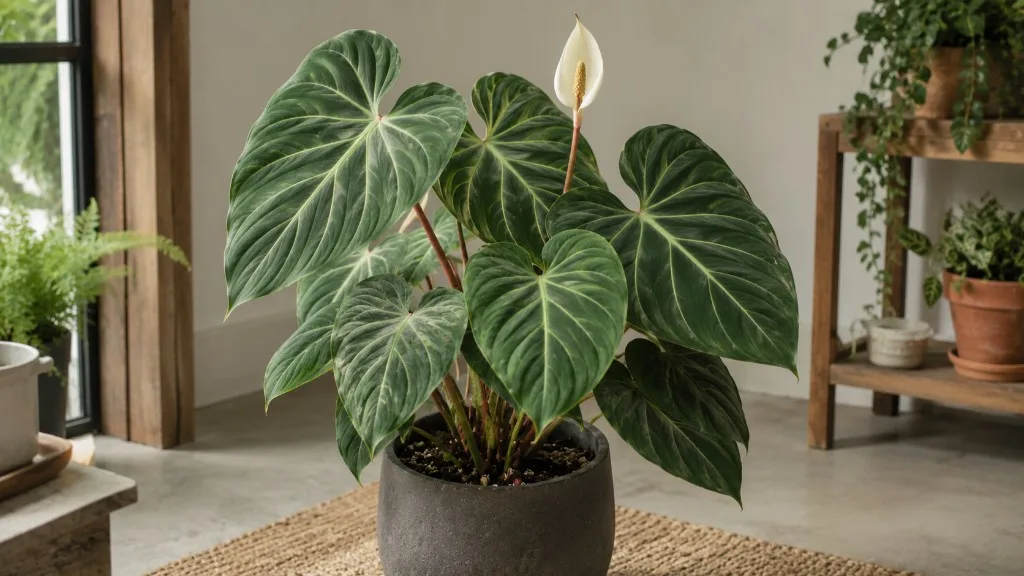
Philodendron gloriosum watering is rhizome work, not vine work. Philodendron gloriosum is a creeping terrestrial aroid native to Colombian rainforest understory whose thick green rhizome advances horizontally across the soil surface. Indoors, that biology means three non-negotiables: check the pot before every drink, let the top 3–5 cm of mix dry between waterings, and keep the newest growth point above stagnant moisture in a wide shallow pot. Treating Gloriosum like a climbing philodendron - deep tall pot, buried stem, calendar watering - is how velvet crawlers develop rhizome rot while the mix still looks merely “damp.”
Overwatering kills more Gloriosums than underwatering. root rot on Philodendron Gloriosum and rhizome rot are the serious failures; a single dry episode is usually recoverable. The payoff for getting moisture right is slow but dramatic: large cordate-ovate velvet leaves with pale veins, unfurling cleanly from a firm rhizome tip. This guide walks through how often to water, a numbered moisture-check workflow, over- and underwatering diagnostics with recovery steps, seasonal adjustment, clean watering technique, and the crawler-specific mistakes that generic philodendron advice misses.
For full species context - humidity, light, toxicity, buying checks - see the Gloriosum overview guide. This page is the procedural watering hub the overview summarizes.
Quick answer: check the pot, not the calendar
Water Philodendron Gloriosum when the top 3–5 cm of mix feels dry, typically every 10–14 days during active summer growth and less often in winter - but only after finger, skewer, or pot-weight checks confirm dryness. Water thoroughly until runoff exits drainage holes, empty the saucer or cachepot, and never let the rhizome growth point sit against permanently wet, compacted mix. If leaves look limp, check moisture first: limp + wet soil points to overwatering or root damage; limp + light dry pot points to thirst.
Why Gloriosum watering is different from other philodendrons
Most philodendron watering articles assume a climbing or self-heading plant whose roots fill vertical pot depth. Gloriosum is a crawler: the stem travels across the mix surface, producing one large velvet leaf at a time from an advancing rhizome. NC State Extension notes philodendrons need well-drained organic-rich mix - but on Gloriosum the critical moisture zone is the upper rhizome layer, not just the root ball center.
Three biology facts change every watering decision:
Horizontal uptake zone shifts over time. As the rhizome advances, the active root-and-tip zone moves forward. Mix behind the tip may compact while the growth front sits in fresher bark - so dryness at the leading edge matters more than surface color at the trailing end.
Rhizome tissue stores moisture. The thick runner buffers short dry spells, which is why Gloriosum can look fine for a few extra days after the top layer dries - but also why chronic small top-ups mask underwatering until fine roots desiccate.
Velvet leaves punish bad technique. Textured blades mark with water spots when routinely splashed during watering. High humidity supports unfurling; stale wet mix at the tip causes stuck cataphylls. Pair watering with the light guide and soil guide - mix chunkiness and pot width determine dry-down speed as much as calendar date.
A wide shallow pot dries differently from a tall narrow one. RHS philodendron guidance applies broadly to the genus, but crawler geometry demands width over depth so the rhizome can advance without the tip sinking into an unnecessary volume of wet substrate.
How often to water Philodendron Gloriosum
There is no honest universal schedule. A rigid “every Tuesday” fails because pot width, mix chunkiness, light intensity, humidity, and season all change evaporation. What works as a starting framework - not a rule:
| Season / conditions | Typical check interval | Water when |
|---|---|---|
| Active growth, bright warm room | Every 7–14 days | Top 3–5 cm dry; pot noticeably lighter |
| Active growth, moderate light | Every 10–18 days | Same dry-down test |
| Winter, cool dim room | Every 14–21+ days | Top 3–5 cm dry; growth slow or paused |
| Recently repotted wide pot | Add 3–7 days to prior rhythm | Extra mix holds moisture until roots explore |
| Cabinet 60–70% humidity | Often toward longer end of range | High humidity slows transpiration |
Iowa State Extension recommends waiting until the top layer dries rather than adding small frequent top-ups - advice that suits aroids especially well. Illinois Extension houseplant watering guidance emphasizes checking top layer moisture and pot weight before every irrigation. Apply both to Gloriosum, then adjust for your container.
Worked example: An 8–10 inch (20–25 cm) wide shallow pot in a 65% humidity cabinet under bright indirect light might need a full soak every 9–11 days in July when the top 3–5 cm dries consistently. The same plant in a cool north-facing room in January might stretch to 16–20 days between drinks even though the pot size is unchanged. Track two full dry-down cycles in your home before trusting any blog’s fixed interval.
After repotting, expect slower dry-down until roots fill new mix - a common post-repot watering trap. If you jumped to a much wider pot without adding roots, the extra substrate holds water longer; wait rather than topping up when the pot still feels heavy.
The moisture check workflow (finger, skewer, pot weight)
Surface color lies. Chunky aroid mix can look pale on top while staying damp around the rhizome. Use at least one of these checks every time - ideally two until you learn your pot’s rhythm.
| Check result | Mix at 3–5 cm | Pot weight | Action |
|---|---|---|---|
| Dry | Dry or barely cool | Light for its size | Water thoroughly; drain saucer |
| Borderline | Slightly cool, not clingy | Medium | Wait 1–2 days; recheck tip moisture |
| Wet | Cool, damp, soil sticks | Heavy days after last water | Do not water; inspect rhizome tip |
Finger and knuckle depth test
Insert your finger or knuckle 3–5 cm (1–2 inches) into the mix at the root zone near the rhizome - not only at the pot rim. Dry or approaching dry at that depth means water. Cool, clingy, or damp means wait. This matches Illinois Extension’s top-layer check scaled to Gloriosum’s shallow active zone.
Skewer and chopstick probe test
Push a dry bamboo skewer or chopstick toward the pot bottom near the rhizome. Pull it out. Darkening or mix sticking means moisture remains. Clean dry wood means the root zone has dried enough for the next soak. Skewers help wide shallow pots where finger depth is awkward at the growth front.
Pot-weight dry versus wet comparison
Lift the pot after a full soak when you know mix is wet - note the heft. Lift again when the top 3–5 cm is dry. A clearly lighter pot confirms dry-down even when surface bark looks unchanged. Wide crawler pots feel subtly different; practice builds calibration within two cycles.
Moisture meters: cheap probes read inconsistently in chunky bark-heavy mix. Use them as a secondary hint only; trust finger and weight for the final call. When in doubt on a velvet crawler, lean slightly dry - a thirsty Gloriosum recovers fast; a rotting rhizome often does not.
Signs you are watering too much (and what to do)
Overwatering is among the most common causes of houseplant failure. On Gloriosum, chronic wet mix deprives roots of oxygen, invites fungus gnats, and softens rhizome tissue at the growth point.
Watch for combined signals:
- Top mix stays dark and cool many days after watering
- Pot feels heavy; saucer holds water repeatedly
- Yellowing velvet leaves without dry soil
- New leaf stalls before unfurling; cataphyll stays tight
- Fungus gnats at the soil surface
- Sour smell from the drainage hole
- Soft rhizome when you brush mix away from the tip
Critical diagnostic: limp leaves with wet soil are not a call for more water - damaged roots cannot take up moisture. That pattern points to overwatering or incipient root rot. Limp leaves with a light, dry pot point to underwatering instead.
Overwatering clusters with low light + chunky mix that never dries, no drainage holes, decorative cachepots holding runoff, and winter watering at summer frequency. See the dedicated overwatering problem guide for full diagnostic depth.
Rhizome-rot recovery when overwatering is confirmed
Mild case - firm rhizome, neutral smell, no mush: stop watering until top 3–5 cm is dry throughout (often 7–14 days in winter). Improve airflow around the wide pot. Resume soak-and-drain only when dryness checks pass.
Moderate case - sour smell, soft tip, yellowing despite wet mix: unpot the same day. Trim mushy roots and rhizome with sterile shears. Let cut surfaces air-dry briefly. Repot into fresh chunky mix with the growth tip on or above grade per the soil guide. Withhold water 7–10 days, then give one careful soak and drain.
Severe case - collapsed petioles, widespread mush, multiple yellow leaves: salvage firm rhizome sections if any exist for propagation; discard fully rotted tissue. Recovery is judged by firm new growth, not old leaves re-greening.
Always empty saucer water after every future irrigation. Never return to calendar watering - track dry-down cycles instead.
Signs you waited too long (and how to rehydrate)
Underwatering shows as wilting, inward-curling new leaves, dry compacted mix, and a light pot. Fine roots desiccate first; velvet blades lose turgor before older leaves yellow. A single dry episode is usually recoverable with one thorough soak.
Rehydration protocol:
- Confirm mix is dry throughout the top half - not merely surface-dusty.
- Water slowly and evenly until runoff exits drainage holes.
- Empty the saucer; do not let the pot sit in runoff.
- Wait for normal dry-down before the next drink - resist daily sips that keep only the surface damp.
Repeated drought damages fine roots and can create hydrophobic dry pockets where water runs down pot sides without wetting the core.
Hydrophobic dry-pocket recovery
If water channels around the root ball while the center stays dry, bottom-water once: place the pot in a basin of room-temperature water halfway up the container for 20–30 minutes, let it drain fully, then return to top-watering next cycle. If compaction persists, plan mix refresh per dry hydrophobic soil recovery and the repotting guide.
Seasonal watering changes (summer vs winter)
Gloriosum grows actively in warm, bright months and slows when light and temperature drop. The same pot that dried in four days in July may take eighteen in January.
Summer (roughly April–September): More frequent checks; typical range every 9–14 days when top 3–5 cm dries. Stronger light and warmth increase transpiration. Resume this rhythm when new leaves emerge steadily.
Winter (roughly October–March): Stretch intervals; typical range every 14–21+ days. Growth slows; rhizome moisture storage buffers longer gaps. Cool rooms below 18°C (65°F) slow water use further - UMN Extension notes seasonal houseplant water needs shift with light and temperature.
Do not fertilize dry mix or stack repotting, pruning, and watering changes in one week during winter. If yellow leaves appear in a dim cool room, verify you have not kept summer watering frequency on a winter metabolism.
How to water cleanly (soak-drain, saucer emptying, velvet leaves)
The standard best practice for container aroids: one thorough irrigation, complete drainage, appropriate dry-down - not permanently damp soil.
Step-by-step:
- Use room-temperature water when possible; cold water shocks tropical roots.
- Apply slowly across the mix surface until water runs freely from drainage holes - confirms the root ball wetted throughout.
- Empty any saucer or cachepot within 30 minutes. Standing runoff is one of the fastest routes to rhizome rot in wide shallow pots.
- Avoid routinely wetting velvet leaves during watering. Surface moisture invites water spots and fungal marking on textured blades. Water the mix, not the foliage. A humidifier handles humidity better than misting.
- Do not water by calendar reminder alone - run dryness checks even if the app says “water today.”
Partial top-ups every few days keep the upper layer damp without flushing salts or reaching deep roots - a pattern that fails Gloriosum in wide pots where the rhizome lives near the surface.
Rhizome placement and wide-pot watering notes
The growth tip and emerging cataphyll must stay on or just above the mix line, not buried in wet substrate. That is how unfurling stalls and soft rhizome rot starts. As the rhizome advances, the tip can sink below grade after repeated watering - top-dress with coarse bark or perlite, or repot wider per the soil guide.
Wide shallow geometry changes dry-down:
- More surface area evaporates faster at the rim - but less vertical depth means less total water reservoir.
- Water tends to distribute across a broad horizontal layer rather than a deep column - check moisture at the growth front, not only the trailing end.
- Recently advanced rhizome sections may have fewer roots - they rely on tip-adjacent moisture until anchors form.
If the rhizome runs out of horizontal space at the pot lip, plan repotting before the tip curls back into wet mix. Crawler repot timing lives on the repotting guide.
Common Philodendron Gloriosum watering mistakes
| Mistake | Why it fails on Gloriosum | Fix |
|---|---|---|
| Calendar watering every 7 days | Ignores season, light, pot width | Check top 3–5 cm + pot weight instead |
| Burying the rhizome in wet mix | Tip rots in stagnant moisture | Keep growth point above grade |
| Small daily sips | Surface damp, core uneven | One soak when dry, then wait |
| Leaving saucer water | Wide pot wicks stale moisture upward | Empty after every water |
| Misting leaves for “humidity” | Spots velvet; does not replace dry-down logic | Humidifier + proper soak cycle |
| Watering winter at summer rate | Cool dim rooms hold moisture longer | Stretch interval; confirm dryness |
| Deep tall decorative pot | Excess wet substrate below rhizome | Wide shallow pot with drainage |
| Trusting moisture meter alone | Chunky mix reads falsely | Finger + weight confirm |
Gloriosum vs climbing philodendrons: watering differences
| Factor | Gloriosum (crawler) | Climbing philodendron (e.g. Brasil, micans) |
|---|---|---|
| Growth axis | Horizontal rhizome across surface | Vertical stem up pole or hang |
| Pot shape | Wide shallow | Deep or hanging acceptable |
| Critical moisture zone | Rhizome tip and upper layer | Root ball throughout depth |
| Stem in mix | Tip must stay above grade | Nodes may root along buried stem |
| Typical dry-down signal | Top 3–5 cm at growth front | Top 3–5 cm at pot center |
| Overwatering failure | Rhizome tip rot, stuck unfurling | Root rot, yellow lower leaves |
| Recovery priority | Expose tip; reduce frequency | Improve drainage; check root ball |
Same Araceae family - different geometry. Swapping climber watering habits onto a velvet crawler is the classic setup error.
When to use this page vs other Philodendron Gloriosum guides
- Philodendron Gloriosum overview - Start here for whole-plant context before deep-diving this topic.
- Philodendron Gloriosum problems hub - Jump to symptom-specific fix guides when this care topic does not resolve the issue.
- Root Rot on Philodendron Gloriosum - Escalate here when watering adjustments are not enough.
Related Philodendron Gloriosum guides
- Philodendron Gloriosum overview
- Philodendron Gloriosum light
- Philodendron Gloriosum soil
- Philodendron Gloriosum propagation
- Philodendron Gloriosum fertilizer
- Philodendron Gloriosum repotting
- Root Rot on Philodendron Gloriosum
- Philodendron Gloriosum problems
Conclusion
Philodendron gloriosum watering succeeds when you treat moisture as a check-first system, not a calendar habit: let the top 3–5 cm dry, confirm with finger, skewer, or pot weight, then soak and drain while keeping the rhizome tip above wet mix in a wide shallow pot. Summer active growth shortens intervals; winter and dim rooms lengthen them. Overwatering shows as limp leaves on wet soil - pause, inspect the rhizome, and recover before feeding or repotting on impulse.
Track two dry-down cycles in your actual container, pair this rhythm with airy mix from the soil guide, and link out to problem pages when signs persist. Get those mechanics right and Gloriosum rewards you with the large velvet hearts that justify the extra pot width on your shelf.