Fertilizer Burn on Philodendron Gloriosum: Causes, Checks &
Quick answer
Fertilizer burn on Philodendron Gloriosum shows as crispy brown tips and margins on velvet heart-shaped leaves-often after heavy feeding or months of salt buildup in a wide shallow pot. First step: stop all fertilizer and flush the pot with plain water until it drains freely.
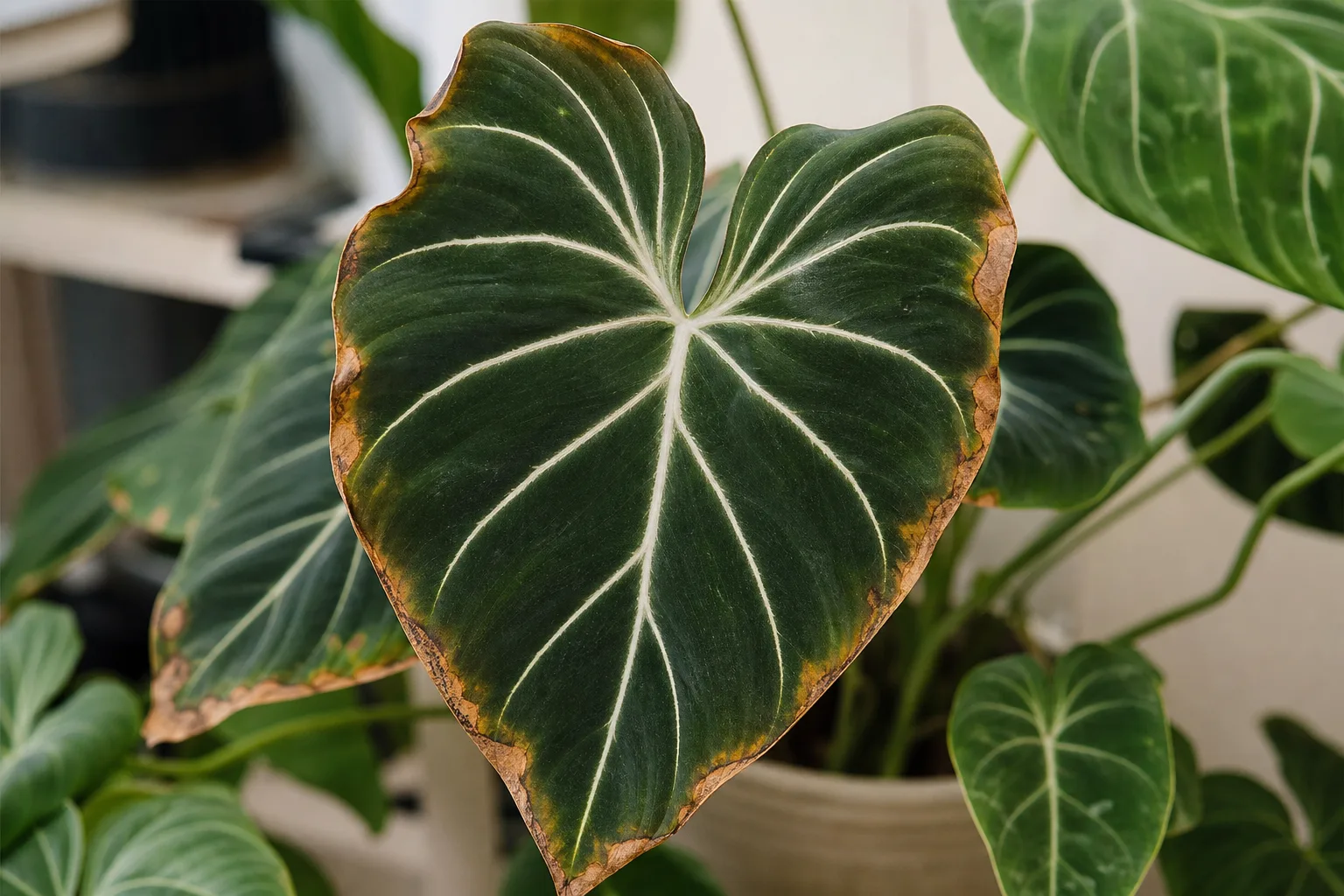
Fertilizer Burn on Philodendron Gloriosum: Causes, Checks & Fixes
This guide covers fertilizer burn on Philodendron Gloriosum. See also the general Fertilizer Burn guide, watering, and light pages for this plant.
Fertilizer Burn on Philodendron Gloriosum: Causes, Checks & Fixes
Quick answer
Fertilizer burn on Philodendron Gloriosum shows up as dry, crispy brown tips and margins on large velvet heart-shaped leaves-often within days of feeding or after salts have built up over months in a wide shallow pot. Gloriosum is a creeping terrestrial philodendron with a slow rhizome-driven growth habit that needs far less fertilizer than fast climbers like Brasil. Excess soluble salts pull moisture from leaf edges and root tips before the plant can use the nutrients.
First step: stop all fertilizer and flush the pot with plain water. Run room-temperature water through until it drains freely from the bottom, empty the saucer, and repeat once more within a few days. Do not repot, prune heavily, or add supplements until you confirm the rhizome is firm and new growth looks healthy.
What fertilizer burn looks like on Gloriosum
Healthy Gloriosum leaves are thick, velvety, and deep green with prominent pale veins. Burn damage has recognizable patterns on this crawler:
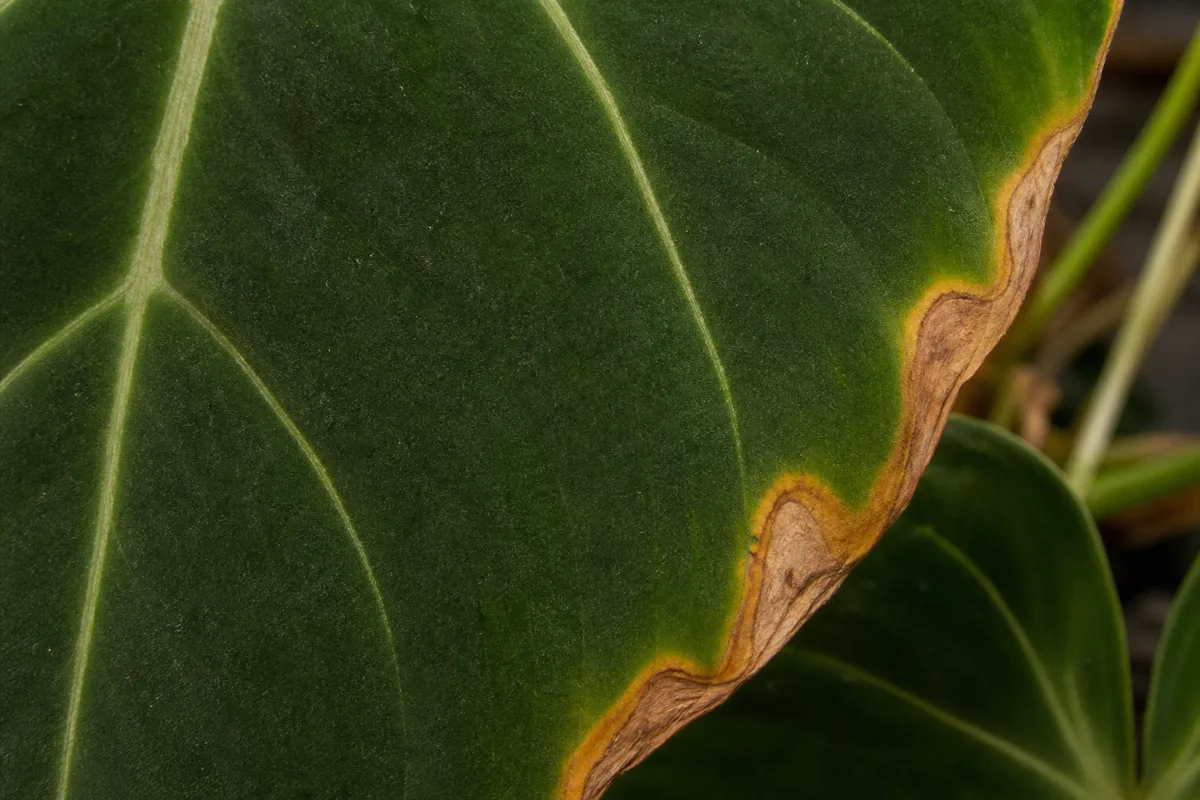
Fertilizer Burn symptoms on Philodendron Gloriosum - compare with healthy tissue on the same plant.
- Crisp brown tips or margins on Philodendron Gloriosum on one or more velvet leaves, often starting at the heart-shaped point
- Damage along pale vein edges where thinner tissue dries faster than the central blade
- White or tan crust on the mix surface, inside the pot rim, or on clay pots-common in wide shallow containers where evaporation concentrates salts at the top
- Timing tied to feeding - symptoms appear or worsen within one to two weeks of liquid feed, slow-release granules, or fertilizer spikes
- Firm rhizome - unlike rot, burned Gloriosum usually keeps its creeping stem firm above the mix without mush at the growth point
- Wilting despite damp soil in severe cases, when salts have damaged root and rhizome tips
The University of Maryland Extension notes that fertilizer toxicity typically causes browning or dieback of leaf tips and margins, along with reduced growth, lower leaf drop, and wilting. On Gloriosum, velvet texture makes tip scorch look dramatic even when the green center is still intact.
Older leaves often show edges first while the newest velvet leaf still looks clean-until salts keep accumulating. Once feeding stops and salts flush out, the next leaf unfurling from the rhizome tip should open with clean margins. That new leaf is your best recovery signal on this slow producer.
Why Philodendron Gloriosum gets fertilizer burn
Gloriosum is not a heavy feeder. It pushes one large heart-shaped leaf at a time from a horizontal rhizome-not weekly like a trailing vine. That biology makes it easy to overshoot what roots can absorb:
Slow growth means low nutrient demand. New foliage can take a month or more to fully unfurl. Monthly or full-strength feeding schedules written for fast philodendrons dump salts into mix faster than Gloriosum uses them, especially in dim rooms where photosynthesis and uptake stay low.
Wide shallow pots concentrate salts at the surface. The rhizome crawls across a broad, low container. When watering every 10–14 days, less frequent leaching lets fertilizer salts accumulate on the top layer where evaporation is highest. Penn State Extension explains that soluble salts damage roots by slowing water uptake and that salts build when fertilizer is applied repeatedly with little leaching.
Winter feeding on a resting plant. Growth slows in cool months with shorter days. Feeding when Gloriosum is not actively producing leaves adds salts without uptake-the classic setup for tip scorch on the next spring flush.
Wrong dose or product type. Full-strength liquid feed, slow-release spikes, or granules scattered on dry soil deliver a salt shock. Combining slow-release fertilizer in the mix with monthly liquid feed doubles the risk-Penn State advises not using slow-release fertilizer in combination with soluble fertilizer.
Tap water plus fertilizer compounds the problem. Hard or fluoridated water leaves minerals at leaf margins over time. Iowa State Extension lists excess fertilizer salts among common causes of brown leaf tips. Heavy feeding plus mineral-rich water pushes Gloriosum’s delicate velvet margins past cosmetic brown into widespread crisp edges.
Bottom watering without flushing. Salt crust on the mix surface is common when wide pots are watered from below and never leached. Maryland Extension notes that fertilizer salts may accumulate on the potting media surface as a white crust, especially with bottom watering.
How to confirm fertilizer burn
Work through these checks before Philodendron Gloriosum repotting guide or cutting leaves:
- Feeding history - When did you last fertilize? What product, concentration, and method? Recent feed plus tip burn strongly favors salts over disease.
- Soil surface - Scrape lightly with a finger. White, gritty crust confirms salt accumulation. No crust does not rule burn out, but crust plus recent feed is diagnostic.
- Rhizome and root firmness - Slide the plant partway out or feel through the drainage hole. Firm white or tan roots and a solid rhizome support a salt-burn diagnosis. Mushy brown rhizome tissue with sour smell means rot-a different emergency.
- Soil moisture and smell - Dry or moderately dry mix with neutral odor fits burn. Wet, heavy mix that smells sour suggests overwatering with or without fertilizer stress.
- Symptom pattern - Even tip browning on multiple velvet leaves after feeding points to salts. Yellow lower leaves with limp petioles and wet soil point to overwatering. Wrinkled leaves on bone-dry soil suggest underwatering.
- Light reality check - Direct sun scorches one side of the blade facing the window. Fertilizer burn usually affects tips across several leaves after a feed event.
If you fed at full strength last week and white crust covers the mix, you likely have your answer without repotting.
First fix for Gloriosum
Stop all fertilizer immediately and flush the pot with plain water.
Move Gloriosum to a sink or tub. Run room-temperature water slowly through the chunky aroid mix for several minutes until it pours freely from drainage holes. Empty the saucer completely. Maryland Extension recommends leaching large pots by irrigating with clear water and repeating several irrigations with a volume at least equal to the pot size.
Repeat the flush once more within two to three days. Penn State Extension advises leaching excess fertilizer by applying tap water so it pours out the bottom, then repeating two to three hours later or the next day. Oregon State Extension suggests leaching every four to six months by watering thoroughly twice in succession-the first pass dissolves salts, the second washes them out.
Do not repot, prune heavily, or add Epsom salt on day one unless the rhizome is mushy or crust is so thick that water will not penetrate. Fixing salt overload first tells you whether tips were purely fertilizer stress.
Step-by-step recovery
After the initial flush, choose a path based on severity:
Mild case: tip burn only, firm rhizome, no crust
- Hold all fertilizer for four to six weeks.
- Resume watering when the top 3–5 cm is dry-do not overcompensate with extra water.
- Trim fully dead tip tissue with clean scissors if appearance bothers you; leave a sliver of brown edge to protect living cells.
- Watch for the next velvet leaf to unfurl with clean margins.
Moderate case: white crust, multiple scorched leaves, firm rhizome
- Scrape the top 1–2 cm of crusty soil from the surface if it is mostly mineral deposit, not living roots or rhizome nodes.
- Flush two to three times over 48 hours as described above.
- Keep Gloriosum in Philodendron Gloriosum light guide with 60–70% humidity so it can resume steady growth without scorching velvet tissue.
- Hold fertilizer until at least one new leaf opens clean for two weeks.
Severe case: wilting with damp soil, dark root tips, or rhizome softening
- Unpot and inspect the rhizome and roots. Trim dark, limp root tips back to firm white tissue with clean scissors.
- If salts permeated the entire mix or slow-release granules were mixed into soil incorrectly, repot into fresh chunky aroid mix-potting mix plus perlite and orchid bark-with no fertilizer added to the new mix. Keep the wide shallow pot shape so the rhizome can continue crawling.
- Water lightly once to settle, then let the top 3–5 cm dry before the next drink.
- Accept that Gloriosum may drop older leaves before pushing new velvet growth; slow recovery over a full growing season is normal.
Wear gloves when handling cut tissue-philodendron sap can irritate skin, and all parts contain calcium oxalate crystals toxic to pets if ingested.
Recovery timeline
Environmental and fertilizer tip burn on Gloriosum resolves gradually-you judge success by new growth, not old leaves.
- Week 1–2: No spread to newly unfurling leaves once feeding stops and flushing is complete; existing brown tips stay brown.
- Week 3–4: The next heart-shaped leaf should show cleaner margins if salts were the main trigger.
- Week 4–8: Multiple flush cycles may be needed before every new leaf emerges without crispy edges.
- Month 2+: If every new leaf still emerges with burned margins despite flushing, filtered water, and half-strength spring feeding only, inspect the rhizome for hidden rot or reassess whether direct sun is scorching velvet tissue.
Gloriosum’s slow growth rate means patience-not a sign the rescue failed.
Lookalike symptoms
Low humidity - Dry papery tips without recent feeding, often worse in winter near heating vents despite good watering. Gloriosum needs 60–70% humidity; fix air moisture before assuming fertilizer.
Sun scorch - Brown or bleached patches concentrated on one side after a move toward harsh afternoon glass. One-sided damage facing the window fits light, not salts.
Overwatering - Yellow lower leaves, limp velvet foliage, sour wet mix, and fungus gnats. Soil stays saturated; burn usually follows a feed event on moderately dry mix.
Underwatering - Light pot, dry mix several centimeters down, sometimes curled leaves before tips crisp. A thorough soak perks foliage within hours if roots are healthy.
Natural senescence - One older leaf yellows at the base while soil dries normally and new velvet leaves look good. No flush needed.
Mistakes to avoid
- Feeding on a calendar without checking whether Gloriosum is actively unfurling new leaves
- Using full-strength outdoor fertilizer doses on a slow indoor crawler
- Adding fertilizer to dry soil - always water first, then feed diluted product
- Combining slow-release granules with monthly liquid feed
- Feeding in winter when growth has stalled in a cool, dim room
- Misting velvet leaves instead of flushing salts from the root zone
- Repotting into a much deeper pot immediately after burn-excess mix holds salts and moisture longer around the rhizome
- Trimming every leaf at once for cosmetics before the plant stabilizes
Gloriosum care cross-check
Fertilizer burn recovery sticks only when the rest of the setup matches Gloriosum’s needs:
- Light: Bright indirect light most of the day. Too dark slows uptake and extends salt residence time in soil.
- Feed rhythm: Half-strength balanced liquid fertilizer every four to six weeks during active spring and summer growth only.
- Water: When the top 3–5 cm is dry; each thorough watering should leach some salts if drainage is good.
- Soil and pot: Chunky aroid mix in a wide shallow container-not a deep decorative planter that buries the rhizome.
- Humidity: 60–70% supports healthy velvet margins but does not replace proper feeding and flushing.
How to prevent fertilizer burn next time
Feed lightly during active growth, not in winter dormancy. Dilute liquid fertilizer to half the label rate-or less-for Gloriosum’s slow habit. Always apply to moist soil, never to a dust-dry pot.
Flush the mix with plain water once in spring if you feed regularly during the growing season. Nebraska Extension recommends periodic leaching every four to six months using twice the pot’s water volume to flush excess salt.
Repot every two to three years into fresh mix so depleted soil does not tempt you to overfeed to compensate for lost nutrients.
Match feeding to light and growth. A Gloriosum pushing one new leaf every month in a bright window needs less fertilizer than marketing labels suggest for generic houseplants.
Scout the soil surface monthly for white crust. Early crust means leach now-not more feed.
When to worry
Treat fertilizer burn as urgent when:
- Leaves wilt while soil is damp shortly after a heavy feed
- The rhizome growth point softens at the soil line despite stopping fertilizer
- Root and rhizome tips are dark, limp, and widespread on inspection
- Yellowing spreads to multiple leaves within a week after flushing
- White crust is so thick that water runs off the surface without penetrating
The plant may not be saveable if the entire rhizome is mushy and no firm tissue remains to propagate. Take a healthy rhizome section with a node and leaf before discarding if any firm section still exists.
Conclusion
Philodendron Gloriosum rewards owners who treat fertilizer as a light supplement-not a growth shortcut. Its velvet heart-shaped leaves look dramatic, but the real damage from overfeeding happens in the root zone and at leaf margins where salts concentrate in a wide shallow pot. Catch burn early by feeding half strength only during active growth, flushing salts before crust forms, and stopping feed the moment tips crisp after a dose. Firm rhizome, clean new velvet leaves, and predictable Philodendron Gloriosum watering guide are the signs your Gloriosum is back on track.
When to use this page vs other Philodendron Gloriosum guides
- Philodendron Gloriosum watering guide - Use for routine moisture checks before assuming fertilizer burn is the main issue.
- Philodendron Gloriosum problems hub - Browse all 22 common issues on this species.
- Brown Tips on Philodendron Gloriosum - Different entry point when symptoms overlap with fertilizer burn.