Holes in Leaves on Philodendron Brasil: Causes, Checks &
Quick answer
Philodendron Brasil does not develop natural fenestrations; holes in its heart-shaped lime-and-green leaves mean damage. First step: note whether holes are ragged and new each week (chewing pests), follow serpentine trails inside the leaf (leaf miners), or sit on one older leaf only (mechanical or pet contact).
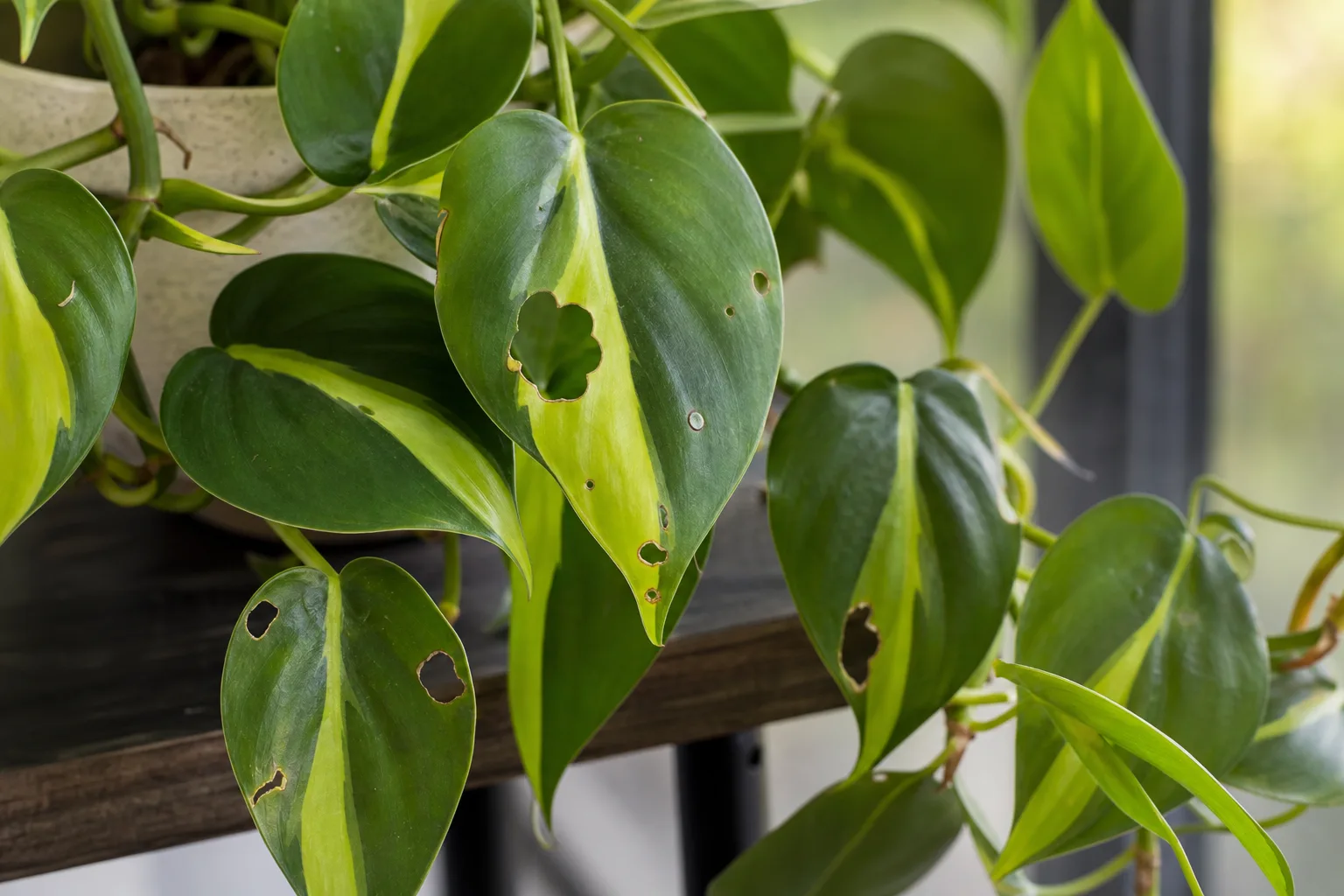
Holes in Leaves on Philodendron Brasil: Causes, Checks & Fixes
This guide covers holes in leaves on Philodendron Brasil. See also the general Holes in Leaves guide, watering, and light pages for this plant.
Holes in Leaves on Philodendron Brasil: Causes, Checks & Fixes
Quick answer
Philodendron Brasil (Philodendron hederaceum ‘Brasil’) produces glossy heart-shaped leaves with lime-green streaks-not the natural splits some aroids develop as they mature. Any hole in Brasil foliage is damage, not fenestration. The most common indoor causes are caterpillars (especially after time outdoors), leaf miners, mechanical tears from trailing vines catching on hangers or shelves, and pet chewing on low-hanging stems.
First step: photograph affected leaves, then inspect every heart leaf underside under bright light. Note whether holes have ragged chewed edges with black frass pellets below, serpentine pale trails inside the leaf blade, or a single clean tear on one vine that has not changed in weeks. That pattern tells you whether to hunt live insects, remove mined leaves, or simply reposition the plant-before reaching for spray.
What holes in leaves look like on Philodendron Brasil
Brasil leaves are alternate, cordate, and glossy with entire margins-roughly 3–6 inches long on mature trailing vines. Normal variegation shifts from leaf to leaf; it does not create open windows in the blade. When holes appear, they usually fall into one of these patterns:
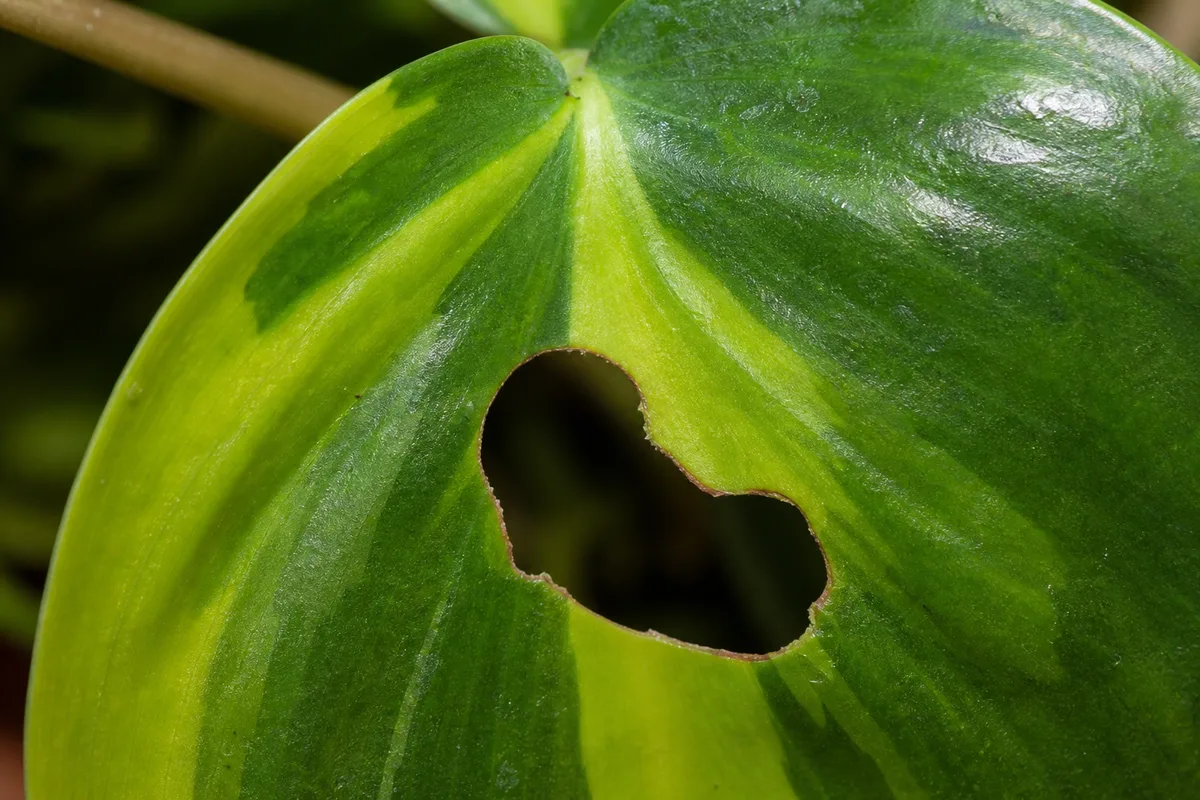
Holes in Leaves symptoms on Philodendron Brasil - compare with healthy tissue on the same plant.
- Ragged margin notches or large irregular holes - often starting at the leaf edge and working inward, with black fecal pellets (frass) on leaves or the pot rim below
- Serpentine or blotchy pale trails inside the leaf - tissue looks thin or translucent along a winding path, sometimes ending in a small exit hole
- Single clean tears or punctures - concentrated on one or two leaves on the outermost trailing vine, with no new damage after you move the pot
- Clustered small holes on soft new growth - sometimes on unfurling heart leaves at vine tips, often alongside visible larvae or slime trails if the plant was recently outdoors
- Tooth-mark notches on lower stems or leaf edges - paired with sap residue when pets have reached trailing vines
Damage on Brasil often shows first on the softest tissue: unfurling heart leaves at growing tips and outer vines that hang free of the main cluster. Older inner leaves may stay untouched while new holes keep appearing on the longest trailers- a sign of an active chewer rather than a one-time bump.
Why Philodendron Brasil gets holes in leaves
Brasil does not fenestrate. Unlike Monstera or some climbing philodendrons, heartleaf cultivars keep solid cordate blades. Search results about “philodendron holes” often mix up fenestrated species with pest damage. On Brasil, treat every hole as something to diagnose.
Outdoor summer brings caterpillars indoors. Moths and butterflies lay eggs on undersides of leaves on plants that sat on patios or balconies. When you bring Brasil inside, tiny larvae can hatch and feed on tender new heart leaves for days before you notice ragged holes. Frass pellets on foliage or the shelf below are a reliable caterpillar clue.
Leaf miners target thin heart leaves. Leafminer larvae feed between upper and lower leaf surfaces, leaving winding discolored trails. On Brasil’s relatively thin variegated blades, trails show clearly against lime-green tissue. Damage is usually cosmetic but spreads if mined leaves are left in place.
Trailing growth gets mechanical damage. Cascading vines on hangers swing against walls, window frames, and neighboring pots. A heart leaf caught on a hook can tear cleanly; once the loose tissue dries, it looks like a neat hole. Damage stays on the same leaf after you adjust placement.
Pet contact matters on low trails. Philodendron Brasil is toxic to cats and dogs-chewing stems or leaf edges for curiosity can leave torn margins and sap marks on lower vines within pet reach. This is not a pest problem, but the holes are real and the plant should move higher immediately.
Less common: slugs, snails, and fungal spot collapse. Slugs and snails chew at night and leave slime trails-usually only after outdoor exposure or greenhouse conditions. Fungal leaf spots on philodendrons typically brown and dry before tissue falls out; the initial discoloration usually precedes the hole, unlike clean insect feeding.
How to confirm the cause
Work through these checks in order:
- Timeline - Are new holes appearing weekly on different leaves? Active pest or chewer. One old hole unchanged for a month? Likely mechanical or past event.
- Frass search - Hold trailing vines over white paper and tap lightly. Black pellets that roll off point to caterpillars.
- Trail inspection - Backlight heart leaves or hold them up to a window. Winding pale tunnels inside the blade confirm leaf miners-not surface chewing.
- Night patrol - After dark, inspect vine tips and undersides with a flashlight. Caterpillars and slugs feed openly when lights are low.
- Slime check - Silvery dried trails on pot rims or leaves suggest slugs or snails, especially if the plant was recently outdoors.
- Placement audit - Trace which vine touches walls, hooks, or shelves. If only abraded leaves sit in the traffic path, reposition before treating for pests.
- Pet zone review - Tooth marks, stripped midribs on lower leaves, and sap on stems near the floor point to chewing pets, not insects.
- Pest rule-out - Spider mites cause stippling and webbing, not punched holes. Thrips leave silvery scrape marks. Aphids cluster on soft tips but rarely chew large holes. Scale and mealybugs do not create ragged leaf tissue.
Lookalike symptoms to rule out
Sunburn scorches lime streaks to crisp brown patches without punched holes. overwatering on Philodendron Brasil yellows lower leaves and softens stems without frass or internal trails. Normal old-leaf drop may leave a clean break at the petiole-not random holes mid-blade. Reverting plain-green leaves from low light have no tissue loss-just faded variegation.
First fix for Philodendron Brasil
Document the pattern, then inspect all leaf undersides under bright light before applying any treatment.
If holes are ragged with frass and you find a caterpillar: isolate the plant away from other houseplants, hand-pick larvae and visible eggs from undersides, and destroy heavily stripped leaves once you have removed the insects. Check adjacent pots-caterpillars move slowly but moths may have laid eggs on multiple plants brought in together.
If you see serpentine trails inside leaves: pinch off and discard affected heart leaves into a sealed bag. Do not compost mined tissue indoors. Leafminer damage is usually isolated to a few blades; removing them stops the current generation on that vine.
If damage is a single tear on one trailing leaf with no frass, trails, or new holes: reposition the hanger or shelf so vines clear walls and traffic zones. No spray needed.
If pet tooth marks are present: move Brasil out of reach immediately. Wear gloves when trimming damaged vines-the sap contains calcium oxalate crystals that irritate skin and mouths.
Do not spray insecticide on the whole plant until you know which pattern you have. Do not repot, fertilize, or prune heavily on the same day you start pest removal.
Step-by-step recovery
Once the cause is confirmed:
- Isolate - Move Brasil away from other philodendrons until you see no new holes for two weeks after treatment.
- Remove infested tissue - Cut mined or heavily chewed leaves at the base of the petiole with clean shears. Leave lightly holed mature leaves if the plant is stable.
- Hand-pick caterpillars - Check vine tips at night for one week. Drop larvae into soapy water rather than onto nearby pots.
- Shower if needed - For small caterpillars or slug slime on accessible vines, rinse leaf undersides in a sink with lukewarm water. Tilt the pot so mix drains freely-Brasil hates soggy roots.
- Treat only if feeding continues - If hand-picking fails after several nights, apply insecticidal soap or neem oil labeled for ornamentals on a test leaf first; wait 48 hours before full application. Cover undersides thoroughly and repeat at label intervals.
- Adjust placement - Rehang trailing vines with clearance from walls, windows, and pet zones.
- Monitor new growth - Judge success by clean unfurling heart leaves on vine tips, not by old holed blades greening up.
Recovery timeline
Mechanical tears and single past events need no recovery time-only repositioning. Caterpillar damage on an actively growing Brasil often stops spreading within one week of hand-picking, with clean new lime-streaked leaves visible on trailing vines within two to three weeks. Leaf-miner removal shows results immediately on remaining foliage; new trails should not appear on freshly unfurled leaves.
Holed heart leaves do not regenerate tissue. Variegation on damaged blades stays as-is until the leaf is eventually shed naturally. Firm stems, normal Philodendron Brasil watering guide (top 3–5 cm dry between drinks), and unstippled new growth mean the root system is fine even when foliage looks rough.
What not to do
- Do not assume holes are “natural philodendron splits”-Brasil is not a fenestrating cultivar.
- Do not spray the entire hanging basket without identifying caterpillars, miners, or mechanical damage first.
- Do not leave mined leaves attached hoping they heal-the larvae inside can pupate and reinfect new vines.
- Do not increase watering because leaves look damaged-check soil moisture at the top 3–5 cm first.
- Do not use homemade dish soap sprays; commercial insecticidal soaps are formulated for plant contact.
- Do not ignore pet access-repeated chewing causes oral irritation and worsening vine damage.
- Do not return an outdoor plant to the indoor collection without inspecting every vine tip and leaf underside.
How to prevent holes in leaves on Philodendron Brasil
Quarantine every new Brasil for two weeks before it shares a shelf with other plants. After any outdoor summer stay, inspect vine tips and leaf undersides before bringing the pot back inside-moths lay eggs on foliage that was exposed overnight.
Hang trailing vines where they clear walls, door frames, and sharp hooks. Keep pots above pet height or behind barriers; Brasil’s cascading habit puts lower heart leaves in easy reach of curious cats and dogs.
Scout leaf undersides during each watering check, especially in spring when fast new growth produces soft aphid- and caterpillar-friendly tissue. Bright indirect light and well-draining mix that dries at the surface between waterings keep vines firm. Avoid heavy nitrogen feeding that pushes overly soft shoots pests prefer.
When moving plants between indoor and outdoor spaces, a quick rinse of leaf undersides in the sink dislodges hitchhiking eggs before they hatch on your collection.
When to worry
Escalate if new ragged holes appear on multiple vine tips every few days despite hand-picking, if leaf-miner trails spread through most new unfurling leaves, or if caterpillar frass accumulates across the entire hanging basket. Chronic feeding during a spring growth flush can strip soft tips and weaken trailing stems even when roots remain healthy.
A single old hole on one leaf, with firm vines and clean new growth elsewhere, is not an emergency. Pet chewing that repeats after repositioning needs a permanent height change-not pest spray.
If you see brown spots that dry and fall out rather than clean chewed edges, reassess for fungal leaf spot and improve airflow rather than hunting insects.
Conclusion
Holes in Philodendron Brasil leaves are always damage-never natural fenestration on this heartleaf cultivar. Match the pattern first: ragged holes with frass mean caterpillars, internal trails mean leaf miners, isolated clean tears mean mechanical contact or pets. Inspect undersides under bright light before spraying; hand-pick or remove affected leaves, then judge recovery by clean new lime-streaked growth on trailing vines-not by repairing old holed heart leaves.
When to use this page vs other Philodendron Brasil guides
- Philodendron Brasil watering guide - Use for routine moisture checks before assuming holes in leaves is the main issue.
- Philodendron Brasil problems hub - Browse all 46 common issues on this species.