Caterpillars on Petunia: Causes, Checks & Fixes
Quick answer
Caterpillars on petunias are almost always tobacco budworm (Helicoverpa virescens) feeding inside buds and on petals at night. Scout hanging baskets at dusk with a flashlight, hand-pick larvae from damaged buds, then apply Bt to bud surfaces in late evening if damage continues.
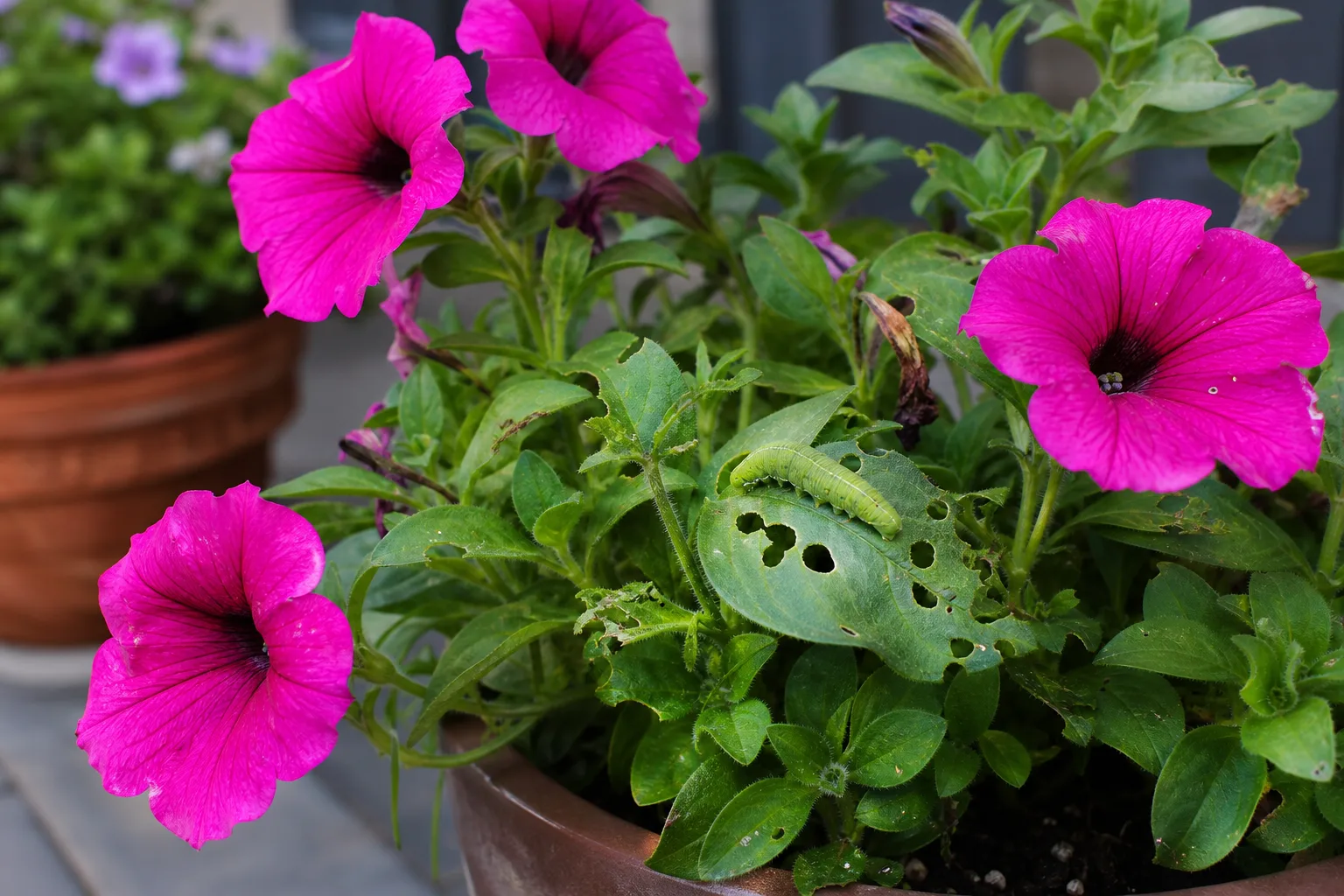
Caterpillars on Petunia: Causes, Checks & Fixes
This guide covers caterpillars on Petunia. See also the general Caterpillars guide, watering, and light pages for this plant.
Caterpillars on Petunia: Causes, Checks & Fixes
Quick answer
The caterpillars chewing petunia buds are almost always tobacco budworm (Helicoverpa virescens)-not random garden worms or cabbage loopers on foliage alone. Adult moths lay eggs on buds and open flowers; larvae bore into unopened blooms and chew ragged holes in petals, mostly at night. On a trailing Wave Purple or Supertunia Red basket at eye level, the first clue is often pinholes in tight buds with black frass pellets on leaves directly below.
First step: scout at dusk with a flashlight and hand-pick any larvae you find inside damaged buds. Container baskets make this practical-you can rotate the pot and peel back one sacrificial bud to confirm a caterpillar before spraying anything. If hand-picking cannot keep up, apply Bacillus thuringiensis (Bt) to bud surfaces and nearby petals in late evening when bees are inactive.
Budworms are not a sign you failed at petunia care. They are a predictable warm-season pest on outdoor petunias in regions where moths arrive each year. Multiple generations per season mean damage can restart after you think you cleared them-especially on purple, red, and bi-color cultivars where extension sources note variation in susceptibility among petunia types.
Why Petunia gets caterpillars
Petunia is a primary ornamental host for tobacco budworm. The pest also attacks geranium, nicotiana, and rose, but petunias-with their constant flush of soft buds through the bloom season-offer steady feeding sites from late spring until frost in warm climates.
The biology explains why sprays miss. Larvae tunnel into buds where daytime insecticide passes rarely reach them. Most feeding happens at night, and many caterpillars hide at the base of the plant or in spent flowers during the day. That is why a morning glance at a balcony basket can show fresh holes without any visible culprit.
On mixed combo planters-petunia paired with zonal geranium-watch both species. Colorado State Extension notes geranium budworm on both crops, and larvae can move between neighbors when flowers touch on a crowded rail. Ivy-leaved geraniums are less susceptible than zonal types, but petunias in the same pot still need their own dusk inspection.
Moths do not overwinter in cold northern gardens. UMN Extension explains that budworms arrive on southern air currents in late summer in Minnesota-unpredictable year to year. Gulf Coast, Southeast, and Southwest container growers often see damage earlier and across more generations per season. Trailing baskets in Petunia light guide on open railings are easy moth targets; damage concentrated on one end of a long planter may mean eggs were laid on the railing-adjacent side first.
Purple Wave, Supertunia Bordeaux, and other dark-flowered cultivars often show damage before pale neighbors on the same basket-not because those colors attract more moths universally, but because cultivar susceptibility varies and dark petals make pinholes easier to spot at dusk. Treat the whole basket once you confirm larvae, not only the worst-looking stem.
What caterpillar damage looks like on Petunia
Bud damage-the most serious on blooming petunias:
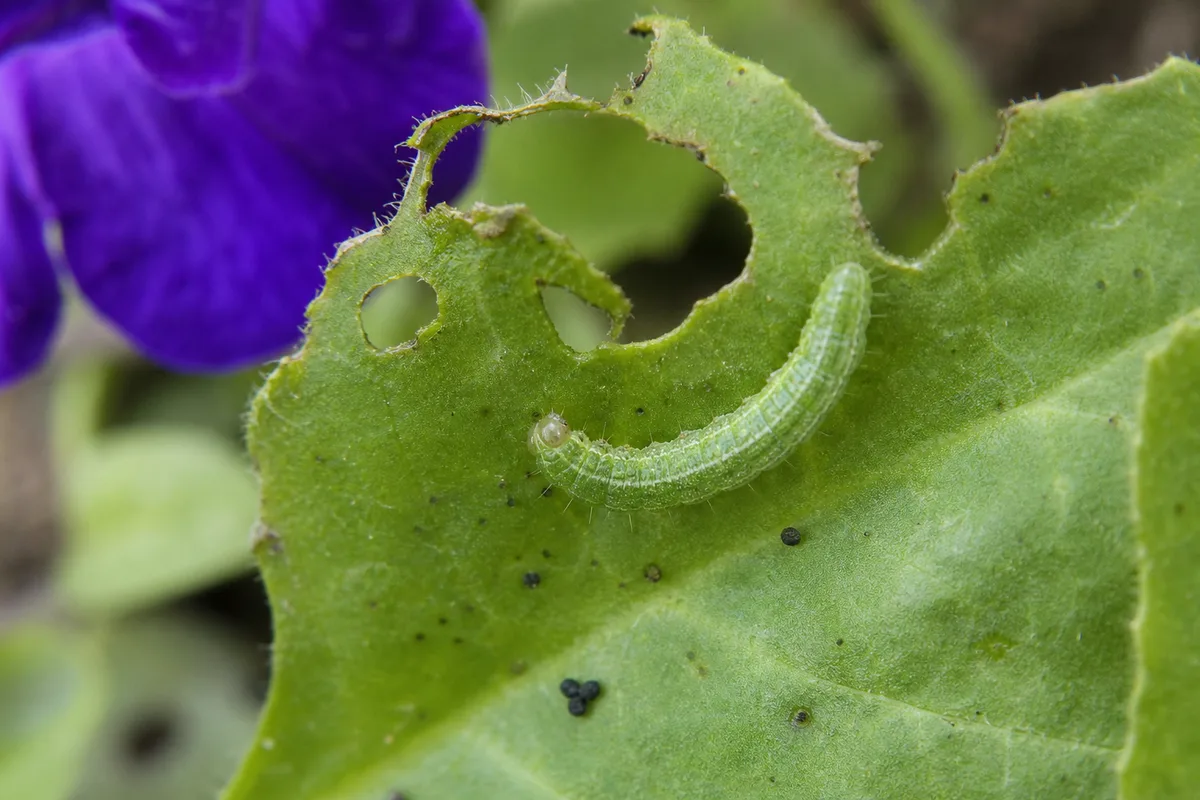
Caterpillars symptoms on Petunia - compare with healthy tissue on the same plant.
- Pinholes or small round openings in unopened buds before petals unfurl
- Buds that look dried, stuck, or fail to open symmetrically
- Tunneled tissue inside tight buds when you peel petals back gently
Open flower damage:
- Ragged holes chewed through petals overnight
- Tattered edges on showy grandiflora blooms
- Flowers that open partially then collapse from internal feeding
Evidence on foliage and stems:
- Black frass pellets on leaves directly below damaged buds
- Chewed shoot tips when flower buds are scarce
- Larvae curled inside blooms or along the stem just below the flower head
Basket-level patterns:
- One side of a trailing basket stops flowering while the other still blooms
- Sudden loss of color on a purple or red section of a mixed-color planting
- Fresh damage appearing daily on eye-level hanging baskets during peak summer
Clemson HGIC lists petunias as versatile annuals for containers and hanging baskets that bloom from spring until frost-exactly the window when budworm generations cycle. Damage on buds and petals with frass below points to caterpillars, not the drought stress or nutrient issues that affect whole-plant turgor.
How to confirm the cause
Work through these checks in order before treating:
- Dusk timing - Inspect at sunset or with a flashlight after dark. WSU HortSense recommends dusk scouting when larvae are actively feeding on buds and petals.
- Bud peel test - Gently open one damaged unopened bud. A green, brown, or reddish caterpillar with lengthwise stripes and fine hairs confirms tobacco budworm.
- Frass search - Look for dark pellet-shaped droppings on leaves below holed buds. Frass plus bud holes strongly confirms caterpillars over environmental bud failure.
- Slime trail rule-out - Slugs and snails leave shiny mucus trails on leaves and pot rims. Ragged holes without slime point to caterpillars or beetles, not slugs.
- Thrips rule-out - Silvery scrape marks and black varnish-like specks on petals suggest thrips. Thrips scar tissue; they do not typically bore pinholes through tight unopened buds the way budworm does.
- Neighbor basket scan - Check other baskets on the same rail. Moths often lay eggs across several plants when flowers touch. One infested Supertunia can seed larvae into a neighbor overnight.
- Watering cross-check - If soil is bone-dry, stems are limp, and damage is only on oldest lower leaves with no bud holes, drought may explain wilt better than caterpillars. Firm stems with holed buds point to pests-see the petunia watering guide only after bud inspection rules out larvae.
If you find a live caterpillar inside a damaged bud plus frass on leaves below, you have confirmation. No need to wait for more symptoms or test soil moisture first.
Lookalike symptoms to rule out
| Sign | Likely cause | Quick check |
|---|---|---|
| Pinholes in unopened buds + frass below | Tobacco budworm | Dusk peel test inside bud |
| Silvery petal streaks, no holes through tight buds | Thrips | Tap bloom over white paper |
| Ragged holes + shiny slime trails | Slugs or snails | Mucus on leaves or pot rim |
| Green buds abort while closed, no frass or larvae | Bud drop from heat or watering swings | Compare bud drop on petunia |
| Large irregular holes in leaves only, larvae on foliage | Cabbage looper or corn earworm | Larvae on leaf surface, less bud tunneling |
| Wet brown mushy petals after rain | Botrytis blight | Gray fuzz, water-soaked tissue |
Corn earworm vs. tobacco budworm: Both are Helicoverpa species that can appear on garden flowers. On petunias, the tobacco budworm habit-tunneling into buds and feeding on petals-is the usual culprit. Earworm is more often associated with corn and large fruiting crops. Treatment timing is similar (dusk scouting, hand-pick, Bt on exposed tissue), so confirm larvae in buds rather than guessing species before you act.
First fix for Petunia
Hand-pick larvae from buds and flowers at dusk-starting with the most damaged blooms on the basket.
This is the safest first response on flowering petunias where bees visit open blooms during the day. Rotate the hanging basket to eye level, peel back damaged buds gently, and drop larvae into soapy water.
How to hand-pick effectively on container petunias:
- Scout at dusk or with a flashlight within an hour of sunset
- Check inside unopened buds, under ruffled petals, and in spent flowers where larvae hide by day
- Remove heavily tunneled buds entirely so larvae do not migrate to clean blooms on the same stem
- Wipe frass-coated leaves below damaged buds to make the next night’s search easier
If hand-picking cannot keep up-or damage spreads across most buds on a trailing basket-move to Bt as the next step, not a simultaneous spray-and-pick blitz on day one.
Step-by-step Bt application
Bt (Bacillus thuringiensis var. kurstaki) kills caterpillars only after they eat treated plant tissue. On petunias, where larvae feed on blossom surfaces as well as inside buds, Bt can work when young larvae ingest treated petals-but WSU HortSense notes Bt is less reliable once larvae are deep inside buds or mature. Apply early in an infestation for best results.
- Choose late evening - Colorado Extension recommends dusk applications when caterpillars climb onto plants and bees are less active. Bt breaks down rapidly in sunlight.
- Target buds and upper petals - Coat unopened buds and the outer petal surfaces where young larvae feed. A light mist on open flowers only will miss tunneling larvae.
- Cover the feeding zone - Spray bud clusters and the top few inches of stems on trailing varieties. On Wave and Supertunia baskets, work around the canopy where new buds form.
- Repeat per label - New eggs hatch across the season. Most home-garden Bt labels allow reapplication every five to seven days until new damage stops.
- Escalate only if needed - If Bt plus hand-picking fails after two label cycles, WSU HortSense lists spinosad among products registered for tobacco budworm on ornamentals. Apply in late evening, avoid spraying open blooms during midday pollinator activity, and follow the label for ornamental use.
Do not spray broad-spectrum insecticides on flowering balcony petunias as a first move. You risk harming bees and predators that help control other [petunia pests](/plants/petunia/Petunia overview/) without reaching larvae inside buds.
Step-by-step recovery
Once budworm is confirmed, work in this order:
- Sanitation - Remove tunneled buds and heavily frass-coated spent blooms every two to three days. Drop debris into a bag, not the soil surface of the container.
- Dusk hand-pick for one week - Even if you plan to spray, removing large larvae immediately slows bud destruction while Bt takes effect on smaller feeders.
- Bt cycle - Apply at dusk to bud surfaces; repeat per label for two to three cycles. Watch for new pinholes on the newest buds, not old damaged tissue.
- Track clean new blooms - Judge success by buds opening without holes. Old chewed petals will not heal.
- Hold heavy fertilizer - Do not push high nitrogen while the plant is pest-stressed. Resume balanced feeding after two weeks of clean new flowers per your normal petunia care rhythm.
- Mixed basket check - If geraniums or nicotiana share the pot, inspect them on the same schedule. Larvae do not stay on one species when flowers overlap.
Recovery timeline
Chewed petals and holed buds do not repair themselves. Judge recovery by what happens next, not by old damage disappearing.
Within three to seven days after larvae are removed or killed, you should see no new pinholes on the tightest buds. On fast-growing Supertunia and Wave baskets in full sun, clean replacement blooms often appear within one to two weeks. Badly tunneled buds usually will not open into perfect flowers-snip them so the plant pushes side branches.
Moderate infestations on a single hanging basket typically need two to three weeks of dusk scouting plus Bt repeats before the bloom cycle looks normal again. Multiple generations per season mean a clean basket in July can show fresh holes in August if moths re-lay eggs-resume scouting rather than assuming one treatment season-long protection.
If most buds on one side of a basket are destroyed before opening, flowering on that side may lag for three to four weeks even after control succeeds. The plant redirects energy to new stems; light pruning of bare trails can help balance a lopsided display.
What not to do
Do not spray open petunia flowers at midday when pollinators visit. Even selective products like Bt harm caterpillars broadly; time treatments for late evening.
Do not assume buds failed from underwatering or heat alone without checking for pinholes and frass first. Bud drop from culture stress rarely produces caterpillar droppings on leaves below.
Do not rely on daytime spraying alone. Most budworm feeding occurs at night, and larvae hidden inside buds at noon will miss contact sprays.
Do not use broad-spectrum insecticides before hand-pick and Bt on home basket displays. Mature budworm can be resistant to many common garden insecticides; wiping out predators without reaching tunneling larvae often makes the next generation worse.
Do not compost heavily infested buds from treated plants if you applied spinosad or synthetic products-bag and discard them per label guidance.
How to prevent caterpillars next time
Prevention on petunias is mostly early detection and reducing repeat generations-not eliminating budworm from an outdoor garden entirely.
Scout hanging baskets weekly at dusk from first bud set through peak bloom. A two-minute flashlight check at eye level catches larvae when hand-picking still works on a single Wave or Supertunia basket.
Remove infested buds promptly. One tunneled bud can harbor a larva that moves to three clean blooms the same night.
In high-pressure Gulf Coast, Southeast, and desert Southwest regions where multiple generations overlap, consider prophylactic Bt on new bud clusters before holes appear-especially on red and purple cultivars that showed damage last season. Colorado Extension recommends late-day insecticide timing for any chemical prevention program.
Deadhead spent blooms on schedule. Larvae use old flowers as daytime hiding spots on trailing stems.
Rotate basket placement if one railing section gets hit repeatedly. Moth concentration along a warm wall or light source can localize egg-laying.
On mixed combo planters, remember that geranium budworm shares the same pest. Treat the whole container when either species shows frass or bud holes.
Space baskets so flowers are not touching on crowded balcony rails. One infested basket can seed larvae into neighbors overnight.
When to worry
Treat promptly when:
- Most unopened buds show pinholes before petals open-flowering can stop for weeks on that stem
- One side of a trailing basket loses color while the other still blooms and larvae are still visible at dusk
- New holes appear daily despite hand-picking
- A mixed-color basket loses red or purple sections first and damage is spreading to pale cultivars on the same plant
You can monitor briefly when:
- A few ragged edges appear on open flowers but new buds look clean and tight
- You find one larva, remove it, and no new frass appears for several days
- Damage is limited to older spent blooms while the growing tips push unblemished buds
Cosmetic petal holes on open blooms are less urgent than bud destruction that prevents bloom entirely. The main risk of delayed treatment is lost weeks of basket color-not permanent loss of a healthy rooted petunia from moderate petal chewing alone.
Conclusion
Tobacco budworm is the caterpillar petunia growers actually face on balcony baskets and window boxes-not generic foliage worms. The diagnostic path is simple: scout buds at dusk, confirm larvae or frass, hand-pick first, then apply Bt to bud surfaces in late evening if damage continues. Damaged petals do not heal; watch for clean new blooms within one to three weeks once feeding stops.
If silvery petal scarring appears without bud holes, compare thrips on petunia. For slime trails and night feeding without frass pellets in buds, see slugs and snails on petunia. When buds abort closed without larvae inside, review bud drop and your watering rhythm after pest inspection rules out budworm.
Related petunia guides:
- Petunia overview - cultivar types, basket culture, and deadheading by series
- Thrips on petunia - silvery petal scars without bud tunneling
- Slugs and snails on petunia - slime trails and night feeding lookalikes
- Bud drop on petunia - closed buds falling without caterpillar frass
- Petunia watering - drought and wilt checks after bud inspection
When to use this page vs other Petunia guides
- Petunia watering guide - Use for routine moisture checks before assuming caterpillars is the main issue.
- Petunia problems hub - Browse all 40 common issues on this species.