High Humidity on Petunia: Causes, Checks & Fixes
Quick answer
High humidity above about 85% promotes Botrytis on petunia flowers and foliage in crowded containers. Improve airflow, space plants apart, and water at the base only-never mist flowers.
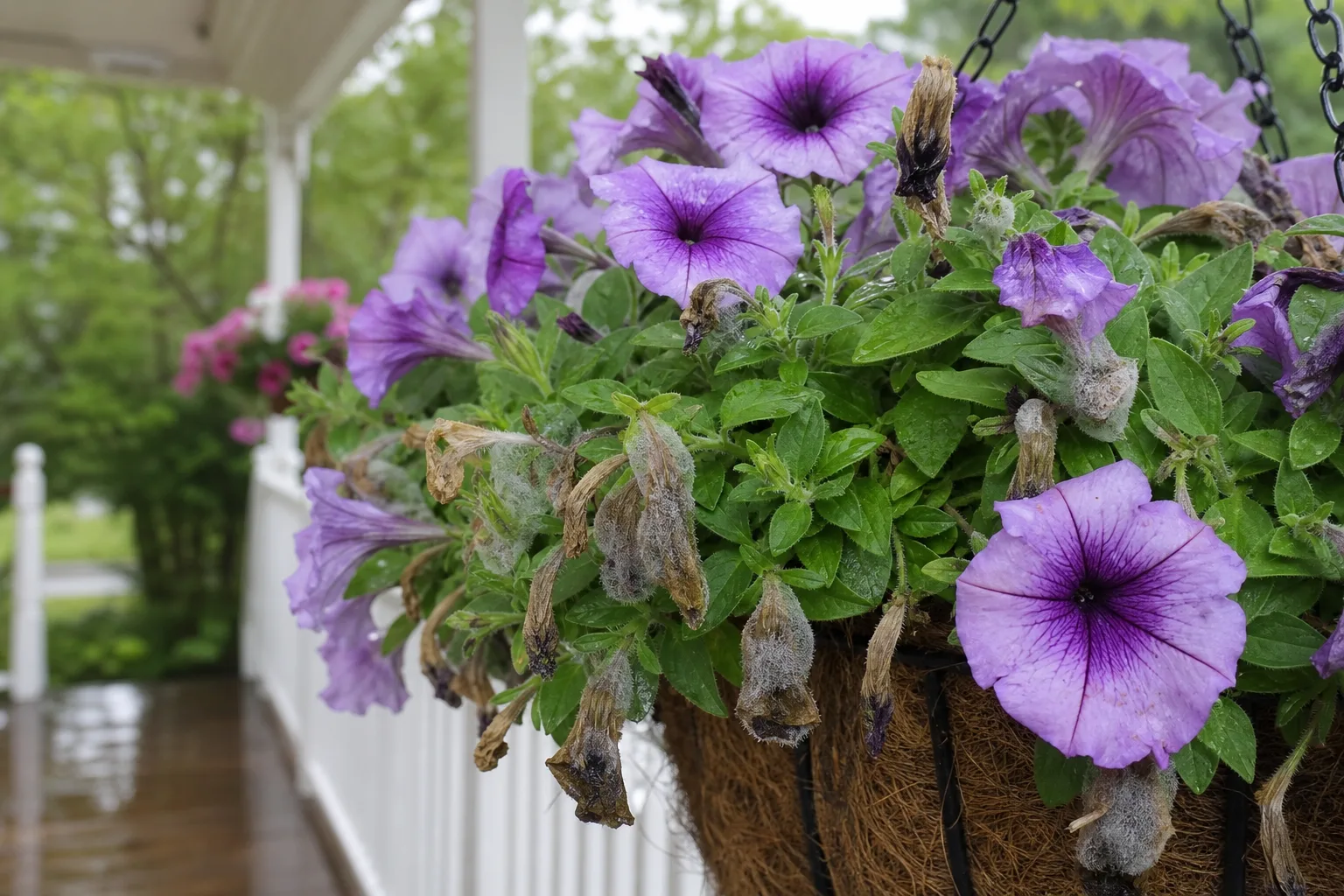
High Humidity on Petunia: Causes, Checks & Fixes
This guide covers high humidity on Petunia. See also the general High Humidity guide, watering, and light pages for this plant.
High Humidity on Petunia: Causes, Checks & Fixes
Quick answer
Petunias tolerate low to moderate humidity but suffer when prolonged high humidity keeps flowers and foliage wet overnight. The main risk is Botrytis gray mold-not leaf edema or tropical-style humidity stress. Hanging baskets on covered porches, greenhouse-adjacent patios, and rainy weeks trap humid air inside dense trailing canopies where spent petals never dry.
First step: remove infected and spent flowers, then improve airflow around the basket. Space containers apart, trim overlapping stems blocking the interior, and switch to base watering in the morning. Do not mist blooms or run overhead sprinklers while symptoms are active.
Why high humidity hurts Petunia
Petunias are sun-loving annuals bred for open garden beds and bright containers-not enclosed tropical rooms. They perform best with good airflow and dry flower surfaces overnight. When relative humidity stays high and leaf wetness persists, Botrytis cinerea exploits senescent tissue on heavily blooming plants.
Trailing petunias in baskets create a humid microclimate. Dense stems, overlapping leaves, and layers of old petals hold moisture in the basket center while outer blooms look fine. Covered porches, latticed patios, and greenhouse walls reflect cool, damp air back onto plants. Several consecutive cloudy, rainy days slow evaporation while gardeners keep watering on schedule-soil stays moist and foliage stays wet longer than petunias tolerate.
High humidity alone rarely yellows healthy leaves the way overwatering on Petunia does. The damage pattern starts on flowers and soft tissue: spent petals, bud sheaths, and leaf edges that touch wet neighbors. Overhead irrigation, evening misting, and drip from eaves compound the problem by wetting exactly the tissue Botrytis colonizes first.
Unlike tropical houseplants that need humidifiers, petunias face more risk from too much enclosure than too little moisture in the air. Enclosing baskets with plastic, crowding mixed containers shoulder-to-shoulder, or placing pots against walls with poor air movement turns a tolerable humid spell into a mold outbreak.
What high humidity damage looks like on Petunia
- Grey or tan fuzzy mold on old petals and spent flower clusters.
- Brown, water-soaked buds that fail to open during humid weather.
- Soft brown patches on leaf margins where wet leaves press together.
- Musty odor when you lift trailing stems and peek inside a crowded basket.
- One-sided dieback on the dampest side of a porch or greenhouse bench.
- Rapid flower collapse after rain when blooms were already fading.
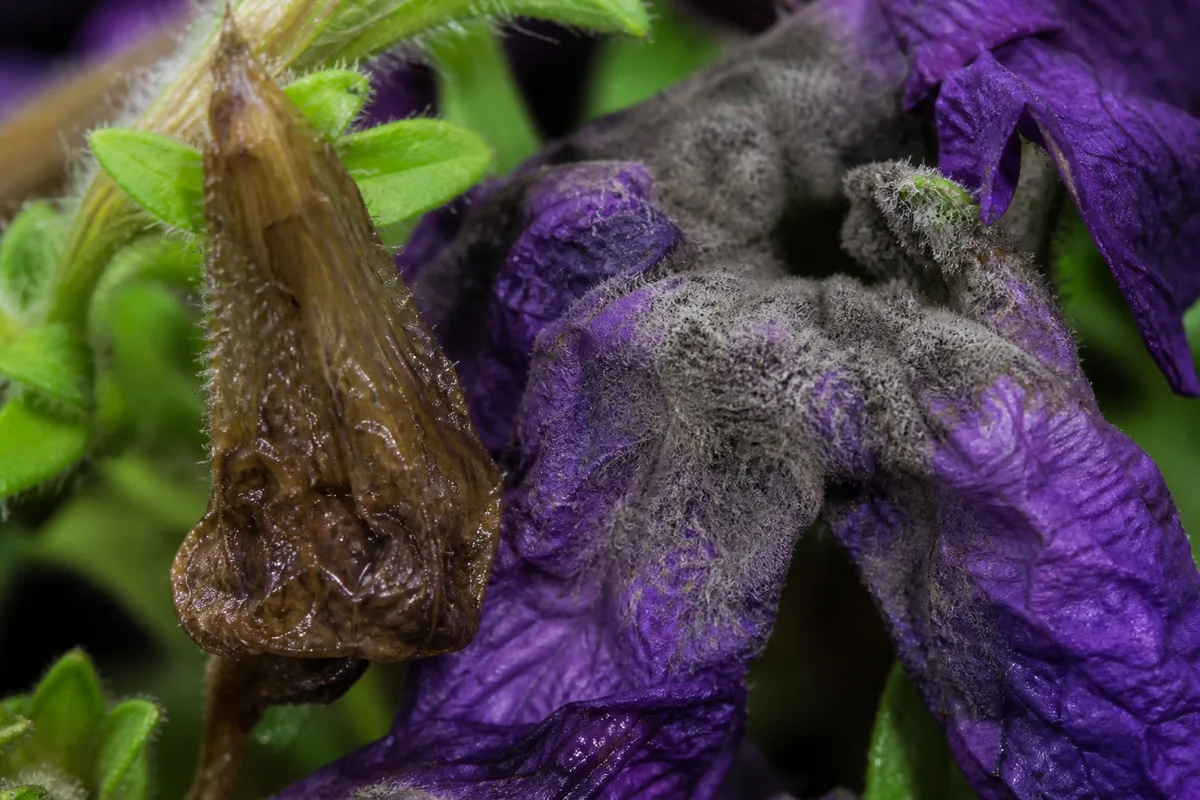
High Humidity symptoms on Petunia - compare with healthy tissue on the same plant.
This differs from drought-brown flowers, which feel dry and papery rather than water-soaked and fuzzy. Powdery mildew shows white powdery patches on upper leaf surfaces in dry-warm spells-not the grey mold on wet petals typical of humid Botrytis.
How to confirm the cause
Work through these checks before changing your whole watering routine:
- Weather and placement - Did symptoms appear after several humid days, evening rain, or while baskets sat on a covered porch with little breeze? Timing after environmental moisture supports humidity-driven Botrytis.
- Spent flowers first - Inspect old blooms before new buds. Grey mold on senescent petals while stems feel firm points to surface humidity disease, not root rot on Petunia.
- Interior vs. exterior - Damage concentrated inside the basket canopy but less on outer exposed stems confirms trapped humid air.
- Tissue texture - Botrytis patches are soft and wet; sun scorch or drought damage is crisp and dry.
- Soil moisture - Stick a finger 2 cm into the mix. Soggy soil plus humidity accelerates both mold and root problems; firm stems with only flower mold suggest humidity culture is the primary fix.
- Smell - A musty note near infected flowers supports Botrytis; sour swamp smell from the pot points toward overwatering or root rot instead.
If grey mold appears only on flowers after one rainy night but stems stay firm and soil dries normally, humidity sanitation is enough. If stems soften at the crown while soil stays wet, investigate root rot alongside humidity fixes.
First fix for Petunia
Pick off all spent flowers, brown buds, and visibly moldy leaves-discard them in the trash, not compost.
That single sanitation step removes the tissue Botrytis feeds on and stops spores from raining onto healthy buds below. After cleanup, pull baskets slightly apart on railings and trim back stems that block air into the basket center. Hold overhead watering and flower misting until new blooms open clean for at least a week.
Step-by-step recovery
Once infected tissue is removed and airflow improves, work through these steps in order:
- Deadhead every two to three days during humid spells. Do not let faded petals collapse onto buds underneath.
- Water at the soil line in early morning so foliage and flowers dry through the day. Skip evening watering entirely while symptoms persist.
- Space containers - leave a few inches between hanging baskets and wall planters so air can move between them.
- Trim selective trailing growth if interior stems stay damp 24 hours after morning watering. Cut back to a leaf node above healthy tissue.
- Run a fan on low near grouped baskets on enclosed porches if natural breeze is weak. Aim for gentle movement, not blasting stems.
- Isolate chronically affected plants in mixed containers so mold does not spread to neighbors through shared wet petals.
- Replace severely defoliated baskets mid-season if grey mold returns weekly despite dry-flower habits-chronic Botrytis on one plant rarely clears without replacing the planting.
Hold fertilizer until new growth looks clean for a week. Stressed petunias in humid pockets do not need extra nitrogen while fighting surface mold.
Recovery timeline
Stabilization often takes one to two weeks once spent flowers are removed, base watering starts, and airflow improves. You should see no new grey mold on fresh blooms within that window if humidity culture was the main driver.
New buds opening clean are the best recovery sign. Old water-soaked petals and spotted leaves will not revert to perfect color-trim them for hygiene. Expect trailing stems to fill back in over two to four weeks during active bloom season if roots stayed healthy.
Worsening signs: grey mold advancing into live stems, crown tissue softening, or entire basket sides collapsing within days mean escalation beyond humidity tweaks-inspect roots and consider replacing the plant.
Lookalike symptoms
- Blight / Botrytis from overhead watering on Petunia - Same fungus, but triggered by irrigation habit rather than ambient humidity alone. Fix is identical: dry flowers and improve airflow.
- Overwatering and root rot - Yellow leaves, wilt on wet soil, sour pot smell. Stems may soften at the base while flowers also mold. Reduce watering and check roots; humidity fixes alone will not save Phytophthora-damaged plants.
- Powdery mildew - White dusty fungal growth on leaf surfaces, often in warm dry days with cool humid nights. Different fungus, different prevention emphasis-spacing still helps, but sulfur or labeled fungicides target mildew, not wet-flower Botrytis.
- Flowers turning brown from drought - Papery brown petals after missed watering in Petunia light guide. Soil is light and dry; rehydrate on schedule rather than chasing humidity.
- Cold damage after frost - Blackened, water-soaked tissue after temperatures below about 5°C. Petunias are frost-sensitive annuals; cold-injured tissue can rot if kept wet.
What not to do
Do not mist flowers to refresh them on humid days-that extends leaf wetness and feeds Botrytis. Do not enclose baskets with plastic or crowd mixed planters tightly to “raise humidity”-petunias do not need tropical steam.
Avoid evening overhead watering while mold is active. Do not interpret fuzzy flowers as thirst and water more; saturated mix plus high humidity accelerates both mold and root stress.
Do not compost infected petals-spores survive home compost piles. Skip heavy nitrogen fertilizer on mold-stressed plants until growth stabilizes.
Petunia care cross-check
High humidity problems worsen when other basics slip. Confirm these alongside airflow work:
- Light - Petunias need at least five to six hours of direct sun; shaded damp baskets stay wet longer and bloom less, leaving more senescent tissue on stems.
- Drainage - Lightweight mix with perlite drains within hours after watering. Heavy, water-retentive soil keeps roots damp while humid air keeps flowers damp-a double stress.
- Deadheading rhythm - Heavy bloomers produce spent flowers fast; humid weather turns every missed deadhead into a mold platform.
- Watering check - Water when the top 2 cm dries, not on a calendar. Humid weeks slow evaporation from soil too-adjust frequency without keeping mix constantly soggy.
How to prevent problems in humid sites
Choose open, breezy placement when possible-full sun on a slightly exposed railing beats a damp corner under a deep porch roof. Plant in well-drained mix and water at the base only. Deadhead spent blooms before they collapse inward.
On greenhouse-like porches, trim trailing growth mid-season so interior stems dry by afternoon. After rainy weeks, scout basket interiors before problems show on outer blooms. Space new baskets at planting time rather than waiting until mold appears.
If you must grow petunias in chronically humid microclimates, treat deadheading and dry flowers as core care-not optional grooming. A few minutes every few days prevents most humid-site outbreaks.
When to worry
Escalate immediately if grey mold moves into live stems, crowns soften while soil stays wet, or entire sides of a basket collapse within days. Mild flower spotting after one rainy week is manageable with sanitation and dry-flower habits.
Chronic weekly mold on one basket in a humid porch may mean that placement is unsuitable for petunias-swap to a more airflow-tolerant annual or accept mid-season replacement rather than fighting the environment.
Conclusion
High humidity on petunia is an environmental culture problem: wet flowers, trapped air, and senescent petals in dense trailing baskets. Confirm it by finding grey mold on spent blooms after humid weather while stems remain firm. First remove infected flowers, improve airflow, and water at the base in the morning. Petunias forgive dry air far more willingly than they forgive wet blooms overnight-keep flowers dry and spent tissue off the plant, and humid sites become manageable through the bloom season.
When to use this page vs other Petunia guides
- Petunia watering guide - Use for routine moisture checks before assuming high humidity is the main issue.
- Petunia problems hub - Browse all 40 common issues on this species.