Crispy Leaves on Petunia: Causes, Checks & Fixes
Quick answer
First, check pot moisture 2 inches down before watering. Crispy petunia leaves are most often drought stress in containers, but can also come from heat stress on still-moist soil, spider mites, fertilizer salt burn, or wet-soil root rot.
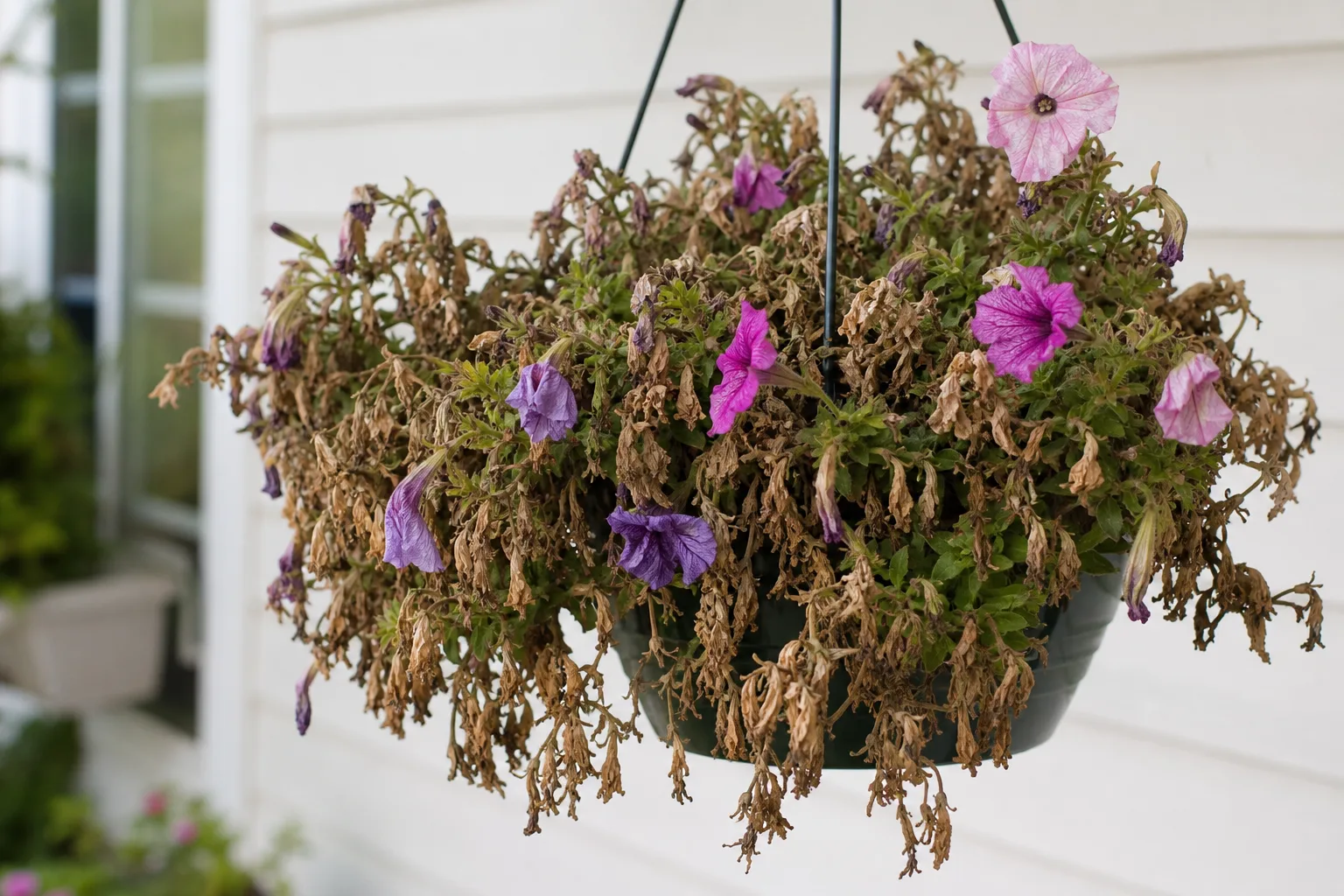
Crispy Leaves on Petunia: Causes, Checks & Fixes
This guide covers crispy leaves on Petunia. See also the general Crispy Leaves guide, watering, and light pages for this plant.
Crispy Leaves on Petunia: Causes, Checks & Fixes
Quick answer
Start with one check: test moisture in the root zone (about 2 inches down) before you water. Crispy petunia leaves are often drought stress in containers, but this symptom can also come from heat stress, spider mites, fertilizer salt buildup, or root rot on Petunia in wet media. Petunias perform best with Petunia light guide and steady moisture, not repeated drought swings or constantly soggy mix (UMN Extension).
If the pot is very light and the mix is dry, water deeply until drainage starts. If the mix repels water, rewet slowly in rounds so moisture reaches the core instead of channeling down the pot wall. If the mix is still moist, do not automatically add more water; move to diagnosis below.
What crispy leaves look like on petunia by cause
- Drought stress: papery edges and tips, brittle older leaves, light pot weight, dusty dry mix.
- Heat stress on moist soil: leaf edges scorch and curl during peak sun, but morning turgor may still look acceptable.
- Spider mites: fine pale stippling first, then bronzing/crisping; webbing may appear on undersides in heavier infestations (UC IPM).
- Fertilizer salt burn: tip and margin scorch with possible white crust on soil or pot rim (Clemson HGIC).
- Root rot/crown rot: wilting with wet soil, declining roots, possible crown softness; roots often darkened or decayed (NC State Extension).
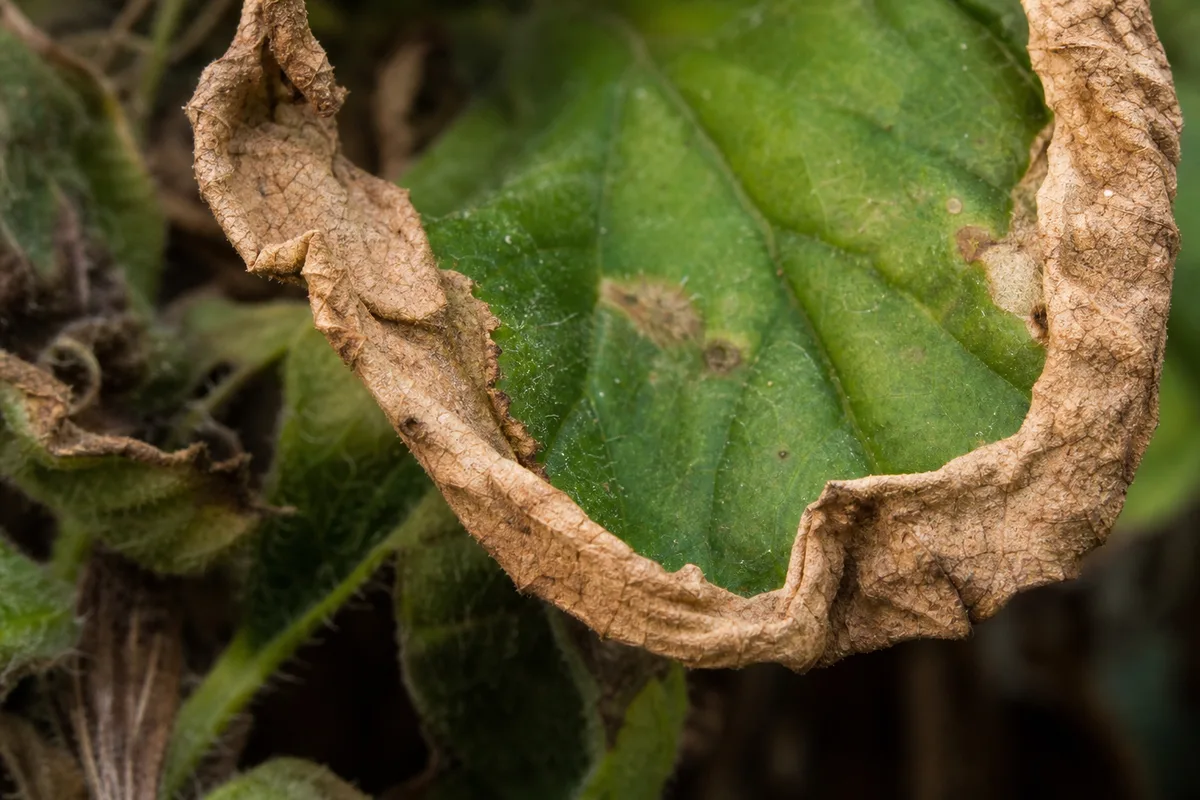
Crispy Leaves symptoms on Petunia - compare with healthy tissue on the same plant.
Why petunia gets crispy leaves
Petunia is a high-light annual that flowers hardest in full sun, so transpiration demand is high during hot weather (UMN Extension). In hanging baskets and small containers, root volume is limited and media can dry quickly. Repeated dry-down to the point of wilt damages leaf margins first, then flower quality and bud set.
Crispy tissue is not always from drought. Hot afternoons can outpace water uptake even when soil is still moist, causing temporary wilt and edge stress in exposed sites. Pest feeding (especially mites), salt accumulation, or wet-root disease can produce similar “dry-looking” foliage, so pot moisture and leaf pattern matter more than one visual clue.
How to confirm the cause
Use this order so you do not mis-treat the plant:
- Check moisture at root depth (not just the surface).
- Lift the pot (light suggests drought; heavy/wet suggests overwatering on Petunia risk).
- Inspect undersides of leaves for stippling, moving dots, and webbing (mite clues) (UC IPM).
- Look for salt crust on media and pot edges (overfeeding clue) (Clemson HGIC).
- Check crown and roots if decline continues; dark/rotted roots in wet media point to rot pathogens favored by poor drainage and prolonged wetness (NC State Extension).
First fix to try
If the root zone is dry, deeply rehydrate once. Water at the base until drainage starts, wait a few minutes, then water again to wet the full root ball. This is safer and more useful than stacking multiple treatments at once. After rehydration, recheck the plant the next morning before making additional changes.
If the root zone is moist, skip extra watering and move to the matching branch in the recovery steps.
Step-by-step recovery by confirmed cause
If drought is confirmed
- Remove fully crisp leaves and spent blooms.
- Switch to deeper, complete watering cycles instead of frequent light splashes.
- During heat spikes, check baskets twice daily, but only water when the root zone actually begins to dry.
- Compare with your deeper drought guide at
/plants/petunia/[underwatering on Petunia](/plants/petunia/underwatering/)/.
If heat stress is confirmed on moist soil
- Give temporary afternoon shade during extreme heat periods.
- Keep morning sun exposure because petunia still needs high light for flowering.
- Avoid overwatering “just because it wilted at 2 p.m.”; that can shift a heat issue into root stress.
- Cross-check with
/plants/petunia/heat-stress/.
If spider mites are confirmed
- Isolate affected containers from healthy annuals.
- Rinse leaf undersides with a strong water spray, then reassess in 48 hours.
- If needed, use a labeled soap/oil product and cover undersides thoroughly; repeat per label.
- Track details in
/plants/petunia/spider-mites/.
If fertilizer/salt burn is likely
- Pause feeding.
- Flush the container thoroughly with plain water so excess salts drain out.
- Resume feeding later at a lower rate and only when growth resumes.
- Review
/plants/petunia/overfertilization/.
If root rot/crown rot is likely
- Stop watering until oxygen returns to the root zone.
- Remove severely affected plants if crowns are collapsing.
- Improve drainage and avoid standing water.
- Compare symptoms with
/plants/petunia/root-rot/.
Recovery timeline
- 24 to 48 hours: wilt should reduce after correct first action.
- 3 to 7 days: symptom spread should stop.
- 7 to 14 days: new leaves should emerge without new crisp margins.
- After 2 weeks: if decline continues, re-diagnose for root disease or persistent pests.
Damaged leaves do not “heal.” Success means healthy new growth and stable flowering, not reversal of old tissue damage.
What not to do
- Do not keep adding water when media is already wet.
- Do not fertilize a stressed, crispy plant as a first response.
- Do not spray oils/soaps during the hottest part of the day.
- Do not leave pots standing in runoff water.
How to prevent crispy leaves next time
Petunias need full sun and consistent care rhythm, especially in containers (UMN Extension). Use a fast-draining potting mix, verify drainage holes, and water deeply when the root zone begins drying rather than on a rigid calendar.
During sustained summer heat, baskets can need closer monitoring because root zones are small and exposed. Keep pruning/deadheading on schedule, and check regularly for early mite stippling so you can intervene before leaves bronze and crisp. For related stress patterns, see /plants/petunia/watering/, /plants/petunia/wilting/, and /plants/petunia/drooping-leaves/.
When to worry
Escalate quickly if any of these appear:
- crisping spreads while soil remains wet
- crowns soften or stems darken near the base
- heavy mite webbing reaches buds and flowers
- multiple branches collapse despite corrected watering
When decline persists after first-line fixes, submit a sample to your local extension clinic to confirm pathogen versus cultural stress. Petunia can fail fast in peak season once root disease is advanced.
Related petunia pages
/plants/petunia/underwatering//plants/petunia/heat-stress//plants/petunia/spider-mites//plants/petunia/overfertilization//plants/petunia/root-rot//plants/petunia/
When to use this page vs other Petunia guides
- Petunia watering guide - Use for routine moisture checks before assuming crispy leaves is the main issue.
- Petunia problems hub - Browse all 40 common issues on this species.
- Brown Tips on Petunia - Different entry point when symptoms overlap with crispy leaves.