Powdery Mildew on Petunia: Causes, Checks & Fixes
Quick answer
Powdery mildew on petunias shows as chlorotic lower leaves and white fungal patches, often from Podosphaera species in crowded baskets. First step: strip affected lower leaves, improve spacing and airflow, and water at the base only.
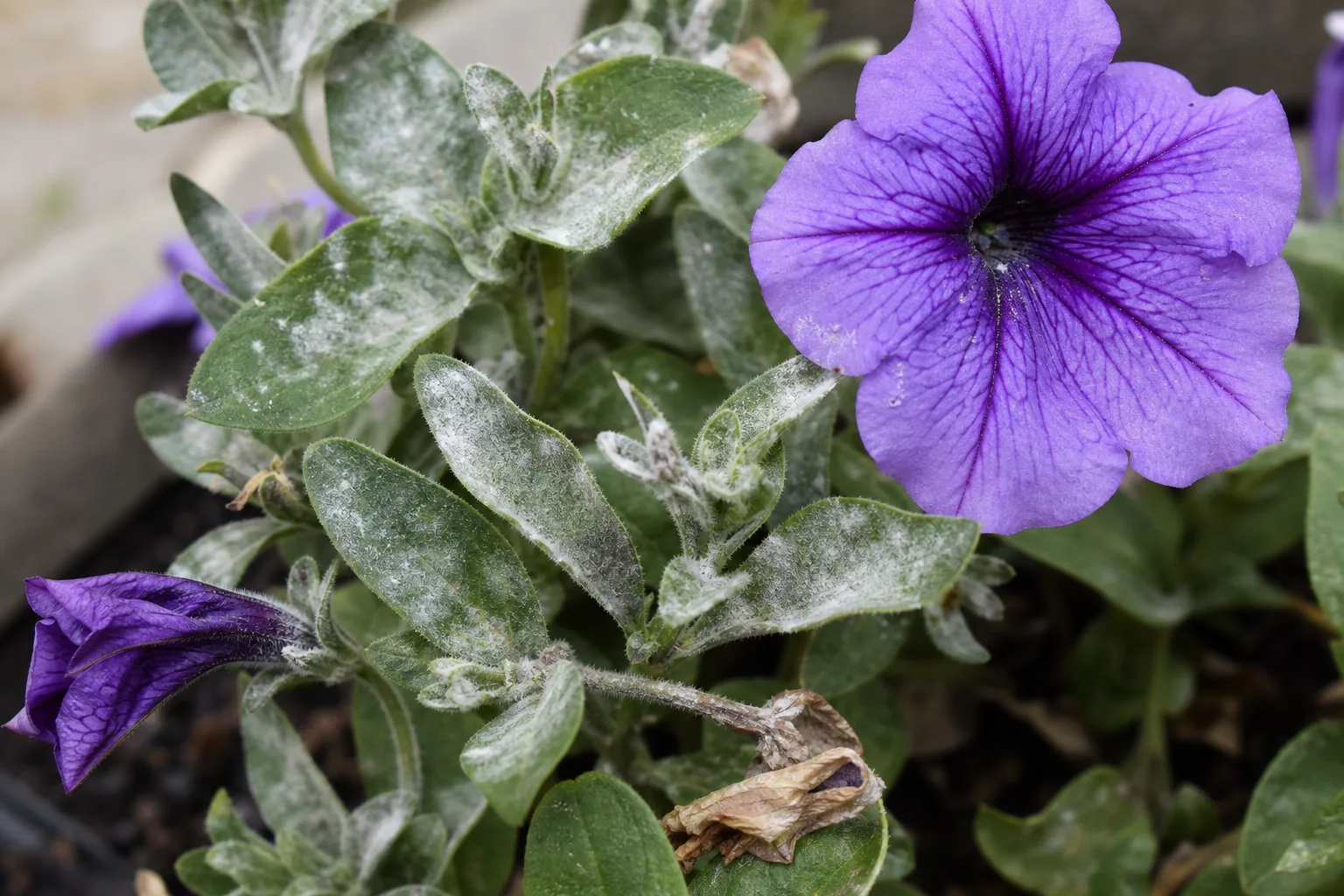
Powdery Mildew on Petunia: Causes, Checks & Fixes
This guide covers powdery mildew on Petunia. See also the general Powdery Mildew guide, watering, and light pages for this plant.
Powdery Mildew on Petunia: Causes, Checks & Fixes
Quick answer
Powdery mildew on petunia (Petunia × atkinsiana) often starts quietly on lower, shaded leaves inside trailing baskets-yellow mottling appears before the classic white dust is obvious. The fungus is usually a Podosphaera species, and unlike grey Botrytis on wet flowers, it can develop without free water sitting on leaves.
First step: remove affected lower leaves and open up the basket interior for airflow. Strip chlorotic or powder-coated foliage into a bag, thin overlapping stems, and switch to base watering only. Do not reach for fungicide until you have done that sanitation pass and confirmed the white growth is still spreading.
What powdery mildew looks like on Petunia
On container petunias, symptoms often follow the growth habit: dense trailing stems shade the bottom of the plant while blooms continue above.
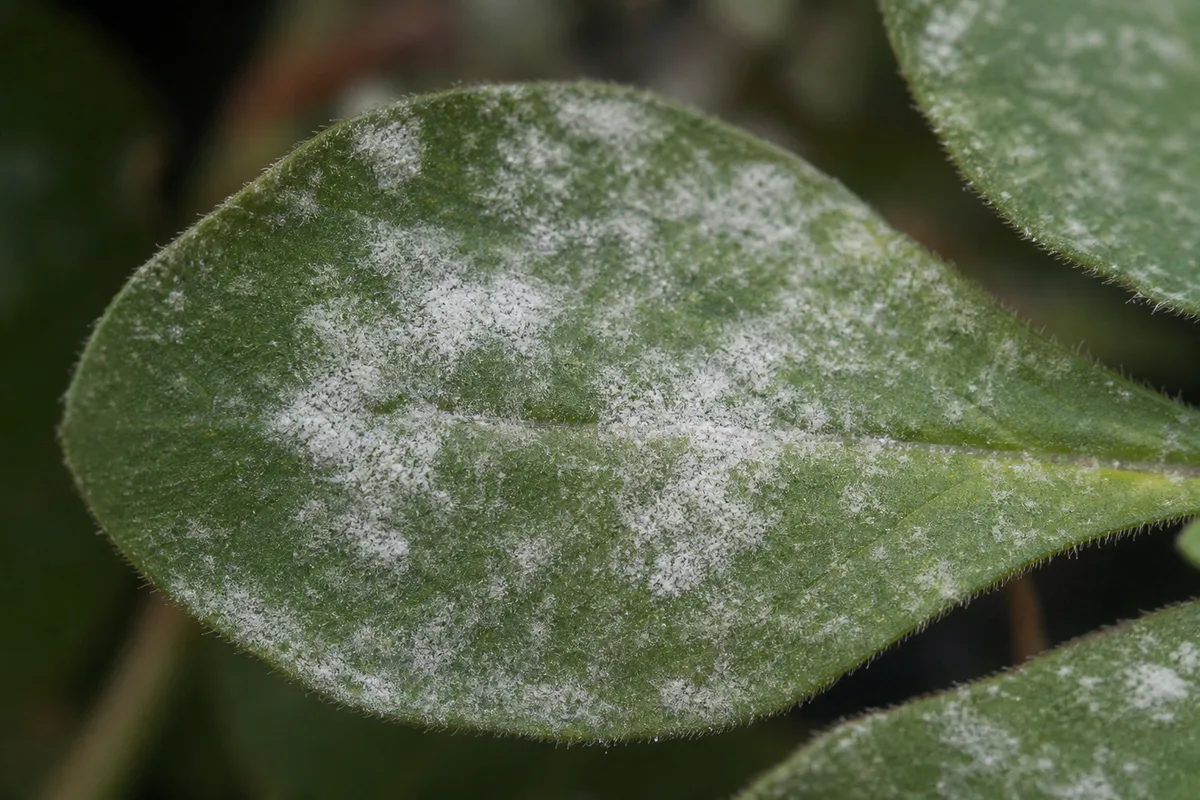
Powdery Mildew symptoms on Petunia - compare with healthy tissue on the same plant.
Typical signs include:
- Mottled or chlorotic lower leaves that later brown and die, sometimes with tiny dark speckles on the yellow tissue.
- White or grey powdery patches on leaf surfaces-upper or lower-that rub off when touched.
- Distorted or stunted lower shoots in heavier infections, while upper stems may still flower.
- Gradual defoliation from the base upward if the basket stays crowded and humid.
Early cases can look like simple aging or nitrogen stress because the white coating is subtle. Place a few chlorotic leaves in a clean plastic bag with a lightly moist paper towel for a day; telltale fuzzy growth often becomes visible on close inspection.
This is not the same as Botrytis blight on spent flowers-grey mold on wet petals is soft and water-soaked. Powdery mildew stays dry and talc-like. Spider mite stippling shows as fine yellow dots without a powdery film.
Why Petunia gets powdery mildew
Petunias want Petunia light guide, but the way we grow them creates mildew-friendly microclimates. Trailing varieties in hanging baskets and window boxes build a dense interior canopy where air moves slowly and humidity lingers between stems.
Several Podosphaera species infect petunias; Podosphaera xanthii is the most common in greenhouse and container production. That same pathogen also infects calibrachoa, verbena, and cucurbits-so a mixed basket or porch display can share spores across crops.
Powdery mildew fungi behave differently from many leaf diseases: they do not require free water on foliage to germinate and infect. They are favored by high relative humidity, moderate temperatures, and low light inside the plant canopy. Cool spring and fall nights with warm days-common petunia seasons-create the temperature swings where mildew spreads fast.
Crowded placement on railings, walls that block breeze, and overhead watering or evening misting that keeps interior leaves damp longer all raise risk. Shaded lower leaves in an otherwise sunny basket are often the first tissue infected because spores land there and humidity stays high.
Weakened or older lower leaves are typical entry points, but powdery mildews are obligate parasites-they do not need prior drought or fertilizer stress to start infection on susceptible tissue.
How to confirm the cause
Work through these checks before treating:
- Location on the plant - Are symptoms worst on lower or interior leaves while upper blooms look fine? That pattern fits mildew in dense baskets.
- Surface test - Rub a suspicious leaf. Powdery mildew leaves a white smear on your finger; chlorosis from iron deficiency shows clean yellow tissue with green veins on new growth instead.
- Moisture context - Wet, grey fuzz on old flowers points to Botrytis. Dry white dust on living leaves points to powdery mildew.
- Bag incubation - If white growth is hard to see, bag chlorotic leaves with a damp paper towel overnight and re-inspect.
- Neighbor plants - Check calibrachoa, verbena, or other petunias in the same display for matching symptoms.
- Spread speed - Mildew usually advances over days on living leaves; mosaic virus causes mottling with distortion on new growth rather than a removable powder.
If only the lowest one or two leaves are yellow with no powder and soil has been soggy, rule out overwatering on Petunia or root rot on Petunia by checking whether stems are firm and roots are white-not brown and slimy.
First fix for Petunia
Remove affected lower leaves and open the basket for airflow.
Pinch or cut off every chlorotic, brown, or powder-coated leaf you can reach. Drop material straight into a plastic bag rather than letting spores drift across the porch. Then thin interior stems that cross and shade each other-one pass of light pruning often matters more than spraying on a seasonal annual.
Water at the soil line in morning so foliage dries through the day. Do not mist leaves or wet flowers while mildew is active.
Hold off on bloom fertilizer until new growth looks clean for at least a week. Feeding stressed, infected tissue pushes soft growth that mildew colonizes quickly.
Step-by-step recovery
After the first sanitation pass, continue in this order based on severity:
- Improve spacing - Move baskets slightly apart on railings or hooks so air circulates on all sides.
- Adjust watering - Water when the top 2 cm of mix is dry; avoid evening drinks that leave the canopy damp overnight.
- Deadhead routinely - Remove spent flowers every two to three days so dense, dying tissue does not trap humidity at the basket center.
- Scout weekly - Lift trailing stems and inspect the lowest leaves first; early yellow mottling is easier to manage than base defoliation.
- Isolate mixed baskets - If calibrachoa or verbena partners show white patches, separate containers until all look clean.
- Consider fungicide only if spread continues - For home seasonal baskets, sanitation and airflow often suffice. If white growth keeps climbing after pruning, a labeled ornamental fungicide or potassium bicarbonate product applied per label may help-rotate modes of action if you spray more than once.
Do not compost infected petunia clippings in home piles where spores can survive on plant debris.
Recovery timeline
One to two weeks after removing infected lower leaves and improving airflow, spread should slow or stop. Upper stems often keep blooming through recovery because the fungus started low.
New side shoots without white coating are the best success sign. Old yellow leaves will not revert to green-judge progress by clean new tissue, not repaired lower foliage.
Two to four weeks of stable conditions usually clears mild basket infections without replacement. Severe base defoliation that exposes bare stems weakens the display for the rest of the season; replacing one badly affected basket mid-season is sometimes more practical than repeated fungicide passes on an annual.
Worsening signs: white growth on flower buds, rapid loss of more than half the lower canopy in a week, or distortion spreading into new upper leaves despite dry foliage habits.
Lookalike symptoms
- Botrytis blight on Petunia - Grey fuzzy mold on wet spent flowers and soft brown petals; fix by deadheading and dry flowers, not by treating powder.
- Iron chlorosis - Interveinal yellowing on new growth at high substrate pH; no white rub-off on leaves.
- Spider mites - Fine stippling and webbing under leaves in hot, dry basket locations; rinse undersides and look for moving specks.
- Tobacco mosaic virus - Mottled distortion on young leaves and color break in flowers; not removable powder; discard infected plants.
- Natural lower-leaf senescence - A few plain yellow leaves at the base late in season without white growth; remove and monitor only.
Mistakes to avoid
Do not overhead water or mist foliage hoping to wash mildew off-wet leaves in a crowded basket favor Botrytis and extend leaf wetness without reliably clearing surface mildew.
Do not leave stripped leaves on soil in the pot where spores can reinfect from below.
Do not fertilize heavily while lower leaves are still coated-soft nitrogen-rich growth is easy colonization tissue.
Do not assume drought because lower leaves yellow; check for powder before soaking a basket that may already have humid interior conditions.
Do not stack fungicide, pruning, and Petunia repotting guide the same day on a seasonal petunia unless roots are clearly failing-focus on foliage sanitation and airflow first.
Petunia care cross-check
Powdery mildew prevention aligns with normal petunia culture: full sun, lightweight well-drained mix, base watering, and regular deadheading. Petunias in too much shade etiolate and bloom poorly, but even sun-loving baskets develop shaded interior leaves because of their own trailing growth-that is exactly where mildew starts.
If you run mixed containers, remember Podosphaera xanthii can move between petunias and nearby calibrachoa or verbena. Scout the whole display, not just one basket.
High humidity above 85% also promotes Botrytis on petunia flowers-good airflow helps both diseases. Low humidity alone does not prevent powdery mildew; the fungus can thrive in humid pockets inside dense foliage even when the wider porch feels dry.
How to prevent powdery mildew next time
Space new baskets so stems are not pressed against walls or each other. Choose trailing varieties you can reach to inspect and prune the interior monthly during peak growth.
Water at the base in morning. Deadhead every two to three days during cool, humid weather. When buying pre-planted baskets, lift trailing stems at the store and check lower leaves for yellow mottling before bringing them home.
If you overwinter cuttings or start seedlings indoors, provide strong light and fan movement so young petunias do not grow a tight, humid mini-canopy on the bench. Clean benches and discard volunteer petunia debris between crops.
Resistant cultivars are limited in retail petunia lines, so cultural control-spacing, sanitation, dry foliage habits, and early lower-leaf scouting-remains the main home-gardener strategy.
When to worry
Mild powdery mildew on a few lower leaves in an otherwise blooming basket is manageable with the first-fix sanitation pass. Worry when white growth reaches buds, when defoliation climbs faster than you can prune, or when multiple related crops in one display all show symptoms.
Petunias are seasonal annuals. If more than half the canopy is defoliated mid-season and blooms are failing, replacing the basket often gives a better display than chasing chronic mildew on aging tissue.
Conclusion
Powdery mildew on petunias is a surface fungal colonization that exploits shaded, crowded lower leaves in trailing baskets-not a mystery wilt or root failure. Confirm it with chlorotic lower foliage plus removable white growth, then strip affected leaves, open airflow, and water at the base. Most home basket cases stabilize within one to two weeks when you catch the yellowing before the base defoliates. Watch mixed plantings of petunia, calibrachoa, and verbena together, and scout the bottom of every basket before the white dust becomes obvious.
When to use this page vs other Petunia guides
- Petunia watering guide - Use for routine moisture checks before assuming powdery mildew is the main issue.
- Petunia problems hub - Browse all 40 common issues on this species.