Sticky Leaves on Petunia: Causes, Checks & Fixes
Quick answer
Petunias are naturally somewhat sticky from glandular hairs, but patchy tackiness on new growth with insects, ants, or sooty mold means aphid or whitefly honeydew. First step: inspect leaf undersides and confirm pests before spraying anything.
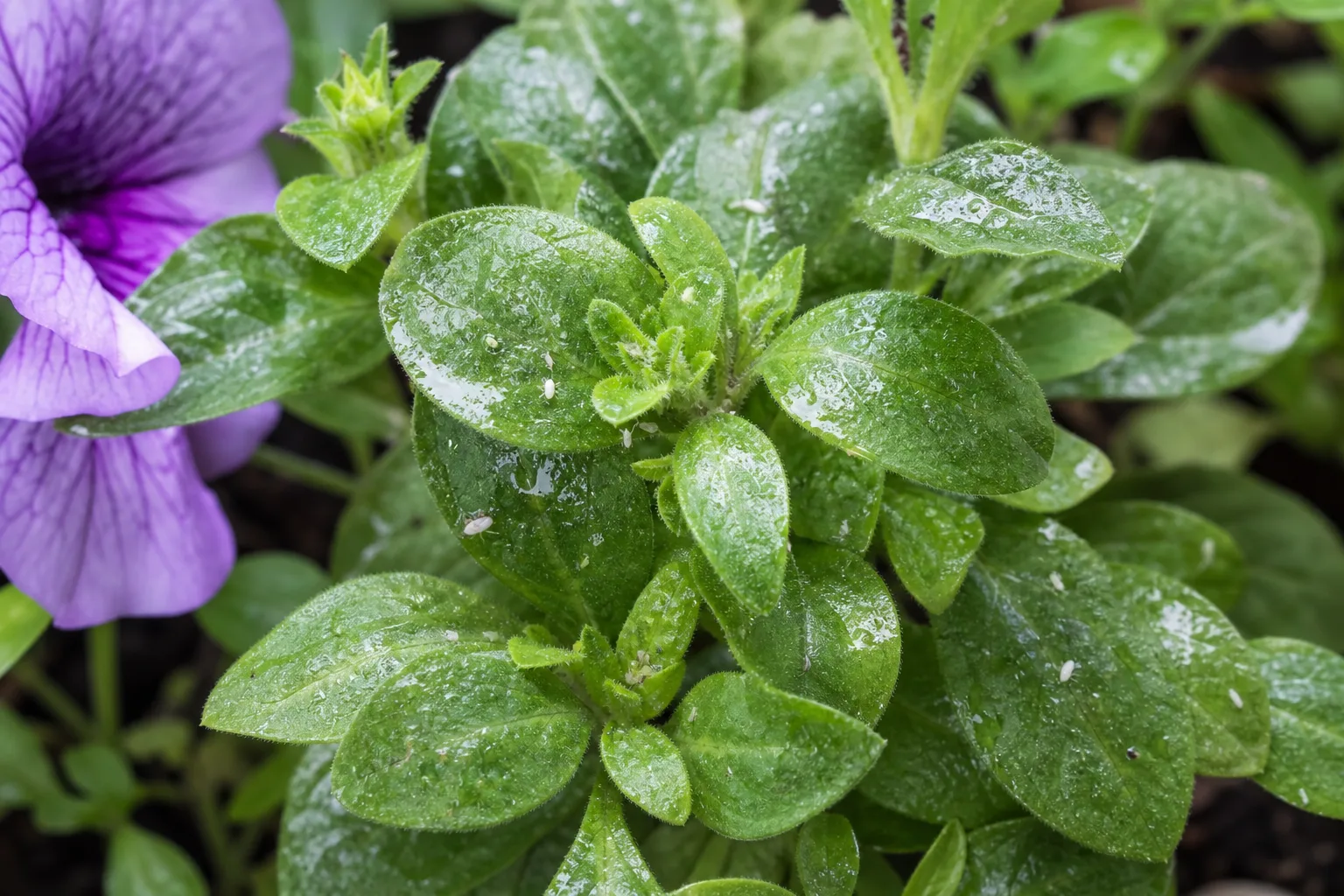
Sticky Leaves on Petunia: Causes, Checks & Fixes
This guide covers sticky leaves on Petunia. See also the general Sticky Leaves guide, watering, and light pages for this plant.
Sticky Leaves on Petunia: Causes, Checks & Fixes
Quick answer
Sticky petunia leaves fall into two very different categories. Healthy petunias in the nightshade family have thick foliage that feels somewhat sticky to the touch-that is normal glandular hair secretion, not a problem. Patchy, shiny tackiness concentrated on new growth, leaf undersides, or the deck rail below your basket usually means sap-feeding insects are excreting honeydew.
First step: inspect leaf undersides and stem tips before you spray. If you find aphids, whiteflies, ants, or wipe-able black sooty mold, you have a pest issue to treat-start with the aphids or whiteflies guides for species-specific control. If the plant blooms normally with uniform light stickiness and no insects, leave it alone.
Natural stickiness vs. pest honeydew
Use this table before you reach for insecticide. It is the fastest way to separate healthy resinous petunias from baskets that need treatment.
| Sign | Normal trichome stickiness | Pest honeydew |
|---|---|---|
| Feel | Light, even tack on stems and both leaf surfaces | Shiny, tacky patches-often on upper leaves where drips landed |
| Distribution | Whole plant, from first open leaves | Concentrated on new tips, leaf undersides, flowers below feeding sites |
| Insects | None visible | Aphids, whiteflies, mealybugs, or scale on stems |
| Ants | Absent | Often marching on basket hooks, chains, or pot rims |
| Sooty mold | None | Black film that wipes off with a damp cloth |
| Surfaces below basket | Dry | Sticky deck rails, patio furniture, or window sills |
| Treatment needed | No | Yes-rinse undersides first, then treat confirmed pests |
Porch-basket clue: Honeydew drips onto surfaces below the pot before many growers notice stickiness on upper leaves. If only one basket leaves a tacky ring on your deck rail while neighbors stay clean, inspect that basket’s undersides first.
Recovery snapshot (mixed porch display, June): One grower reported a neighbor’s Supertunia basket with ant trails on the chain and black smears on upper leaves; three morning rinses targeting undersides plus one insecticidal soap pass cleared live aphids within ten days, and new tips opened clean by week three. A second basket on the same rail felt uniformly resinous from day one with no ants-left untreated and bloomed normally all season.
Why Petunia leaves get sticky
Petunias belong to Solanaceae-the same family as tomatoes and peppers-and their leaves and stems carry glandular trichomes that secrete a resinous coating. UC IPM notes that petunia leaves are thick and somewhat sticky as a normal plant characteristic. That baseline texture surprises many first-time growers who assume all stickiness is disease.
Pest-related stickiness is different. Aphids and whiteflies pierce phloem sap and excrete excess sugar as honeydew-a sweet, tacky liquid that drips onto lower leaves, flowers, and surfaces below the basket. Honeydew does not spread evenly; it pools where insects feed, especially on soft new shoots petunias produce constantly during bloom season.
Trailing Wave and Supertunia baskets are especially prone because they push tender growth in Petunia light guide while their dense outer curtain limits airflow compared with upright milliflora plantings in open beds. Drought-stressed containers combined with warm sheltered porches create conditions where aphid and whitefly populations surge before stickiness shows on the sunny side of the basket.
Mealybugs and soft scale also excrete honeydew on ornamentals. On petunias they are less common than aphids or whiteflies but show up as white cottony clusters in stem crotches or waxy bumps along stems-see mealybugs on petunia if you find wax patches instead of soft aphid groups. Thrips rarely produce heavy stickiness but can scar petals; sticky blooms with silvery streaks point to thrips rather than trichomes.
Ants complicate the picture. Ants harvest honeydew and protect aphid colonies from predators. Ant trails on basket hooks or container rims often appear before you spot the aphids themselves.
What sticky leaves look like on Petunia
Natural trichome stickiness:
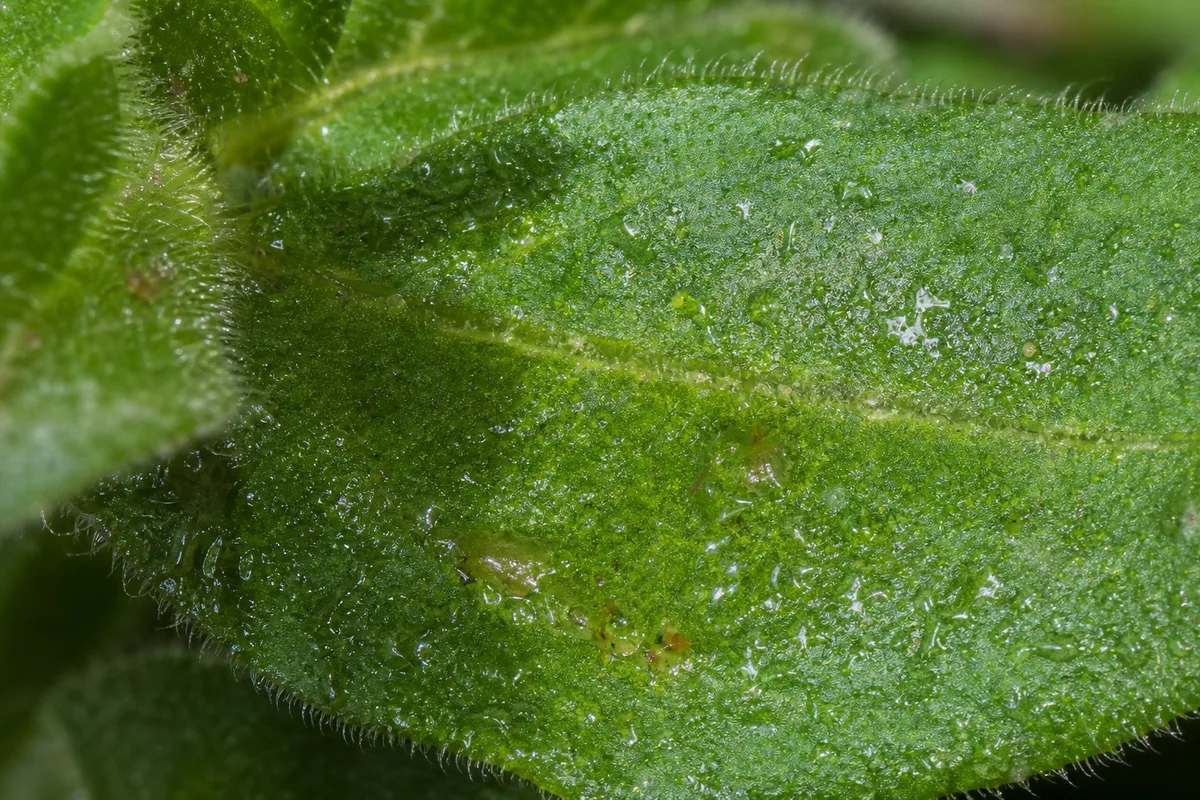
Sticky Leaves symptoms on Petunia - compare with healthy tissue on the same plant.
- Light tackiness on stems, both leaf surfaces, and flower stalks from early growth
- No visible insects, sooty mold, or yellowing tied to the stickiness
- Plant blooms normally with firm stems on Wave, Supertunia, or grandiflora types
Pest honeydew stickiness:
- Shiny, tacky patches on upper leaves where drips landed
- Sticky residue concentrated on new tips and leaf undersides
- Soft green, black, or pink aphid clusters on shoots, or tiny white insects flying when stems are shaken
- White cottony mealybug masses in leaf axils or along stems
- Black sooty mold that wipes off with a damp cloth
- Ant activity on stems or basket hardware
- Yellowing or curled new leaves when feeding is heavy
Sooty mold is a fungus that grows on honeydew-it does not infect petunia tissue directly but can block light and stunt leaves if the coating is thick. Once insects are controlled, mold stops spreading and can be rinsed off.
How to confirm the cause
Work through these checks in order:
- Distribution pattern - Uniform stickiness across the whole plant suggests normal trichomes. Localized tackiness near growing tips or undersides points to honeydew.
- Underside inspection - Lift trailing stems and check the backs of upper leaves with a hand lens. Aphids cluster as soft-bodied groups; whitefly nymphs look like flat pale scales; white adults fly when disturbed; mealybugs form cottony white masses in crotches.
- Shake test - Gently shake a stem over white paper. A small cloud of white insects confirms whiteflies. Aphids stay put.
- Sooty mold check - Rub a finger on a dark upper leaf patch. Sooty mold smears and wipes away; natural stickiness does not leave a black film.
- Ant trails and surface drips - Ants marching up stems or sticky residue on deck rails below one basket strongly suggest honeydew producers are present.
- Soil and stress check - Confirm the pot is not bone dry or waterlogged per petunia watering guidance. Drought alone does not create stickiness, but stressed petunias attract pests faster than evenly watered plants.
If none of these pest signs appear and the plant looks otherwise healthy, the stickiness is likely normal-no treatment required.
First fix for Petunia
Rinse the plant with a strong stream of water early in the morning, targeting leaf undersides and stem tips.
This single step dislodges aphids, knocks down whitefly nymphs, and washes fresh honeydew before it attracts ants or grows sooty mold. Hold trailing basket stems and spray from below so undersides get direct contact. Let foliage dry in sun the same day to reduce fungal risk.
Do not reach for insecticide on day one if you have not confirmed insects. Natural trichome stickiness needs no spray. Do not fertilize a pest-hit plant hoping to push new growth-that produces more tender tissue pests prefer.
Step-by-step recovery
After the initial rinse:
- Repeat water sprays every two to three days until live aphids or flying whiteflies are gone on inspection.
- Apply insecticidal soap if colonies persist after several rinses. Cover undersides thoroughly; repeat every four to five days through one full pest generation.
- Set yellow sticky traps near heavily infested baskets to catch adult whiteflies-traps reduce populations but do not replace sprays on undersides.
- Manage ants if they protect colonies. Ant stakes or barriers on basket chains can help natural enemies reach aphids.
- Wash sooty mold off upper leaves with plain water once honeydew production stops. Severely coated leaves can be trimmed if they no longer photosynthesize well.
- Remove virus-suspect leaves showing mosaic mottling or severe distortion after heavy aphid or whitefly feeding-see mosaic virus on petunia before deciding whether to salvage the plant. Do not compost that tissue near garden beds.
Isolate badly infested baskets from mixed window boxes until control holds for at least a week.
Recovery timeline
Water knockdown shows results within two to three days when colonies are moderate. A full soap course may take one to two weeks with label-interval repeats. Sooty mold fades as honeydew dries up; expect cleaner new growth within one to three weeks once insects stay gone.
Sticky upper leaves themselves rarely become glossy again if mold was thick-judge recovery by clean new tips and buds, not old coated foliage.
Lookalike symptoms to rule out
Powdery mildew puts a dry white powder on leaf surfaces, not a tacky film. It spreads in patches without honeydew or insects.
Spider mites cause stippling and fine webbing, not typically heavy stickiness. Mites thrive in hot dry conditions; confirm with a tap test over white paper.
Botrytis on wet flowers causes brown mushy petals, not leaf stickiness. It follows overhead watering or high humidity on spent blooms-not sap-feeder honeydew.
Drought stress wilts and crisps petunia edges but leaves feel dry, not tacky-see underwatering on petunia if the pot is light and mix is dry at 2 cm depth.
Mistakes to avoid
Do not assume every sticky petunia needs pesticide-many healthy plants feel naturally resinous.
Do not spray insecticidal soap during peak bee activity on open blooms; treat early morning or evening when pollinator traffic is low.
Do not ignore ants. Controlling aphids alone is harder while ants defend colonies.
Do not compost heavily infested or virus-suspect clippings near garden petunias.
Do not increase nitrogen feeding during an active infestation-that fuels soft aphid-friendly growth.
How to prevent sticky leaves next time
Scout new growth weekly from late spring through peak bloom. Trailing Wave and Supertunia baskets produce constant soft shoots during this window-the tissue aphids and whiteflies prefer.
Quarantine new hanging baskets for several days before combining them with existing displays. Mixed greenhouse baskets often introduce whiteflies.
Keep even moisture using base watering when the top 2 cm of mix feels dry. Petunias in full sun dry quickly, but chronic drought stress invites pests.
Preserve beneficial insects. Lady beetles, lacewings, and parasitic wasps control aphids when broad-spectrum sprays have not wiped them out.
Avoid excess nitrogen that produces lush leafy growth with fewer flowers-tender shoots attract aphids.
Improve airflow around crowded baskets on sheltered porches. Stagnant warm pockets favor whitefly buildup on trailing cultivars more than on spaced in-ground plantings.
When to worry
Treat as urgent when honeydew and sooty mold spread across most of the canopy within days, buds drop before opening, or leaves show virus-like mottling after heavy sap-feeder pressure. Aphids and whiteflies can transmit viruses on petunias; distorted mosaic growth after infestation may mean the plant will not fully recover and should be removed to protect neighbors.
Replace severely declining baskets rather than fighting endless reinfestation on a stressed annual. Petunias are seasonal plants-starting fresh with clean stock is often cheaper than repeated chemical cycles.
Natural uniform stickiness on a vigorous blooming petunia is not urgent. Confirm pests first; treat only when evidence supports honeydew, not trichomes.
Related petunia problems
- Aphids on petunia - soft clusters on new tips, common honeydew source
- Whiteflies on petunia - shake-test clouds, basket outbreaks
- Mealybugs on petunia - cottony wax in stem crotches
- Mosaic virus on petunia - mottling after heavy sap-feeder pressure
- Spider mites on petunia - stippling and webbing, not heavy honeydew
- Powdery mildew on petunia - dry white powder, not tacky film
- Thrips on petunia - petal scarring, occasional sticky blooms
- Petunia watering - 2 cm dry test for even moisture without drought stress
How we wrote and verified this guide: Recommendations were checked against UC IPM, Missouri Extension, UMN Extension, Ask Extension, and PNW Handbooks references cited inline. Author: sai-ananth. Reviewer: LeafyPixels Review Board. Methodology: plant problem guidance is reviewed against botanical references, extension resources, and LeafyPixels plant-care data before publication. Claims validation: claims-validator-v1 pass with inline external links documented below. Last reviewed: 2026-06-17.
When to use this page vs other Petunia guides
- Petunia watering guide - Use for routine moisture checks before assuming sticky leaves is the main issue.
- Petunia problems hub - Browse all 40 common issues on this species.