Iron Deficiency on Petunia: Causes, Checks & Fixes
Quick answer
Petunia iron deficiency shows as yellow new leaves with green veins when container pH rises above about 6.2. Test runoff pH first, then apply an iron chelate drench and let the mix dry between waterings.
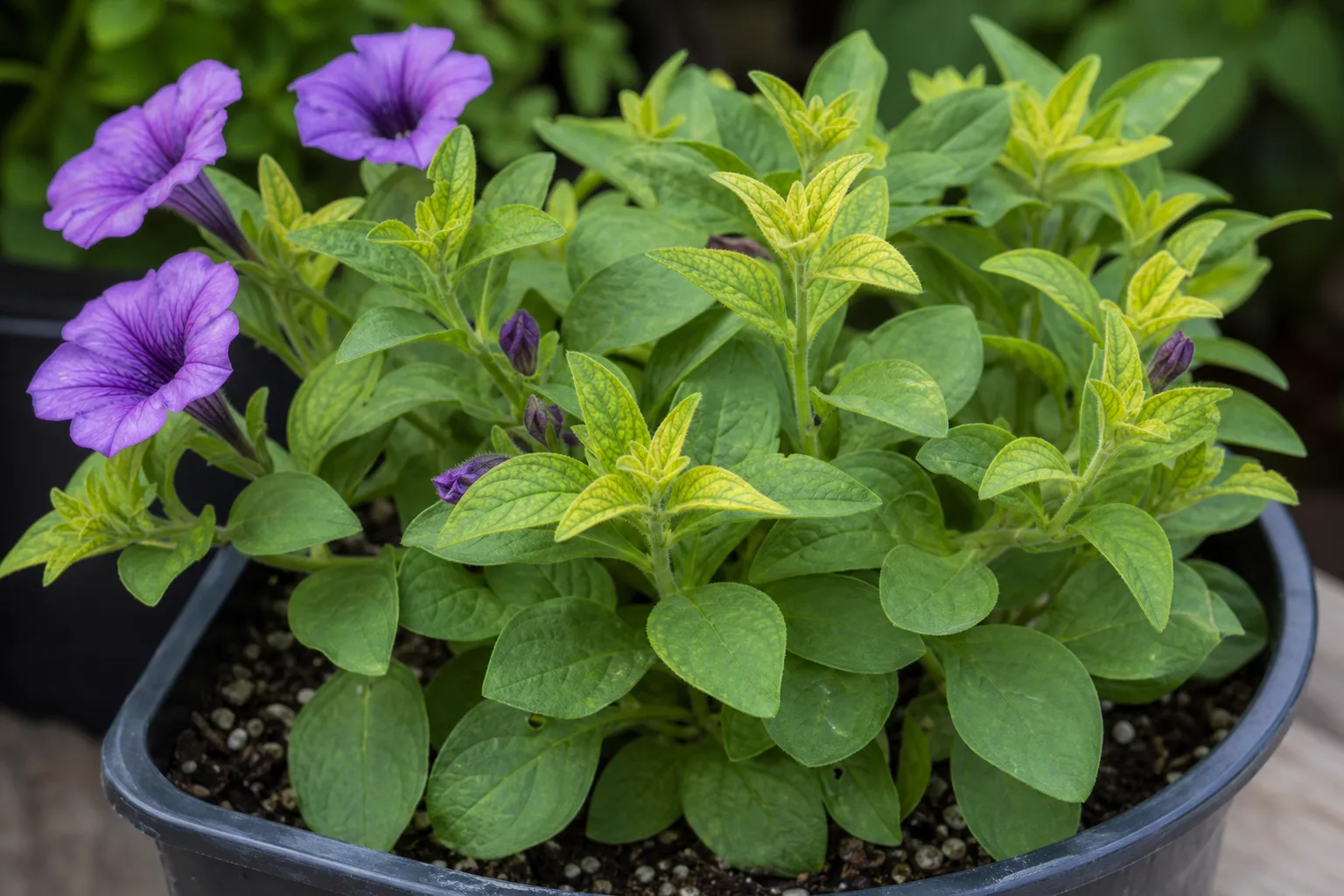
Iron Deficiency on Petunia: Causes, Checks & Fixes
This guide covers iron deficiency on Petunia. See also the general Iron Deficiency guide, watering, and light pages for this plant.
Iron Deficiency on Petunia: Causes, Checks & Fixes
Quick answer
Iron deficiency on petunias shows up as interveinal chlorosis on new growth - the newest leaves turn yellow between green veins while older foliage stays relatively green. Petunias are iron-inefficient in containers; when substrate pH drifts above about 6.2, iron becomes unavailable even if it is in the mix.
First step: test runoff pH. If it reads high, apply an iron chelate drench per label and improve drainage so roots stay oxygenated between waterings. Do not pile on nitrogen fertilizer until you confirm the pattern is iron lockout, not root rot on Petunia.
What iron deficiency looks like on Petunia
The signature pattern is yellowing between veins on the youngest leaves at shoot tips and side branches. Veins often stay green longer, giving a net-like or striped look. As deficiency worsens, tissue may bleach toward white and flowers can look dull or washed out.
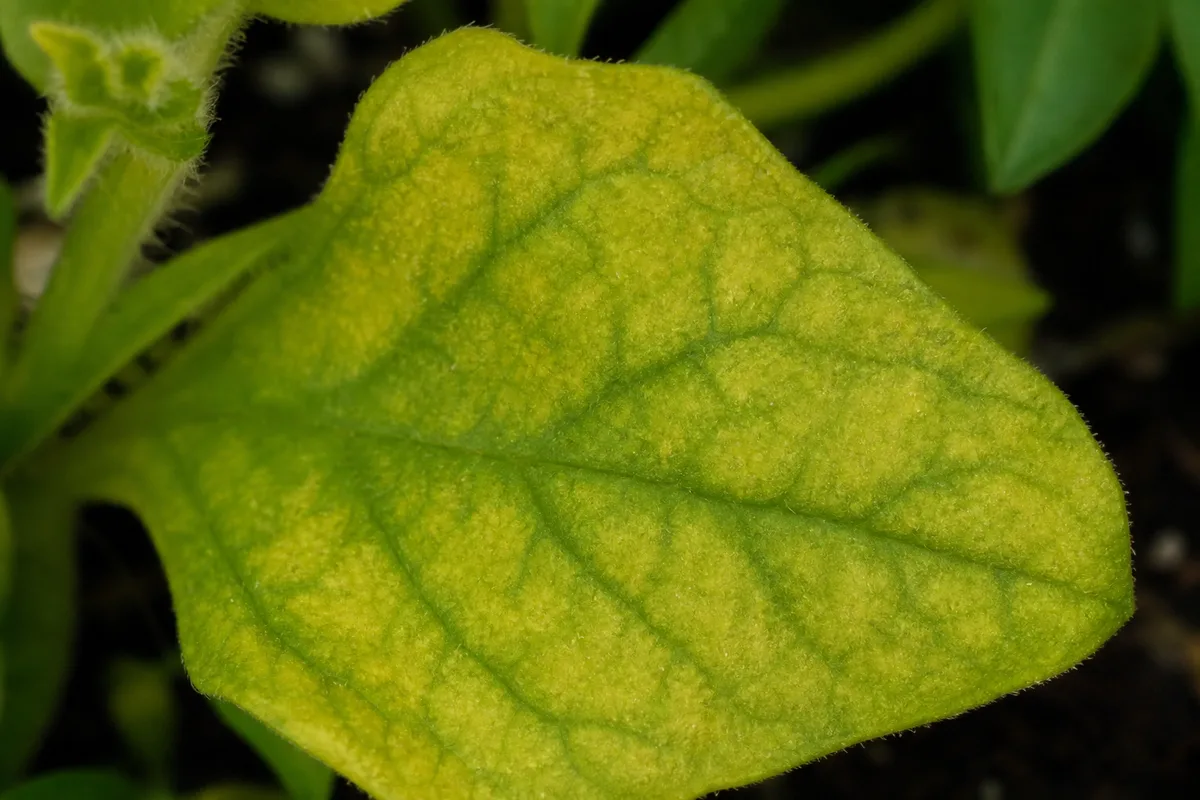
Iron Deficiency symptoms on Petunia - compare with healthy tissue on the same plant.
Because iron is immobile in plants, symptoms appear on new growth first. Lower, older leaves may look fine for weeks while the top of a hanging basket fades. That top-down, interveinal pattern is the key visual clue.
Petunias in peak bloom still push new leaves at stem tips. Iron-stressed plants may show stunted new shoots, smaller leaves at the top, and reduced flower intensity even before the whole basket collapses. In advanced cases, growing tips can die back and produce clustered, pale side shoots.
Separate normal aging: a few bottom leaves yellowing late in season on an otherwise blooming plant is not iron deficiency. Worry when new leaves at the top are pale while the plant is actively growing in spring or early summer.
Why Petunia gets iron deficiency
Petunias belong to a group of bedding plants that cannot efficiently take up iron when pH is high. Extension greenhouse guidance lists petunia among iron-inefficient species that need a lower target substrate pH - roughly 5.5 to 6.2 - to keep micronutrients soluble.
High substrate pH is the primary driver. As pH rises above about 6.2 to 6.4 in peat-based or coco mixes, iron and manganese become less available in the soil solution. Container petunias fed with alkaline tap water or allowed to dry slowly often drift upward in pH through a season, especially in hanging baskets where leaching is limited.
overwatering on Petunia makes it worse. Constantly wet mix reduces root function and oxygen, which slows nutrient uptake. Soggy roots in cool weather mimic deficiency even when iron is present. Chronic overwatering also contributes to pH creep in buffered potting media.
High-phosphorus fertilizer can lock iron. Phosphorus and iron can form insoluble compounds in the root zone. Heavy bloom boosters or superphosphate additions - especially combined with high pH - push petunias toward interveinal chlorosis despite regular feeding.
Alkaline irrigation water raises substrate pH over time in closed containers. If your tap water is hard, each watering adds bicarbonates that nudge pH up - a common reason basket petunias chlorose midseason while garden petunias in native soil stay green.
Petunias are heavy feeders in sun, but more nitrogen does not fix iron chlorosis. Excess nitrogen can produce lush stems with pale new tissue that looks like deficiency; the fix is iron availability and pH, not more NPK.
How to confirm the cause
Work through this inspection order before Petunia repotting guide or switching fertilizers:
- New vs old leaves - Interveinal yellow on top growth points to iron or manganese; uniform yellow on older lower leaves suggests nitrogen deficiency or natural senescence.
- Soil moisture at 2 cm - Wet, cold mix with pale tops may be root stress plus pH drift. Dry, light pots with pale new leaves still fit iron lockout if pH is high.
- Runoff pH - Collect drainage after a thorough watering. Readings consistently above 6.2 on petunias strongly support iron deficiency. Home pH meters or test strips work; lab soil tests are more precise.
- Water source - Hard, alkaline tap water correlates with midseason chlorosis in containers.
- Recent fertilizer - High-phosphorus feeds or lime additions in the last month increase lockout risk.
- Root check - Slide the plant partly out. Firm, pale roots with dry-down between waterings fit nutrient lockout. Mushy brown roots with wet soil suggest rot - a different fix path.
Manganese deficiency can mimic iron chlorosis on new leaves. Without a tissue test, treat confirmed high pH with iron chelate first; many commercial micronutrient drenches supply both.
First fix for Petunia
Apply an iron chelate drench at label rate, then rinse foliage.
Use a chelated iron product formulated for container plants - EDDHA or DTPA chelates remain effective when pH is slightly high. Mix per label, drench until a small amount runs from drainage holes, and rinse leaves and flowers immediately to prevent brown spotting from iron contact on wet petals.
Do this only after confirming the interveinal pattern on new growth. If runoff pH is above 6.5, pair the chelate with steps to lower pH gradually - acid-forming fertilizers with ammoniacal nitrogen help in greenhouse production, but home growers more often succeed by flushing with plain water and avoiding high-phosphorus feeds rather than aggressive acidifying.
Hold off on extra nitrogen until new leaves emerge greener. A stressed petunia with damaged roots does not need a heavy feed on the same day as chelate.
Step-by-step recovery
For mild chlorosis on an otherwise firm plant:
- Test or estimate runoff pH if possible.
- Apply iron chelate drench; rinse foliage after application.
- Let the top 2 cm of mix dry before the next watering - petunias need moisture in sun but not constant saturation.
- Switch to a balanced liquid feed moderate in phosphorus for the next two weeks.
- Watch the next flush of leaves at stem tips for green color return.
For chlorosis paired with wet, heavy mix:
- Stop watering until the top 2 cm dries and the pot lightens.
- Confirm drainage holes are open; empty saucers after every drink.
- Apply iron chelate once roots are functioning again - not while soil is waterlogged.
- If pH test strips stay high after two weeks, flush the container with plain water until runoff runs clear, then re-test.
- Resume base watering only when the check confirms dryness.
For severe bleaching at shoot tips:
- Trim dead or white tip tissue with clean scissors to redirect energy.
- Chelate once; wait ten to fourteen days before repeating unless label allows.
- Move the basket to Petunia light guide with good airflow - petunias recover faster when photosynthesis demand matches water use.
- Do not repot mid-chlorosis unless mix is clearly degraded or root-bound; repotting plus chelate plus feed stacks stress.
Recovery timeline
Already-yellow leaf tissue rarely re-greens fully. Judge success by new leaves emerging with normal green color within one to three weeks after chelate and pH correction. Flower color should brighten on the next bloom cycle if roots were healthy.
Mild cases on young basket petunias often turn around after a single chelate drench and corrected watering. Chronic high pH from hard water may need repeated monitoring every two to three weeks through the season.
If new growth stays pale after two chelate applications and verified pH below 6.5, consider manganese deficiency or root damage - tissue testing or replacing the plant may be more practical than guessing supplements on a seasonal annual.
Lookalike symptoms
Iron chlorosis shares signs with several other petunia problems:
- Nitrogen deficiency - Older leaves yellow first, often uniformly pale rather than strongly interveinal on new tissue only.
- Manganese deficiency - Interveinal chlorosis on young leaves, similar to iron; more common when pH exceeds 6.4. Tissue analysis distinguishes them.
- Overwatering / root rot - Yellow leaves often start lower down; soil stays wet; stems may wilt despite moisture. Whole-leaf yellow more than vein-specific pattern.
- Mosaic virus - Mottled green and yellow patches with distortion, not clean interveinal netting on new growth alone.
- Spider mite stippling - Fine yellow dots on leaves, often with webbing; not confined to newest leaves between veins.
- Natural lower-leaf drop - Few bottom leaves only, late season, plant otherwise blooming.
Mistakes to avoid
Do not treat every pale petunia with more bloom fertilizer - high phosphorus worsens iron lockout. Do not chelate repeatedly without checking pH; excess iron can damage roots and spot flowers if foliage is not rinsed. Do not keep watering on schedule when mix stays wet; oxygen-starved roots cannot use iron you apply.
Avoid confusing iron chlorosis with nitrogen shortage and dumping nitrogen - petunias may grow taller with paler tops. Do not repot into garden soil to “add minerals”; heavy soil raises wetness and pH problems in baskets.
Petunia care cross-check
Iron deficiency often appears when sun, water, and pH drift out of sync. Petunias in full sun use water quickly and need regular feeding during bloom - but they still require dry-down between waterings. A basket in partial shade that gets daily water stays wet, pH creeps up, and top leaves chlorose even though you fertilize.
Align with lightweight mix at pH 6.0–7.0, base watering when the top 2 cm is dry, and balanced feeding every one to two weeks during active bloom - not high-phosphorus boosters every watering.
How to prevent iron deficiency next time
Start with quality potting mix and avoid lime-heavy amendments in containers. Monitor pH midseason if you use hard tap water - flush containers periodically to leach salts and bicarbonates.
Use fertilizers moderate in phosphorus during petunia bloom; reserve high-P products for confirmed deficiency elsewhere. For iron-inefficient crops, proactive low-rate iron chelate every three to four weeks is used in greenhouse production; home baskets usually do fine with pH management plus one corrective chelate when tips first pale.
Water at the base, let mix dry appropriately, and replace seasonal basket substrate each planting cycle rather than reusing compacted, pH-buffered old mix.
When to worry
Treat as urgent when shoot tips bleach white, new growth stops entirely, or chlorosis spreads to most of the canopy within a week despite chelate. Severe iron stress reduces photosynthesis sharply and petunias may not recover full bloom before season end.
Mild interveinal yellow on a few top leaves after weeks of hard-water watering is manageable. Wilting with wet soil and soft stems is root rot, not iron - inspect roots before chelating.
Conclusion
Iron deficiency on container petunias is a pH and uptake problem, not a lack of feeding discipline. Confirm interveinal yellowing on new leaves with green veins, test runoff pH if you can, and apply iron chelate drench with a foliage rinse. Correct overwatering and high-phosphorus feeds that push pH up. Recovery shows in the next green leaves at stem tips - not in old bleached tissue - usually within one to three weeks when roots are healthy.
When to use this page vs other Petunia guides
- Petunia watering guide - Use for routine moisture checks before assuming iron deficiency is the main issue.
- Petunia problems hub - Browse all 40 common issues on this species.