Mosaic Virus on Pothos: Causes, Checks & Fixes
Quick answer
Most mottled pothos leaves are normal genetic variegation or thrips damage-not Dasheen mosaic virus, which has not been shown to infect Epipremnum aureum. First step: isolate the plant and compare leaf patterns to your cultivar before assuming a viral infection.
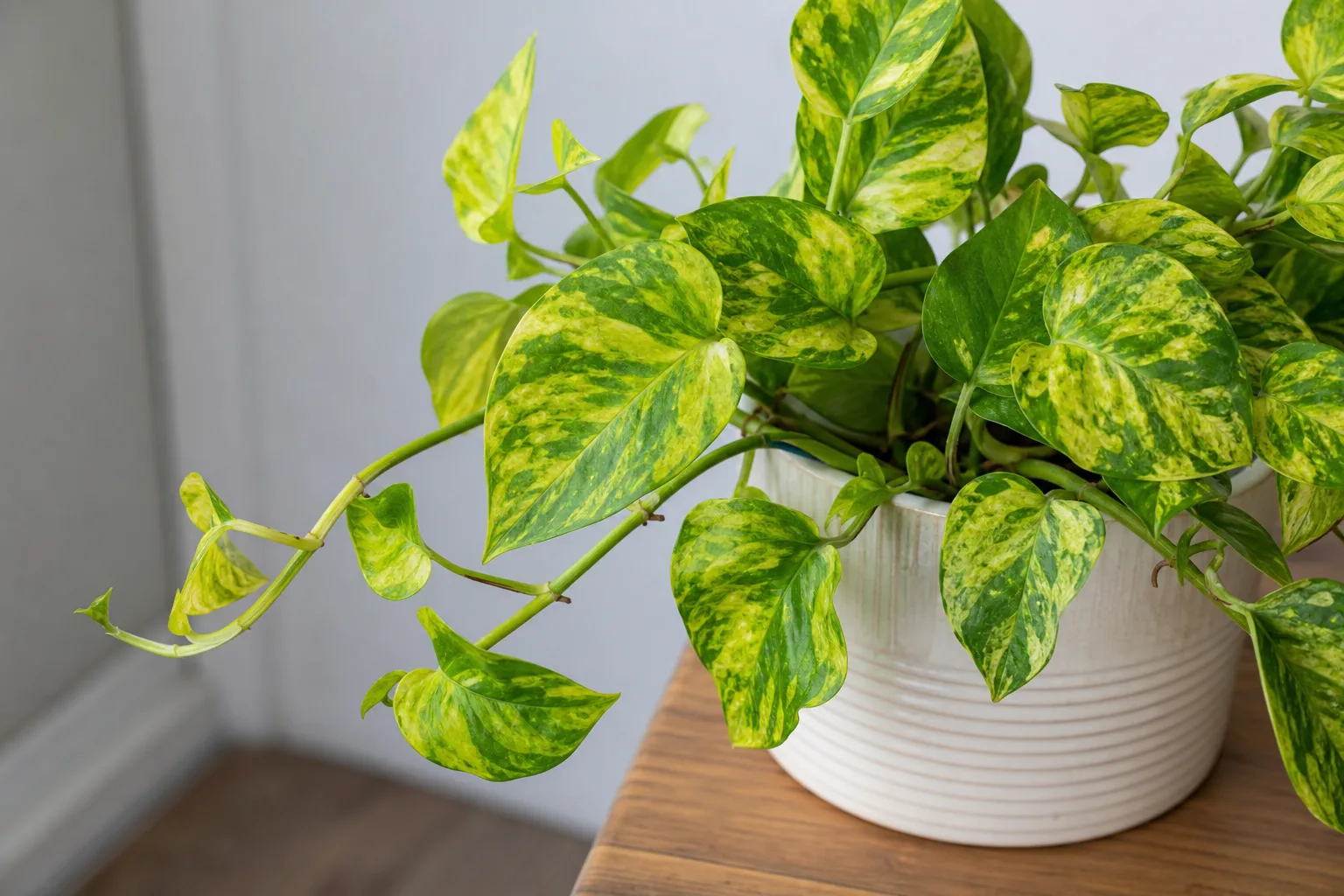
Mosaic Virus on Pothos: Causes, Checks & Fixes
This guide covers mosaic virus on Pothos. See also the general Mosaic Virus guide, watering, and light pages for this plant.
Mosaic Virus on Pothos: Causes, Checks & Fixes
Quick answer
Worried about mosaic virus on pothos (Epipremnum aureum)? On Pothos overview, irregular light-and-dark green patches are usually normal-not a viral infection. Golden pothos, Marble Queen, Pearls and Jade, Jessenia, and Manjula are bred for marbled foliage. University of Hawaii extension notes that mosaic-like patterns on variegated pothos come from genetic variegation, not Dasheen mosaic virus (DsMV).
Research on Florida nursery aroids also states that golden pothos has not been demonstrated to be susceptible to Dasheen mosaic virus, unlike philodendron, dieffenbachia, and aglaonema. Leaf deformity and rugosity on pothos are more often linked to aroid thrips feeding injury than to DsMV.
First step: isolate the plant and compare its mottling to your cultivar’s normal pattern before assuming mosaic virus. Move it away from philodendron, dieffenbachia, and other aroids until you confirm whether you are seeing stable variegation, thrips damage, light-related reversion, or a rare new problem worth lab testing.
What mosaic-like patterns look like on pothos
Pothos leaves are naturally heart-shaped, waxy, and often marbled. Wisconsin Extension describes leaves as bright green or irregularly splotched or marbled with yellow or cream-that baseline matters before you label anything viral.
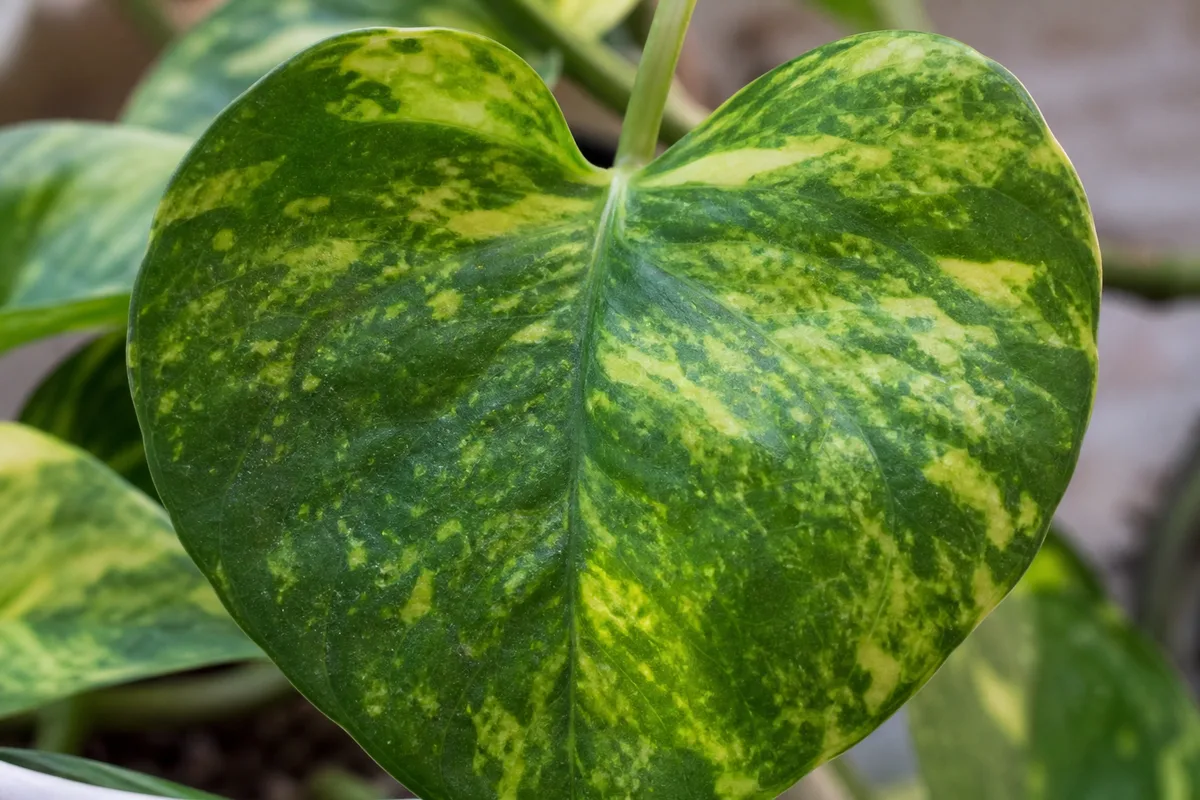
Mosaic Virus symptoms on Pothos - compare with healthy tissue on the same plant.
Normal genetic variegation (most common):
- Stable white, cream, yellow, or lime sectors on cultivars like Marble Queen, Snow Queen, Pearls and Jade, or Golden pothos
- Pattern present from purchase and consistent along the same vine-not spreading randomly week to week
- Clemson Extension notes that variegated pothos may lose coloring in low light rather than developing infectious mosaic
- Solid-green cultivars like Jade stay uniformly green unless reverting or stressed
Thrips-related distortion (common lookalike):
- Silvery or stippled patches on leaf blades, especially on newest unfurling leaves
- Twisted, small, or scarred new leaves that look “rugose” or crinkled
- Tiny black frass specks in silvery zones-distinct from random green/yellow marbling
- Hawaii extension specifically warns not to confuse thrips injury on pothos with DsMV on other aroids
Patterns that raise virus concern (uncommon on pothos):
- New mottling on a previously solid-green Jade or Neon plant that worsens on successive leaves
- Chlorotic streaking along veins plus distortion on multiple vines-more typical of DsMV on philodendron and dieffenbachia than on pothos
- Matching symptoms on nearby philodendron or dieffenbachia after shared pruning or bench space
- Stunting and decline despite correct watering and Pothos light guide
Do not confuse mosaic with root rot on Pothos yellowing (often lower leaves on wet mix), sunburn (bleached patches on the window side), or fertilizer burn (tip and margin browning with crusty soil).
Why pothos rarely gets true mosaic virus
Dasheen mosaic virus is a potyvirus that affects many ornamental aroids-philodendron, dieffenbachia, caladium, spathiphyllum, and syngonium among them. Symptoms on susceptible hosts include leaf mosaic, vein chlorosis, ring spots, distortion, and stunting.
Epipremnum aureum is a different story. Florida pathologists report that golden pothos, satin pothos (Scindapsus pictus), and arrowhead vine have not been shown susceptible to DsMV under nursery conditions. That is why most “mosaic virus on pothos” searches actually describe:
- Cultivar variegation - Marble Queen’s white streaks, Pearls and Jade’s speckled edges, and Golden pothos’s yellow splotches are inherited traits, not pathogens.
- Environmental reversion - Variegated pothos pushed into dim corners may produce more green tissue; Wisconsin Extension links low light to loss of variegation, which can look like new mottling if you only watch one vine.
- Thrips feeding - Aroid thrips scar new leaves and create silvery, distorted tissue that social posts often mislabel as “virus.”
- Cross-species confusion - Philodendron and dieffenbachia on the same shelf genuinely carry DsMV risk; pothos on that shelf may look similarly marbled for unrelated reasons.
Pothos is a fast vining houseplant whose nodes produce leaves in quick succession. When every new leaf on a variegated clone opens with the same white-and-green pattern, that rhythm fits genetics. When solid-green pothos suddenly shows patchy chlorosis on multiple nodes within weeks-and philodendron neighbors show vein banding-that timeline fits virus spread on other aroids more than documented DsMV on pothos.
How to confirm the cause
Work through this order before discarding a plant or spraying fungicide:
- Isolate first - Move the pothos away from philodendron, dieffenbachia, aglaonema, and syngonium until you finish inspecting. Sanitize shears if you recently trimmed multiple aroids.
- Identify the cultivar - Match your plant to known patterns: Marble Queen (white streaks on green), Neon (uniform chartreuse), Jade (solid green), Pearls and Jade (edge-heavy white speckles). Stable cultivar color is strong evidence against virus.
- Track new leaves for two weeks - Photograph the newest node every few days. Genetic variegation stays stylistically consistent; thrips damage adds fresh silvery zones; suspected virus-like spread adds new chlorotic patches on successive leaves.
- Thrips inspection - Tap a suspect leaf over white paper, check leaf undersides and unfurling tips with a hand lens, and look for black frass in silvery areas.
- Neighbor check - Inspect philodendron and dieffenbachia on the same shelf for vein chlorosis and mosaic typical of DsMV. Pothos mottling plus clean neighbors points away from shared viral outbreak.
- Light and care cross-check - Confirm bright indirect light, dry-top watering, and no recent repot shock. Reversion and stress yellowing mimic “new mosaic” when care shifted recently.
- Lab confirmation if still uncertain - Commercial growers index stock against viruses; home growers can submit tissue to a university plant diagnostic clinic when symptoms persist after thrips control and cultivar comparison.
If thrips are present, treat insects first and re-evaluate mottling after two weeks. If the plant is a known variegated cultivar with stable patterns and firm vines, you likely do not have mosaic virus-you have normal pothos genetics.
First fix for pothos
Isolate the plant and compare its leaf mottling to your cultivar’s expected variegation before assuming Dasheen mosaic virus or removing the plant.
Bagging or discarding a Marble Queen because white streaks look “viral” destroys a healthy specimen. Isolation still matters when you share space with philodendron or dieffenbachia, when thrips are suspected, or when a solid-green pothos develops new patchy chlorosis.
Once isolated:
- Photograph newest leaves at the growing tip
- Inspect for thrips frass and silvery stippling
- Hold a solid-green leaf from Jade pothos next to a marbled leaf-cultivar contrast clarifies normal versus new
Do not apply fungicide as a first response. Mosaic is viral when it occurs; fungicides do not clear DsMV. Do not fertilize a stressed pothos hoping color will return.
Step-by-step response
After isolation and cultivar comparison:
- If patterns match normal variegation - Return the pothos to bright indirect light once neighbors are checked. Trim only damaged thrips leaves; no virus protocol needed.
- If thrips are confirmed - Remove heavily scarred leaves, shower the plant, and apply insecticidal soap on a label schedule. Re-check mottling after two weeks; silvery zones on old leaves stay, but new leaves should unfurl cleaner.
- If low-light reversion is the issue - Move closer to a window or add supplemental light. Variegated pothos needs brighter conditions than all-green Jade to hold white or yellow sectors.
- If DsMV is confirmed on nearby aroids - Sanitize all tools with soap and 70% alcohol. Scout your pothos weekly for six weeks but understand documented susceptibility data does not list golden pothos as a DsMV host.
- If rare systemic virus is lab-confirmed on pothos - Remove and bag the plant; do not compost. Replace from indexed tissue-cultured stock. Commercial micropropagation aims to eliminate systemic viruses from starting material-buy from reputable nurseries after outbreaks.
- Protect the collection - Work symptomatic aroids last, use separate shears, and quarantine new pothos cuttings before rooting them in shared water.
Recovery timeline
Genetic variegation does not need recovery-it is the plant’s normal appearance. Thrips-damaged or reverted leaves rarely regain perfect marbling; judge success by clean new nodes opening without silvery scarring.
If a true viral infection were confirmed on an aroid, damaged leaves would not revert. Replacement pothos from clean stock typically roots in one to three weeks from cuttings and resumes normal growth in bright indirect light within a month.
Low-light reversion may take three to six weeks of improved light before new leaves show stronger variegation-older green sections stay green.
Lookalike symptoms to rule out
Normal cultivar variegation - Stable marbling from purchase on Marble Queen, Golden, or Pearls and Jade. Not progressive whole-plant decline.
Low-light reversion - More green on variegated vines in dim corners; improves when light increases. Not random chlorotic flecks on solid-green Jade.
Thrips damage - Silvery stippling, black frass, and twisted new tips. Distortion from feeding injury should not be confused with DsMV on pothos.
Nutrient or water stress - Uniform yellow lower leaves on wet soil, or scattered brown centers after cold drafts per Wisconsin Extension-not patchy mosaic across mid-vine leaves.
Philodendron DsMV on a misidentified plant - Heart-shaped leaves with smooth petioles and softer texture may mean you have philodendron, which is a documented DsMV host with vein chlorosis and mosaic.
Fungal leaf spot - Discrete brown or black spots with halos, not irregular green/yellow marbling across the blade.
Mistakes to avoid
Do not discard a variegated pothos because marbling looks “sick”-that is often the cultivar’s purpose. Do not treat genetic variegation with fungicide or virus panic sprays.
Do not assume every mottled aroid has the same virus risk; pothos and philodendron share a family but not the same documented DsMV susceptibility.
Do not prune multiple aroids with one pair of shears during an outbreak on dieffenbachia or philodendron-DsMV spreads through contaminated sap and tools on susceptible hosts.
Do not compost a plant you suspect carries systemic virus. Bag it for trash collection.
Do not root cuttings from a lab-confirmed infected plant hoping clean roots will emerge-viruses systemic in foliage also contaminate stem tissue.
How to prevent mosaic concerns on pothos
Buy pothos from reputable nurseries that use healthy indexed stock for mass production. Quarantine new plants-and propagation jars-for two to three weeks before mixing them with philodendron or dieffenbachia.
Sanitize pruning shears between every plant when trimming multiple aroids. Scout newest pothos leaves weekly for thrips during warm indoor months.
Keep variegated cultivars in bright indirect light so normal patterns stay obvious and sudden changes stand out. Match watering to dry-top rhythm so stress yellowing does not mimic new mosaic.
When a philodendron on the same shelf tests positive for DsMV, isolate and monitor pothos-but avoid unnecessary disposal based on marbling alone on a known variegated clone.
When to worry
Treat as urgent when a previously solid-green pothos develops spreading chlorotic patches on multiple vines within two weeks, confirmed DsMV-positive philodendron or dieffenbachia share your pruning tools, or thrips are unchecked and new leaves keep emerging twisted and silvery across the whole plant.
Lab confirmation is warranted before destroying a large specimen or an entire collection. A Marble Queen with stable white streaks and firm vines in good light is not an emergency-even if a forum post called it “mosaic virus.”
Replace rather than fight when a rare systemic virus is confirmed, neighboring susceptible aroids are declining, or the plant has lost most functional leaf area despite corrected care.
Conclusion
Mosaic virus on pothos is a misleading search term for a plant that usually shows mottled leaves for genetic reasons. Dasheen mosaic virus affects many aroid cousins, but golden pothos has not been demonstrated as a susceptible host-and Hawaii extension explicitly separates variegated pothos marbling from DsMV disease. Isolate, identify your cultivar, rule out thrips and light reversion, and reserve removal for lab-confirmed virus or documented outbreaks on nearby susceptible aroids. That diagnostic path saves healthy Marble Queen and Pearls and Jade plants while still protecting your wider collection.
When to use this page vs other Pothos guides
- Pothos watering guide - Use for routine moisture checks before assuming mosaic virus is the main issue.
- Pothos problems hub - Browse all 39 common issues on this species.