Weak Stems on Jasmine: Causes, Checks & Fixes
Quick answer
Weak jasmine stems usually mean the vine lacks sun, support, or a firm root anchor-not normal twining flexibility. First step: install a trellis and tie the floppiest stems before you move the pot or change watering.
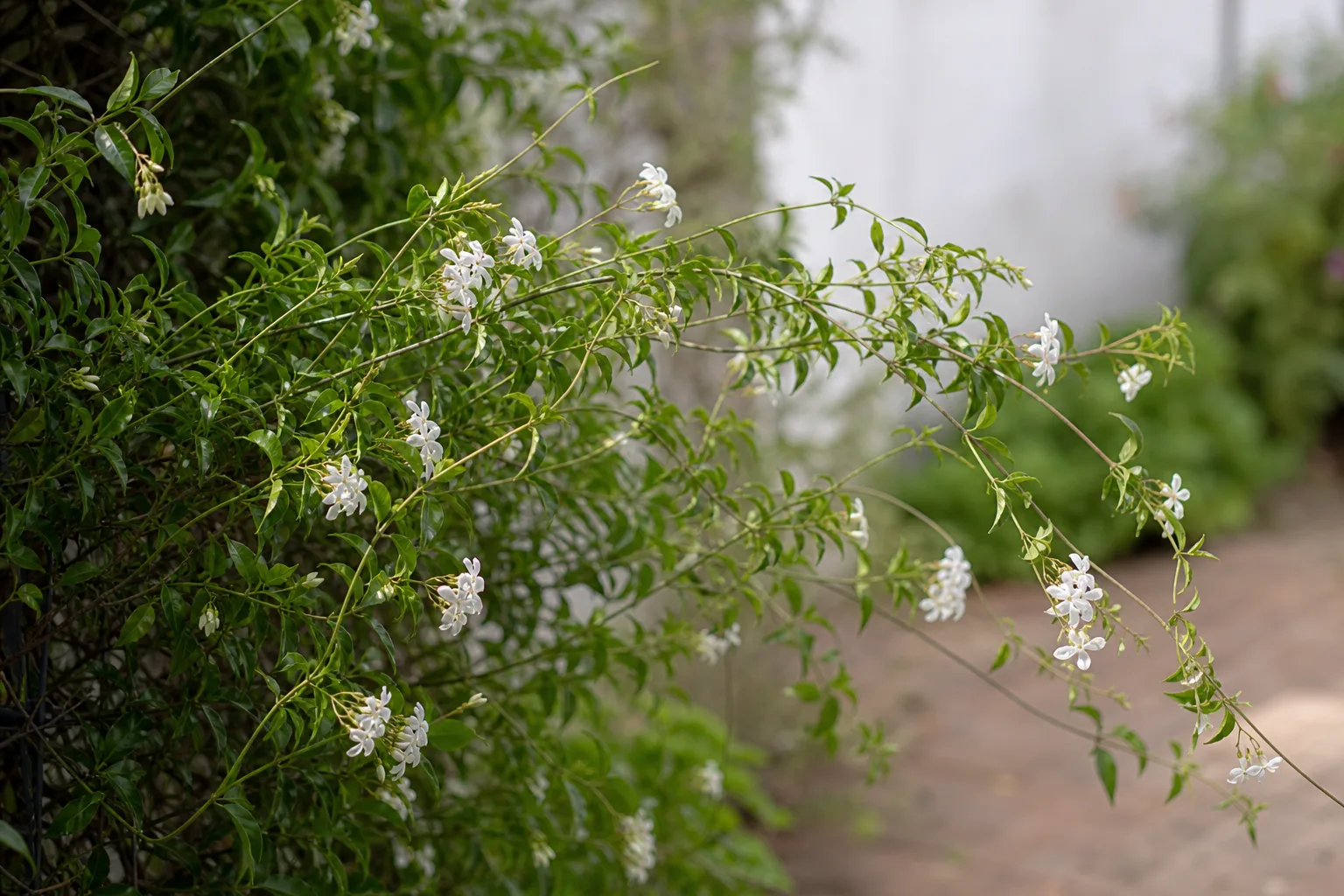
Weak Stems on Jasmine: Causes, Checks & Fixes
This guide covers weak stems on Jasmine. See also the general Weak Stems guide, watering, and light pages for this plant.
Weak Stems on Jasmine: Causes, Checks & Fixes
Quick answer
Weak stems on jasmine mean the vine cannot hold its shape, support new leaves, or carry flower clusters without bending, kinking, or collapsing off its support. On common jasmine (Jasminum officinale), this is rarely a mystery disease-it usually traces to dim indoor light, missing trellis training, a loose or failing root ball, or soft pest-damaged tips.
First step: install a trellis and tie the weakest stems with soft garden ties before you move the pot, repot, or feed. A twining climber needs something to wrap around; without that anchor, even healthy shoots eventually sag under their own length and summer bloom weight.
What weak stems look like on Jasmine
Weakness on jasmine shows up in patterns that differ from normal vine flexibility:
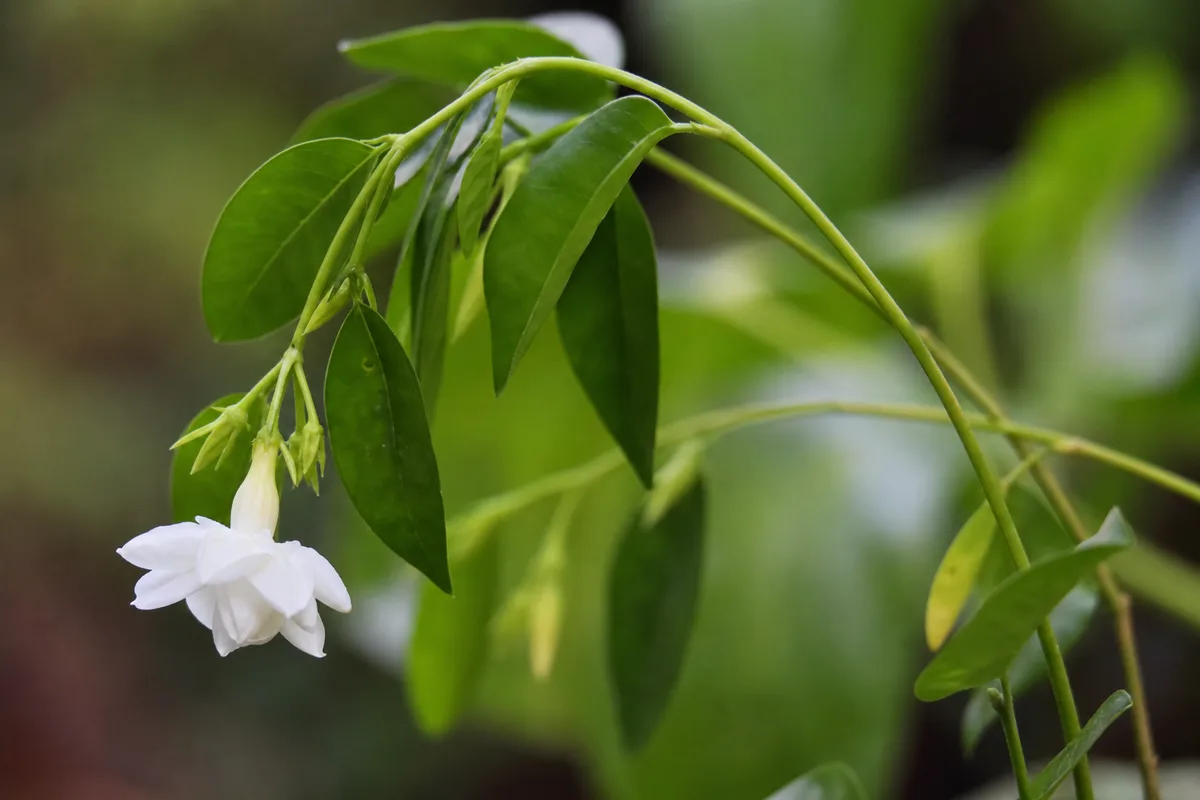
Weak Stems symptoms on Jasmine - compare with healthy tissue on the same plant.
Typical weak-stem signs:
- New shoots are pale, thin, and noticeably longer than older wood, with small leaves and wide gaps between leaf pairs
- Runners flop off a trellis or drape sideways instead of twining upward
- The stem kinks or bends sharply at the soil line when you touch it
- The base of the plant rocks in the pot while the top keeps elongating
- Bloom clusters pull branches downward until they rest on furniture or neighboring pots
- Soft tips wilt even though soil moisture seems adequate
What is normal, not weak:
- Young flexible stems that actively wrap around a support
- Seasonal slower growth in a cool winter rest period when the plant is otherwise firm at the base
- Long mature runners that stay attached to a trellis and feel woody near the base
Jasmine is a vigorous twining vine, not a self-clinging ivy. Long stems are expected once established-but they should feel firm, stay attached to support, and carry leaves of normal size for that section of the plant.
Why jasmine stems weaken
Several causes stack easily on a container-grown climber. The most common on indoor and patio jasmine are light, support, and roots.
Insufficient light and etiolation
Jasmine needs bright conditions to build compact, flower-ready wood. In dim rooms, new growth stretches toward the brightest window. Stems elongate faster than they thicken, leaves stay small, and internodes widen-the classic leggy look extension guides describe when houseplants stretch for more light.
This hits jasmine hard because it is a sun-loving summer bloomer. Leaves may survive in mediocre light, but stems stay soft and flowering drops off long before the vine collapses.
No trellis or slipped ties
Common jasmine climbs by twining. It does not stick to walls on its own. Without a trellis, obelisk, or tensioned wires-and without soft ties while stems are young-runners grow horizontally, tangle, and sag. Slipped ties are a common reason an otherwise healthy vine suddenly looks weak mid-season.
Root-bound or unstable root ball
When roots fill the pot, there is little soil left to anchor the plant. The base wobbles even though the top keeps producing long shoots. Conversely, recent Jasmine repotting guide into loose mix without firming the root ball can leave the plant unstable for weeks until new roots grip the soil.
Root rot or chronic wet soil
Overwatering in low light keeps roots soggy. As roots fail, the stem cannot draw enough water and nutrients to stay rigid. Weakness at the base paired with yellow leaves, sour-smelling mix, or stems that feel hollow near the soil line points here-not simple etiolation.
Excess nitrogen on soft growth
Heavy nitrogen feeding pushes tender leafy shoots, especially when light is already marginal. Those shoots look lush briefly, then flop because the tissue never hardened off. On jasmine, excess nitrogen also tends to reduce flowering-another clue that feeding is not the first fix.
Pest-softened tips
Aphids and spider mites cluster on soft new jasmine growth, especially in dry indoor air after winter. Feeding damage leaves tips limp and distorted while lower woody stems stay firm. Sticky residue, fine webbing, or visible insects on undersides separate this from pure light stress.
Bloom weight on unsupported wood
Summer jasmine produces fragrant clusters on current-season growth. A long unsupported runner loaded with buds can bend or snap at a kink point. This is mechanical weakness on soft wood, not root failure-but it still needs staking before bloom opens.
How to confirm the cause
Work through these checks in order. Stop when one cause clearly fits.
- Light audit - At midday, note whether direct sun reaches the plant for several hours. Dim diffuse light only, or growth leaning hard toward glass, supports low-light etiolation.
- Support check - Trace each main runner to its tie point. Count how many stems have no contact with the trellis for more than 12 inches.
- Base stability test - Gently push the main stem near soil level. Firm resistance with no rocking suggests roots are anchoring; easy wobble with long top growth suggests root-bound pot, recent loose repot, or rot.
- Soil and root sniff test - Slide the plant partway from the pot if wobble is severe. Circling white roots with little soil confirm root-bound. Brown mushy roots, sour smell, or wet mix that never dries confirm rot.
- New growth pattern - Small pale leaves on long shoots mean stretch. Normal-sized leaves on a firm base with only the tip flopping may mean missing ties or bloom weight.
- Pest scan - Inspect soft tips and leaf undersides with a hand lens for aphids, webbing, or stippling.
If light is poor and no trellis is present, you likely have both problems at once-address support first so you can move the pot safely toward brighter exposure.
First fix for jasmine
Install a sturdy trellis or obelisk and tie the floppiest stems with soft garden ties, spacing ties every 6–8 inches along each runner.
This single step stops immediate collapse, protects kink points from snapping, and gives twining stems a direction to wrap. Use cloth or coated wire ties-never tight string that cuts bark. Guide stems upward or diagonally rather than letting them pile horizontally.
Do not repot, fertilize, or hard-prune on the same day unless you confirm mushy roots. Stabilize the structure first, then correct light and roots in the following week.
Step-by-step recovery
After staking, work through secondary fixes based on what you confirmed.
Improve light gradually
Move the staked pot to a spot with full sun to partial shade-several hours of direct sun daily for outdoor or bright south or west window culture indoors. Shift over a week if the plant was in deep shade to avoid leaf scorch. Rotate the pot weekly so new growth does not lean permanently.
Repot only when root-bound or after rot is cleared
If roots circle the pot edge or grow through drainage holes, repot in early spring into a container one size larger with well-draining mix. Trim only black mushy roots if rot is present; let cuts callus before watering. Skip oversize pots-they hold wet soil and slow root anchoring.
Prune back etiolated runners
Cut weak leggy stems back to a firm node above a healthy leaf pair once light improves. Jasmine responds to pruning after flowering; hard cuts on severely stretched wood force stouter replacement shoots. Remove pest-damaged tips if insects are confirmed.
Correct Jasmine watering guide
Water when the top inch of mix dries. Reduce frequency during the cool winter rest. Weak stems from rot improve only when roots stay in moist but not soggy mix with good drainage.
Treat pests on soft tips
If aphids or spider mites are present, rinse undersides with water and isolate the plant until populations drop. Do not feed while pests are active on tender growth.
Add airflow indoors
Gentle air movement helps stems harden and reduces spider mite pressure on jasmine kept in warm dry rooms.
Recovery timeline
Expect gradual stiffening rather than overnight transformation.
- Within 1–2 weeks: Staked stems stop sagging further; new tips may begin aligning with light once exposure improves.
- 3–6 weeks: Fresh shoots from pruned nodes emerge smaller and closer-spaced if light is adequate.
- One growing season: Woody base firms in a right-sized pot; mature tied sections carry bloom without kinking.
Severely etiolated stems that were never cut back may stay thin indefinitely-they will not thicken enough to support heavy summer clusters. When in doubt, prune and wait for replacement wood.
Lookalike symptoms
Normal twining flexibility - Young stems bend easily but wrap the support and feel turgid. No pale mini-leaves or base wobble.
Winter slow growth - Jasmine semi-rests in cool months with less new wood. Stems stay firm; growth rate alone is not weakness.
Transplant shock - Temporary wilt after repotting without base mush or yellowing. Firm roots and recovery within two weeks once watering stabilizes.
Plant leaning toward light - Whole pot tips toward a window while stems stay firm. Rotate and brighten; this differs from structural flop at the soil line.
Thin stems from age - Very old untrimmed runners can be sparse at the base while tips stay vigorous. Renewal pruning after bloom fixes this pattern.
Mistakes to avoid
- Loading weak stems with bloom season fertilizer before light and support are fixed
- Repotting into a much larger pot hoping for instant strength-wet idle soil weakens roots further
- Using bare string or wire that girdles twining stems as they thicken
- Cutting all growth at once with no trellis in place afterward-the vine has nowhere to go
- Assuming every long stem must be weak; untrained length without support is the issue
- Ignoring a rocking base and only tying the top-root failure will continue
How to prevent weak stems next time
Train jasmine onto support while stems are young and pliable. Install the trellis before or at planting time and tie shoots loosely every few inches until they begin twining on their own.
Keep the plant in a warm sheltered spot with full sun to partial shade and several hours of direct light when possible. Match watering to season: regular moisture during active growth, reduced in cool winter rest, always in well-drained mix.
Repot every two years or when roots circle, before the base wobbles. Feed balanced fertilizer during active growth only after light and roots are sound; avoid heavy nitrogen on shaded plants.
Prune after flowering to remove old flowered shoots and control long unsupported runners. Scout soft tips during dry indoor months for aphids and spider mites before they weaken new wood.
Weak stems vs thin stems vs leaning
| Pattern | Weak stems (this page) | Thin stems | Plant leaning |
|---|---|---|---|
| Main issue | Cannot support weight; kinks at base | Spindly, pencil-thin runners | Whole pot tips toward light |
| Root ball | May rock or feel loose | Often firm | Usually firm |
| Light | Insufficient + no support | Chronic shade stretch | One-sided exposure |
| First fix | Trellis + tie before moving | Brighten + prune back | Rotate pot + add sun |
For overlapping posture symptoms, also see leggy growth, root-bound, and root rot when the base is mushy.
When to worry
Escalate beyond basic staking when:
- The base is mushy, smells sour, or stems pull away from roots with a gentle tug
- Yellowing leaves spread with wilt despite moist soil-possible root rot
- Stems snap at the soil line under light bloom load after kinking appeared suddenly
- Pest colonies cover most new growth and rinse treatments fail after two weeks
- The plant produces no firm new wood through a full spring after light and support were corrected
In those cases, root rescue or replacement cuttings from firm lower wood may be needed. A vine that stays permanently pale and floppy through an entire growing season in adequate light rarely recovers without hard renewal pruning or restart from healthy basal shoots.
Related jasmine problems
- Jasmine overview and pruning guide - training and post-bloom renewal
- Not enough light - when stretch drives weakness
- Thin stems and leggy growth - shade-related elongation without base failure
- Plant leaning - directional tilt with firm stems
- Root-bound and root rot - when the base wobbles or smells sour
When to use this page vs other Jasmine guides
- Jasmine watering guide - Use for routine moisture checks before assuming weak stems is the main issue.
- Jasmine problems hub - Browse all 53 common issues on this species.