Scale Insects on Jasmine: Causes, Checks & Fixes
Quick answer
Scale on jasmine appears as brown, tan, or white bumps on woody stems and leaf axils, often with sticky honeydew and sooty mold. First step: scratch one bump to confirm it is a living insect-not bark-then treat stems with thorough horticultural oil coverage.
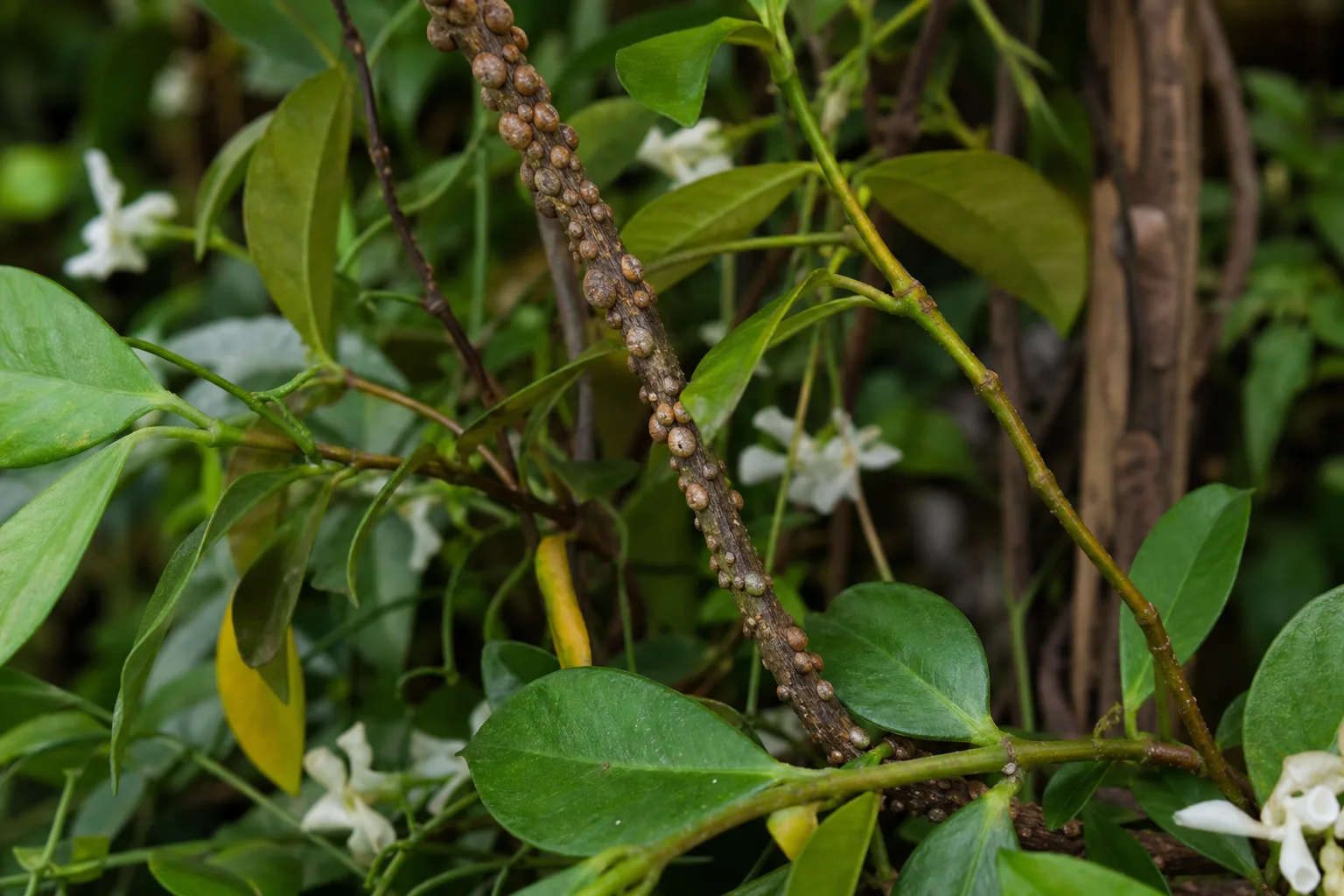
Scale Insects on Jasmine: Causes, Checks & Fixes
This guide covers scale insects on Jasmine. See also the general Scale Insects guide, watering, and light pages for this plant.
Scale Insects on Jasmine: Causes, Checks & Fixes
Quick answer
Scale insects on jasmine look like small brown, tan, or white bumps glued to woody stems, leaf axils, and sometimes leaf undersides-not part of the bark. They pierce stems and leaves to feed on sap, then excrete sticky honeydew that drips onto foliage below and can grow black sooty mold.
First step: scratch one bump with a fingernail or cotton swab dipped in soapy water. If it lifts and leaves a wet residue, you have scale. If the texture is fixed and uniform along the stem, it may be natural bark or lenticels-check whether the spot count is increasing before you treat.
Once confirmed, the priority is direct stem treatment. Scale shells protect adults from casual foliar sprays that never reach the insect underneath.
Why jasmine gets scale
Jasminum officinale and related true jasmines produce long twining stems that overlap and create sheltered crevices where scale hides. Older woody runners are prime real estate-armored and soft scales both settle on bark, branch crotches, and leaf joints where sprays miss if you only hit leaf surfaces.
Indoor and conservatory jasmine often faces year-round temperatures without the cold breaks that slow pest cycles outdoors. A vine kept in warm rooms through winter can host scale continuously, especially if humidity sits in the moderate range jasmine prefers while airflow between tangled stems stays poor.
Stressed plants attract heavier infestations. Jasmine pushed in low light may keep leaves but grow weak, leggy stems that scale colonizes more easily than vigorous sun-grown wood. Overwatered roots or drought-stressed pots both weaken the vine-scale thrives on plants under physiological stress even when basic care looks roughly correct.
Ants complicate every jasmine scale case. Ants harvest honeydew and actively protect scale colonies from lady beetles, parasitic wasps, and other natural enemies. Ant trails on pot rims, trellis wires, or along woody stems often appear before you notice the bumps themselves.
Scale frequently hitchhikes on new nursery stock. Jasmine sold as Common Jasmine, Poet’s Jasmine, or Chameli may arrive with early infestations on lower stems. Skipping quarantine after purchase is one of the most common introduction routes.
What scale looks like on jasmine
Armored scale appears as flat, round or oval bumps-often brown or gray-cemented to stems and leaf undersides. The insect sits under a hard waxy cover that does not wipe off with a dry finger.
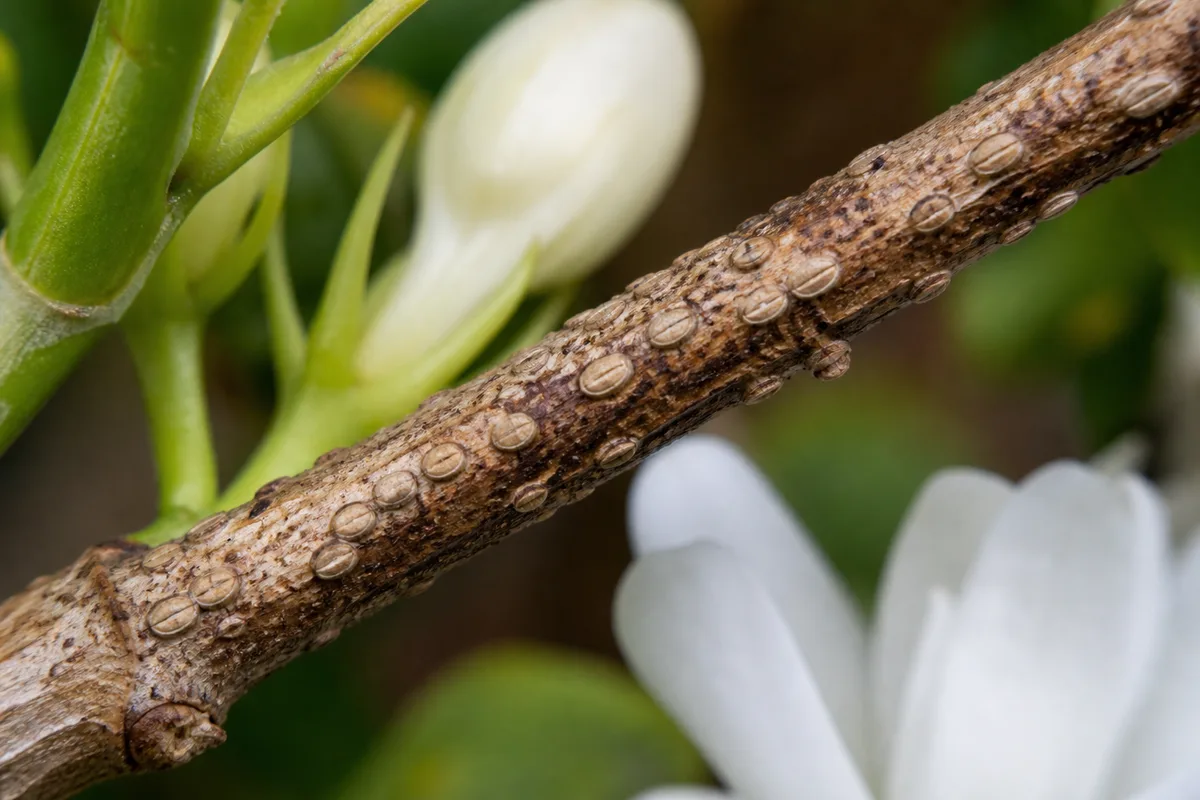
Scale Insects symptoms on Jasmine - compare with healthy tissue on the same plant.
Soft scale and cottony types may look white, tan, or slightly fuzzy. Cottony camellia scale produces a narrow white egg sac on leaf undersides and is documented on jasmine among other ornamental hosts. Mealybugs look similar but are softer and more cottony; the same treatment approach often applies, but mealybugs cluster in leaf axils more than on bare bark.
Honeydew and sooty mold:
- Shiny, sticky residue on upper leaves below infested stems
- Black sooty coating that smears and wipes off with a damp cloth
- Ant activity on stems, trellis, or nearby surfaces
- Yellowing on leaves with heavy feeding, especially when sap loss is prolonged
Growth and bloom impact:
- Stunted new shoots on heavily colonized runners
- Fewer or smaller flower buds when scale covers nodes before the spring flush
- Premature leaf drop on stems with dense scale clusters
Unlike edema or corky lenticels, scale bumps are individual, irregular in placement, and increase in number over time. Lenticels and natural bark texture follow a consistent pattern along mature wood.
How to confirm the cause
Work through these checks before committing to spray:
- Scrape test - Gently lift one bump with a fingernail or soapy cotton swab. Scale comes off with a moist smear; bark and lenticels do not.
- Count trend - Mark a small stem section with tape and recheck in one week. New bumps confirm an active infestation; stable texture suggests normal stem anatomy.
- Honeydew check - Rub an upper leaf below a suspicious stem. Tackiness that transfers to your finger points to sap-feeder honeydew, not normal leaf texture.
- Ant trails - Follow ants up stems to their source. Ants strongly suggest honeydew producers-usually scale, aphids, or mealybugs-are present nearby.
- Underside inspection - Spread overlapping twining stems apart and check leaf axils and lower leaf surfaces with a hand lens. Crawlers and soft scales hide where stems cross.
- Lookalike comparison - Aphids are soft-bodied and move when disturbed; scale adults stay fixed. Whitefly nymphs are flat and pale on undersides but adults fly when shaken. Mealybugs look cottony in clusters rather than individual hard bumps on bark.
If bumps are fixed, evenly patterned, and no honeydew, ants, or sooty mold appear, hold off on pesticides until you see evidence of living scale.
First fix for jasmine
Isolate the vine and manually remove every scale you can reach on woody stems before applying any spray.
Move the plant away from neighbors. Dampen a soft toothbrush or cloth with soapy water and scrub accessible bumps on stems and leaf joints. When adult scales are rubbed off, their mouthparts break and they cannot reinfest the same spot. Bag and discard pruned material with heavy infestations-do not compost scale-covered stems.
This single step reduces the population enough that follow-up sprays contact remaining insects. Do not skip stem contact and spray only leaves-scale on jasmine lives primarily on wood, not foliage surfaces alone.
Do not fertilize a scale-hit vine hoping to push new growth. Tender shoots attract crawlers and add stress while the plant is losing sap.
Step-by-step recovery
After manual removal:
- Apply horticultural oil to labeled directions, covering all stem surfaces, leaf axils, and leaf undersides until spray runs off. Oils suffocate exposed scales, crawlers, and eggs by blocking their breathing pores. Complete coverage matters more than product choice.
- Repeat oil applications at five- to six-week intervals or weekly for lighter indoor infestations, through at least three cycles to catch crawler emergence. Scale species differ in timing; multiple applications are standard.
- Time applications carefully. Spray when temperatures are between roughly 45 and 85°F, avoid direct hot sun on treated foliage, and skip treatment if rain is forecast within 24 hours. Water the plant thoroughly a day or two before spraying to reduce phytotoxicity risk.
- Prune out dead or heavily infested woody runners that stay shriveled after treatment. Jasmine tolerates hard pruning on old wood after flowering; remove scale reservoirs rather than leaving them on the vine.
- Manage ants on pot rims, trellis, and nearby surfaces. Ant control alone does not eliminate scale, but it allows natural predators to reach colonies.
- Wash sooty mold from upper leaves with plain water once honeydew production stops. Thick coatings block light and reduce photosynthesis; trim leaves that stay heavily blackened if new growth is already clean.
For indoor jasmine, take the plant outdoors or to a shower for treatment when weather allows, then return it after foliage dries. Oil residues on leaves in low airflow can cause burn in warm rooms.
Recovery timeline
Manual removal shows results within days when colonies are moderate-you should see fewer live bumps on re-inspection. A full oil course typically takes three to six weeks with repeated applications. Honeydew dries up within one to two weeks once feeding stops; sooty mold stops spreading at the same time.
Judge recovery by clean new shoots and bud formation, not old yellowed leaves. Jasmine flowers on wood that grew the previous season-protect nodes before the spring flush for the best bloom recovery.
Lookalike symptoms to rule out
Natural bark and lenticels on older jasmine stems look like small raised dots in a regular pattern. They do not increase in number and produce no honeydew.
Aphids cluster as soft green, black, or pink groups on tender new growth. They move when disturbed and prefer soft shoots over woody bark.
Mealybugs form white cottony clusters in leaf axils and soil lines. They are softer and more irregular than armored scale on bare wood.
Spider mites cause stippling and fine webbing on leaf undersides, not hard bumps on stems. Mites thrive in dry indoor air-common on jasmine after winter heating-but the scrape test distinguishes them quickly.
Edema creates small corky bumps on leaf surfaces from irregular watering. These are part of the leaf tissue, not removable insects on stems.
Mistakes to avoid
Do not rely on a single foliar spray without scrubbing stems first. Scale shells block contact insecticides from reaching the insect underneath.
Do not ignore ants while treating scale. Protected colonies rebound faster when ants remain.
Do not apply horticultural oil during peak bloom on open flowers if you can wait-treat before buds open or after the main flush when possible.
Do not confuse star jasmine (Trachelospermum) or night-blooming Cestrum with true Jasminum when checking pet safety or pest patterns. True jasmine is non-toxic to cats and dogs, but verify the genus on the label.
Do not compost pruned infested wood near outdoor jasmine plantings.
Do not increase nitrogen feeding during active infestation-lush soft growth is easier for crawlers to colonize.
How to prevent scale next time
Quarantine new jasmine for at least two weeks before placing it near other plants. Inspect lower woody stems and leaf axils on day one and again before release.
Wipe stems on indoor vines during monthly care checks. Twining growth hides scale until honeydew drips onto lower leaves.
Inspect thoroughly when moving outdoor jasmine indoors for winter. Scale that stayed manageable outside can explode in warm, predator-free rooms.
Maintain the basics jasmine needs for vigor: Jasmine light guide to partial shade, well-draining mix, and watering when the top few centimeters of soil dry. Chronically stressed vines tolerate heavier scale pressure.
Preserve beneficial insects outdoors. Lady beetles, lacewings, and parasitic wasps control scale when broad-spectrum sprays have not eliminated them.
Manage ant access to pots and trellises. Ant barriers or bait stations on legs and wires-not on the soil surface near roots-can help predators reach scale.
When to worry
Treat as urgent when bumps cover bud nodes before the main spring bloom, honeydew and sooty mold spread across most of the canopy within days, or multiple woody runners show dense scale with yellowing and dieback. Jasmine invests heavily in one major flowering period-sap loss on flowering wood directly reduces bloom quality.
A few isolated bumps on one stem after a confirmed scrape test can be managed with manual removal and a single thorough oil application without panic.
Replace severely declining vines that lose most woody structure to scale and sooty mold if new shoots fail to appear within four to six weeks after treatment. Starting with clean quarantined stock is often faster than repeated chemical cycles on a weakened plant.
Conclusion
Scale on jasmine is a stem problem first. Confirm living insects with a scrape test, scrub what you can reach, then follow with thorough horticultural oil on all woody surfaces-not just leaves. Control ants, wash sooty mold once honeydew stops, and inspect twining stems where scale hides between overlapping runners. That path protects both the vine’s health and the fragrant bloom it was grown for.
When to use this page vs other Jasmine guides
- Jasmine watering guide - Use for routine moisture checks before assuming scale insects is the main issue.
- Jasmine problems hub - Browse all 53 common issues on this species.
- Ants on Plant on Jasmine - Different entry point when symptoms overlap with scale insects.
- Yellow Leaves on Jasmine - Different entry point when symptoms overlap with scale insects.
- Aphids on Jasmine - Different entry point when symptoms overlap with scale insects.