Root Bound on Jasmine: Causes, Checks & Fixes
Quick answer
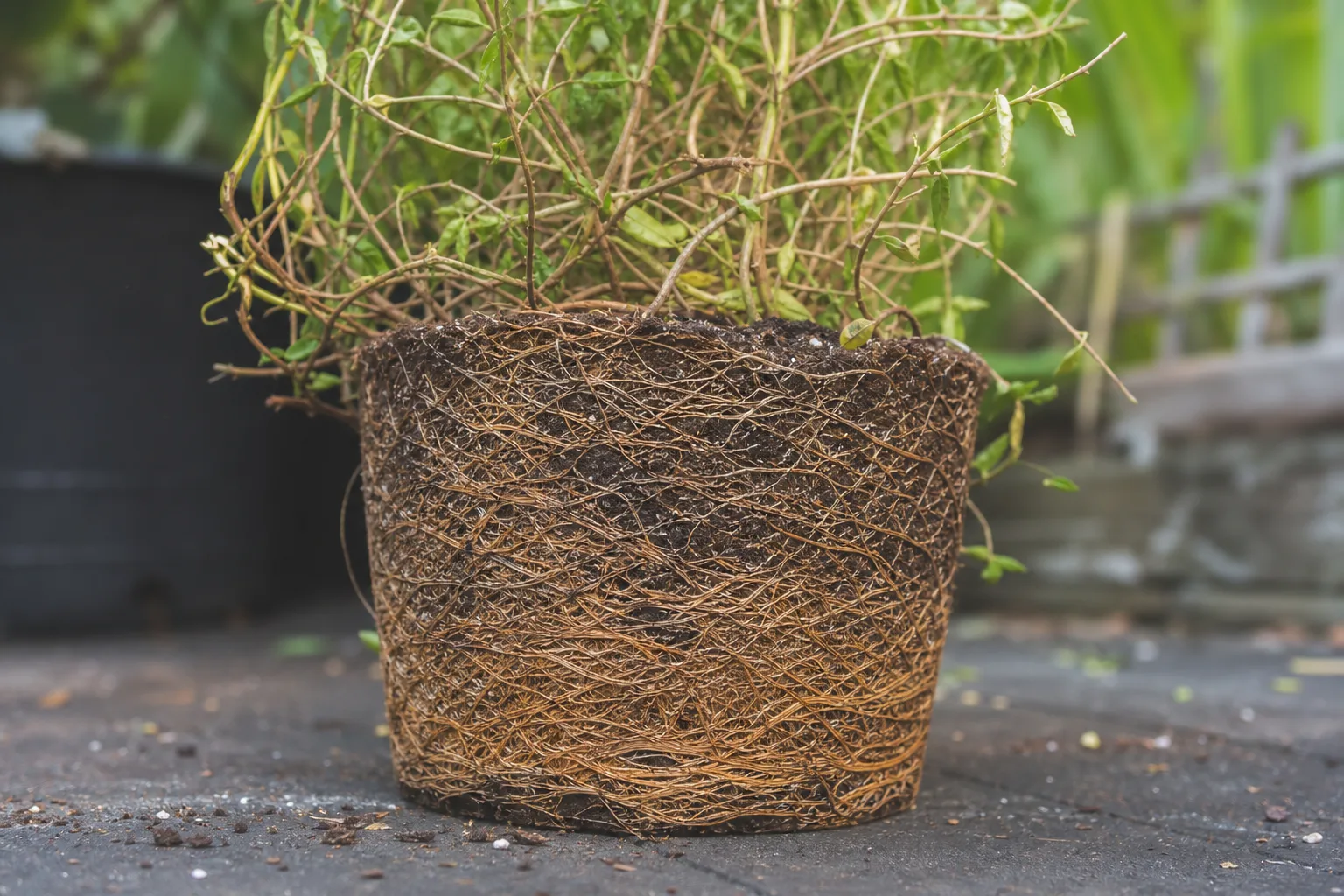
Root-bound jasmine has a dense circling root mat, water that runs straight through the pot, and fewer buds despite good light. First step: slide the plant out and inspect the root ball-if roots wrap the outside in a solid sleeve with little soil left, repot one size up in early spring with fresh well-draining mix.
Root Bound on Jasmine: Causes, Checks & Fixes
This guide covers root bound on Jasmine. See also the general Root Bound guide, watering, and light pages for this plant.
Root Bound on Jasmine: Causes, Checks & Fixes
Quick answer
Root-bound jasmine (Jasminum officinale) stops holding water and nutrients in the pot. The vine may look healthy from a distance, but the mix dries within hours, buds thin out, and white roots spiral at drainage holes in a dense mat with almost no soil left inside.
First step: slide the plant out of its pot and inspect the root ball. If roots wrap the outside in a solid circling sleeve and the center feels dry and hard, you have binding-not a mystery pest or fertilizer shortage. Plan to repot one container size up in early spring with fresh well-draining mix and teased outer roots.
What root bound looks like on Jasmine
Above soil, binding shows up as water stress in a wet-looking routine. You water thoroughly, yet the pot feels light again by the next day. The vine may wilt briefly after watering even though you are not skipping drinks. New shoots stay short, and flower count drops even when light and winter chill were correct-the plant simply cannot pull moisture from a root-dominated ball.
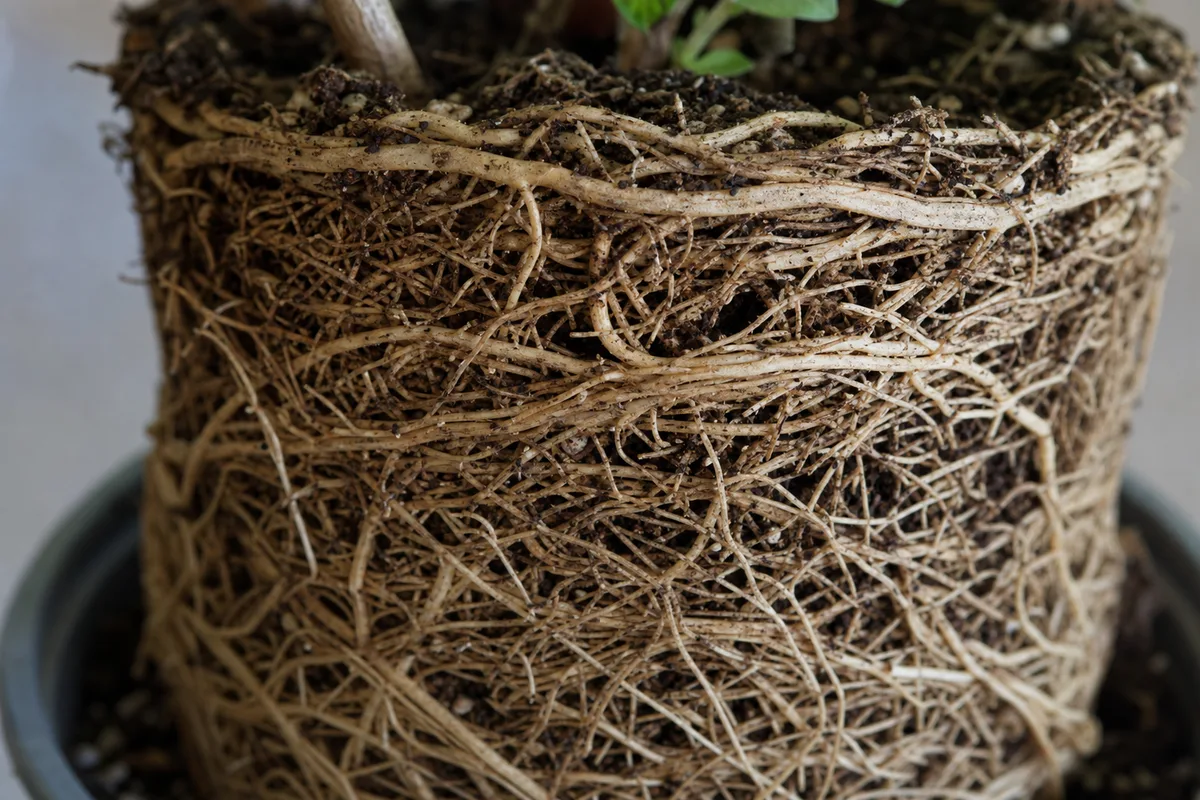
Root Bound symptoms on Jasmine - compare with healthy tissue on the same plant.
Below soil, the picture is clearer:
- White or tan roots form a tight spiral against the pot wall
- The root ball lifts out as one solid mass with little visible mix
- Roots poke through drainage holes or surface at the top edge
- The pot feels hard and full when you press the sides
- Water runs straight through in seconds without soaking the center
Healthy jasmine roots should be firm and pale, with loose mix between them. Root-bound plants often have no sour smell unless uneven wet-dry cycles have started secondary decay at the core-that is a separate rot problem, not simple binding.
Indoor jasmine is a vigorous climber that grows 12 to 24 inches a year once established. In a small decorative pot on a windowsill or trellis, that growth rate consumes pot space faster than many owners expect.
Why Jasmine becomes root bound
Common jasmine is a naturally moderate to fast grower in warm, bright conditions. Clemson Extension notes that containerized jasmines need regular pinching and support indoors, which reflects how quickly stems and roots expand when light and moisture are adequate.
Most indoor jasmine stays in the same pot too long. LeafyPixels care data recommends Jasmine repotting guide every two years or when roots circle the pot-but many growers wait until watering becomes impossible. By then, roots occupy most of the volume and the remaining mix cannot store water or release fertilizer evenly.
Delayed repotting forces roots to circle the pot wall. As the mat thickens, water follows channels down the sides and drains out before the dry core absorbs anything. The plant reads this as drought even right after you water. Bloom suffers because bud formation depends on steady moisture during the growing season-RHS guidance notes that container jasmine needs regular watering through the growing season with little reserve in the pot.
Binding also worsens when jasmine is kept in a pot that is too small for a trained vine. A climber tied to a trellis may look fine on top while roots below have nowhere to go. Terracotta helps drying, but even porous pots fill eventually.
Oversized pots are the opposite problem-not binding, but wet outer soil with a small root zone. Binding shows fast dry-down and circling roots; oversized pots show slow drying and idle wet mix around a small ball.
How to confirm the cause
Work through these checks before you repot:
- Time since last repot - Has the plant been in the same container for two or more years, or since purchase with no refresh?
- Water behavior - After a full soak, does the pot feel light within 24 hours? Does water pour out the bottom in seconds without the top inch staying evenly moist?
- Partial lift test - Tilt the pot and slide the root ball up one inch. Do roots cling to the wall in a visible spiral?
- Drain hole inspection - Are white root tips growing out of holes or packing the bottom?
- Bloom and growth pattern - Has flowering declined despite good summer light and a proper cool winter rest? Are new tips small while stems look otherwise green?
- Smell and root texture on unpot - Firm circling roots with no foul odor confirm binding. Brown mushy roots with a sour smell point to rot from poor drainage or overwatering on a bound ball-handle that as rot plus repot, not binding alone.
- Pot size versus plant size - A large trained vine in a one-gallon pot is a binding risk regardless of calendar schedule.
If the mix is dry throughout, the stem base is firm, and roots are loose with plenty of soil when you unpot, underwatering or winter rest may explain wilt better than binding. Jasmine rests from October to March indoors and needs less water then-do not repot a dormant plant on drought symptoms alone without inspecting roots.
First fix for Jasmine
Slide the plant out and inspect the root ball.
Knock the pot gently, support the base, and lift the whole mass out. If roots circle the outside in a dense mat with little soil visible, binding is confirmed. That single inspection tells you whether the next step is repotting, root trimming for rot, or simply adjusting water because the mix was dry and roots were fine.
Do not jump to a huge new pot, heavy fertilizer, or aggressive root shaving on day one. Do not repot during peak winter rest unless roots are rotting-Missouri Botanical Garden recommends repotting after flowering when necessary, which for indoor jasmine aligns with late summer or early autumn pruning time, though early spring just before active growth is also standard for bound container plants.
Step-by-step recovery
Once binding is confirmed, repot in this order:
- Choose timing - Early spring, as new growth starts, is ideal. Clemson HGIC notes repotting during active growth helps recovery. Late summer after flowering also works for jasmine on an indoor schedule.
- Select the pot - Move up only one size-about 1 to 2 inches wider in diameter. Ensure drainage holes are open. Avoid jumping to a large decorative container; excess wet mix around a small root zone invites rot.
- Prepare mix - Use fresh well-draining potting mix. Jasmine prefers moderate fertility and good drainage-roughly potting soil with compost and perlite or coarse sand, targeting pH 6.0 to 7.5 per species care norms.
- Tease or score the root ball - Gently loosen circling outer roots with your fingers. If the mat is tight, make vertical cuts with a clean knife around the ball-Clemson recommends scoring when roots will not loosen by hand. Snip through roots that wrap the ball; this redirects growth outward.
- Trim only what is dead - Remove brown, mushy sections with sterile scissors. Healthy white roots can stay unless the ball is extremely dense-in that case, trimming up to one-third of the outer mat is acceptable for container plants when repotting into a slightly larger pot.
- Repot at the same depth - Place the ball so the stem sits at the same soil line as before. Fill around with fresh mix; do not bury stems deeper.
- Water to settle - Water until excess drains freely. Repeat once if peat-heavy mix settles and exposes roots.
- Hold fertilizer - Wait two to three weeks until new tips show before feeding. High-potassium bloom feed comes later in the season, not during recovery.
- Support and light - Re-tie stems to the trellis without crushing new shoots. Keep bright light; avoid dark corners while roots re-establish.
If the plant wilts heavily after repot, shade it slightly for a few days but do not withhold all water-the mix should stay lightly moist, not soggy.
Recovery timeline
Moderately bound jasmine often pushes new pale green tips within two to four weeks after a spring repot with teased roots. Water uptake stabilizes first; you notice the pot stays evenly moist for a normal interval instead of drying in hours.
Bloom recovery takes longer. Bud set for fragrant summer flowers depends on the prior cool rest and summer light. Expect improved flowering the season after a late-winter or spring repot, not necessarily the first flush right after disturbance. Judge success by firm new growth and even moisture retention, not instant flowers.
Severely girdled plants may sit quietly for several weeks before branching resumes. If no new tips appear after six weeks in warm bright conditions, inspect again for hidden rot at the core.
Lookalike symptoms to rule out
Simple underwatering - Dry mix throughout, loose roots, and a light pot without circling at the walls. Soaking once fixes wilt; bound pots re-wilt quickly.
Overwatering on a bound ball - Wet mix, yellow lower leaves, and sour smell with mushy roots. Binding caused fast channel drainage first; repeated heavy watering then rotted the core.
Winter rest - Reduced growth and less water need from October to March is normal. Roots should still be firm and loosely packed when you check-not a solid brick.
Not enough light - Leggy stems and no flowers without the fast dry-down pattern of binding. Fix placement before repotting.
Spider mites or scale - Stippling, sticky residue, or visible pests on stems. Mites surge in dry indoor air after winter; they do not create a circling root mat.
Pot too large - Outer mix stays wet for days while the center root zone is small. Opposite hydraulics from binding.
Mistakes to avoid
Do not upsizing two or three pot sizes to “avoid repotting again.” Excess soil holds moisture jasmine roots cannot use quickly, raising rot risk.
Do not slice away more than one-third of healthy roots unless mushy rot is present-aggressive pruning on a blooming vine delays recovery.
Do not repot and fertilize the same week on a stressed plant. Fresh roots need time before salts.
Do not assume every wilting jasmine is bound. Confirm with an unpot check first.
Do not ignore drain holes when roots block them-binding and poor drainage overlap and worsen each other.
Jasmine care cross-check
Root-bound jasmine often masquerades as a watering problem because the owner keeps adding drinks to a pot that cannot hold them. Cross-check your baseline care:
- Light - Full sun to partial shade with several hours of direct sun for indoor bloom
- Water check - Top 3 cm dry before the next soak once repotted; faster dry-down before repot signaled binding
- Winter rhythm - Cool rest with reduced watering; resume normal rhythm in February
- Support - Trellis or frame so the vine is not root-starved in a tiny pot while stems reach the ceiling
Binding is maintenance timing, not a mysterious disease. When culture is correct and the plant still dries in hours with thin bloom, the pot is the bottleneck.
How to prevent root bound next time
- Repot every two years or when roots circle the pot-whichever comes first
- Upsize incrementally one container size at a time with fresh mix
- Tease outer roots at each repot so they grow outward instead of girdling again
- Match pot to trained size - A vigorous climber needs room below, not just trellis height above
- Prefer pots with drainage holes; terracotta helps moderate moisture but still fills over time
- Refresh the top inch of mix annually if you must delay full repot, but do not treat that as a substitute when the ball is solid
When to worry
Repot soon if the pot dries within hours, roots fully circle, and summer bloom is failing despite good light. Chronic binding plus erratic watering can rot the core-if unpotting reveals mushy brown roots and foul odor, trim decay the same day and repot into fresh mix without delay.
If stems collapse, buds abort en masse during active growth, and the root ball is soft-not just tight-treat as root failure, not routine binding.
Conclusion
Root-bound jasmine is a container volume problem on a fast-growing fragrant vine. Circling roots leave too little soil to hold water, so the plant wilts on a schedule that feels like neglect even when you water often. Slide the plant out to confirm the mat, repot one size up in early spring with teased roots and fresh well-draining mix, and judge recovery by stable moisture and new tips first-flowers follow once roots have room again.
When to use this page vs other Jasmine guides
- Jasmine watering guide - Use for routine moisture checks before assuming root bound is the main issue.
- Jasmine problems hub - Browse all 53 common issues on this species.