Wrong Soil Mix on Jasmine: Causes, Checks & Fixes
Quick answer
Common jasmine needs fertile, well-draining potting mix-not dense garden clay, pure peat bog soil, or gritty succulent blend alone. First step: slide the plant out and check how fast the mix dries and whether roots are firm before you repot or change watering.
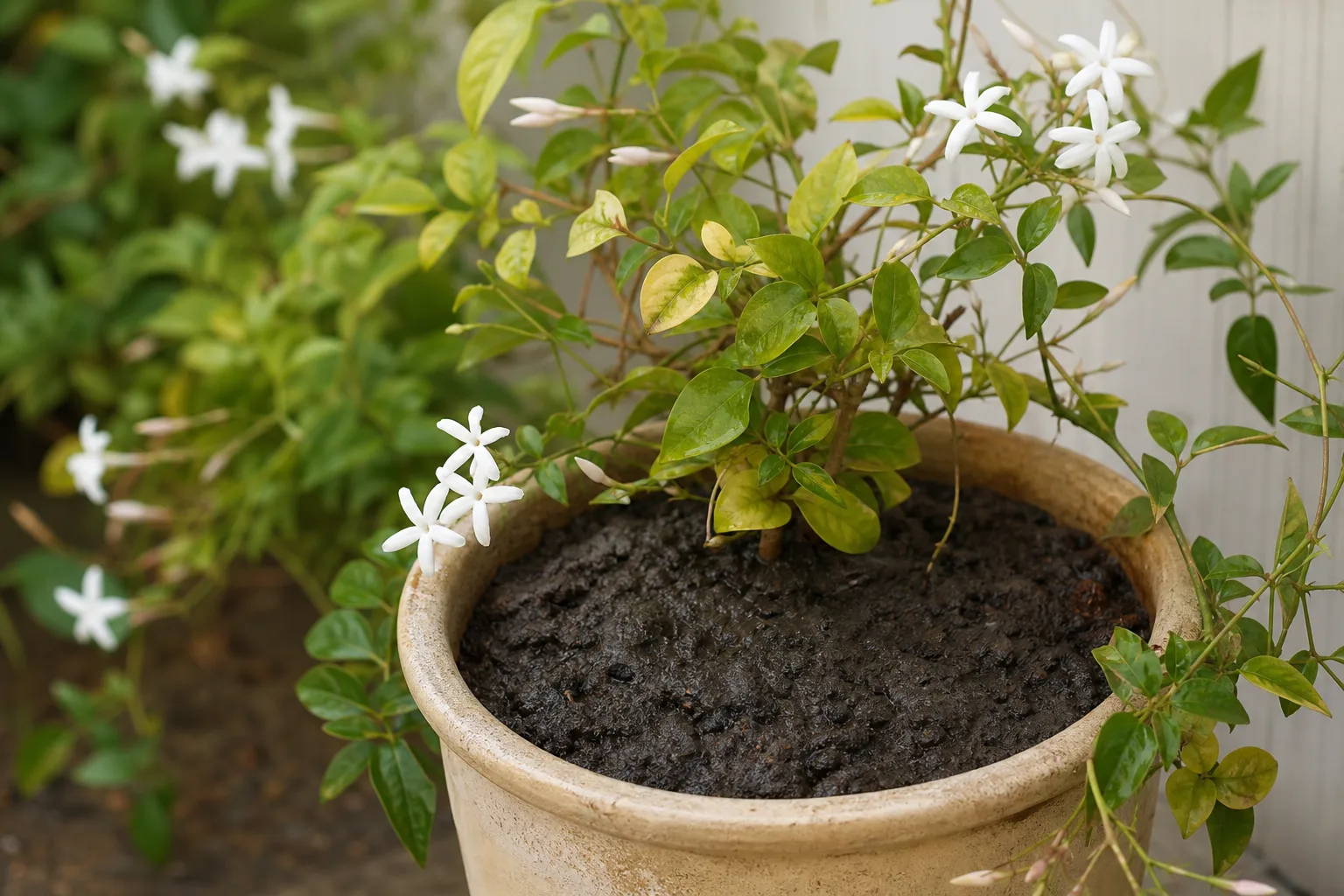
Wrong Soil Mix on Jasmine: Causes, Checks & Fixes
This guide covers wrong soil mix on Jasmine. See also the general Wrong Soil Mix guide, watering, and light pages for this plant.
Wrong Soil Mix on Jasmine: Causes, Checks & Fixes
Quick answer
Wrong soil mix on common jasmine (Jasminum officinale) means the root zone holds water too long, dries out too fast, or compacts so roots cannot breathe. Jasmine is not a desert succulent and not a bog plant-it wants fertile, moist, well-drained soil that lets the top layer dry between drinks while the root ball stays evenly workable.
First step: slide the plant out of its pot and inspect the mix and roots before you repot, prune, or fertilize. You need to know whether the problem is heavy, sour, compacted mix, an oversized pot full of unused wet soil, or a fast-draining blend that never holds moisture through a bloom cycle. Changing watering alone rarely fixes a structural mix mismatch.
Scope note: This page troubleshoots active mix failure on a plant already in the wrong substrate. If you are building a fresh blend from scratch, drainage tests, and repot sizing, start with the jasmine soil guide-then return here when symptoms suggest the current mix is the bottleneck.
What wrong soil mix looks like on Jasmine
Soil problems show up as a pattern tied to how the pot dries-not a single yellow leaf. Stalled bud set often appears before widespread yellowing when light and winter chill are otherwise correct-a useful early signal on fragrant summer jasmines.
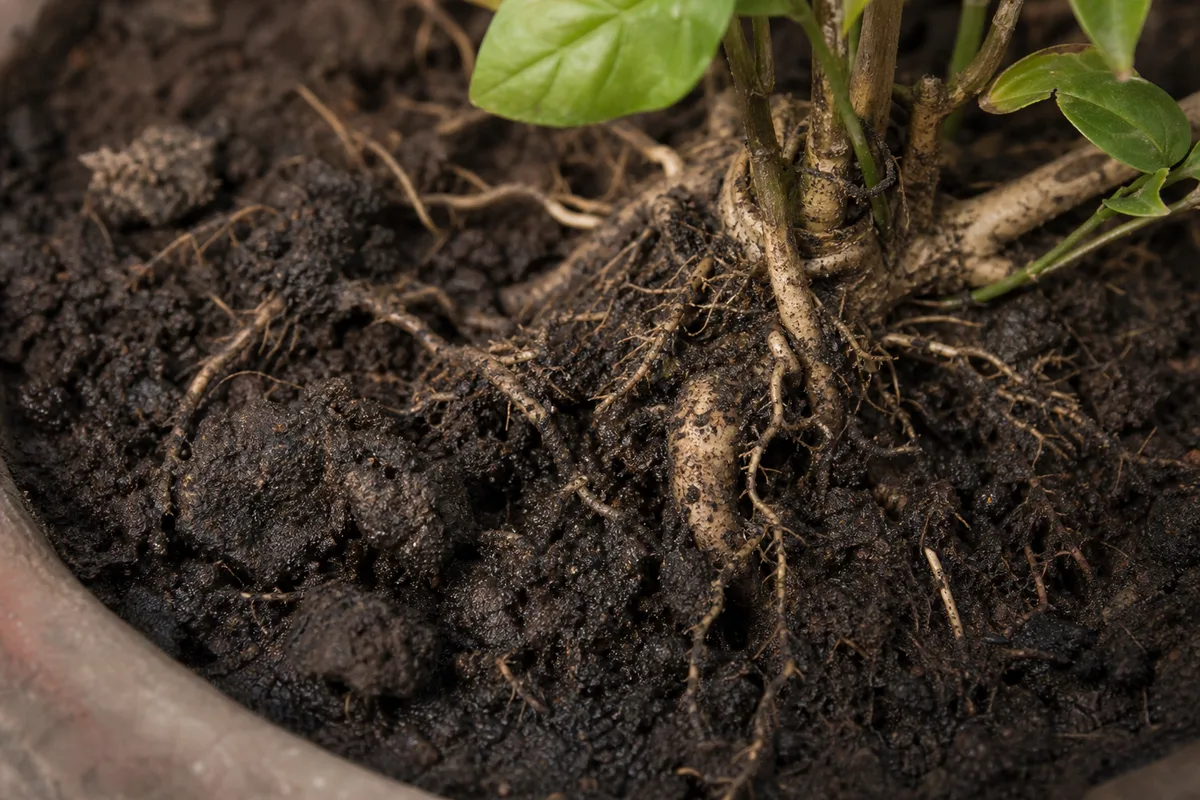
Wrong Soil Mix symptoms on Jasmine - compare with healthy tissue on the same plant.
Heavy or water-retentive mix
- Top 3 cm of mix stays wet for many days after one thorough watering, even in bright light
- Pot feels constantly heavy; saucer water sits for hours
- Sour, swampy smell from drainage holes or when you lift the root ball
- Fungus gnats hovering at the soil surface
- Lower leaves yellow while new tips stall or stay small
- Dry, cracked surface with a wet core underneath-water channels through old peat instead of soaking evenly
- White or gray mold on the soil surface in chronically damp organic matter
Too-fast or wrong-texture mix
- Mix dries completely within a day or two in summer, even when jasmine is actively growing
- Leaves wilt between waterings despite your best schedule-overlap with underwatering once you confirm bone-dry mix throughout
- No flower buds despite good light and feeding-roots cannot hold steady moisture during the flowering push
- Fine roots look brittle or brown at the tips; mix feels dusty and repels water when dry
Compacted or aged mix
- Water runs straight down the gap between root ball and pot wall without wetting the center
- White mineral crust on the soil surface from repeated tap-water and fertilizer without flushing
- Roots circling tightly with almost no crumbly mix left between them-see root-bound when the mat is solid
Why Jasmine gets wrong soil mix problems
Common jasmine evolved as a vigorous climber in open, well-aerated ground-not in a sealed plastic pot of straight garden clay. Its roots need oxygen between waterings. Dense mix suffocates fine feeder roots and invites rot during cool winter rest when the plant drinks slowly.
The opposite error is equally common indoors. Pure orchid bark, coarse succulent grit, or mostly sand drains so fast that roots never build the steady moisture bank jasmine uses while pushing fragrant summer flowers. Container jasmine also leaches nutrients faster than in-ground plants; a mix with almost no organic matter starves growth even when you water on schedule.
The Missouri Botanical Garden notes that common jasmine grows in regular garden soil with moderate fertility and moisture and needs good drainage-a loamy, airy texture, not a wet sponge or desert grit in a pot.
Typical mix mistakes on jasmine:
- Garden soil or heavy clay in a pot - adding soil to potting mix compacts, holds perched water, and breaks down drainage in a confined volume
- Pure peat or “moisture control” bagged mix without perlite - stays soggy in cool rooms and during winter semi-rest
- Succulent or cactus blend alone - too airy for a flowering vine that expects regular summer moisture
- Old, broken-down peat - loses air pockets after one to two years; water either pools or channels through
- Pot far too large for the root ball - excess soil stays wet because roots cannot use it
- Decorative cachepot without drainage - outer shell traps water even when inner mix is technically correct
Jasmine’s normal rhythm makes mix errors worse. You reduce watering in the cool winter period, but heavy mix still stays wet for weeks. In summer flowering, fast-draining wrong mix cannot support the extra moisture draw without constant stress.
Compound stress - wrong mix plus oversized pot, cachepot trapping runoff, and a dim winter corner can stall growth even when each factor alone looks minor. Fix substrate and container volume together when dry-down never normalizes.
How to confirm the cause
Work through these checks in order before you repot:
- Dry-down timing - Water thoroughly, drain the saucer, then test the top 3 cm daily. Healthy jasmine mix in an appropriate pot usually dries enough to warrant the next drink within a few days in active summer growth-not a week or more indoors at moderate temperature.
- Pot size vs. root mass - Slide the plant out. If roots occupy less than half the pot volume and the outer soil stays cold and wet, oversizing-not just mix-may be the issue.
- Mix texture and smell - Crumbly, earthy smell with visible perlite or sand particles is healthy. Dense, black, sour-smelling muck confirms failure.
- Root color and firmness - Firm white or tan roots point to mix or watering stress that is still reversible. Brown, mushy, peeling roots mean rot has started-often in heavy mix.
- Watering cross-check - If an identical schedule works on another jasmine in a similar pot and light, suspect Jasmine overview’s mix or container first.
- Rule out pure overwatering - When mix dries at a normal pace but you water before the top inch is dry, symptoms mimic bad soil. Fix the schedule first only if dry-down timing is normal-see overwatering on jasmine.
Confirmed diagnosis requires both mix behavior (slow dry-down, compaction, or instant desiccation) and supporting root or growth signs-not a single wilted afternoon on a hot windowsill.
Confirmation decision table
| What you observe | Top inch dry-down | Root rinse | Likely issue | Next page |
|---|---|---|---|---|
| Heavy pot, sour smell, gnats | 7+ days indoors | Mushy brown sections | Heavy wrong mix → rot risk | Stay here; escalate to root rot if mush dominates |
| Wilting, dusty mix throughout | 1–2 days in summer | Firm but dry tips | Fast gritty mix or drought | Underwatering or repot to richer blend |
| Yellow lower leaves, firm roots | Normal 3–5 day cycle | White, firm | Schedule too wet on OK mix | Overwatering |
| Pale new leaves, OK dry-down | Normal | Firm | pH or nutrient lock | Soil too alkaline, nutrient lockout |
| Outer soil wet, small root ball | Very slow | Firm | Oversized pot | Pot too large |
First fix for Jasmine
Unpot the plant and inspect the root ball and mix texture before changing anything else.
Lay newspaper down, tip the pot, and gently loosen the edges with your fingers. Shake off enough old mix to see root color and smell the core. If roots are mostly firm, you can plan a repot into corrected blend without emergency surgery. If more than a third are mushy, trim decay back to solid tissue with clean scissors and let cut surfaces air-dry for several hours before repotting into fresh mix-full rot protocol lives in the root rot guide.
Do not add fertilizer, foliar sprays, or extra water “to help shock” on the same day. Do not repot into an oversized container hoping more soil will stabilize the plant-that deepens chronic wetness.
Step-by-step recovery
Once inspection is complete:
- Choose the right blend - Aim for roughly 50% quality potting soil, 30% compost or coir, and 20% perlite or coarse sand-the same fertile, well-drained target as the jasmine soil guide. The goal is standard potting texture with extra aeration-not desert grit, not pure peat.
- Pick a pot one size up at most - Only move up when roots circle heavily. Ensure drainage holes are open; poke clogged holes with a chopstick. Detailed sizing steps are in the repotting guide.
- Trim and discard - Remove all mushy roots and the worst compacted outer soil. Keep as much healthy root mass as you can.
- Repot at the same depth - Burying the crown deeper invites stem rot on jasmine. Firm mix lightly around roots; do not compress into a brick.
- Water once to settle - Irrigate until water exits the bottom, discard saucer water after 30 minutes, then stop. Resume watering when the top inch of mix feels dry to your knuckle per the watering guide.
- Place in appropriate light - Bright light helps the mix dry predictably. A dark corner with heavy soil is the worst combination.
- Hold fertilizer - Wait until you see new pale green tips before feeding with balanced liquid fertilizer during active growth.
If the plant was in pure garden soil, replace all of it-blending a little fresh perlite into unchanged clay rarely fixes structure.
For hydrophobic aged peat that channels water down the sides, soak the root ball in lukewarm water for ten to fifteen minutes once before repotting so new mix contacts roots evenly-then move to fresh blend rather than re-wetting the same collapsed peat in place.
Recovery timeline
Mix correction is slower than swapping a watering day. Expect two to four weeks before new tip growth looks normal when root damage was mild. Jasmine recovering from significant rot may take a full growing season to regain bloom strength; bud formation depends on winter chill and summer light as much as on soil.
Signs recovery is working:
- Top inch dries on a predictable schedule
- New leaves emerge with normal size and color
- Root tips look white on re-inspection after four to six weeks
- No spreading soft stems at the soil line
Signs the problem is worsening:
- More yellow leaves while mix stays wet
- Stems softening from base upward
- Sour smell returns within days of repotting
- New growth aborts or blackens
Damaged leaves and lost buds from the stress period do not “green up” again-judge progress on new tissue and root firmness.
Lookalike symptoms to rule out
Overwatering with correct mix - Mix dries slowly because the room is cold or dim, not because texture is wrong. Dry-down improves when light increases or winter rest watering drops. Start with the overwatering guide when roots are still firm.
Underwatering in fast-draining mix - Wilting with bone-dry mix throughout the pot points to drought or overly gritty soil, not chronic sogginess.
Nutrient deficiency or pH stress - Pale leaves with otherwise healthy dry-down may be alkaline garden soil raising pH and locking iron, not generic “bad soil.” Repotting into neutral potting blend addresses structure; persistent chlorosis may need the soil too alkaline or nutrient lockout pages.
Spider mites or low humidity - Stippled, dusty leaves with fine webbing are pest or humidity issues; they can coexist with bad soil but are not caused by mix alone. See spider mites on jasmine.
Normal winter semi-rest - Reduced growth and less frequent watering in cool months mimic stall. A firm base and acceptable dry-down without sour smell often means rest, not emergency repot.
Star jasmine confusion - Star jasmine (Trachelospermum jasminoides) is a different genus sold as “jasmine” at nurseries. Confirm ID on the jasmine overview before copying mix advice across species.
Mistakes to avoid
Do not add a gravel layer at the bottom “for drainage” instead of fixing the mix-that raises the saturated zone in the root column where jasmine actually grows.
Do not reuse sour, moldy old mix or compost from a rotted plant.
Do not jump three pot sizes at repot because the vine is tall; match volume to roots.
Do not repot into pure succulent mix to “prevent rot”-you will trade rot risk for chronic drought stress and weak flowering.
Do not fertilize a plant still sitting in unchanged heavy soil hoping to force blooms.
Do not confuse star jasmine with true Jasminum when copying care advice-star jasmine tolerates different conditions and is a different genus entirely.
How to prevent wrong soil mix next time
Refresh potting mix every two years in early spring, or sooner if dry-down slows dramatically. Terracotta pots help heavy-handed waterers by wicking moisture from the sidewalls. Label custom blends when you experiment so you remember what worked.
When buying new jasmine, squeeze the nursery pot gently-avoid plants in rock-hard, waterlogged, or visibly compacted mix even if foliage looks fine. At home, quarantine new pots for a week and learn dry-down speed before combining care with established plants.
Pair soil structure with jasmine’s real needs: allow the top inch to dry between waterings, reduce frequency during cool winter rest, and keep enough direct sun that the mix actually cycles moisture instead of staying cold and wet.
For in-ground jasmine in heavy clay beds, incorporate organic matter and improve drainage over seasons-or consult your local cooperative extension office for site-specific soil correction rather than potting-recipe fixes alone.
When to worry
Treat as urgent when stems soften at the soil line, the mix smells like rot, or most roots are mushy on inspection-delay lets decay climb into the crown. Also act quickly if fungus gnats are heavy and the root ball disintegrates when touched.
A firm stem, slow but steady growth, and mix that simply dries slower than you prefer is not the same emergency. Plan a scheduled spring repot rather than disturbing roots repeatedly in winter unless rot is confirmed.
If the base keeps softening after a careful repot into correct mix, the plant may not be saveable. Start fresh from a healthy cutting next summer per the propagation guide rather than fighting advancing crown rot in the same pot.
When to use this page vs other Jasmine guides
- Jasmine watering guide - Use for routine moisture checks before assuming wrong soil mix is the main issue.
- Jasmine problems hub - Browse all 53 common issues on this species.