Soil Too Alkaline on Jasmine: Causes, Checks & Fixes
Quick answer
When container mix pH climbs above about 7.5, jasmine cannot absorb iron even if it is present-new leaves yellow between green veins while older foliage looks relatively normal. First step: test soil pH before adding fertilizer or iron sprays.
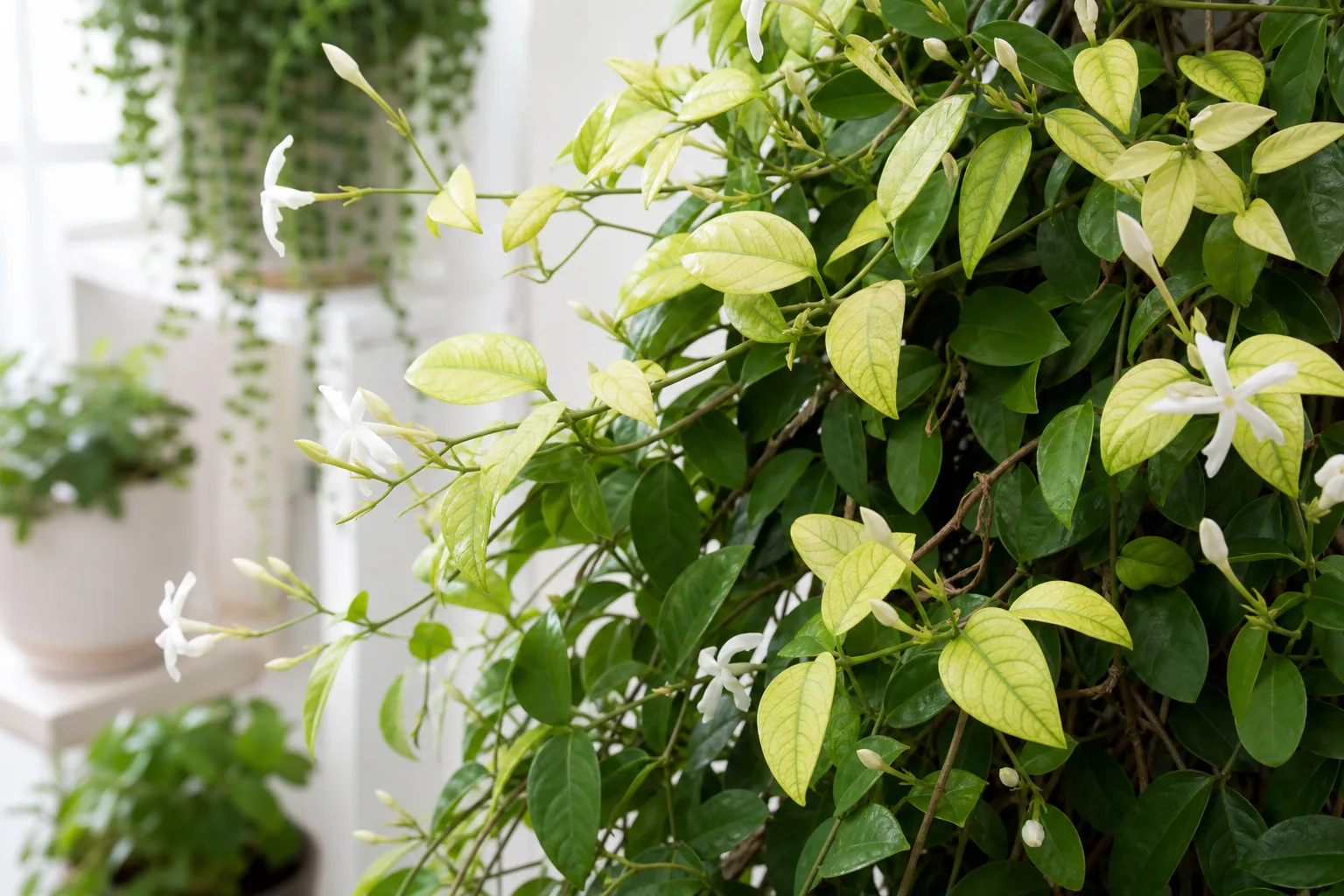
Soil Too Alkaline on Jasmine: Causes, Checks & Fixes
This guide covers soil too alkaline on Jasmine. See also the general Soil Too Alkaline guide, watering, and light pages for this plant.
Soil Too Alkaline on Jasmine: Causes, Checks & Fixes
Quick answer
Soil too alkaline on jasmine means the root zone pH has drifted above the range where iron and other micronutrients stay plant-available. On common jasmine (Jasminum officinale) and related container-grown Jasminum species, the classic sign is interveinal chlorosis on new leaves-leaf blades turn pale yellow or light green while veins remain dark green. Iron may be present in the mix, but high pH makes it chemically unavailable to roots.
Jasmine prefers moderately acidic to neutral soil, roughly pH 6.0–7.5. Above about 7.5, manganese and zinc uptake can also suffer, but iron chlorosis on expanding tips is usually the first visible clue indoors.
First step: test soil pH with a meter, probe, or drainage-water sample before you feed, spray iron, or repot. A confirmed high reading plus the new-leaf chlorosis pattern tells you to fix the root zone-not just treat leaves.
Scope note: This page troubleshoots alkaline drift and iron lockout on an existing vine. If you are building a new mix, sizing a pot, or running a drainage test, start with the jasmine soil guide-then return here when new tips stripe yellow despite good care.
What alkaline soil looks like on Jasmine
Alkaline soil problems show up in the newest growth first because iron is immobile inside the plant. Older leaves that formed when pH was still acceptable often stay greener while expanding tips struggle.
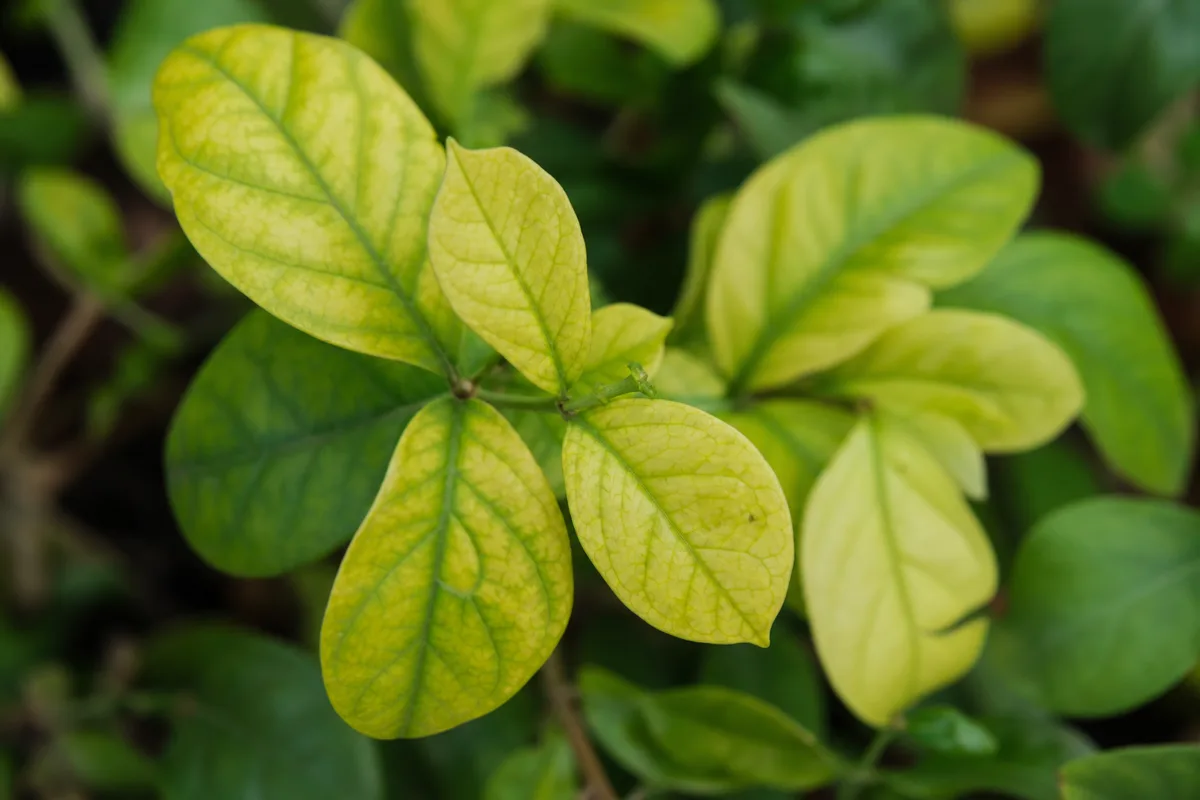
Soil Too Alkaline symptoms on Jasmine - compare with healthy tissue on the same plant.
Typical patterns on jasmine vines and shrubs in pots:
- Interveinal yellowing on young leaves at stem tips-veins stay green, tissue between them fades
- Smaller or thinner new leaves compared with last season’s flush
- Slowed stem extension during spring push, when jasmine normally builds long shoots for summer bloom
- Weak or aborted flower buds if chlorosis runs through the pre-bloom window-summer-flowering jasmine sets buds on current-season wood, so a weak spring flush can cost fragrance even after leaves recover
- White or gray mineral crust on the soil surface, pot rim, or saucer from hard water and fertilizer salts
- Uniform pale green on the whole vine only when pH has been high for many months-not the classic striped new-tip pattern alone
What alkaline lockout does not look like:
- Whole leaves yellowing evenly on wet, sour-smelling mix-that fits overwatering or root rot better than pH alone
- Brown crispy edges on lower mature leaves-more typical of potassium shortage or salt burn at leaf margins
- Mosaic mottling or distortion-suggest pest or virus issues, not soil chemistry
Unlike nitrogen deficiency, which usually fades older leaves first while new growth stays relatively green, alkaline iron lockout concentrates on the leaves opening now. See yellow leaves on jasmine for the full age-pattern differential.
Why Jasmine gets alkaline soil problems
Jasmine is not a lime-loving Mediterranean shrub. It wants fertile, well-drained soil in sun or partial shade-not heavy alkaline garden loam packed into a container. Several indoor and patio habits push pH upward over time.
Hard tap water is the most common indoor trigger. Irrigation water with high bicarbonate or calcium content leaves carbonate residues in the mix each time you water. Months of top watering without flushing gradually raise pH in the small soil volume of a pot-much faster than in open ground.
Wrong amendments at repot cause sudden spikes. Garden lime, crushed limestone as “drainage,” alkaline municipal compost, or Jasmine repotting guide with unmodified garden soil can jump pH within one season. Jasmine’s preferred mix is standard peat-free or general potting soil with compost and perlite or coarse sand for drainage-not chalky field soil. The jasmine soil guide covers mix ratios and drainage checks.
Salt and mineral buildup from heavy fertilizing on a stressed vine compounds the problem. White crust on the mix surface often travels with pH drift. The nutrients are there, but roots cannot extract them efficiently-overlap with nutrient lockout is common when crust and stunting appear together.
Long intervals between repots let old mix break down and lose buffering capacity. A root-bound jasmine in the same alkaline-trending container for three or more years is especially prone to tip chlorosis in late winter or early spring when the plant wakes and pushes new leaves.
Wall or concrete proximity outdoors can raise pH in border soil through lime leaching from masonry. Container jasmine on alkaline patios may show symptoms even when your potting mix started neutral.
Species note: Jasminum sambac (Arabian jasmine) is often sold beside J. officinale and tolerates a similar pH band, but indoor sambac in small pots drifts alkaline on hard water just as quickly. Confirm which species you grow on the jasmine overview before assuming a different care profile.
How to confirm the cause
Work through these checks in order before changing mix or applying iron:
- Leaf age pattern - Yellowing on newest tips with green veins fits iron chlorosis. Uniform fading on lowest leaves first suggests nitrogen shortage instead.
- Soil pH test - Use a handheld meter on moist mix taken from mid-pot depth, a soil test kit, or test water that drains freely from the bottom after a thorough soak. Readings above 7.5 with tip chlorosis strongly support alkaline lockout. Target range for jasmine is 6.0–7.5.
- Water source review - Do you use hard tap water exclusively? Has rainwater or filtered water ever been used? Hard water history increases confidence in the diagnosis.
- Repot history - Was garden lime, limestone gravel, or alkaline garden soil added recently? Was the last repot more than two years ago with the same hard-water routine?
- Crust and salt signs - White deposits on the pot rim or soil surface suggest mineral accumulation that often pairs with rising pH.
- Moisture and root check (if mix stays wet) - Stick a finger 3 cm into the soil. If it stays soggy for days and smells sour, slide the plant out gently. Firm pale roots with striped new leaves point to pH; brown mushy roots with whole-leaf yellowing mean rot-fix drainage and decay before acidifying.
Confirmed alkaline soil requires high pH plus the new-growth chlorosis pattern, not yellow leaves alone on a vine you never tested.
Confirmation decision table
| What you see | pH reading | Most likely cause | Next step |
|---|---|---|---|
| New leaves yellow between green veins | Above 7.5 | Alkaline iron lockout | This page-flush or repot, then chelated iron if needed |
| New leaves yellow between green veins | 6.0–7.5 | Iron deficiency or lockout without high pH | Iron deficiency guide |
| Stunted growth, dark speckling on leaf tips | Below 6.0 | Excess acidity / manganese | Soil too acidic |
| White crust, mixed pale leaves, feed does nothing | Any | Salt buildup / nutrient lockout | Nutrient lockout |
| Whole leaves yellow, sour wet mix, mushy roots | Any | Root rot | Root rot guide-rescue roots before pH work |
| Uniform lower-leaf fade, new tips relatively green | In range | Nitrogen shortage | Balanced feed after drainage and pH check; see yellow leaves |
First fix for Jasmine
Test soil pH today and record the number before any other treatment.
That single measurement tells you whether iron sprays, repotting, or flushing is the right next move. Without pH data, chelated iron may green leaves briefly while the root zone stays too alkaline for lasting recovery-and extra nitrogen on chlorotic tips can push soft, weak shoots.
Do not add vinegar, sulfur, or acidifying products blindly to a container. Concentrated acid shocks roots and gives unreliable results in a small pot volume. Do not repot on the same day you discover severe root rot; address decay first.
Step-by-step recovery
After pH confirms alkalinity, work in this order:
- Flush the container if repot is not yet possible - Water slowly with plain room-temperature water until roughly twice the pot volume runs freely from drainage holes. Repeat once after the mix partially dries. This leaches surface salts and is a holding step-not a full substitute for fresh mix when pH is far above range.
- Repot into fresh neutral mix when pH stays high - Move jasmine in early spring if timing allows. Use well-draining standard potting mix with compost and perlite or coarse sand. Omit limestone, garden lime, and unmodified garden soil. Choose a pot only one size larger if the root ball needs room-oversized wet zones slow recovery. Follow the jasmine soil guide for mix and pot sizing.
- Apply chelated iron only after you are correcting the root zone - Chelated iron is more available in alkaline conditions than ordinary iron sulfate. Fe-EDDHA chelates remain effective when soil pH exceeds 7.5, whereas other chelating compounds work only in a narrower band around 7.2 to 7.5. Foliar sprays treat symptoms temporarily; they do not fix high pH in the pot. Follow label rates for container ornamentals. Expect new leaves-not old ones-to respond.
- Switch water source if tap is hard - Rainwater, filtered water, or letting tap water sit does not fully de-alkalize hard supplies, but reducing carbonate load slows future drift. Flush again every few months in hard-water homes.
- Hold nitrogen until new growth greens - Extra nitrogen on iron-locked jasmine produces lush stems with still-chlorotic tips. Resume balanced liquid feed at half strength only after the next flush shows improved color and roots are in corrected mix. See jasmine fertilizer for timing around bloom season.
- Improve light and airflow after soil correction - Jasmine recovering from chlorosis needs bright sun to partial shade (roughly four to six hours of direct sun for summer-flowering species) to rebuild chlorophyll in new tissue. Do not move from deep shade to harsh midday sun in one step-harden off over one to two weeks.
For ground-planted jasmine on naturally alkaline soil, lowering pH in open ground is slow and often impractical. USU Extension notes that living with slightly alkaline soil is easier than large-scale acidification where free lime buffers pH. Container culture or raised beds with imported neutral mix are more realistic fixes for persistent chlorosis. If in-ground correction fails after one season of proper container-style care, contact your local cooperative extension office for a soil test and lime-management guidance suited to your region.
Recovery timeline
One to two weeks after flushing or repot: New leaves should stop getting worse if pH is moving toward range and roots are healthy.
Three to six weeks during active growth: Greener new blades on the next flush are the main success signal. Veins and tissue should look more uniformly green than the previous chlorotic tips.
One to two bloom cycles: Flower bud strength returns once chlorosis no longer runs through the pre-bloom window. Summer-flowering jasmine sets buds on current-season wood-weak spring growth from iron lockout can reduce that season’s bloom even after leaves recover.
Old chlorotic leaves: They rarely re-green fully. Trim only if they are mostly yellow and unsightly after new growth looks healthy-do not hard-prune a recovering vine before it stabilizes.
Signs the problem is worsening: Tips bleach nearly white, stems thin and break easily, bud drop increases, or yellowing spreads to older leaves while mix stays wet. Re-test pH and inspect roots.
Lookalike symptoms to rule out
Nitrogen deficiency - Older leaves fade first; new tips stay relatively green. Common on jasmine not repotted or fed in two or more years. Fix with balanced feed only after confirming drainage and pH are acceptable. Full pattern guide: yellow leaves.
Overwatering and root rot - Whole leaves yellow, stems wilt on wet mix, and roots smell sour. pH may be normal. Stop watering and inspect roots before any acidifying treatment. See root rot on jasmine.
Nutrient lockout from salt buildup alone - Can mimic multiple deficiencies with crust on the mix. Often overlaps with alkaline drift; flushing and repot address both. Dedicated workflow: nutrient lockout.
Soil too acidic - Stunted shoots and dark speckling on leaf tips at pH below 6.0 point to excess acidity, not alkalinity. Cross-check with the soil too acidic guide before adding iron.
Insufficient light - Whole vine looks pale and leggy without the striped new-leaf pattern. Move gradually into more direct sun; pH correction alone will not fix deep-shade paleness. See not enough light.
Spider mites or aphids - Stippling, webbing, or sticky residue on undersides-not interveinal chlorosis with green veins on clean leaf surfaces.
Mistakes to avoid
Do not spray iron foliar feeds as the only fix while pot pH stays above 7.5. New leaves after treatment may still chlorose because iron is immobile in the plant-only the sprayed tissue greens temporarily.
Do not add garden lime or dolomite hoping to “sweeten” soil. That deepens alkaline lockout on jasmine.
Do not pour vinegar into the pot without measured pH and dilution guidance. Root burn from strong acid is a real risk in containers.
Do not stack full-strength fertilizer on chlorotic vines. Salts raise pH further and stress roots that already struggle with uptake-risk of fertilizer burn rises.
Do not confuse winter rest with chlorosis. Jasmine slows in cool months and may drop some leaves normally. Tip chlorosis on active spring flush with high pH test results is the actionable pattern.
How to prevent alkaline soil next time
Repot jasmine every two years in early spring with fresh well-draining mix per the jasmine soil guide. Do not reuse crusty, compacted soil.
Flush containers seasonally in hard-water regions-water until free drainage, once or twice, before resuming normal care.
Keep pH in the 6.0–7.5 band jasmine tolerates best. Test annually on long-lived container plants.
Avoid limestone mulch, concrete chips, or alkaline amendments in pots.
Use balanced liquid fertilizer at modest strength during active growth only; pause in winter rest when uptake slows.
For patio jasmine, elevate pots off limestone ledges if tip chlorosis recurs despite good care indoors.
When to worry
Treat as urgent when new growth bleaches to near-white, more than a third of the canopy yellows within weeks, or flower buds abort en masse before the main bloom season. Summer-flowering jasmine builds bloom on spring growth-running iron chlorosis through that window can cost a year of fragrance even if the vine survives.
Replace or hard-cut back only when stems stay weak after two corrected flushes, roots are mostly dead, or pH cannot be held below 8.0 in a manageable container despite fresh mix and water changes. Firm green stems with living buds mean the plant is still worth correcting.
If soft stems, blackening at the soil line, and sour roots appear, prioritize root rot treatment over pH correction alone.
Related jasmine problems
This page covers excess alkalinity-pH above about 7.5 with interveinal yellowing on new leaves. If your symptoms point elsewhere, use these guides:
| Symptom pattern | Likely page |
|---|---|
| New leaves yellow between green veins, pH in range | Iron deficiency |
| pH below 6.0, stunted growth, leaf tip speckling | Soil too acidic |
| Feed present but plant stays pale; white crust | Nutrient lockout |
| General yellowing patterns by leaf age | Yellow leaves |
| Pale whole vine without striped new tips | Pale leaves |
| Sour wet mix, mushy roots, whole-leaf yellow | Root rot |
| Mix recipes, drainage tests, repot timing | Jasmine soil guide |
Scope note: Use this page when a pH test confirms alkalinity and new growth shows the classic interveinal pattern. For building the right mix from the start, use the soil guide first.
When to use this page vs other Jasmine guides
- Jasmine watering guide - Use for routine moisture checks before assuming soil too alkaline is the main issue.
- Jasmine problems hub - Browse all 53 common issues on this species.