Damaged Roots on Jasmine: Causes, Checks & Fixes
Quick answer
Damaged roots on jasmine follow overwatering rot, rough repotting, compaction, or an oversized pot-showing as wilt on wet soil, yellow lower leaves, or broken white root tips after a recent move. First step: unpot gently and sort roots by firmness before you trim or water again.
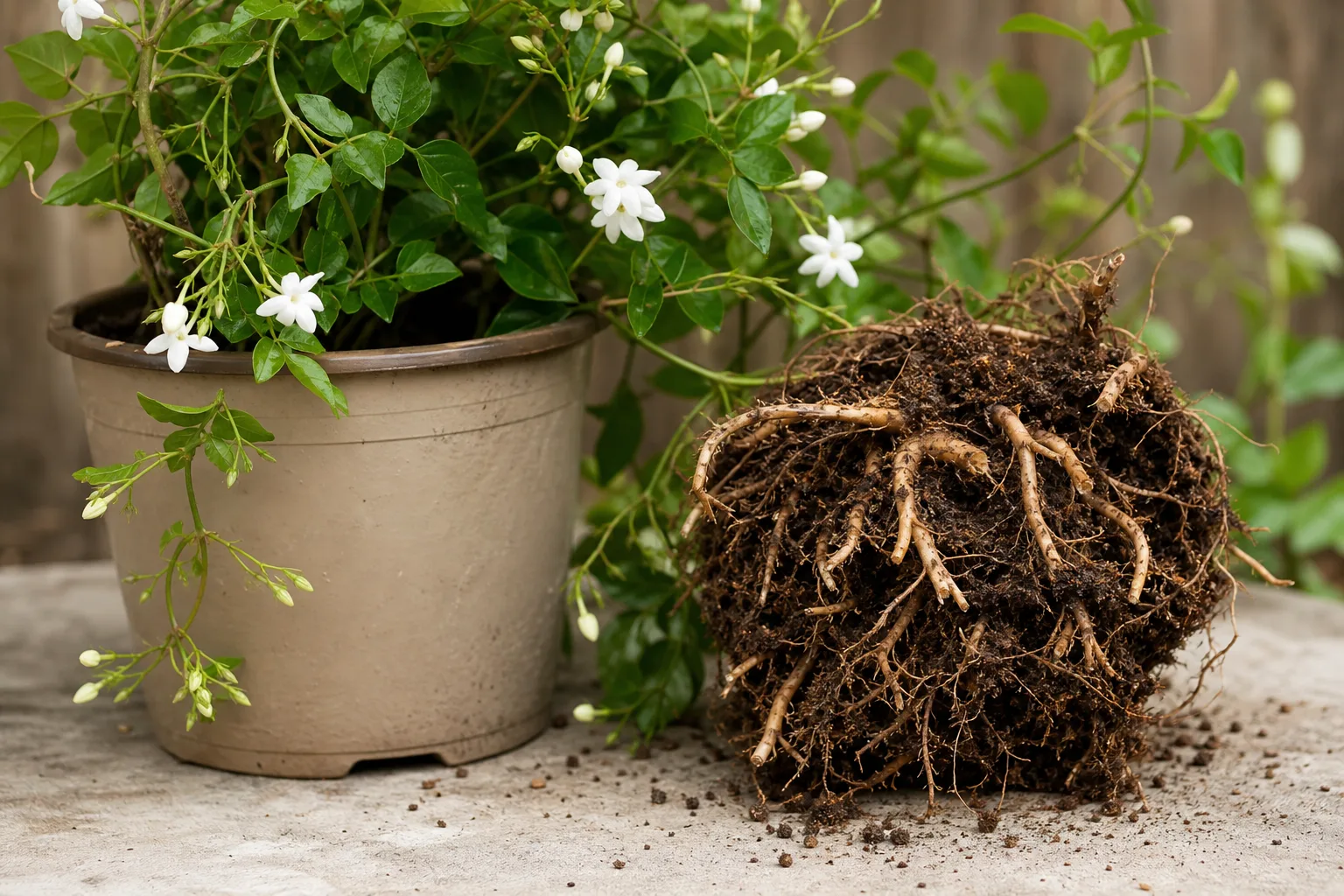
Damaged Roots on Jasmine: Causes, Checks & Fixes
This guide covers damaged roots on Jasmine. See also the general Damaged Roots guide, watering, and light pages for this plant.
Damaged Roots on Jasmine: Causes, Checks & Fixes
Quick answer
Damaged roots on common jasmine (Jasminum officinale) mean feeder roots can no longer move water to twining stems-whether from chronic wet rot, rough repotting, compacted peat, or an oversized pot holding moisture too long. This fragrant summer-flowering climber builds a dense mat of fine roots that fail fast when mix stays airless. During bloom and active growth the vine transpires heavily; when those fine roots are injured, stems wilt before lower leaves yellow-the hallmark wet-wilt paradox.
First step: stop watering and unpot gently. Do not add another drink because leaves look limp on already-wet mix. Slide the root ball out, rinse mix away, and sort roots by color and firmness before you trim, repot, or fertilize.
For confirmed brown mushy rot with sour smell, escalate to the root rot guide for full trim-and-air-dry protocol. For wet soil without mushy tissue, start with the overwatering guide. This page covers all root-failure causes-rot, mechanical breakage, compaction, and overpotting-with distinct first fixes for each.
Damaged roots vs. root rot on jasmine
“Damaged roots” describes any root-zone injury that blocks uptake. “Root rot” is one specific cause-pathogenic decay in saturated mix. On container jasmine the two overlap in symptoms but diverge in repair.
| Likely cause | Root inspection | Stem at soil line | Recent history | First fix |
|---|---|---|---|---|
| Pathogenic rot | Brown, mushy, sour-smelling | May soften | Chronic wet mix, winter overwatering | Trim decay, air-dry, repot - see root rot |
| Mechanical repot damage | Broken white tips; inner roots firm | Firm green | Repotted within past two weeks | Minimal trim; stable light; lighter watering - see below |
| Compaction / overpotting | Outer roots peel; dense wet core | Firm | Oversized pot or old peat mix | Tease outer mat, fresh perlite mix, right-sized pot |
| Underwatering (lookalike) | White, firm, dry throughout | Firm | Light pot, dry mix 5 cm down | Deep soak per underwatering guide |
| Transplant shock | Firm roots; mix disturbed | Firm | Recent move or repot, no mush | Hold water rhythm; see transplant shock |
Rule of thumb: mushy tissue that squishes and smells sour is rot-treat aggressively. Firm white roots with snapped tips after a recent repot need gentle recovery, not wholesale root surgery.
Why jasmine gets damaged roots
Overwatering rot, compaction, and overpotting
Jasmine wants moist but well-drained soil in active growth and sharply less water during its cool winter semi-rest. Dense peat-heavy mix, blocked drainage holes, and saucers that hold runoff keep the root zone saturated for days. Problems are more likely for plants brought indoors for the winter-where surrounding soil cannot wick excess moisture away.
Overpotting is a common indoor failure: a small trimmed root ball sits in a large glazed pot full of unused wet compost. Every pour saturates the zone around fine twining roots until it evaporates or drains-often too slowly in winter. Old, compacted mix forms a waterlogged core while the surface dries, creating the wet-core paradox growers mistake for thirst.
Compaction develops when roots circle a pot for two or more years without refresh. Outer feeder roots mat against the wall; when you finally unpot, they peel away leaving a dense, airless center that holds water long after the top inch feels dry.
Rough repotting and winter wet-root stress
Jasmine’s fine feeder roots tear easily when a root-bound ball is yanked, shaken aggressively, or teased with force during spring repot. Damage to roots during transplant may result in wilting even when stems look healthy-symptoms can show immediately or the vine stays stunted for weeks.
Rough handling paired with immediate heavy watering pushes torn tips into anaerobic mix-the same conditions that invite rot. Follow jasmine repotting for gentle slide-out, teasing circling roots, and one-size-up sizing.
Cool winter rest slows transpiration from October through March indoors. Watering on a summer calendar keeps cold wet roots in saturated mix when the vine cannot use moisture-yellow lower leaves and bud drop often trace to this rhythm, not a mystery disease. The jasmine watering guide covers seasonal frequency and pot-weight checks.
What damaged roots look like on jasmine
Healthy common jasmine carries glossy deep-green leaves on wiry twining stems. Root failure shows through distinct above-soil patterns:
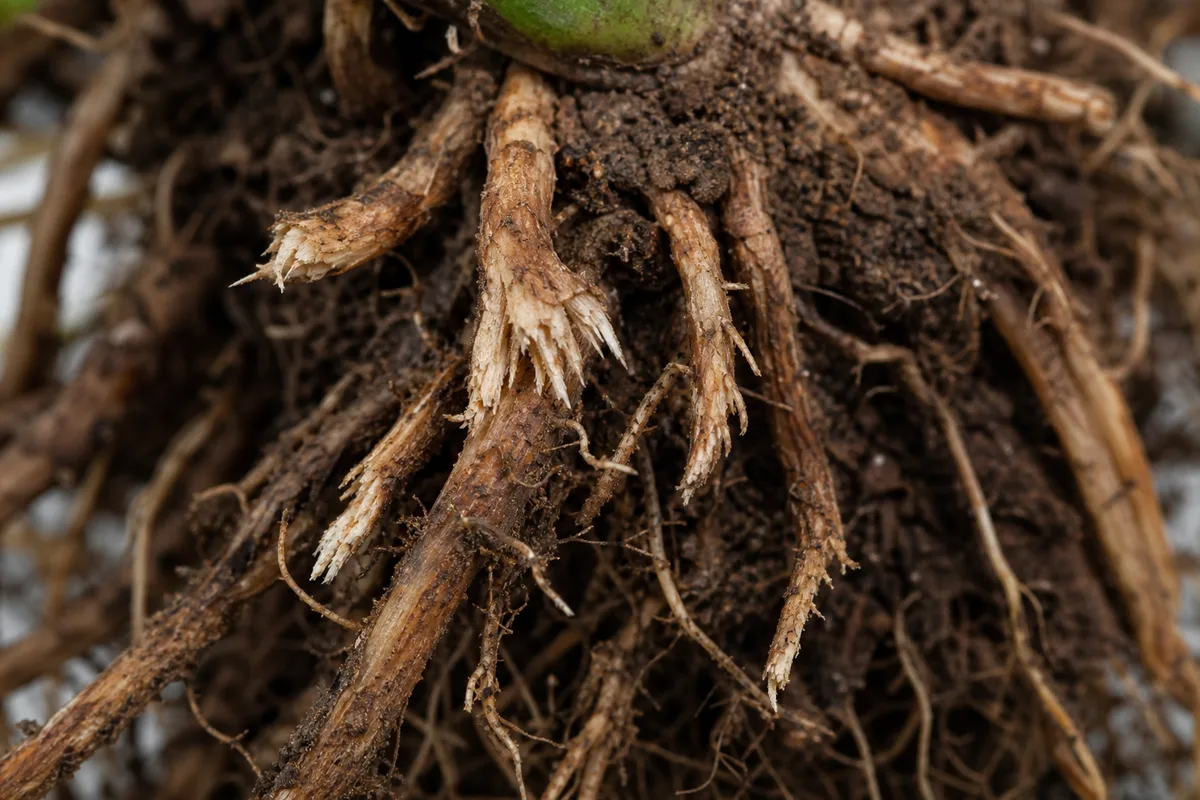
Damaged Roots symptoms on Jasmine - compare with healthy tissue on the same plant.
Rot vs. mechanical breakage vs. compaction
Pathogenic rot:
- Wilting stems while mix one to two inches down stays moist
- Yellowing lower leaves spreading when saturation is chronic
- Sour or musty smell from drain holes
- Brown, black, or slimy roots that slide off when rinsed
Mechanical repot damage:
- Limp tips for three to seven days after a recent repot
- Broken white root tips visible on rinse; inner tissue firm
- Stems firm at soil line; no sour odor
- Mix may be appropriately moist-not chronically soggy for weeks
Compaction and overpotting:
- Outer roots peel away in a mat; dense wet core remains
- Pot stays heavy for many days between waterings
- Slow growth despite fertilizer; buds drop on wet winter mix
- Surface crust dry while probe 5 cm deep finds clingy wet mix
The wet-wilt paradox on twining jasmine
Fine twining roots move water to long stems fast during summer growth and flowering. When those roots suffocate in waterlogged mix, roots lose oxygen and stop absorbing water-so the vine looks thirsty while soil is wet. Watering again accelerates decay. Wilt on dry soil with a light pot points to drought; wilt on wet soil with a heavy pot points to damaged roots.
How to confirm the cause
Work through these checks in order before you cut tissue or repot.
-
Pot weight and smell - Lift the container. Heavy for many days plus sour odor supports rot or compaction over simple thirst.
-
Soil probe - Push your finger or a bamboo skewer 5 cm deep near the pot edge. Persistent wet cling with yellow lower leaves means the root zone is not drying. A dry crust over wet depths confirms overwatering history.
-
Recent repot or move - Repot within the past two weeks with firm stems and broken white tips points to mechanical damage or transplant shock-not full rot surgery.
-
Root rinse test - Unpot and wash mix away with lukewarm water. Healthy jasmine roots are firm and white to cream. Mushy brown tissue that smells foul is rot. Firm roots with snapped tips are mechanical.
-
Stem squeeze at soil line - Firm green cambium means salvageable crown. Mushy collapsing bark means decay has climbed-escalate to stem rot if rot spreads above the soil line.
-
Severity estimate - Count damaged tissue:
- Mild: less than 30% brown or broken tips, firm stems
- Moderate: 30–60% loss, some base softening or heavy compaction
- Severe: more than 60% mushy, stem base collapsing, rapid vine-wide yellowing
First fix for jasmine (by likely cause)
Match your repair to what inspection showed-do not default to aggressive trimming when roots are firm.
Rot: trim, air-dry, repot
When roots are mushy and sour-smelling:
- Stop all water. Unpot and rinse the ball.
- Trim every brown, mushy root back to firm white tissue with clean scissors. Sterilize blades between cuts if rot is extensive.
- Air-dry the trimmed ball on newspaper in bright indirect light for 24–48 hours before repotting.
- Repot into fresh mix with 20–25% perlite in a pot matched to the trimmed root ball-not the vine’s leaf spread.
- Water lightly once five to seven days after repot; hold fertilizer until new green shoots appear firm for two weeks.
Full severity staging and week-by-week recovery live in the root rot guide.
Mechanical repot damage: minimal disturbance, lighter watering
When roots are mostly firm with broken white tips after recent repotting:
- Do not trim firm roots-remove only mushy sections if any appeared in the tear zone.
- Repot into the same or slightly smaller pot with fresh well-drained mix only if the original mix was compacted or the pot was oversized.
- Water lightly once, then let the top 3 cm dry before the next drink. Avoid saucer water sitting overnight.
- Keep light and temperature stable-no fertilizer for at least two weeks.
- Expect limp tips for three to seven days while feeder roots regrow. Limpness beyond two weeks with firm roots suggests transplant shock.
Compaction: tease outer roots, fresh mix, right-sized pot
When outer roots peel in a dense mat and the core stays wet:
- Gently tease circling outer roots outward with fingers-do not rip the mat apart.
- Trim only truly dead or mushy tissue; keep firm white feeders.
- Repot one nursery size up with 20–25% perlite per the jasmine soil guide.
- Confirm drainage holes are open; discard cachepot runoff within 30 minutes.
- Resume watering when the top 3 cm dries-judge by pot weight, not calendar alone.
Recovery timeline
Days 1–7: Rot spread should stop once decay is trimmed and mix dries. Mechanical damage may show continued limp tips-firm stems at the base are the positive sign. No new yellowing is progress.
Weeks 2–4: Mild cases often push one new green twining tip. Old yellow leaves drop rather than re-green-judge recovery by new shoots, not old foliage. Mechanical repot cases usually stabilize within this window.
Months 2–3: Moderate root loss or compaction rescue rebuilds feeders slowly. Expect sparse new growth; flowering may skip until the following summer if loss was heavy.
Full season: Severe damage with major root trimming may delay bloom an entire year while the vine rebuilds. Firm stems with intermittent new tips mean the rescue worked even when fragrance returns next season.
If no new green tips appear after four weeks with appropriate light and cautious watering, roots may be too far gone-take propagation cuttings while firm upper stems remain.
What not to do
Do not keep watering a wilted vine because the soil surface looks dry while the core stays wet-that deepens rot and compaction damage.
Do not repot into a much larger decorative pot hoping it helps. Unused wet soil around a small root ball re-saturates the zone within days.
Do not fertilize damaged roots-it burns tender regrowth and worsens salt stress on uptake failure.
Do not aggressively trim firm white roots after mechanical repot injury. Only remove tissue that is truly mushy or foul-smelling.
Do not bury twining stems deeper at repot. Keep the original soil line-buried bark rots faster indoors.
Do not confuse underwatering with root failure. A lightweight pot, dry mix throughout, and crisp leaves point to thirst-not damaged roots.
How to prevent damaged roots next time
Learn your pot’s dry weight in each season. Jasmine in the same container may need water every two to three days in summer sun and only once every ten to fourteen days during cool winter rest.
Use terracotta or a mix with 20–25% perlite. Glazed ceramic dries slower-adjust winter frequency accordingly. Empty saucers within 30 minutes of every watering session.
Repot every two to three years in early spring when roots circle the pot-follow jasmine repotting for gentle technique, not preemptive jumps to huge containers.
Match watering to growth phase. The jasmine watering guide covers finger tests, probe depth, and pot-weight protocol for bloom season versus winter rest.
Jasmine is listed as non-toxic to dogs and cats by the ASPCA-still wear gloves when handling rotted tissue and wash hands after repotting.
When to worry
Treat as urgent when stems dent or soften at the soil line, soil smells rotten, or more than a third of roots are mushy on inspection. Dry-down alone is unlikely to save active rot-begin trim-and-repot rescue the same day.
Also act quickly when yellowing spreads up the vine within a week, wilt persists 24 hours on already-wet mix, or mechanical repot limpness lasts beyond two weeks with sour smell developing at drain holes-hidden rot may have followed torn roots into wet mix.
Escalate to root rot when inspection confirms widespread mushy tissue. Take propagation cuttings the same day if the base is failing but firm green tissue remains higher on the vine-see the jasmine propagation guide.
Slow yellowing on one or two lower leaves with firm stems and mix that dries normally within a week can wait for a schedule adjustment-see yellow leaves on jasmine for the broader fork.
Salvage via cuttings when the root ball cannot be saved
When more than half the root ball is mushy or the stem base collapses, semi-hardwood cuttings from healthy upper nodes are the realistic salvage path-not another aggressive repot.
- Choose firm stems with green leaves above the damage zone.
- Cut 10–15 cm sections just below a node with clean, sharp pruners.
- Remove lower leaves; keep two to three leaf pairs at the tip.
- Root in fresh well-drained mix or water per the jasmine propagation guide.
- Discard the failing base and sterilize the old pot before reuse.
A vine whose entire base is hollow usually cannot be saved as one plant-starting clean cuttings beats prolonging a collapsing root ball.
Related tool
Use the Plant Problem Diagnosis Tool to narrow causes for damaged roots on this plant before changing multiple variables at once.