Thin Stems on Jasmine: Causes, Checks & Fixes
Quick answer
Thin spindly jasmine stems usually mean too little light or overcrowded seedlings-not enough photosynthesis to thicken wood. First step: move the plant to the brightest available spot or add a grow light for 14–16 hours daily before changing fertilizer or repotting.
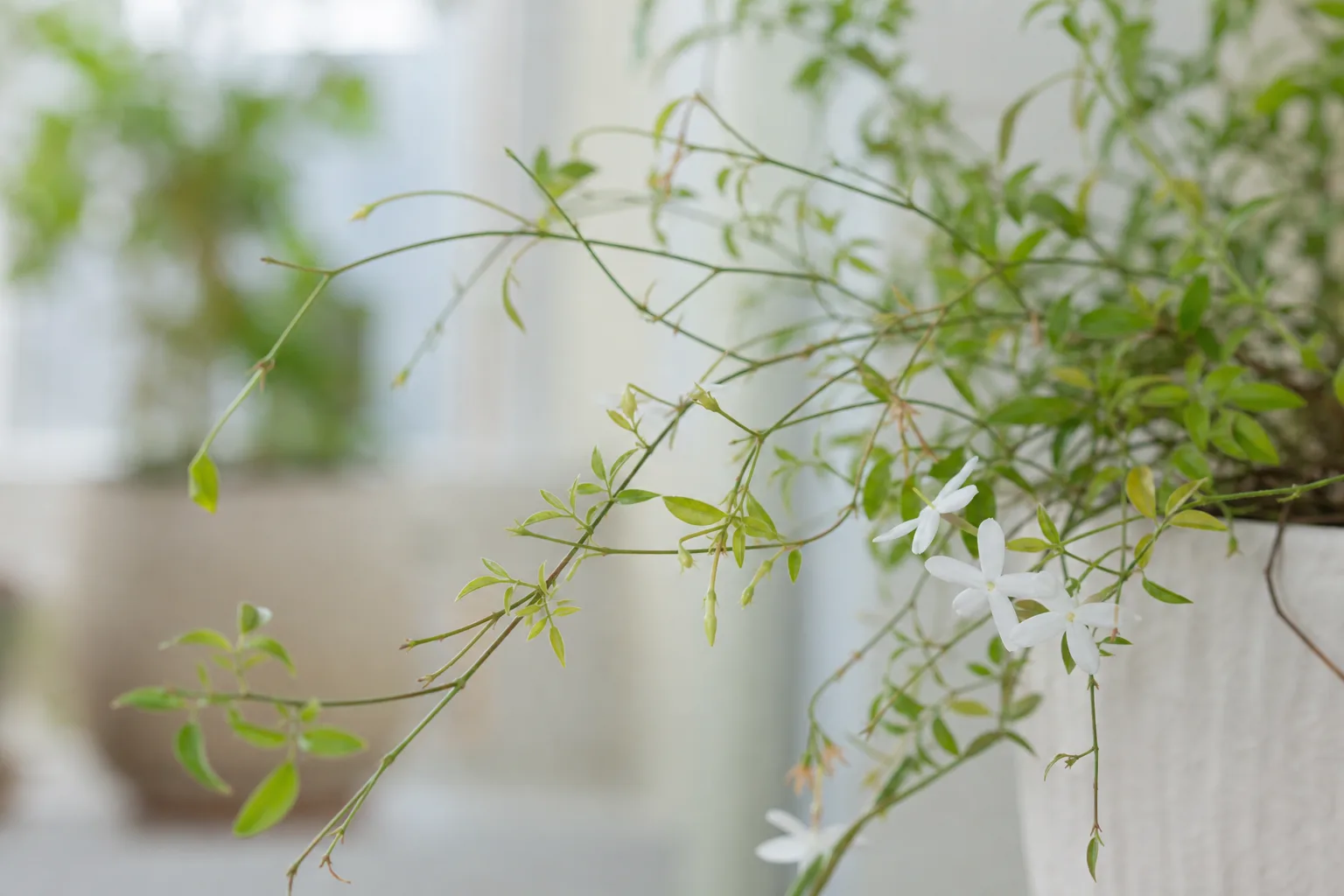
Thin Stems on Jasmine: Causes, Checks & Fixes
This guide covers thin stems on Jasmine. See also the general Thin Stems guide, watering, and light pages for this plant.
Thin Stems on Jasmine: Causes, Checks & Fixes
Quick answer
Thin stems on Jasminum officinale (common jasmine) usually reflect weak photosynthesis-not a mysterious disease. A vigorous twining vine is supposed to produce long climbing shoots, but pencil-thin, floppy stems with wide gaps between small pale leaves mean the plant is stretching for light.
First step: increase daily light before you change fertilizer or repot. Move the vine to the brightest south- or west-facing window you have, or add a full-spectrum grow light for 14–16 hours. Jasmine needs full sun to partial shade outdoors and plenty of bright light indoors to build firm wood. Once light improves, install a trellis so new growth climbs vertically instead of collapsing sideways.
Why jasmine stems stay thin
Common jasmine is a rapid-growing twining vine in the olive family. It pushes long shoots quickly when conditions favor growth-but those shoots only thicken when leaves intercept enough light to fuel stem development. In dim indoor corners, conservatory shade, or crowded seedling trays, the plant elongates toward the brightest source instead of branching.
Insufficient light is the leading cause. University of Maryland Extension notes that houseplants in too little light become spindly or leggy as they stretch for more light, with fading leaf color and poor growth. Jasmine left far from windows shows this clearly because it is a sun-loving climber, not a low-light foliage plant.
Crowded seedlings shade one another in propagation cells. Multiple jasmine seedlings in one plug compete for the same photons, producing weak stems that flop at the soil line even when the tray looks green from above.
Excess nitrogen without matching light pushes soft, leafy extension. Jasmine already produces vigorous growth; high-nitrogen feeds in dim winter rooms add length without structural strength. Tender shoots also attract aphids on ornamental landscape plants, which further weakens stressed tips.
Missing support and air movement matter on a twining species. Missouri Botanical Garden notes that indoor jasmine are vigorous growers that require support. Vines left to sprawl on a shelf lean and bend; gentle air movement helps toughen tissue the way outdoor breezes do on trained climbers.
Seasonal slow growth can look like thinness but is different. Jasmine rests from October to March indoors and may produce little new wood in short cool months-that is normal dormancy, not etiolation. Thin stems that appeared while the plant was actively growing in spring or summer point to culture, not rest.
What thin stems look like on jasmine
Healthy common jasmine produces flexible twining stems that wrap around supports. That normal flexibility is not the problem. Unhealthy thinness shows as:
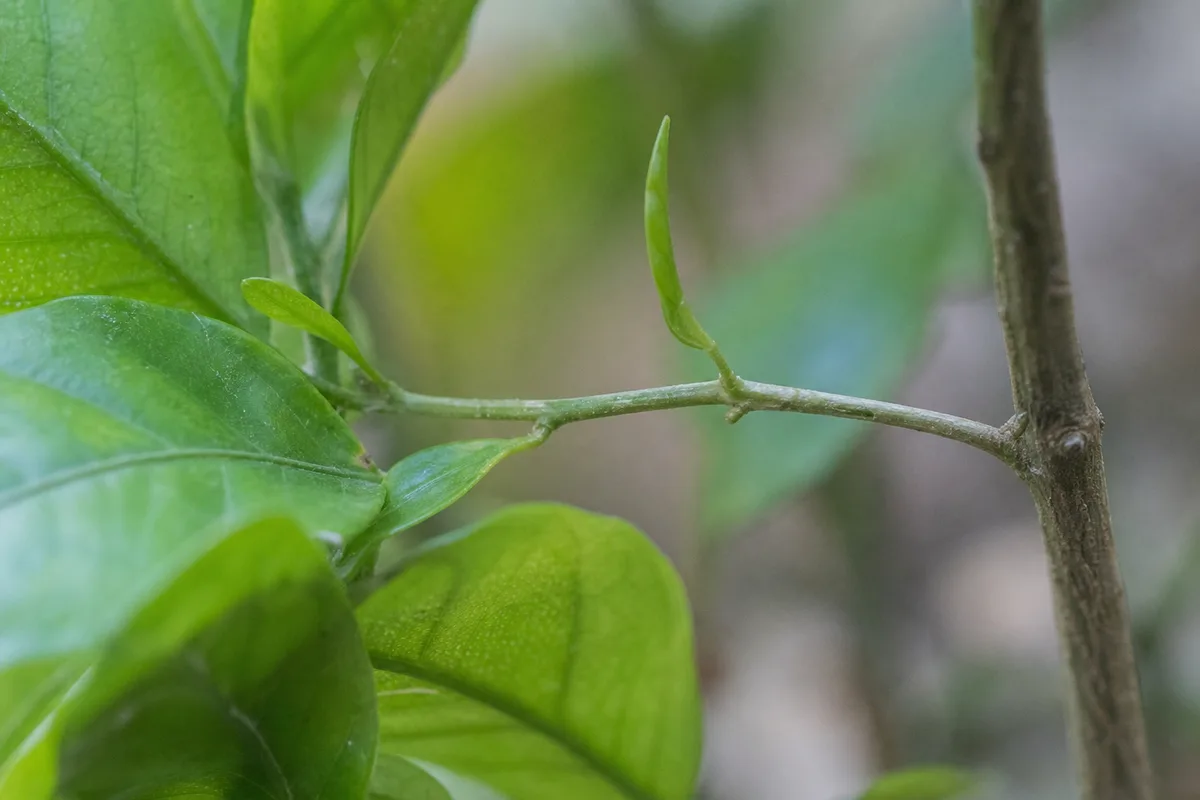
Thin Stems symptoms on Jasmine - compare with healthy tissue on the same plant.
- Long internodes - noticeably wide gaps between leaf pairs along the stem
- Small, pale leaves compared with older growth from brighter conditions
- Stems that bend without snap resistance - floppy, not merely pliable
- Directional lean - the whole vine reaches toward one window or grow lamp
- Seedlings flopping at the soil line in trays, with thin hypocotyls and few side branches
- Runners that cannot hold bloom clusters without immediate trellis support
On mature vines, you may see a mix: older woody sections from a sunnier period plus new thin runners from a recent dim winter indoors. The pattern matters more than any single stem diameter.
How to confirm the cause
Work through these checks in order:
- Light direction and stretch rate - If the vine leans or adds length weekly toward a window, light is the primary suspect. Mark a node with tape and measure internode length over two weeks.
- Hours of direct sun or supplemental light - Outdoor jasmine wants full sun or partial shade with several hours of direct light. Indoors, a north-facing room alone rarely suffices without a grow lamp.
- Seedling density - Count plants per cell. More than one vigorous jasmine seedling per pot almost always means competition and weak stems.
- Fertilizer history - Recent high-nitrogen liquid feeds combined with dim light worsen spindly growth. Hold nitrogen until you confirm adequate light.
- Support check - Unsupported vines sprawling horizontally often look thinner at the base than the same plant trained upright on a trellis.
- Season context - Little new growth in cool winter rest is normal. Active-season stretch in warm months is not.
If light is strong, stems are still thin, and leaves are yellowing with wet soil, look instead at root problems or pests-but thin stems alone in a dim spot rarely need a root inspection first.
First fix for jasmine
Move the plant to maximum bright light, or add a grow light running 14–16 hours daily.
Place the pot within a few feet of the brightest window, or suspend a full-spectrum lamp 30–45 cm above the canopy. Maryland Extension recommends limiting combined natural and artificial light to about 16 hours total so the plant still receives a dark period.
Do not repot, heavily fertilize, or hard-prune on day one. Light is the lever that lets jasmine build stem girth. After one to two weeks of improved exposure, install a trellis or hoop and gently tie the leading shoots vertically. RHS guidance for summer-flowering jasmines emphasizes sturdy supports because vigorous climbers need large, secure structures once established.
Step-by-step recovery
After light improves:
- Thin crowded seedlings to one plant per pot. Snip extras at soil level rather than pulling, which disturbs roots.
- Train upward - Attach the main stems to a trellis, hoop, or wall hooks. Vertical training concentrates growth energy into fewer supported leaders.
- Rotate the pot weekly for even exposure if light comes from one direction.
- Add gentle air movement - A small fan on low several hours daily mimics outdoor toughening. Avoid blasting spindly seedlings; start after stems stiffen slightly.
- Hold high-nitrogen fertilizer until new growth looks firm and internodes shorten. Then use balanced liquid feed during active growth, switching to high-potassium feed before flowering season per normal jasmine care.
- Prune after flowering - RHS pruning guidance recommends cutting back flowered stems to a strong side-shoot and removing weak or thin stems when pruning summer jasmines. Hard renovation is possible on overgrown vines but delays bloom for two to three years.
- Move outdoors gradually once nights stay above 13–15°C (55–59°F) if you grow tender jasmine indoors. Partial shade outdoors still exceeds typical indoor corner light.
If stems remain thin after four to six weeks of strong light, reassess whether the plant is true Jasminum officinale versus a different jasmine species with naturally finer wood-but for most common jasmine, light was the missing piece.
Recovery timeline
Improved light often shows in shortened internodes on new tips within two to three weeks during active growth. Stems that already elongated stay thin along their length until you prune them back to a node.
Expect firmer new shoots in three to six weeks once light, support, and spacing align. Full vine framework recovery on a large leggy plant may take a full growing season plus a post-bloom prune.
Judge success by new growth quality, not old runners: shorter gaps between leaves, deeper green color, and stems that resist gentle bending.
Lookalike symptoms to rule out
Normal twining flexibility - Healthy jasmine stems wrap around trellis wires and sway slightly. They should not feel hollow or bend flat under their own weight along the entire length.
Leggy seedlings vs mature vine runners - Both can look thin, but seedlings flop at the cotyledon stage in dim trays; mature vines produce thin new runners from an otherwise woody base after a dim winter.
Weak stems from root rot or stem rot - These come with wilting despite wet soil, yellowing, sour smell, or soft base tissue. Thin etiolated stems in dry-to-normal soil with firm roots point to light, not rot.
Spider mite stress - Dry indoor air after the cool winter period can bring mites. Look for stippling, fine webbing, and dusty leaf undersides-not classic long internode stretch toward a window.
Winter rest - Slow or absent new growth in cool months with a hardier outdoor plant is seasonal, not etiolation. Etiolation happens when the plant is actively trying to grow toward light.
Mistakes to avoid
Do not harden off spindly seedlings into strong wind before light correction-they snap. Strengthen indoors first, then acclimate gradually.
Do not confuse normal twining with unhealthy thinness at the base. A young vine can be thin while establishing; the red flag is continuous stretch with pale small leaves in dim conditions.
Do not over-fertilize to force bulk in low light. Nitrogen adds length, not strength, when photosynthesis is limited.
Do not repot into an oversized pot hoping for faster growth. Extra wet soil around a small root ball stresses jasmine without fixing etiolation.
Do not skip support on a climbing species. Even well-lit jasmine benefits from early trellis training.
How to prevent thin stems next time
Start seeds and cuttings under adequate light from day one-not a distant windowsill alone unless you know it delivers several hours of direct sun.
Keep one seedling per pot and transplant before roots circle tightly in tiny cells.
Provide sturdy support early for the twining habit. Summer-flowering jasmines become vigorous once established and need room to climb.
Use balanced fertilizer during active growth only, after light and watering basics are stable. Avoid pushing soft growth in dim winter quarters.
Give jasmine its cool rest period with good light if you want bloom-plants weakened by year-round warm dim rooms produce fewer flowers and softer wood.
Rotate containers weekly and move outdoors to partial shade for the growing season when possible; outdoor light levels typically exceed indoor corners by a wide margin.
When to worry
Treat as urgent when spindly stems must support outdoor transition or heavy bloom weight soon-they will break in wind or under flower clusters without immediate trellis support.
Correct seedling trays showing daily stretch before stems become irreversibly long and fragile.
Worry less about slow winter growth on a healthy woody base in a cool rest period-that is seasonal, not a stem emergency.
Replace a vine only if it remains permanently leggy after a full active season of corrected light, support, and post-bloom pruning, and still cannot hold itself upright. That is rare on common jasmine when light was the actual limit.
Conclusion
Thin jasmine stems are usually a light and structure problem, not a mystery disease. Confirm stretch toward windows, crowded seedlings, or soft nitrogen-driven growth in dim rooms. Increase bright light first, train the vine upward on support, thin competition, and prune weak wood after flowering. New growth tells you whether recovery is working-shorter internodes and firmer stems mean you fixed the right cause.
When to use this page vs other Jasmine guides
- Jasmine watering guide - Use for routine moisture checks before assuming thin stems is the main issue.
- Jasmine problems hub - Browse all 53 common issues on this species.