Exposed Roots on Jasmine: Causes, Checks & Fixes
Quick answer
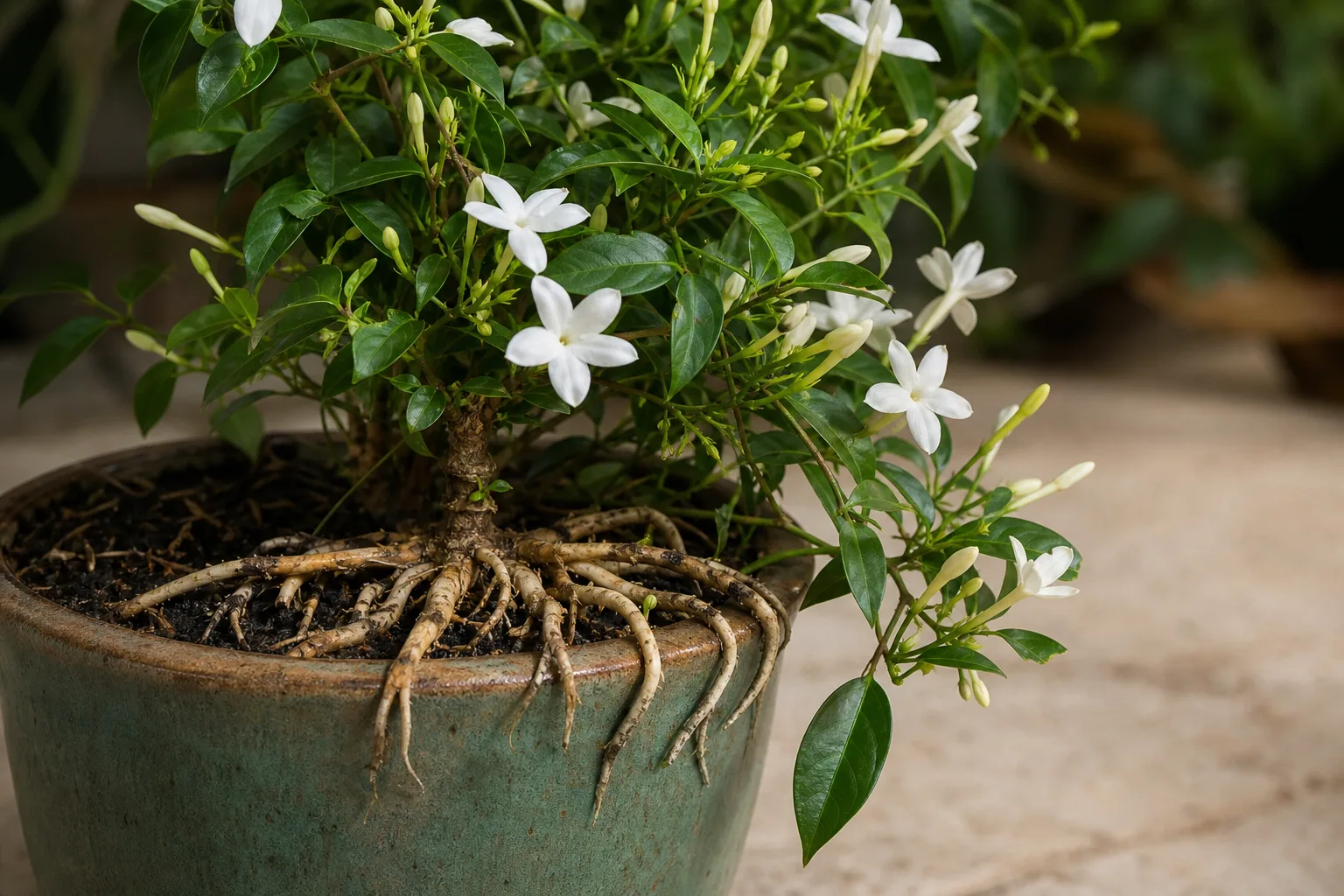
Exposed jasmine roots usually mean soil washed away, the plant is root-bound and riding up in the pot, or rain eroded mulch on a slope. First step: mist dry fine roots, cover firm feeders with fresh mix, and repot one size up in early spring only if circling roots displaced most soil-not because a few white tips show at the rim.
Exposed Roots on Jasmine: Causes, Checks & Fixes
This guide covers exposed roots on Jasmine. See also the general Exposed Roots guide, watering, and light pages for this plant.
Exposed Roots on Jasmine: Causes, Checks & Fixes
Quick answer
Exposed roots on common jasmine (Jasminum officinale) usually follow one of three paths: mix erosion from heavy watering or rain, root-bound lift where circling roots push the plant upward until feeders sit above the soil line, or outdoor slope runoff that strips mulch and topsoil from ground-planted vines.
First step: mist any dry fine roots, then decide whether you need a light top-dress or a full repot. Firm white or tan feeders after a wash-out event get fresh well-draining mix at the same stem depth-not deeper. If the whole root ball shifts up when you lift the pot and roots spiral in a dense sleeve, you have binding overlap-read root-bound jasmine for confirmation before buying a new container. Do not leave sun-baked surface roots dry for days during summer bloom; transpiration pulls hard on a twining vine when fine feeders cannot absorb moisture.
What exposed roots look like on jasmine
Two patterns alarm owners, but only one is always a soil-line problem.
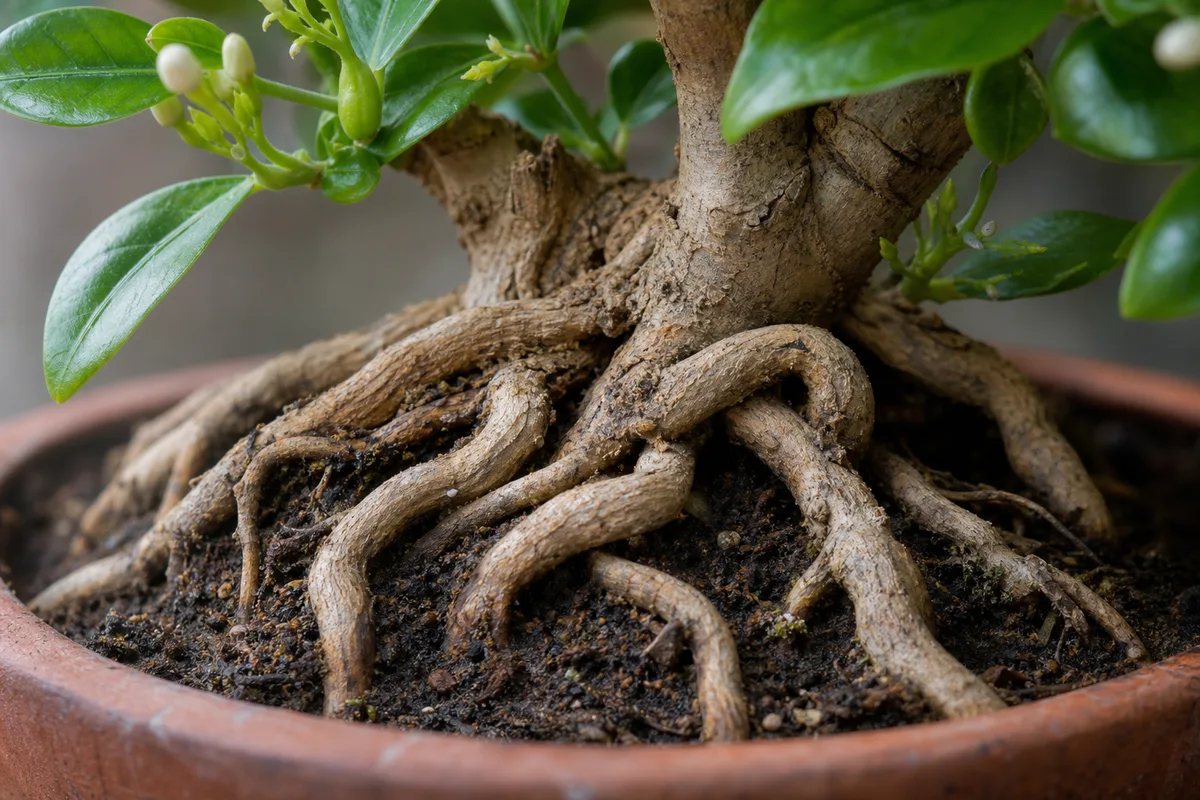
Exposed Roots symptoms on Jasmine - compare with healthy tissue on the same plant.
Surface feeders at the pot rim or on outdoor soil. White or light tan root tips creep over the container edge, sit in a groove where mix used to be, or snake across the top after the soil level dropped an inch below the rim. The vine may wobble when you tug gently because the root collar rides high while stems above still look green.
Dropped soil level after watering or storms. You notice potting mix in the saucer, a hollow around the stem, or an erosion channel downhill on a bank-planted jasmine. Fine roots that were covered last month now dry in open air.
Healthy exposed tissue feels firm and flexible. Rotting exposed roots turn brown, translucent, or mushy and may smell sour-handle that on the root rot page, not with cover-alone.
Jasmine is not an aroid. Unlike pothos or monstera, common jasmine does not produce normal adhesive aerial roots along twining stems. Visible roots at the soil surface or pot edge here signal soil loss, crowding, or decay-not expected climbing anatomy.
Why jasmine gets exposed roots
Jasminum officinale is a vigorous twining climber with rapid growth in warm bright conditions. Containerized plants consume pot space faster than many owners expect-Clemson Extension notes common jasmine grows 12 to 24 inches a year once established, so roots and stems expand together when light and moisture are adequate.
Mix erosion and shallow watering. Repeated top watering with a hard stream, saucer flooding without deep soak, or lightweight perlite floating toward drain holes washes mix away from the crown. The top inch dries while lower roots stay wet; surface feeders seek air and break through-then bake when the saucer routine never wets the upper zone. Match depth to season using the jasmine watering guide.
Root binding displaces soil upward. Fast fill in about two years is common on an actively growing vine. Circling roots pack the pot wall until only a thin layer covers the mass. Water channels down the sides and drains in seconds-the plant reads drought even right after you water. Binding-induced exposure overlaps heavily with root-bound jasmine; exposure here is often the visible tip of crowding below.
Outdoor bank and slope planting. Winter jasmine is often grown as a bank cover where stems root where they touch soil-but common jasmine on a slope loses mulch and topsoil to runoff after storms. Terracing and annual mulch refresh matter more than another drink of water.
Chronic overwatering collapses mix. Wet anaerobic substrate breaks down; fine roots rot and repeated soaking washes failed particles away. Mushy decay at the surface often coincides with bare roots-see overwatering before you only add mix on top.
Rough repotting or settling. Disturbing the root ball without replacing lost volume, or peat-heavy mix settling after the first few waterings, can leave the collar higher than intended with feeders drying in air.
How to confirm the cause
Work through these checks before repotting or burying the stem:
- Lift test - Tilt the pot and slide the root ball up slightly. Does the whole mass shift upward as one piece with roots spiraling the wall? Binding confirmed-plan repot per jasmine repotting.
- Texture - Firm white or tan roots vs. brown mush that slips off when touched.
- Soil history - Recent repot, years without top-dress, mix washing into the saucer after each water, or storm erosion outdoors?
- Smell and pot weight - Sour odor and heavy wet pot suggest rot; light pot with firm bare roots suggest erosion or binding.
- Wilting pattern - Limp leaves on wet mix point to root damage; slight droop on dry surface with firm deeper mix may be underwatering instead.
- Stem base - Soft blackening at the collar means decay climbing from wet soil contact-not simple exposure.
- Growth and bloom - Stalled tips despite good summer light often overlaps with a root-bound pot that needs space, not only a sprinkle of mix on top.
| Clue | Likely cause | Next step |
|---|---|---|
| Mix in saucer, dropped soil level, firm white roots | Erosion / wash-out | Top-dress; water gently at rim |
| Whole ball shifts up, roots circle wall, fast dry-down | Root-bound lift | Repot one size up; tease outer roots |
| Mushy brown roots, sour wet mix, wilt on wet soil | Root rot | Trim decay; repot fresh mix-root rot |
| Dry whole pot, loose roots, no circling | Underwatering | Soak once; check underwatering |
| Drooping days after transplant only | Repot stress | Hold water steady; avoid re-burying stem |
First fix for jasmine
Mist dry surface roots if they look crispy, then cover firm feeders with fresh well-draining mix at the same stem depth-before you unpot or fertilize.
For erosion only (firm roots, dropped level, no circling mat): add well-draining mix around the crown, tapering so the stem sits where it did before. Water once lightly to settle; drain the saucer. Use the blend from the jasmine soil guide-airy potting base with perlite or coarse sand, not heavy garden soil.
For root-bound lift (spiraling sleeve, ball shifts up, water runs through in seconds): schedule repot in early spring as new growth starts-one container size up, teased outer roots, fresh mix. Do not jump to a huge decorative tub; excess wet volume around a small root zone invites the rot that exposes roots in the first place.
For outdoor erosion: refresh mulch and soil over exposed zones on level ground; terrace or build a low soil berm on slopes so rain does not channel away from the crown. Do not bury the main stem deeper than it originally sat.
Make this diagnostic cover-or-repot decision first-before stacking fertilizer, aggressive root slicing, or winter repotting on a merely tight but manageable plant.
Step-by-step recovery
- Inspect the rim and drain holes before full unpotting-note color, firmness, smell, and whether mix washed out recently.
- Mist dry fine roots if they look dull or crispy; shade the pot from direct midday sun until covered.
- Top-dress when less than one-third of the root ball was bare and roots feel firm-Clemson HGIC describes topdressing as replacing the top 2 to 3 inches of mix on large containers; skip full repot unless circling displaces most soil.
- Repot when roots circle tightly, water channels every time, or more than one-third of feeders were exposed-follow jasmine repotting for one-size-up sizing and mix ratios.
- Keep the crown at the prior depth when adding mix; do not pack firmly-press gently and water to settle.
- Trim only mushy roots back to firm white tissue; leave healthy feeders intact. Dead brittle tips rarely regrow-judge success by new tips, not old yellow leaves.
- Hold fertilizer until new firm shoots appear-usually two to three weeks after a spring reset.
- Re-tie stems to the trellis without crushing new growth; bright indirect light helps the vine use water predictably after cover.
If binding and rot overlap-sour core inside a tight mat-handle as rot plus repot the same day, not top-dress alone.
Recovery timeline
Firm roots covered before they desiccate often stabilize within a few days once mix is reset and watering follows a dry-down rhythm. Erosion fixed early may show new pale tips within two to three weeks in warm bright conditions during the growing season.
Bloom recovery takes longer. Summer fragrance depends on prior winter rest and even moisture through bud formation-do not expect instant flowers right after disturbance. Judge progress by firm new growth and stable pot weight, not the first flush alone.
Crispy dried surface feeders rarely re-anchor; covering prevents further loss but may not restore every strand. If no new tips appear after six weeks in good light, inspect for hidden rot at the core or damaged roots from earlier handling.
Lookalike symptoms to rule out
- Root-bound drying - Pot empties in hours, roots circle inside, sometimes pushing mix up until feeders show. Needs repot, not only top-dress-see root-bound jasmine.
- Root rot from overwatering - Mushy texture, sour smell, yellow wilting on wet mix; may expose dead roots as soil collapses.
- Underwatering - Light pot, dry mix throughout, limp leaves that perk after one thorough soak-roots not visibly bare at the surface.
- Repotting stress - Drooping starts days after transplant, not gradual erosion over weeks.
- Normal anatomy on other plants - Aroid vines grow intentional aerial roots at nodes; jasmine does not-surface roots here are a substrate or crowding signal.
- Winter rest - Reduced growth October through March is normal; firm roots with stable soil level need less water in winter, not emergency repot on drought symptoms alone.
Mistakes to avoid
Do not bury the stem trunk deeply to hide roots-bark in contact with wet mix can rot where the collar meets soil. Do not cover mushy rotted roots without trimming first. Do not slice exposed roots aggressively unless they are dead and brittle. Do not repot during peak winter rest unless rot is present-wait for early spring unless the vine is failing. Do not upsizing two or three pot sizes to avoid another repot; excess wet mix worsens anaerobic conditions. Do not flood the crown after top-dress to “help roots settle”-that washes mix away again.
Jasmine care cross-check
Exposed roots often signal a substrate maintenance gap on a fast-growing fragrant vine-not instant plant death. Cross-check baseline care before assuming the worst:
- Light - Full sun to partial shade with several hours of direct sun for indoor bloom
- Water depth - Soak until drain runs, then let the top few centimetres dry; shallow saucer fills worsen surface erosion
- Winter rhythm - Cool rest with reduced watering; resume normal rhythm as February growth returns
- Support - Trellis or frame so stems are not root-starved in a tiny pot while the vine reaches the ceiling
- Mix - Well-drained, moderate fertility per the soil guide; refresh before peat collapses in place
Jasmine is listed as non-toxic to dogs and cats by the ASPCA-still wear gloves when handling rotted tissue and wash hands after repotting.
How to prevent exposed roots on jasmine
Repot every two years or when roots circle the pot-whichever comes first. Top-dress the top inch annually if you must delay full repot on a large container. Water slowly at the pot edge so mix stays in the pot, not the saucer. Terrace sloped outdoor plantings and refresh mulch each autumn, leaving a gap around the stem base. Tease outer circling roots at each repot so they grow outward instead of riding up again.
When to worry
Same-day action if bare roots at the soil line are black and slimy with a soft stem base, or if leaves wilt sharply while mix stays wet-that is root failure, not erosion alone.
High urgency in summer heat when fine roots bake dry on the surface during peak bloom while the vine wilts despite moist deeper mix. Cover and mist promptly; move out of scorching afternoon sun until feeders re-anchor.
Stable winter exposure on a firm plant is lower urgency if you top-dress before spring growth resumes. A few white tips at the rim after one heavy flush may need only mix refresh-not emergency repot.
Escalate to root rot when sour smell, mushy core, or chronic wet wilt persists after correction.
Conclusion
Exposed roots on jasmine usually mean washed or displaced mix, root-bound lift, or outdoor erosion-not automatic repotting. Confirm texture and whether the ball shifts up, top-dress firm soil-line feeders at the same stem depth, repot when circling displaces mix, and keep the twining collar dry-not buried-to avoid bark rot. Binding depth lives on the root-bound page; full repot protocol lives on the repotting guide.
Related tool
Use the Plant Problem Diagnosis Tool to narrow causes for exposed roots on this plant before changing multiple variables at once.