Yellow Seedlings on Jasmine: Causes, Checks & Fixes
Quick answer
Yellow jasmine seedlings usually signal overwatering in cool trays, insufficient light after emergence, or nitrogen shortage once true leaves appear-not normal cotyledon fade alone. First step: pinch the stem base and probe mix moisture before you feed or resow.
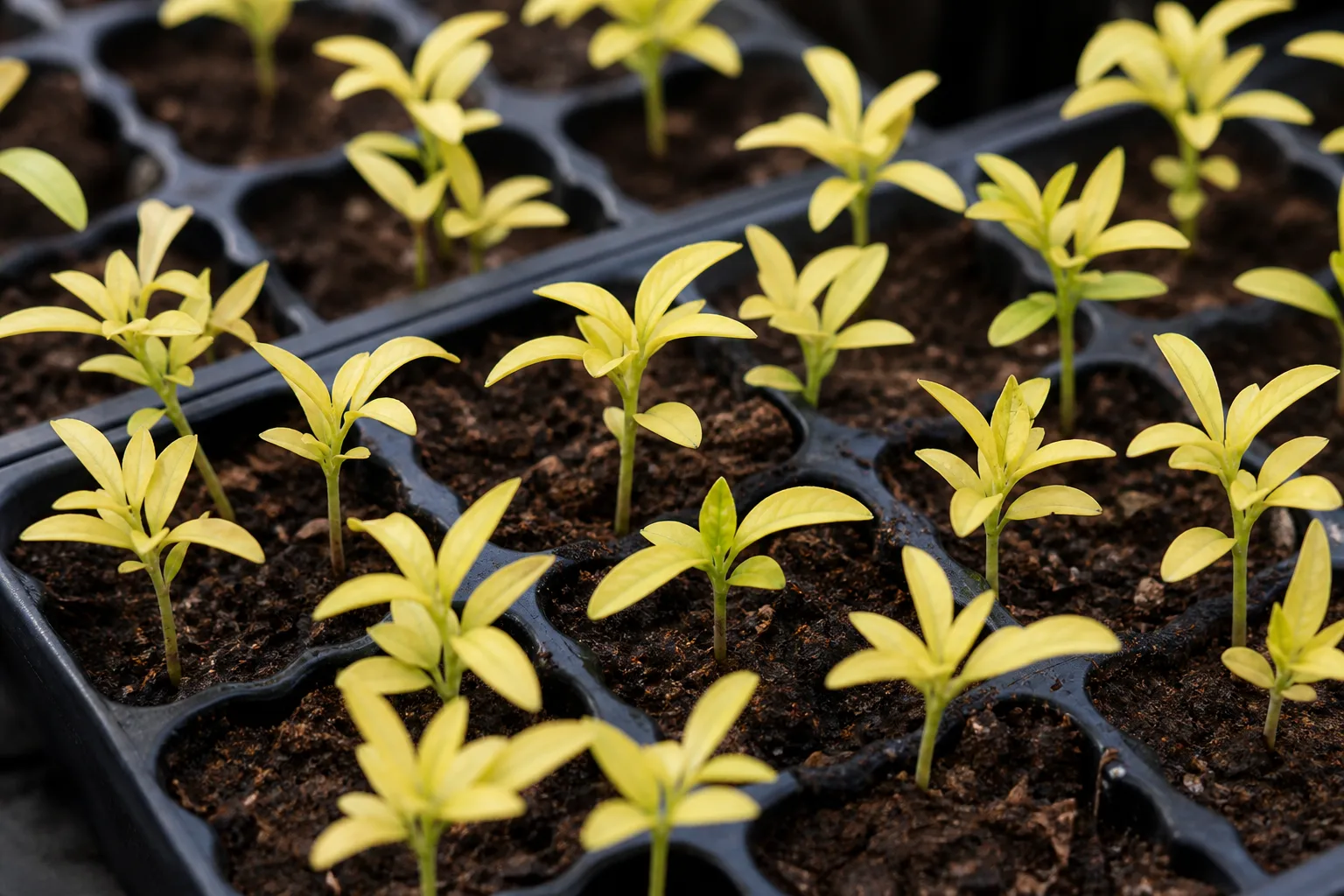
Yellow Seedlings on Jasmine: Causes, Checks & Fixes
This guide covers yellow seedlings on Jasmine. See also the general Yellow Seedlings guide, watering, and light pages for this plant.
Yellow Seedlings on Jasmine: Causes, Checks & Fixes
Quick answer
Yellow jasmine seedlings are a stress signal-not a flower color or a variety name. When Jasminum officinale or related climbing jasmines sprout indoors, pale or yellow leaves almost always trace to wet cold mix, weak light right after emergence, or an empty seed-starting medium once true leaves appear. Damping off can yellow and collapse stems at the soil line within days.
First step: pinch the stem base and check whether the mix is soggy. Firm stems in slightly dry mix need light and airflow adjustments. Mushy, pinched stems mean damping off-remove affected seedlings immediately and do not wait for them to green up.
Why jasmine seedlings turn yellow
Jasmine seeds germinate slowly-often several weeks under warm, moist conditions-so seedlings sit in sterile mix longer than fast crops like marigolds. That mix holds moisture well but carries little or no fertilizer. Once cotyledon reserves are used up and the first true leaves expand, nitrogen shortage shows as uniform pale yellow on older seedling tissue while new leaves stay slightly greener.
Overwatering is the other major driver. Jasmine growers often keep domes sealed and mist constantly because germination takes patience. Cool, waterlogged mix limits oxygen to tiny roots. Leaves yellow while stems stay firm at first; roots fail silently until the whole seedling stalls.
Insufficient light hits jasmine hard because mature plants want full sun to partial shade with several hours of direct sun daily. Seedlings started on a winter windowsill or under a dome without supplemental light stretch toward the glass, producing thin pale stems and yellow-green leaves. Leggy jasmine seedlings yellow faster when the mix swings between wet and dry.
Damping off thrives in the same conditions: cool wet mix, stagnant air under a closed dome, and seedlings kept in low light. Pathogens infect the stem base, causing water-soaked tissue, thin wiry stems, and sudden collapse. Whole sections of a tray can die before you notice general yellowing.
Crowding makes every problem worse. Multiple jasmine sprouts in one cell compete for light and dry unevenly. The center stays wet while edges dry, inviting both nutrient stress and fungal infection.
What yellow seedlings look like on Jasmine
Normal cotyledon fade (usually no action needed):
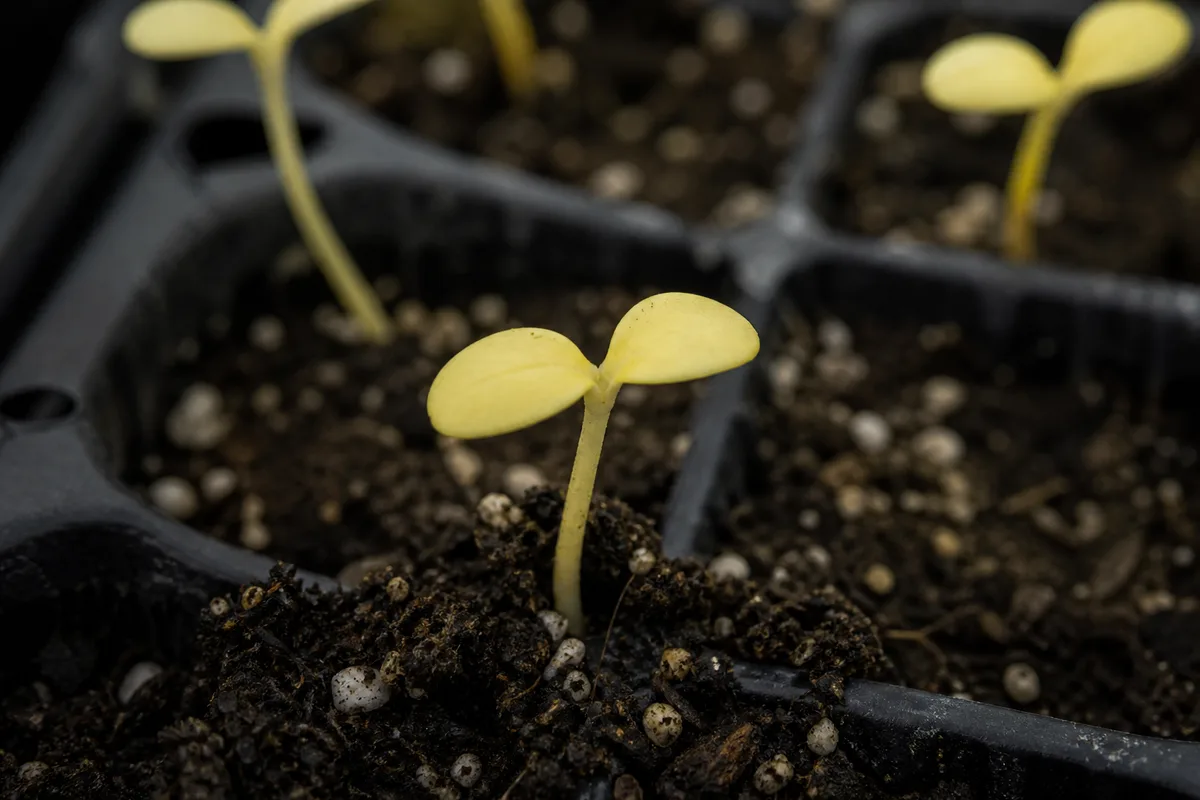
Yellow Seedlings symptoms on Jasmine - compare with healthy tissue on the same plant.
- Only the two round seed leaves yellow slightly as the first true leaves open
- Stems firm at the soil line; no mold on the surface
- True leaves emerging green or lightly yellow-green but firm
Overwatering or oxygen stress:
- Even yellowing across several cells in the same tray
- Mix stays dark and wet on top for days
- Stems still firm but roots may smell sour if you lift a plug
- Algae or green film on the mix surface under a closed dome
Low nutrients after true leaves appear:
- Oldest leaves (cotyledons or lower true leaves) turn pale yellow
- Newer true leaves at the tip stay greener but growth slows
- No stem collapse; seedlings may look otherwise healthy
- You have not fed since sowing in plain seed-starting mix
Insufficient light:
- Seedlings lean toward the window or lamp
- Internodes stretch; stems thin and pale
- Leaves small and yellow-green rather than deep green
- Often paired with a heat mat but weak overhead light
Damping off:
- Seedling tips over at the soil line; stem pinches to a thread
- Lower stem brown, water-soaked, or mushy when pinched
- Cobweb-like white growth on the mix or seedling base in humid trays
- Spreads from one cell to neighbors within days
Do not confuse yellowing seedlings with seed packets labeled “yellow jasmine”-that marketing refers to flower color or unrelated species, not chlorotic sprouts.
How to confirm the cause
Work through these checks in order:
- Stem base pinch test - Gently squeeze the stem at the soil line. Mushy or thread-thin tissue confirms damping off. Firm stems point to moisture, light, or nutrition.
- Moisture probe - Insert a finger or skewer half an inch into the mix. Constant sogginess fits overwatering. Bone-dry plugs with yellow leaves suggest drought stress after stretch-less common but possible if domes were removed too early in a hot room.
- True leaf stage - Cotyledons only with even yellow in a wet tray suggests water stress. Two or more sets of true leaves with pale lower leaves and no feed history suggests nitrogen shortage.
- Light audit - Measure hours of bright light after emergence. Fewer than 12 hours or lights more than 4 inches above tops fits leggy, pale growth.
- Tray pattern - Random collapsed cells with fungal growth indicates damping off. Uniform yellow across the whole flat under a sealed dome suggests environment, not seed quality.
- Density check - More than one seedling per cell with uneven yellowing often means crowding plus wet centers.
If cotyledons alone are fading while firm true leaves open green, watch one week before feeding or Jasmine repotting guide-forced fixes on normal transition cause more harm.
First fix for Jasmine
If the mix is wet and the dome is still on: vent the cover immediately and stop top misting.
Prop the humidity dome open or remove it once sprouts are visible. Bottom-water only when the surface lightens in color and feels barely dry to the touch. Pour off any standing water in the tray. This single step addresses the most common cause of yellow jasmine seedlings and buys time to assess stems before damping off spreads.
Do not fertilize on day one. Do not resow the entire tray until you know whether stems are firm. Do not move tiny seedlings to full outdoor sun-that scorches pale tissue.
Step-by-step recovery
After venting and correcting moisture:
- Add supplemental light - Hang fluorescent or LED grow lights 2–4 inches above seedling tops. Run them 12–16 hours daily. Jasmine seedlings need strong light immediately after emergence, not after they already stretch.
- Warm the root zone - If the room is below about 65°F (18°C), use a heat mat under the tray until true leaves expand, but pair heat with light so stems do not elongate in darkness.
- Feed once true leaves justify it - When at least two sets of true leaves are present and stems are firm, apply a balanced water-soluble fertilizer at one-quarter strength once. Repeat weekly at most if lower leaves stay pale.
- Thin to one seedling per cell - Snip extras at soil level with scissors rather than pulling, which disturbs roots of the keeper.
- Remove damping-off victims - Discard collapsed seedlings and lightly scrape the top of affected cells. Improve airflow with a gentle fan; avoid blasting cold drafts directly on heat-mat trays.
- Resow if the tray is mostly lost - Sterilize reused trays, fill with fresh sterile mix, soak jasmine seeds 24 hours in room-temperature water, and sow shallowly. Expect slow germination again-patience is normal for jasmine.
Recovery timeline
Moisture and light corrections show in three to seven days when stems remain firm: new true leaves should emerge greener and internodes shorter. One dilute feed may green lower leaves within one to two weeks if nitrogen was the limiter.
Damping-off seedlings do not recover once the stem pinches-plan on resowing rather than waiting. Leggy seedlings partially recover with better light but may stay slightly pale on old leaves; judge success by stiff new growth, not cotyledon color.
Lookalike symptoms to rule out
Cotyledon fade during true-leaf emergence yellows only the two seed leaves while new foliage stays firm-normal, not a deficiency.
Leggy seedlings without yellow are a light problem that can precede yellowing; fix light before yellow spreads.
Cold windowsill shock yellows edges overnight after a warm propagator-move trays away from cold glass at night while keeping bright day light.
Wrong species in the packet-seeds sold as “yellow jasmine” may not be Jasminum at all. Verify the scientific name on the packet; care differs for unrelated vines.
Mistakes to avoid
Do not keep humidity domes sealed on yellow, wet trays after germination.
Do not apply full-strength fertilizer to cotyledon-stage sprouts-that salts the mix and burns tiny roots.
Do not pull crowded seedlings-cut extras at soil level to protect the survivor’s roots.
Do not assume slow germination means dead seed and overwater repeatedly. Jasmine can take weeks; soggy mix during the wait invites damping off before you see green.
Do not place heat mats under trays without overhead light-warm dark conditions produce tall pale seedlings that yellow when they cannot photosynthesize.
Jasmine care cross-check
Mature jasmine wants well-draining mix and bright light, but seedlings are more fragile than established vines. Your eventual goal-sun or partial shade with several hours of direct sun-starts with strong artificial light indoors, not a dim windowsill.
Seed-grown jasmine will not flower for a long time; yellow seedlings are a propagation problem, not a bud-drop or winter-chill issue. Focus on roots, light, and sterile mix now. Plan to harden off only after several true leaves and outdoor temperatures stay above frost.
How to prevent yellow jasmine seedlings next time
Start with sterile seed-starting mix and clean trays. Soak jasmine seeds 24 hours before sowing to improve uptake through the hard seed coat.
Sow one to two seeds per cell, cover lightly, and keep mix moist-not saturated-until emergence. Remove domes as soon as sprouts show. Provide grow lights within 2–4 inches of tops from day one of emergence.
Bottom-water when the surface dries slightly; never leave trays sitting in water overnight. Thin to one seedling per cell after the first true leaves. Begin quarter-strength fertilizer only after several true leaves develop.
Run a gentle fan for airflow once domes come off. Sterilize reused equipment between batches if damping off appeared before.
When to worry
Treat as urgent when stems pinching at the soil line spread across cells, cobweb-like growth covers the mix, or seedlings that were upright yesterday collapse overnight. Isolate healthy trays and reduce moisture immediately-damping off kills whole flats fast.
Resow rather than rescue when more than half the tray has mushy bases or fungal growth on the surface. Mild uniform yellow with firm stems and fixable wet mix is not urgent if you vent and adjust light within a day.
Conclusion
Yellow jasmine seedlings usually mean the tray environment-not the plant’s future flower color. Pinch the stem, read the moisture, and match the fix: dry and brighten for firm stems; discard and resow for damping off; dilute feed only after true leaves prove reserves ran out. Slow germination is normal for jasmine; soggy patience is what turns a waiting tray into a yellow, collapsed one.
When to use this page vs other Jasmine guides
- Jasmine watering guide - Use for routine moisture checks before assuming yellow seedlings is the main issue.
- Jasmine problems hub - Browse all 53 common issues on this species.