Plant Leaning on Jasmine: Causes, Checks & Fixes
Quick answer
Jasmine leans toward windows without support or when long twining stems outweigh the pot. First step: install a trellis or stake and loosely tie the main stem-then check whether the base wobbles or only the top bends toward light.
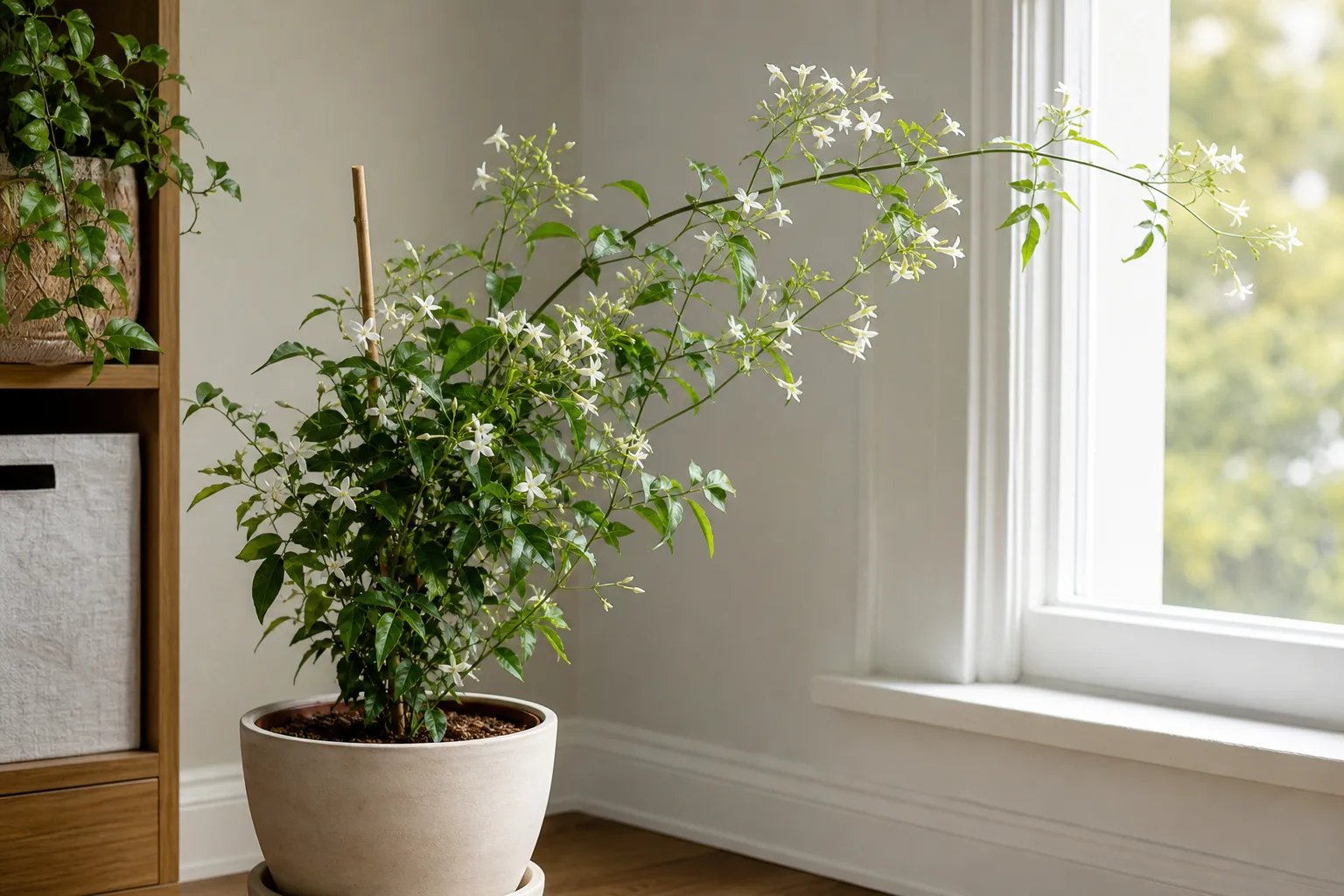
Plant Leaning on Jasmine: Causes, Checks & Fixes
This guide covers plant leaning on Jasmine. See also the general Plant Leaning guide, watering, and light pages for this plant.
Plant Leaning on Jasmine: Causes, Checks & Fixes
Quick answer
Plant leaning on common jasmine (Jasminum officinale) is usually normal climbing behavior without support, growth toward the brightest window, or a loose root ball after repot-not a disease on its own. Jasmine is a vigorous twining vine that wraps around structures rather than standing upright alone. Long summer stems and flower clusters add weight fast, especially in containers.
First step: install a trellis, stake, or wire frame beside the main stem and tie it loosely with soft plant ties. That gives the vine something to twine onto and stops gravity from pulling unsupported runners sideways. After staking, check whether the lean points toward a window (phototropism) or the whole pot wobbles at the base (root instability).
What plant leaning looks like on Jasmine
On indoor or conservatory jasmine, the whole pot may tip toward a south or west window while stems stretch horizontally across the sill. New tips curve sharply toward glass within days of a move. Leaves and buds cluster on the window-facing side; the shaded side carries fewer, smaller leaves.
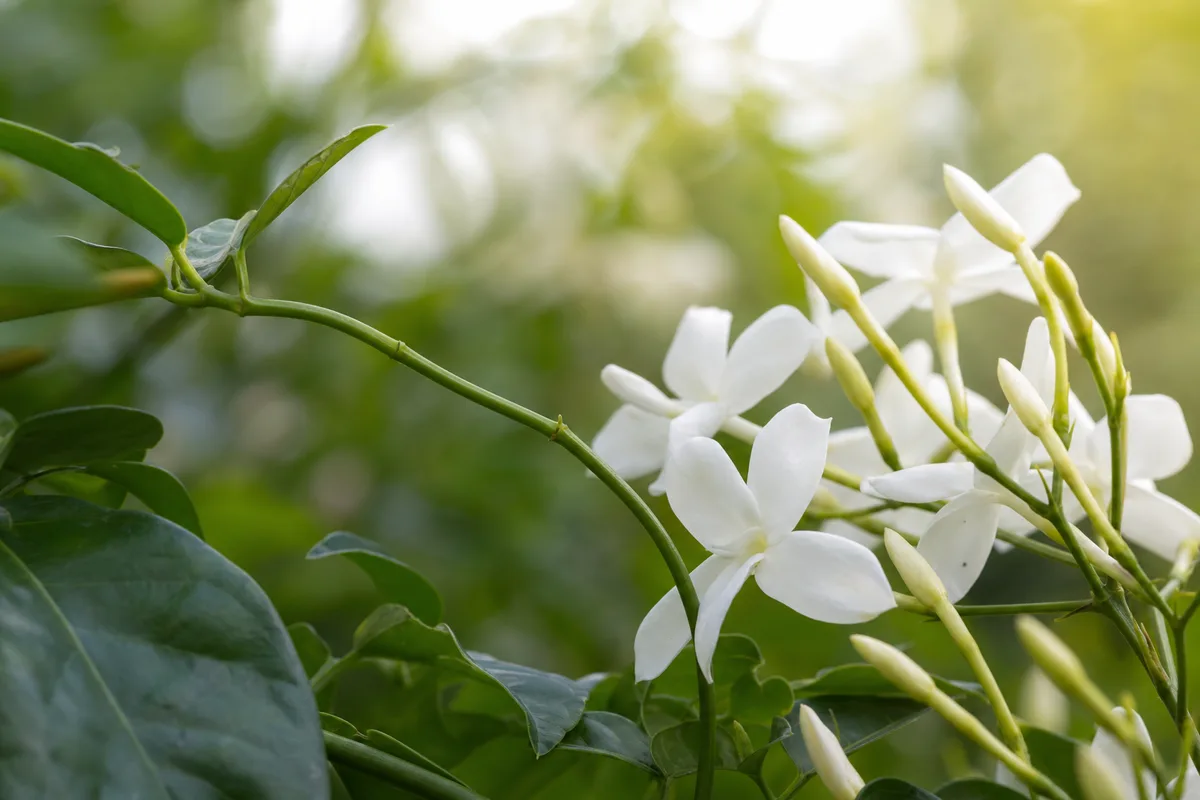
Plant Leaning symptoms on Jasmine - compare with healthy tissue on the same plant.
On outdoor or patio jasmine, long runners arc down from a wall or fence when ties slip or no trellis was installed early. The plant looks healthy and green but grows sideways instead of up a support. During peak summer bloom, heavy flower clusters at the end of thin stems pull branches into a downward bow.
Root-instability lean looks different. The pot rocks when touched. The stem may stay vertical while the root ball shifts inside the mix. This often follows Jasmine repotting guide, a knock, or one-sided root damage from partial rot. Lower leaves may yellow on the same side as the wobble.
Top-heavy lean happens when a small pot holds a tall, unpruned vine. The container itself lists-not just the stems. Terracotta pots on smooth floors are especially prone to tipping when vine mass exceeds base width.
Phototropic lean develops gradually over weeks. Sudden tilt after a pet bump or wind gust is mechanical-reposition and stake rather than treating it as a care disease.
Why Jasmine leans
Light direction and phototropism
Jasmine needs bright light to bloom well-full sun to partial shade with several hours of direct sun outdoors. Indoors, light arrives from one window direction. Stems grow toward that source through phototropism: cells on the shaded side elongate faster, bending the shoot toward light. Without weekly rotation, the plant develops a persistent lean and asymmetric foliage.
Low light makes the problem worse. Weak, etiolated stems stretch farther toward the window, become thin, and develop a lean more easily under their own weight. A jasmine kept in a dim corner may lean aggressively while also producing fewer flowers-a sign the lean is partly light starvation, not only missing support.
Twining habit without support
Common jasmine climbs by twining its stems around supports. It does not produce tendrils or adhesive pads. Without a trellis, wires, or stake to wrap around, stems simply grow in the direction of least resistance-often sideways along a shelf or down from a hanging basket hook. Once established, summer-flowering jasmine can be quite vigorous and needs large, sturdy supports.
Weight of long stems and bloom clusters
Jasmine pushes active growth from spring through summer. Runners that exceed their support length sag under leaf and flower weight. Indoor specimens trained late may already have permanent bends before you add a trellis. Pruning after flowering controls mass, but until then unsupported length pulls the plant off balance.
Loose root ball and repot issues
Repotting in early spring is correct for jasmine, but air pockets around the root ball or insufficient settling water leave the plant wobbly for weeks. One-sided watering can compress mix on one side and leave the other loose. Partial root rot from chronic wetness destroys anchoring roots on one side-the plant lists toward the damaged zone even if top growth looks green initially.
Container size and balance
A narrow-base pot with a tall vine is a physics problem. Plastic containers weigh less than terracotta and tip more easily when vine mass grows asymmetrically. Root-bound plants with dense circling roots can also shift within the pot if the old root ball was not firmed in during repot.
How to confirm the cause
Work through these checks in order:
- Lean direction - Toward the brightest window supports phototropism. Random tilt after a bump or repot supports mechanical or root instability.
- Support audit - Are main stems tied to a trellis or stake? Slipped ties explain sideways growth on an otherwise healthy vine.
- Base wobble test - Push gently at soil level. Firm roots with slight stem lean = support or light issue. Rocking pot with firm stems = loose root ball. Mushy roots on one side = rot overlap-inspect before staking alone.
- Pot rotation test - Turn the pot 180° and wait one week. New tips reorienting confirm light-driven lean. No change with wobble suggests root anchoring failure.
- Stem firmness - Green firm tissue at the base fits mechanical lean. Soft, dark stem bases with sour soil smell mean stem or root rot-leaning is secondary.
- Recent care timeline - Repot, move, or heavy prune within the last month? Temporary wobble is common until roots re-anchor.
- Growth quality - Long gaps between leaves and pale thin stems mean insufficient light is contributing; fix light alongside support.
First fix for Jasmine
Install a trellis, stake, or tensioned wire beside the main stem and attach the vine with soft, loose ties in two or three places.
Choose a stake tall enough to support current height plus one season of growth. Place it close to the stem without piercing roots. Use cloth strips, soft plant tape, or padded wire ties-never tight string that cuts bark as stems thicken. Fan stems outward on the support rather than bundling them into one knot.
This single step addresses the most common jasmine-specific cause: a twining climber growing without structure. Once tied, the vine can continue wrapping on its own. If the pot still rocks after staking, proceed to root stabilization-do not skip the wobble check.
Step-by-step recovery
After the initial stake or trellis:
- Rotate the pot a quarter turn weekly if the plant lives indoors near one window. This balances phototropic growth over time.
- Move toward brighter, more even light if stems are etiolated-gradually increase exposure so new growth is stouter. A grow light positioned overhead reduces one-sided lean in dark rooms.
- Firm the root ball if the pot wobbles after repot: add mix around gaps, water once to settle, and avoid disturbing the plant for two weeks.
- Retie slipping stems every few weeks during active summer growth-jasmine thickens quickly and can outgrow loose ties.
- Prune after flowering to remove straggly length that overloads a small support. Cut flowered stems back to a strong side shoot.
- Repot if root-bound in early spring into a container one size larger with well-draining mix-only when roots circle the pot and stability cannot be restored by staking alone.
- Counterweight or wider base if the display is top-heavy: use a heavier pot or a wider saucer until vine mass is pruned back.
Do not pull sharply bent green stems straight in one motion-they snap at the base where tissue is oldest.
Recovery timeline
Staking and tying often stop further lean within days. Phototropic correction through weekly rotation takes four to eight weeks as new growth balances on all sides. Root re-anchoring after repot typically stabilizes the base in two to three weeks if moisture is managed correctly and rot is not present.
Old woody bends may never fully straighten. Judge success by new upright tips, firm root grip when you tug gently, and the pot staying level when touched. Permanent cosmetic curve on lower stems is acceptable if upper growth follows the trellis.
Lookalike symptoms and causes to rule out
Leaning overlaps with several other jasmine problems:
- Wilting from underwatering - Stems go limp and droop uniformly, then recover after watering. Lean toward a window with firm tissue is not drought wilt.
- Root rot - Soft stem bases, sour soil, yellow leaves on one side, and worsening collapse despite staking. Unpot and inspect before assuming simple lean.
- Transplant shock - Temporary wilt and slight list after repot without mushy roots. Stabilize with one settling water and bright indirect light; wobble should improve within two weeks.
- Leggy growth from low light - Thin stems lean easily; moving brighter and staking together fixes both. Fertilizer alone will not stiffen etiolated tissue.
- Wind or pet knockdown - Sudden position change on outdoor jasmine; re-tie to support without disease treatment.
- Intentional wall training - Outdoor jasmine deliberately fanned on wires is not a problem to “fix” unless ties are damaging bark.
Mistakes to avoid
Do not leave a heavy blooming vine in a top-heavy pot without a wider base or stake-that invites a full tip-over. Do not use wire ties that cut into twining stems as they thicken. Avoid pulling bent stems sharply straight; retrain gradually over weeks.
Do not ignore wobble that comes with soft stem bases or sour soil-that is rot, not phototropism. Do not repot on day one for simple lean unless the root ball is clearly loose and rot-free; staking and rotation solve most cases.
Do not place jasmine in blazing direct sun immediately to “strengthen” lean-prone stems after indoor growth-harden off gradually to avoid scorched leaves. Do not prune heavily during winter rest when the plant is semi-dormant unless removing dead wood.
Jasmine care cross-check
Stable jasmine combines support, light, and root anchoring. A vigorous summer-flowering climber in a small pot beside one window will lean predictably every season unless you train it early on sturdy wires or a trellis, rotate the display, and repot before roots destabilize the base.
Water when the top inch of mix dries; uneven chronic wetness on one side softens roots and worsens list. Feed during active growth only on healthy, anchored plants-not as a first response to lean. Cool winter rest slows growth; lean correction is less urgent then but support should stay in place for spring surge.
How to prevent leaning next time
Install trellis or wires at planting time-not after the vine is already long and bent. Rotate indoor pots a quarter turn each week during the growing season. Choose containers with enough base width for expected vine mass, or plan to prune after bloom.
Repot every two years in early spring before peak growth, firm mix around the root ball, and water once to settle. Train young stems outward on the support framework rather than letting one leader grow unchecked. After flowering, prune flowered stems to keep weight low where scent is enjoyed.
Outdoors, use large sturdy supports rated for vigorous climbers. Check ties each season and loosen before bark embeds. Indoors, consider overhead grow light if window light is one-sided and rotation alone is not enough.
When to worry
Escalate if lean worsens while stem bases soften, soil stays wet and smells sour, or the pot tips repeatedly despite a wider base and stake. Stem cracks at soil level need immediate support and may require cutting back to healthy tissue above the kink.
Act before heavy summer bloom if long unsupported stems kink at the base-snap risk rises with flower weight. Firm green lean toward a window on a newly staked plant is low urgency and corrects over weeks with rotation.
Conclusion
Jasmine leaning is usually fixable support and light balance, not a mystery disease. Confirm whether stems bend toward a window on firm tissue or the whole pot wobbles at the base. Install trellis or stake first, rotate weekly indoors, firm loose root balls after repot, and prune straggly length after bloom. Prevent recurrence by training young vines early on sturdy supports sized for a vigorous twining climber.
When to use this page vs other Jasmine guides
- Jasmine watering guide - Use for routine moisture checks before assuming plant leaning is the main issue.
- Jasmine problems hub - Browse all 53 common issues on this species.