Leaf Miners on Jasmine: Causes, Checks & Fixes
Quick answer
Leaf miners on jasmine leave winding pale trails inside leaves as fly larvae tunnel between layers. First step: pinch fresh pale trails to crush the larva inside, or remove and trash heavily mined leaves before adults emerge.
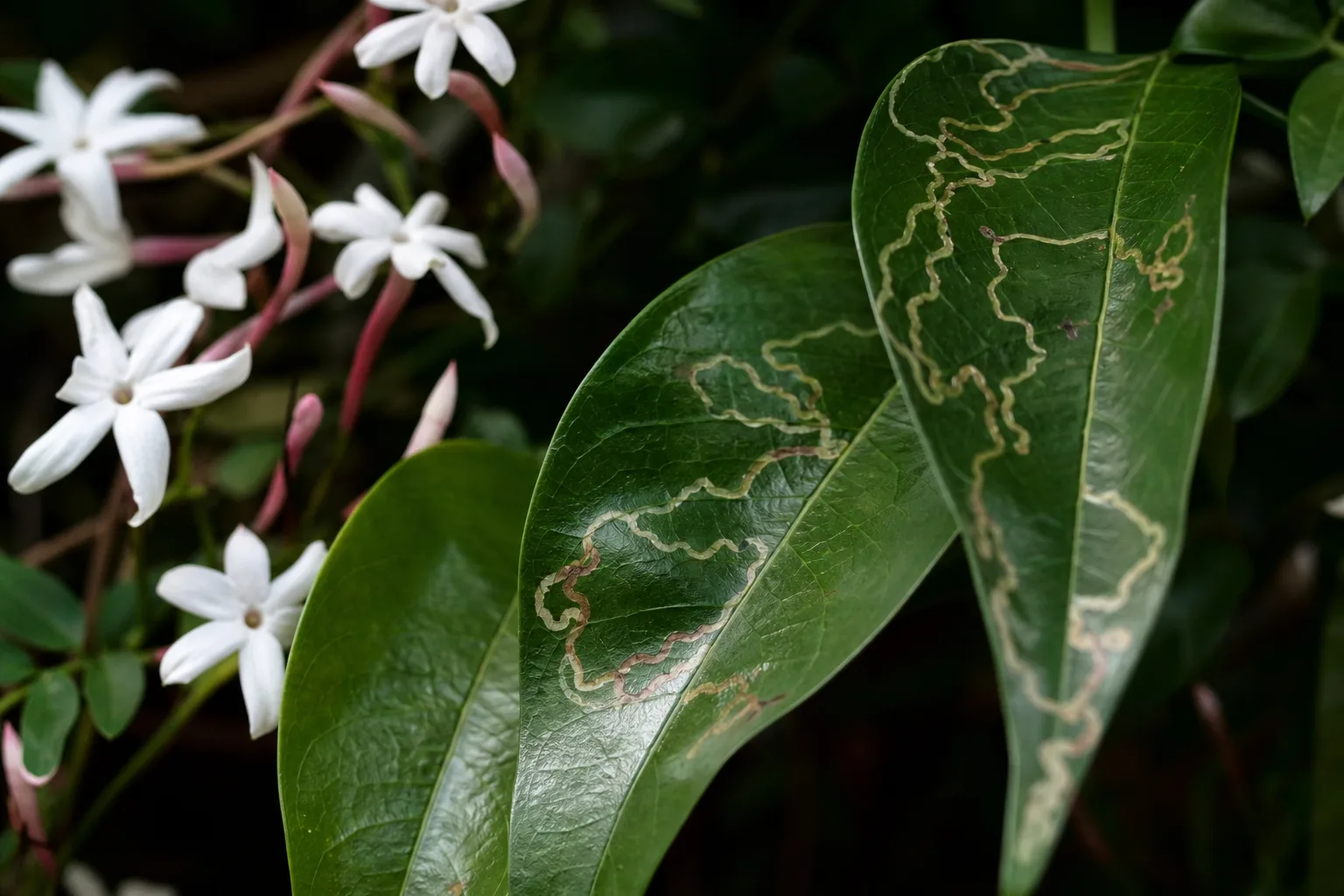
Leaf Miners on Jasmine: Causes, Checks & Fixes
This guide covers leaf miners on Jasmine. See also the general Leaf Miners guide, watering, and light pages for this plant.
Leaf Miners on Jasmine: Causes, Checks & Fixes
Quick answer
Leaf miners on common jasmine (Jasminum officinale) and related summer-flowering climbers are tiny fly or moth larvae that feed between the upper and lower leaf surfaces, leaving serpentine pale or brown trails. The damage looks alarming but is often cosmetic on a vigorous outdoor vine. On container jasmine or vines pushing buds for summer fragrance, fresh mining on many new leaves deserves action.
First step: find a fresh pale trail and pinch it firmly between thumb and finger to crush the larva inside. If several leaves on one shoot are heavily mined, snip those leaves off and discard them in the trash-not the compost pile. Do not reach for a spray until you have done this mechanical control on active trails.
What leaf miners look like on jasmine
On jasmine’s paired, glossy leaflets, miners create meandering tunnels that start narrow and widen as the larva grows. Fresh mines look whitish or translucent; older ones turn tan or brown and feel papery. You may see:
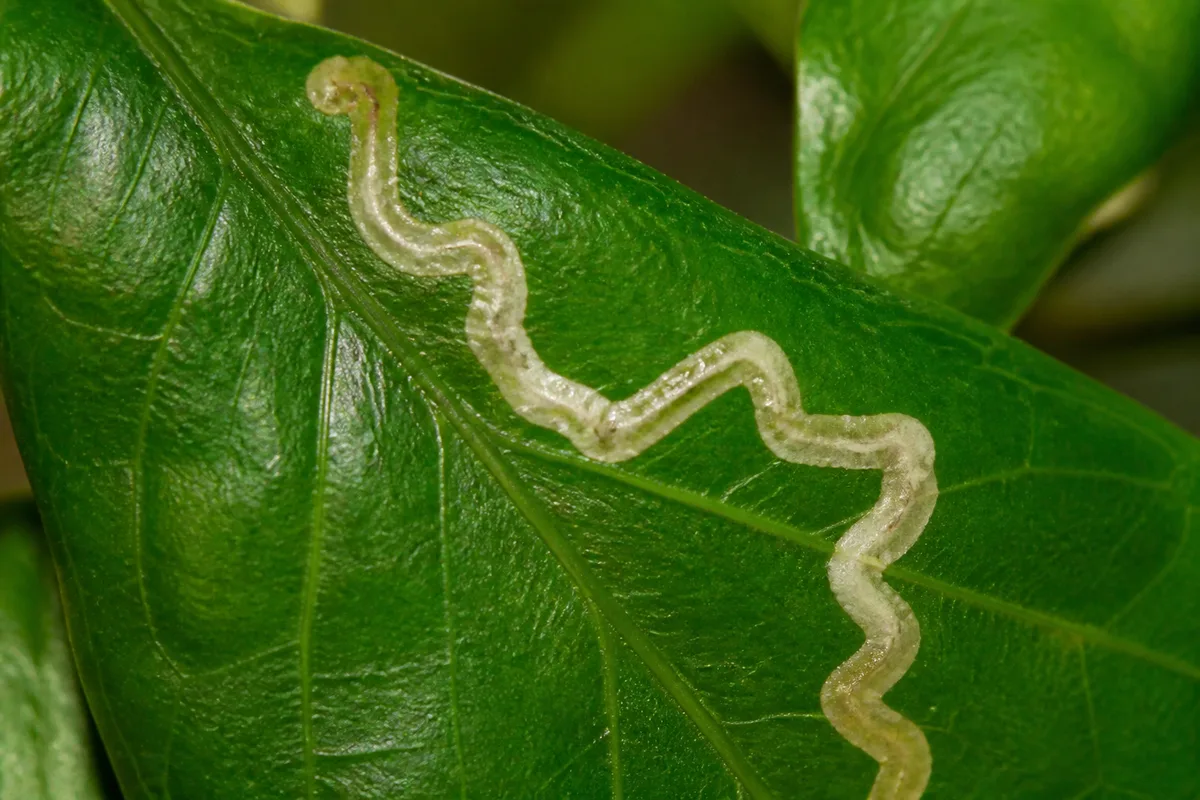
Leaf Miners symptoms on Jasmine - compare with healthy tissue on the same plant.
- Long, winding serpentine trails across a leaf blade
- Blotch-shaped mines on some species, though serpentine patterns are more common on soft ornamental foliage
- A dark speck or line visible inside a fresh trail when you backlight the leaf
- Small puncture marks where adult flies laid eggs or where larvae exited
- Leaves that feel slightly bumpy along the tunnel but are smooth elsewhere
Miners rarely chew holes through the leaf surface until the larva pupates and the adult emerges. That internal feeding is what separates them from caterpillars or beetles that eat from the outside in.
On a twining summer-flowering climber, damage often clusters on the newest flush at stem tips-the same soft tissue aphids and thrips target in spring. Lower, hardened leaves may show only old brown mines from earlier generations.
Why jasmine gets leaf miners
Jasmine pushes moderate to fast spring growth once temperatures rise and watering resumes after the cool winter rest. Those tender new leaflets are ideal egg-laying sites for agromyzid flies and other leaf-mining insects. Adult flies puncture the leaf surface, insert eggs just under the epidermis, and larvae tunnel for two to three weeks before dropping to pupate-often several generations per season on outdoor plants.
Several jasmine-specific factors raise risk:
- Spring flush timing - Mining peaks when the vine leafs out heavily, sometimes overlapping with bud formation. Heavy damage on young leaves can stress a plant preparing to bloom indoors or in a conservatory.
- Soft, thin leaflets - Compared with thick succulent leaves, jasmine foliage is easy for larvae to mine, so trails show up clearly.
- Indoor and greenhouse culture - Tender jasmines such as J. polyanthum grown as houseplants lack the parasitic wasps and birds that keep many outdoor leafminer populations in check.
- New plant introduction - Miners hitchhike on nursery stock. Skipping quarantine before placing a new jasmine near a blooming vine is a common entry route.
- Stressed vines - Leafminers can increase on stressed landscape plants; jasmine in too much shade, chronically wet soil, or poor airflow may show more mines than a healthy vine in sun.
Overhead wet foliage does not cause mining trails. Do not treat serpentine tunnels with fungicide.
How to confirm the cause
Work through these checks before spraying anything:
- Backlight the leaf - Hold it toward a window or lamp. Hollow tunnels between layers confirm miners. Solid discoloration that does not show a hollow channel suggests something else.
- Test a fresh trail - Pale, still-expanding mines are active. Pinch firmly; a wet spot or popped larva confirms live infestation. Dry brown trails are old damage-note them, but prioritize fresh mines.
- Look at the pattern - Serpentine internal tunnels point to leaf miners. Silvery scrape marks on the surface with black specks suggest thrips. Angular brown spots that sit on top of the leaf suggest fungal leaf spot, not mining.
- Check shoot tips first - Miners concentrate on newest jasmine leaves. If only lower leaves show old brown trails and tips are clean, you may only need monitoring.
- Shake test for thrips - Tap a bud or leaf over white paper. Slender crawling insects mean thrips, not miners.
- Rule out mosaic virus - Virus mottling appears as patchy yellow-green areas without a defined tunnel. Mines follow a continuous winding path.
If tunnels are confirmed and fresh, move to mechanical control immediately.
First fix for jasmine
Pinch or crush active larvae inside fresh trails.
When you see a new pale mine on a jasmine leaflet, press the trail between thumb and finger until you feel the tissue collapse. University of Maryland Extension recommends squishing larvae within mines as a primary control on ornamentals. This kills the feeding insect without touching open flowers or beneficial insects on outdoor vines.
If a leaf has more than one active trail, or trails cover most of the blade, cut that leaf off and put it in the trash. Removing infested foliage before larvae exit prevents the next generation from pupating near the vine. On a large outdoor climber, removing the worst 20–30% of mined leaves from the current flush is usually enough; do not strip the entire vine.
After mechanical control:
- Set yellow sticky traps near indoor or greenhouse jasmine to catch adult flies. Traps reduce egg laying but do not replace crushing or removal.
- Monitor weekly through spring and early summer when flies are most active.
- Hold off on broad sprays while jasmine is in bloom if you grow it for fragrance. Contact insecticides miss larvae inside leaves anyway, and sprays applied after mining begins do not reach feeding larvae.
Save chemical options for severe, repeated infestations on high-value indoor plants-and choose low-impact products labeled for leaf miners, applied when adult flies first appear in spring, not on open blossoms.
Step-by-step recovery
Once you have crushed or removed active mines:
- Mark the date and recheck the same shoots in five to seven days. New pale trails mean adults are still laying eggs-repeat pinching and removal.
- Inspect neighboring plants - Leaf miners on jasmine rarely jump species randomly, but flies in the same room or garden bed may hit other soft-leaved ornamentals. Quarantine heavily mined container plants until two weeks pass with no new mines.
- Improve growing conditions - Move container jasmine to brighter light if growth is weak. Confirm the pot dries appropriately between waterings. A vigorous vine outgrows cosmetic mining faster than a stressed one.
- Encourage predators outdoors - Parasitic wasps, birds, and other natural enemies reduce miner numbers on garden-grown jasmine. Avoid broad-spectrum insecticides that kill these helpers.
- Consider spinosad only if needed - For persistent indoor infestations, spinosad can be effective against leaf miners with less impact on beneficial insects than permethrin or carbaryl. Apply only to labeled plants, follow the label interval, and keep spray off open jasmine flowers.
Repeat monitoring until new growth emerges without fresh trails for at least two weeks.
Recovery timeline
Days 1–7: Crush or remove active mines. You should see no new pale trails on the shoots you cleaned if you caught the generation early.
Weeks 2–4: Old brown mines remain visible-they are scars, not active pests. Judge success by clean new leaflets at stem tips, not by old leaves greening up.
One month onward: On an established outdoor jasmine, a single spring generation often causes a burst of trails, then tapers as natural enemies and summer leaf hardening reduce egg laying. Indoor vines may need sticky traps and weekly checks through several fly generations.
Signs of improvement: Fresh leaves open without tunnels. Fewer adult flies on sticky traps. No widening pale trails on new flushes.
Signs the problem is worsening: New mines appear on every new leaf of a shoot. Buds and young leaves drop from heavy mining on an indoor vine. Multiple plants in the same room show fresh trails simultaneously.
Lookalike symptoms
| What you see | Likely cause | How to tell apart |
|---|---|---|
| Winding hollow trail inside leaf | Leaf miner | Backlight shows tunnel; trail widens along its length |
| Silvery streaks on leaf surface | Thrips | Damage is external; black specks present; shake test shows insects |
| Angular brown spots on surface | Fungal leaf spot | Spots do not form continuous tunnels; may have yellow halos |
| Irregular holes chewed from edge | Caterpillar or beetle | Tissue removed from outside; no serpentine internal trail |
| Patchy yellow-green mottling | Mosaic virus | No defined mine path; may affect multiple leaves uniformly |
Mistakes to avoid
- Spraying fungicide on trails - Miners are insects, not fungus. Fungicides waste money and do not fix tunnels.
- Defoliating the entire vine - Removing every mined leaf shocks a blooming jasmine. Target active damage only.
- Assuming one treatment finishes the job - Several fly generations can occur per season. One pinching session is rarely enough on indoor plants.
- Using broad insecticides during bloom - Kills pollinators and parasitic wasps; misses larvae already inside leaves.
- Composting mined leaves - Pupae can survive and reinfest. Trash bag infested foliage.
- Ignoring quarantine - New nursery jasmine is a common source. Two weeks apart from established vines prevents spread.
How to prevent leaf miners next time
- Inspect new growth weekly from early spring through summer, especially after bringing jasmine outdoors or when tender houseplant jasmines resume active growth.
- Quarantine new plants for at least two weeks before placing them near a flowering vine.
- Keep vines healthy - Jasmine light guide to partial shade, well-drained soil, and appropriate watering help jasmine tolerate light cosmetic mining without serious harm.
- Use sticky traps early indoors - Set traps when you first see adult flies near windows or grow lights, before trails multiply.
- Preserve natural enemies outdoors - Light mining on garden jasmine often needs no treatment once predators establish.
- Discard mined leaves promptly - Do not let larvae complete their cycle on fallen foliage near the base of the vine.
Jasmine is non-toxic to cats and dogs when you grow true Jasminum species, but discard mined leaves away from curious chewers and verify the plant is not star jasmine (Trachelospermum) or another look-alike with different toxicity.
When to worry
Leaf miners rarely kill an established jasmine vine. Worry when:
- Fresh mines cover most new leaves on an indoor or greenhouse plant during bud formation
- The vine stops producing clean new growth for multiple weeks despite mechanical control
- You are growing jasmine primarily for edible or medicinal leaf use-any mining is unacceptable on harvest tissue
An outdoor common jasmine with scattered old brown trails and vigorous new shoots at the tips is a low-urgency cosmetic issue, not a rescue situation.
Conclusion
Leaf miners on jasmine are diagnosed by hollow serpentine tunnels inside leaflets, confirmed by backlighting and crushing fresh pale trails. The first fix is mechanical-pinch active mines or remove heavily infested leaves-before considering sprays that could harm blooms or beneficial insects. Mined tissue does not heal, but clean new growth tells you the vine is recovering. Weekly checks through the spring flush prevent a cosmetic nuisance from becoming a pre-bloom stress problem on fragrance-focused vines.
When to use this page vs other Jasmine guides
- Jasmine watering guide - Use for routine moisture checks before assuming leaf miners is the main issue.
- Jasmine problems hub - Browse all 53 common issues on this species.