Leggy Seedlings on Jasmine: Causes, Checks & Fixes
Quick answer
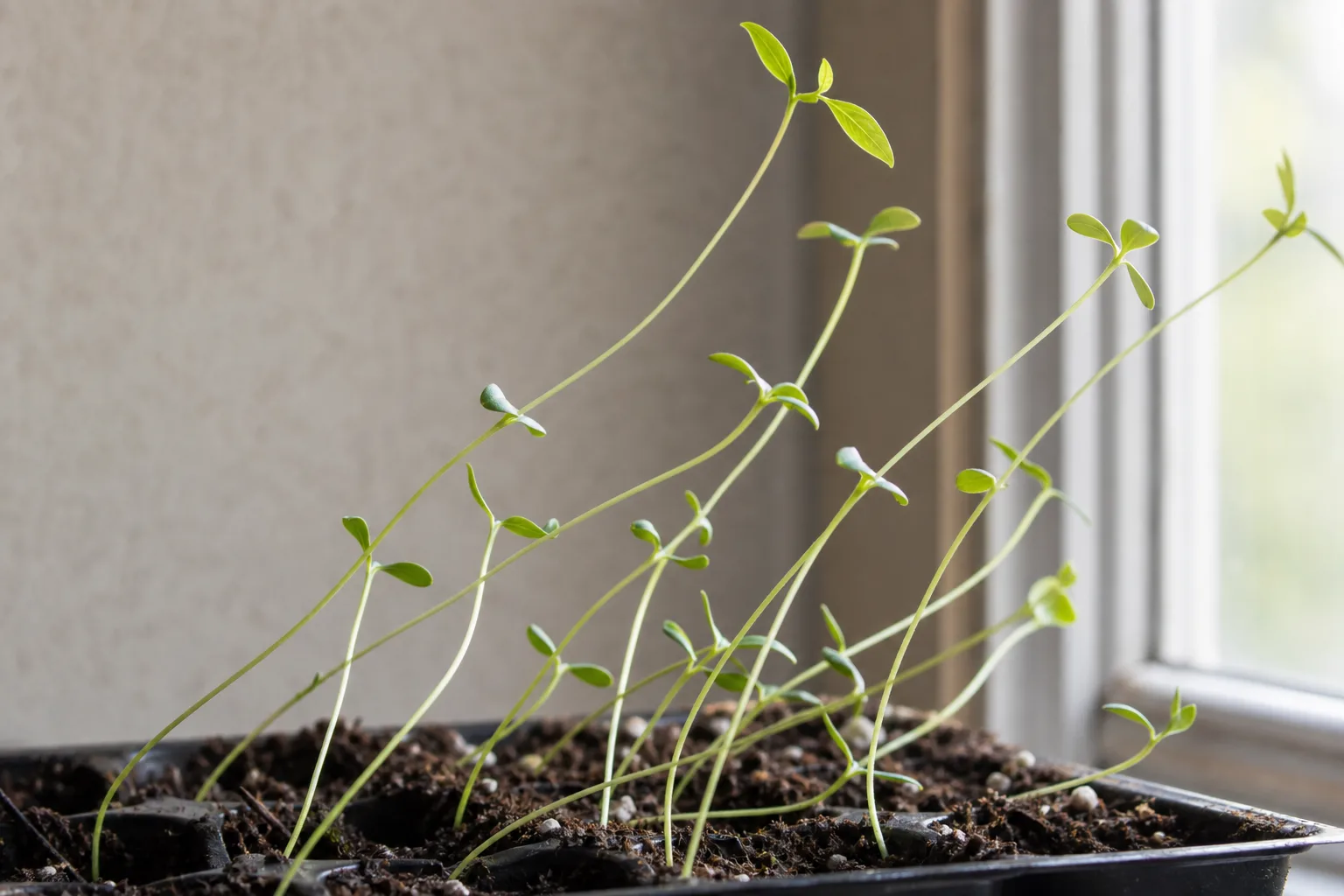
Leggy jasmine seedlings stretch with long pale stems from too little light-often after warm germination on a windowsill. First step: move trays under a grow light 5–8 cm above the tops within 24 hours of noticing stretch.
Leggy Seedlings on Jasmine: Causes, Checks & Fixes
This guide covers leggy seedlings on Jasmine. See also the general Leggy Seedlings guide, watering, and light pages for this plant.
Leggy Seedlings on Jasmine: Causes, Checks & Fixes
Quick answer
Leggy jasmine seedlings are etiolated-they stretched toward light because photosynthesis was too weak for the warmth they received. On Jasminum officinale (common or poet’s jasmine), that shows up as long thin stems, small pale leaves spaced far apart, and seedlings leaning hard toward one window.
This is not the same as a mature vine climbing a trellis. A healthy seedling should look compact until it has several pairs of true leaves. Once internodes lengthen faster than leaves expand, the stem weakens at the soil line and hardening off becomes risky.
First step: move the tray under a grow light 5–8 cm (2–3 in) above the tops. Do this within 24 hours of noticing stretch. A south-facing windowsill alone rarely delivers enough intensity in late winter or early spring-the period when most jasmine seed is started indoors.
What leggy seedlings look like on jasmine
Jasmine seedlings start with narrow cotyledons, then produce opposite pairs of true leaves on twining stems. When light is adequate, those leaves stay relatively close together and the stem looks green and firm.
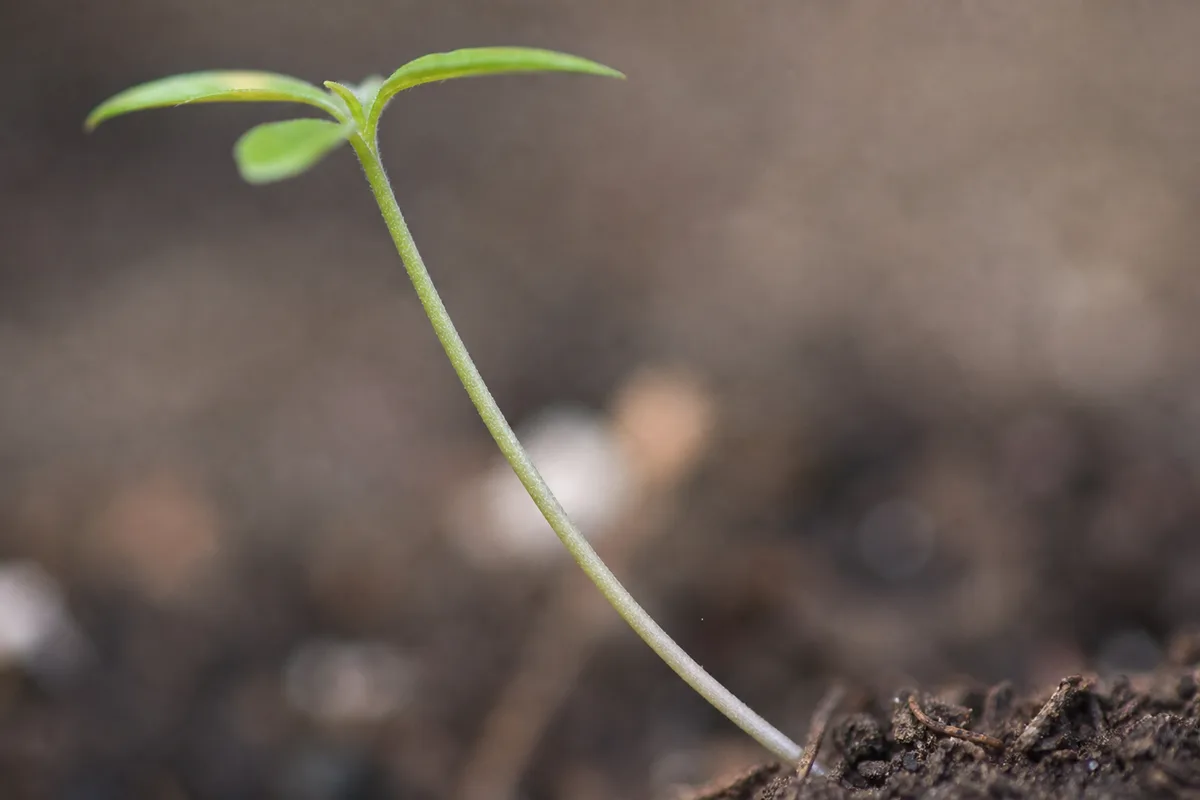
Leggy Seedlings symptoms on Jasmine - compare with healthy tissue on the same plant.
Leggy seedlings on jasmine show a different pattern:
- Long internodes - the bare stem between leaf pairs is longer than the leaf blade itself
- Pale green or yellow-green color - chlorophyll production lags when light is insufficient
- One-sided lean - all seedlings tilt toward the brightest window or lamp
- Thin, floppy stems - a gentle touch bends the stem; it may not support its own weight
- Small leaves far apart - new leaves stay undersized while the stem keeps elongating
Unlike damping-off, roots in leggy seedlings are usually white and firm and there is no dark, pinched collar at the soil line. Unlike yellow seedlings from nutrient stress, the problem here is structural stretch-the plant is reaching for photons, not starving for nitrogen.
Do not confuse this with normal adult habit. Common jasmine is a vigorous climber that eventually produces long vining stems-but that architecture belongs on a plant with a developed root system and strong light, not on a two-week-old tray start.
Why jasmine seedlings get leggy
The most common cause is insufficient light intensity, not underwatering or lack of fertilizer. Seedlings respond to low light by elongating cells in the stem-a process called etiolation-so the growing tip can reach a brighter zone.
Jasmine seed starting makes this worse in predictable ways:
Warm germination without matching light. Many growers sow jasmine in warm mix or on a heat mat to encourage sprouting. Germination succeeds, but if the tray sits in a dim room or on a cold windowsill edge, warmth accelerates cell division while light remains too weak to support compact growth. The result is fast, weak stretch.
Windowsill-only culture. A windowsill is often the coldest spot at night and the brightest only for part of the day. Seedlings lean toward glass, grow tall on the side facing the window, and collapse on the shaded side. Late-winter and early-spring sun is weak compared with a lamp kept close to the canopy.
Humidity domes left on too long. Clear lids help retain moisture during germination, but they also reduce air movement and can shade seedlings once cotyledons touch the plastic. Domes should come off when sprouts emerge-not days later.
Overcrowded cells. Sowing several seeds per cell or failing to thin after germination means seedlings shade each other. Even a reasonably bright room fails when canopies overlap.
Heat without overhead light. Bottom heat mats should not substitute for a lamp. Warm soil encourages growth; without photons, that growth is thin and tall.
Jasmine-specific context: J. officinale is adapted to full sun to partial shade once established and grows rapidly when conditions suit it. Seedlings inherit that vigor-they will stretch quickly when light is marginal, faster than many slow-growing houseplant seedlings.
How to confirm the cause
Work through these checks in order before changing water, feed, or soil:
-
Light distance and duration - How many hours of direct sun hits the tray? If you rely on a window alone in February or March, assume light is inadequate unless seedlings stay compact. With a grow lamp, measure height: tops should be 5–8 cm below the fixture, not 30 cm.
-
Daily lean test - Rotate the tray 180° in the morning. If seedlings re-lean toward the same window by evening, they are actively seeking more light.
-
Seedlings per cell - Peel back overlapping leaves. More than one strong seedling per cell almost always means mutual shading.
-
Dome and airflow - Is a humidity cover still on? Is there any mold on the soil surface? Stagnant humid air compounds weak stems.
-
Temperature pattern - Warm nights above 21 °C (70 °F) with dim days worsen stretch. Cooler nights around 15–18 °C (59–64 °F) with strong light produce stockier stems.
-
Root check - Gently lift one seedling. White, firm roots with no foul smell point to light stress. Mushy roots or a black stem base point to overwatering or damping-off instead-different fixes apply.
If light is weak, overcrowding is present, and roots are healthy, you have confirmed etiolation from culture, not disease.
First fix for jasmine seedlings
Move the tray under a grow light 5–8 cm above the seedling tops.
Hang or raise the fixture on chains so you can lift it as plants grow. Run the lamp 14–16 hours per day on a timer. Lack of light-not slight under-watering-is the primary driver of elongated, skinny stems on indoor seedlings.
Do not wait for the weekend or for outdoor weather to improve. Every day of weak light adds irreversible stem length.
After the lamp is in place:
- Remove humidity domes if cotyledons have cleared the soil
- Thin to one seedling per cell - snip extras at soil level with scissors rather than pulling, which disturbs roots
- Raise the lamp daily so it stays within the 5–8 cm window as stems grow
That single lighting correction is the first fix. Potting up, burying stems, and airflow come next once light is corrected.
Step-by-step recovery
Once strong overhead light is running, work through recovery in this order:
1. Thin and separate
Cut weaker duplicates at the soil line. If multiple seedlings share one small cell, transplant the best one into its own container with fresh sterile seed-starting mix. One strong plant per pot receives even light and air.
2. Pot up deeper
When the seedling has at least one pair of true leaves and roots fill the cell, move it to a slightly larger pot. Bury the lower portion of the elongated stem so only the compact upper section and leaves sit above soil. Jasmine stems can root from buried nodes, similar to tomato seedlings-this stabilizes a floppy base.
Handle by a leaf, not the stem. Never grab the growing tip.
3. Add gentle air movement
A small fan on the lowest setting, aimed across the tray-not directly blasting seedlings-encourages thicker stem tissue and reduces fungal pressure on damp foliage.
4. Hold nitrogen
Do not fertilize heavily on stretched seedlings. Weak etiolated tissue cannot use a surge of nitrogen well. If you feed at all before recovery, use a quarter-strength soluble fertilizer once weekly only after new growth looks green and firm under the corrected light.
5. Delay hardening off
Do not move trays outdoors until stems are stout and the grow light has been running long enough to produce visibly tighter new internodes. Outdoor sun and wind will snap weak stems at the soil line.
Recovery timeline and what to expect
Leggy jasmine seedlings do not shrink-old stretched internodes stay long. Recovery is judged by new growth:
| Timeframe | What you should see |
|---|---|
| 3–7 days after light correction | Lean reduces; new leaves emerge closer to the previous pair |
| 2–3 weeks | Stem color deepens to green; touched stems feel firmer |
| 4–6 weeks | New upper growth looks proportionate; buried stem section roots in if potted deep |
If stems keep elongating under the lamp, the light is still too far away, too dim, or on too short a timer. Move the fixture closer before Jasmine repotting guide again.
Signs the problem is worsening: stems fold at the soil line, cotyledons yellow while soil stays wet, gray mold on the surface, or seedlings collapsing in clusters-these suggest damping-off or overwatering, not light alone. Reduce moisture, improve airflow, and discard affected cells so fungus does not spread.
Lookalike symptoms
Damping-off - seedling falls over at the base with a thin dark pinching point; roots may be brown. Fix: reduce watering, increase airflow, discard affected plants. Stronger light helps prevention but will not revive rotted stems.
Yellow seedlings - uniform yellowing with short stems may indicate overwatering, cold soil, or nutrient deficiency. Leggy seedlings are usually pale but long, leaning toward light.
Normal future vining - once a jasmine seedling has a strong root system, several pairs of true leaves, and full sun or partial shade outdoors, longer internodes on the leading shoot are normal climbing growth. The distinction is stem strength and leaf size, not length alone.
Seeds not germinating - an empty tray is a germination problem, not legginess. If sprouts appeared then stretched, germination succeeded; light failed afterward.
Mistakes to avoid
- Fertilizing heavily on tall pale seedlings-it pushes more weak tissue instead of fixing the cause
- Hardening off outdoors before stems stiffen under grow lights
- Leaving domes on after emergence because the mix dries faster without them-use bottom watering instead
- Pulling extra seedlings instead of snipping-damages roots of the keeper
- Assuming a sunny room is enough without checking whether the tray actually receives direct photons for most of the day
- Confusing common jasmine with other “jasmine” plants - Trachelospermum jasminoides (star jasmine) and Stephanotis (Madagascar jasmine) are different species with different seed habits; this guide targets Jasminum officinale and close relatives started from Jasminum seed
How to prevent leggy jasmine seedlings next time
Start with the setup, not the rescue:
- Sow under grow lights from day one, not on a distant windowsill. Keep lamps 5–8 cm above the canopy and run them 14–16 hours daily.
- Remove humidity domes as soon as seedlings emerge.
- Thin early to one seedling per cell when the first true leaves appear.
- Pair bottom heat with overhead light if you use a heat mat for germination-never warm soil in a dim corner.
- Bottom-water to keep foliage dry and reduce damping-off while maintaining even moisture.
- Plan timing - sow jasmine seed roughly 10–12 weeks before you intend to plant out, so seedlings are not held indoors in weak late-winter light longer than necessary.
When seedlings eventually move outdoors, choose a warm, sheltered, sunny spot for summer jasmine-matching the conditions this climber expects once mature.
When to start over
Restart with fresh seed if:
- More than half the tray shows damping-off collapse
- Stems are so thin they break when you try to pot up, with no firm tissue above the cotyledons
- Seedlings have been etiolating for more than three weeks under corrected light with no tighter new growth
Jasmine also propagates reliably from semi-hardwood cuttings if seed starts repeatedly fail-but that is a separate path from fixing a light-starved tray.
For most leggy trays caught within the first week of stretch, corrected light plus thinning and a deeper pot-up is enough to produce a viable young plant.
When to use this page vs other Jasmine guides
- Jasmine watering guide - Use for routine moisture checks before assuming leggy seedlings is the main issue.
- Jasmine problems hub - Browse all 53 common issues on this species.