Stunted Growth on Jasmine: Causes, Checks & Fixes
Quick answer
Stunted jasmine usually lacks enough direct sun, has damaged or bound roots, or sits in an oversized wet pot. First step: measure sun hours at the plant's spot and unpot to inspect root health before fertilizing-a stressed vine will not respond to feed alone.
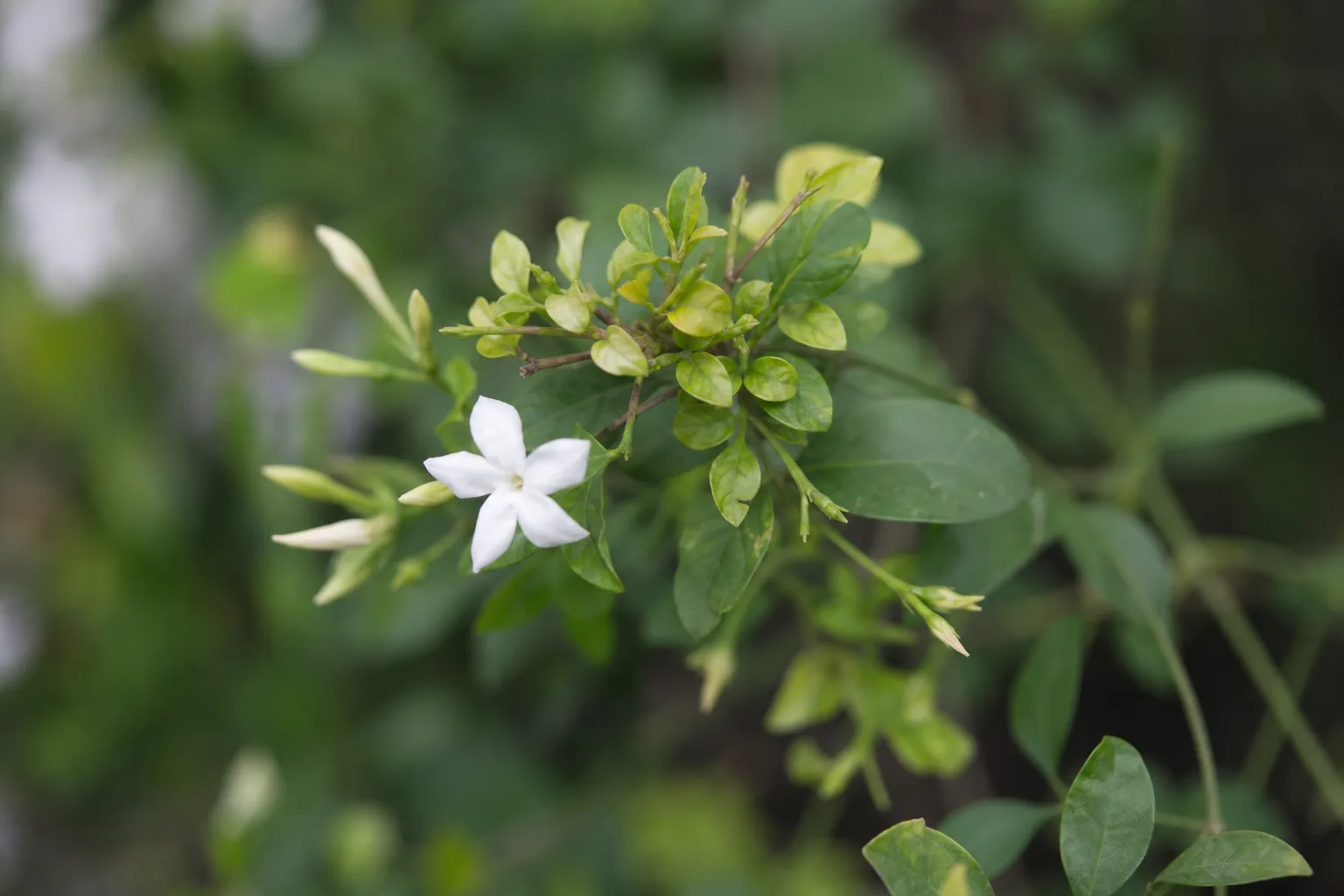
Stunted Growth on Jasmine: Causes, Checks & Fixes
This guide covers stunted growth on Jasmine. See also the general Stunted Growth guide, watering, and light pages for this plant.
Stunted Growth on Jasmine: Causes, Checks & Fixes
Quick answer
Stunted growth on Jasminum officinale (common jasmine) means the vine stops extending runners, sets few or no buds, and produces small leaves on short internodes for weeks during what should be active summer growth. Healthy established jasmine is a vigorous twining climber with rapid growth once roots and light align-a stall is almost always cultural, not random bad luck.
The usual culprits are too little direct sun, root-bound or rotting roots, or an oversized pot that stays wet and idle. Winter semi-rest in cool short days is a normal slow phase and should not be confused with summer stunting.
First step: measure direct sun hours where the pot actually sits, then unpot and inspect roots. Do not reach for fertilizer on a vine that cannot absorb water properly or that has not been checked below soil line. Diagnosis comes before treatment.
Why jasmine growth stalls
Jasmine evolved as a sun-loving climber. NC State Extension lists full sun as six or more hours of direct light daily, with partial shade tolerated but not ideal for strong extension. Indoors or on a shaded porch, leaves may stay green while the plant conserves energy-runners shorten, internodes tighten, and flowering cues disappear even though the vine looks “alive.”
Root problems are the second major brake. [UGA Extension notes that root-bound container plants](https://fieldreport.caes.uga.edu/publications/C1240/[Jasmine repotting guide](/plants/jasmine/repotting/)-basics/) exhaust soil volume, dry out unpredictably, and commonly show stunted growth despite surface care. Circling roots cannot explore fresh mix; water runs down the pot sides while the core stays dry. Chronic wet soil does the opposite-oxygen-starved roots stop absorbing, lower leaves yellow, and new shoots abort.
Oversized pots trap jasmine in a large wet zone. A small root ball in a big container keeps the outer mix soggy while the centre alternates between dry and stagnant. Growth pauses because the plant is neither properly hydrated nor properly aerated.
Seasonal rhythm matters. Jasmine semi-rests in cool winter with reduced watering. Little new length in December is expected. Stunting is a problem when warm lengthening days arrive and tips still do not advance for six or more weeks.
Sap feeders drain energy on indoor vines. RHS notes that jasmine grown indoors may attract red spider mites on tender shoots-stippling and webbing weaken new growth without obvious wilting. Aphids on outdoor tips have a similar effect.
Recent repotting or a stack of care changes can pause growth for several weeks while roots settle. That is transplant stall, not permanent stunting-different fixes apply.
What stunted growth looks like on jasmine
Typical stunting pattern:
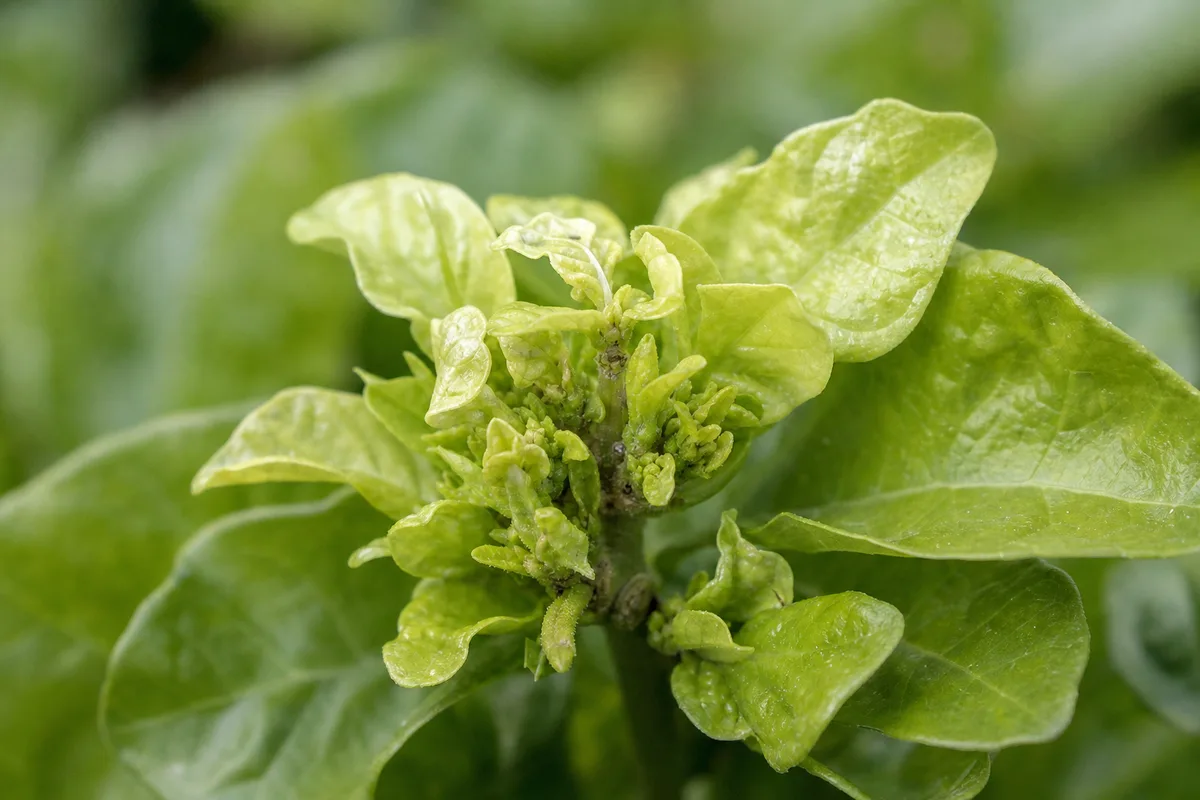
Stunted Growth symptoms on Jasmine - compare with healthy tissue on the same plant.
- Short gaps between leaf pairs on new wood; tendrils or twining shoots stop lengthening for weeks in summer
- New leaves smaller than last season’s foliage
- Few or no flower buds despite past bloom-often the first clue that light or roots are wrong
- Overall plant looks “frozen” at one size while neighbouring healthy jasmine extends
Light-related stunting often pairs with pale or yellow-green upper leaves and stems leaning toward the brightest window. University of Maryland Extension describes low-light plants as spindly or poorly branched with diminished flowering-jasmine in dim rooms may stay compact and weak rather than dramatically leggy.
Root-bound stunting shows extremely fast dry-down-a thorough drink may leave the pot feather-light within twenty-four to forty-eight hours. Roots visible at drainage holes or circling the soil surface are common. Growth stalls even when you water faithfully.
Rot or oversize-pot stunting shows yellowing lower leaves, soil that stays wet for many days, and sometimes a sour smell. Stems may feel firm at tips but soft near the base if rot is advancing.
Pest-related stall adds fine stippling on leaf undersides, sticky residue, or pale webbing on new shoots-growth slows while older leaves look otherwise normal.
Normal winter pause: In cool short days, extension slows or stops with firm stems and no widespread yellowing. Resume worrying when spring warmth returns and tips still do not move.
How to confirm the cause
Work through these checks in order:
- Season check - Is it cool winter with reduced watering? If yes, expect slow growth. If it is warm active season and tips have been static six-plus weeks, continue diagnosing.
- Sun measurement - At midday on a clear day, note whether direct sun hits the leaves. RHS recommends a warm, sheltered, sunny spot for summer jasmines. Fewer than four hours of direct sun on the foliage during the growing season strongly suggests light limit.
- Pot weight and dry-down - Lift the pot after watering. Very fast dry-down with no new length points to root-bound. Heavy wet pot with yellow lower leaves points to excess moisture or oversize container.
- Root inspection - Slide the plant out. Healthy roots are firm and pale tan or white. Mushy brown roots smell sour-that is rot. A dense circling mat with little free soil is bound. A tiny root ball swimming in a large wet mass is oversize-pot stress.
- Pest scan - Check new shoot undersides with a hand lens for mites, aphids, or scale. Shake a stem over white paper-fine moving specks confirm mites.
- Recent history - Repot, move, or fertilizer within the last month? Stall may be shock; fix environment and wait before repotting again.
If sun is adequate, roots are firm and well dispersed, soil dries on a normal rhythm, and no pests appear, nutrient lack is possible-but it is a secondary diagnosis after the basics clear.
First fix for jasmine
Increase direct sun exposure gradually if the plant gets fewer than four hours on the foliage, and unpot the same day to inspect roots before any other treatment.
These two checks run together because light and roots are the top two stall causes on jasmine, and you cannot choose the right follow-up-repot, dry-back, pest rinse, or patience-without seeing both.
Move the pot to the sunniest available spot with four to six hours of direct light on leaves, stepping up over a week if the vine came from deep shade to avoid leaf scorch. At the same time, gently remove the root ball and look for circling, mush, or a small ball in an oversized wet pot.
Do not fertilize, hard-prune, or repot into a larger container on day one until you know which root pattern you have. A bound plant needs spring repot one size up; a rotting plant needs trim and dry recovery; an oversize wet pot needs less water and often a smaller or refreshed mix-not more feed.
Step-by-step recovery
After the initial sun-and-root check, follow the path that matches your findings:
If light was low:
- Relocate to four to six hours direct sun (or supplement with a grow light delivering high-intensity exposure for twelve to fourteen hours daily).
- Wait three to four weeks for new tip growth before light balanced fertilizer at half strength.
- Train new runners onto a trellis or wires-summer jasmines need sturdy support once vigorous.
If root-bound:
- Repot in early spring one container size up-roughly two to three inches wider-with well-draining mix and open drainage holes.
- Tease or trim circling outer roots per UGA Extension guidance so they grow outward.
- Water thoroughly once, then let the top few centimetres dry before the next drink.
- Hold fertilizer four to six weeks while roots establish.
If rot or chronic wet soil:
- Stop watering until the top half of the mix dries.
- Trim mushy roots to firm tissue with clean shears; discard saturated mix.
- Repot into a pot sized to the trimmed root ball, not dramatically larger, with gritty well-drained mix.
- Resume sparse watering only when new tips show firm growth.
If oversized pot:
- Downsize or refresh mix in the same pot so roots occupy most of the volume.
- Water only when the top three centimetres are dry-do not soak a huge wet reservoir on schedule.
- Expect slow restart until the root-to-soil ratio improves.
If spider mites or aphids:
- Rinse shoot undersides with a strong water stream early morning three times weekly.
- Improve airflow and avoid bone-dry indoor air during heating season.
- Apply insecticidal soap only if rinsing fails to reduce stippling after two weeks.
If transplant shock:
- Keep bright light and even moisture without soaking.
- Do not repot or feed again for six weeks.
- Judge by one new firm tip rather than old wood.
Recovery timeline
Light correction often shows longer internodes on new tips within three to five weeks in warm weather. Root-bound recovery after spring repot may take four to six weeks before visible runner extension. Rot recovery is slower-six to ten weeks if enough firm root remains; a vine that keeps yellowing with soft stems despite dry corrected culture may not fully recover.
Old short internodes and small leaves do not lengthen retroactively. Success means fresh segments grow at normal spacing, roots feel firm on re-check, and bud formation returns the following season when winter chill requirements are also met.
Lookalike symptoms to rule out
No flowers without short stems - Jasmine may grow moderately but skip bloom when winter chill or potassium timing is wrong. That is a flowering problem, not stunting. Stunted vines show poor extension and small foliage, not normal length with bud failure alone.
Leggy seedlings vs stalled mature vine - Young cuttings stretch in low light with long thin stems. A mature container vine more often stays dwarfed with tight internodes and pale colour.
Cold damage - Frost or cold drafts brown and crisp leaves. Stunting from culture shows soft stall with green but small tissue, not widespread necrosis.
Nutrient deficiency - Iron or nitrogen lack can yellow leaves while some growth continues. True stall means tips stop entirely; confirm roots and light before assuming feed shortage.
Normal post-prune pause - Hard pruning after bloom redirects energy. Expect several weeks of little length until new framework shoots emerge-that is renovation, not chronic stunting.
Mistakes to avoid
Do not double fertilizer on a weak vine hoping to force growth-salt stress worsens root uptake when the real limit is light or rot.
Do not repot and feed the same day on a stressed plant. Pick one intervention, let roots stabilize, then feed only when tips actively extend.
Do not jump to a pot much larger than the root ball “to give room to grow.” Excess wet mix is a common jasmine stall trigger indoors.
Do not hard-prune a stalled vine to shock it into growth. Remove only dead or rotted wood until culture improves.
Do not confuse cool winter rest with failure. Avoid repotting a firm dormant vine in December unless roots are clearly rotting.
How to prevent stunted jasmine
Match placement to jasmine’s needs: fertile, well-drained soil in sun or partial shade, with as much direct sun as your space allows. Repot every two years or when roots circle, one size up in early spring. Use terracotta or pots with open drainage if you tend to overwater.
Water when the top three centimetres dry-reduce frequency in cool winter. Scout indoor vines weekly for mites after the cool rest period. Feed balanced liquid fertilizer every three to four weeks only during active spring-to-summer extension, not on a stalled plant.
Train runners early onto supports so light reaches leaf surfaces evenly rather than letting one shaded side weaken growth.
When to worry
Escalate immediately if stems soften at the soil line while mix stays wet in warm weather, roots turn brown and collapse on inspection, or yellowing climbs the vine through summer despite corrected watering.
A firm, leaf-slow vine in a cool bright winter room can wait for spring. A summer vine with static tips, sour soil, and mushy roots cannot-address roots and drainage before the growing season ends.
If two corrected growing seasons pass with adequate sun, healthy firm roots, and proper pot size yet tips still barely advance, consider virus, chronic scale infestation, or wrong species (star jasmine and other lookalikes have different limits). Those cases need targeted pest or identity checks beyond basic culture fixes.
When to use this page vs other Jasmine guides
- Jasmine watering guide - Use for routine moisture checks before assuming stunted growth is the main issue.
- Jasmine problems hub - Browse all 53 common issues on this species.