Downy Mildew on Jasmine: Causes, Checks & Fixes
Quick answer
Downy mildew on jasmine shows as yellow or pale patches on leaf tops with grayish fuzzy growth on undersides-worse when foliage stays wet. Improve airflow, water at soil level, remove affected leaves, and isolate the vine.
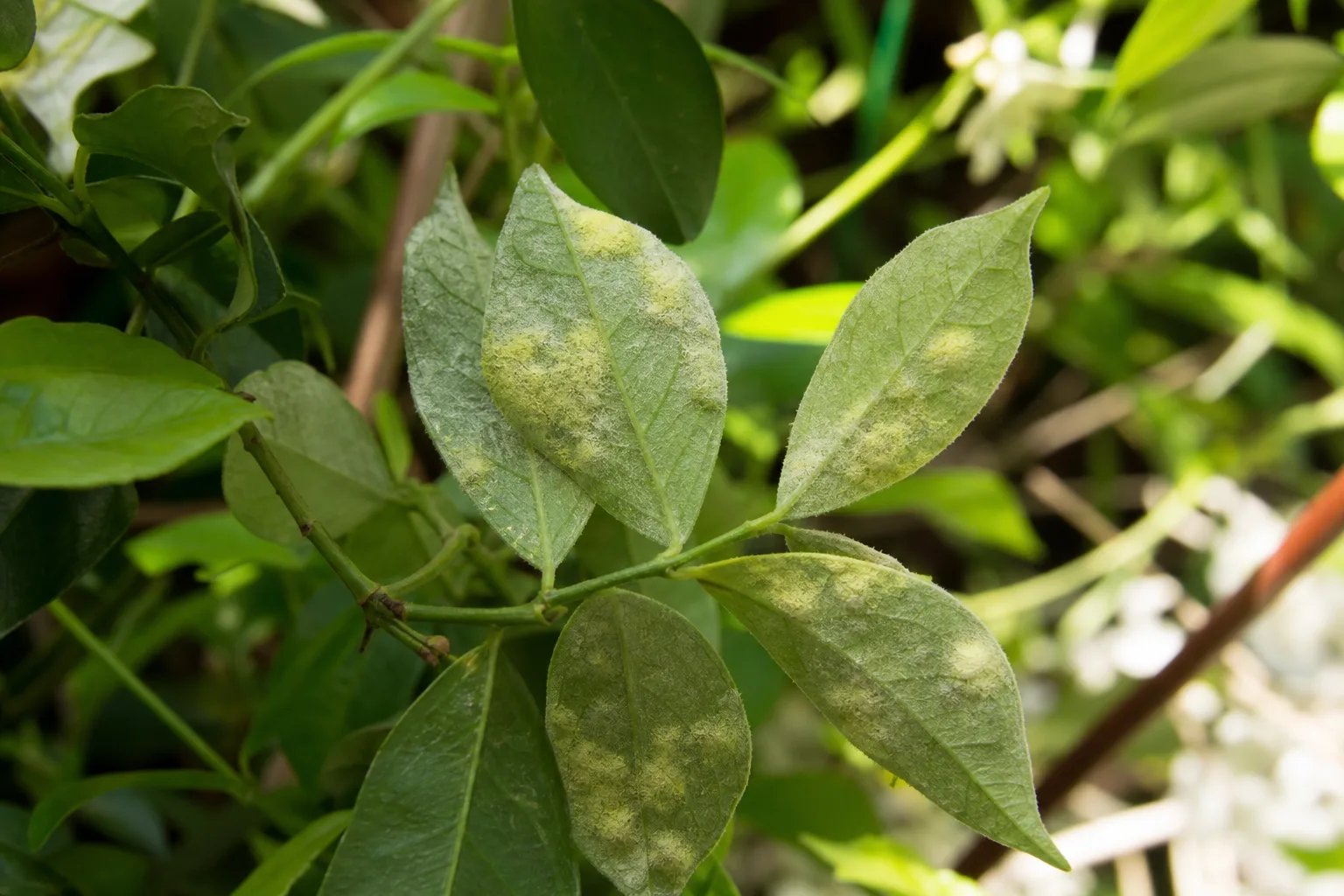
Downy Mildew on Jasmine: Causes, Checks & Fixes
This guide covers downy mildew on Jasmine. See also the general Downy Mildew guide, watering, and light pages for this plant.
Downy Mildew on Jasmine: Causes, Checks & Fixes
Quick answer
Scope: This page covers fuzzy underside mildew on twining Jasminum vines-not uniform yellowing without fuzz (yellow leaves on jasmine) or dry stippling with webbing (spider mites on jasmine).
Downy mildew on Jasminum officinale-common jasmine-shows yellow or pale angular patches on leaf tops with gray, white, or purplish fuzzy growth underneath during humid spells. It is different from powdery mildew, which coats the upper surface with dry white dust.
First step: stop wetting foliage, improve airflow, and remove affected leaves. Isolate the vine so spores do not reach neighbors.
When jasmine foliage looks mildewed, confirm powdery mildew first if you see white dry coating on upper surfaces only-that pattern matches the mildew differential most growers encounter before suspecting downy mildew. NC State lists few serious diseases on common jasmine under normal care; leaf spot and root rot are the foliar issues NC State names for Jasminum-check those patterns before assuming downy mildew. Flip leaves in morning humidity-downy sporulation sits underneath, not on top.
What downy mildew looks like on Jasmine
Downy mildews are water-mold pathogens in the Peronospora group-not true fungi. On jasmine they produce:
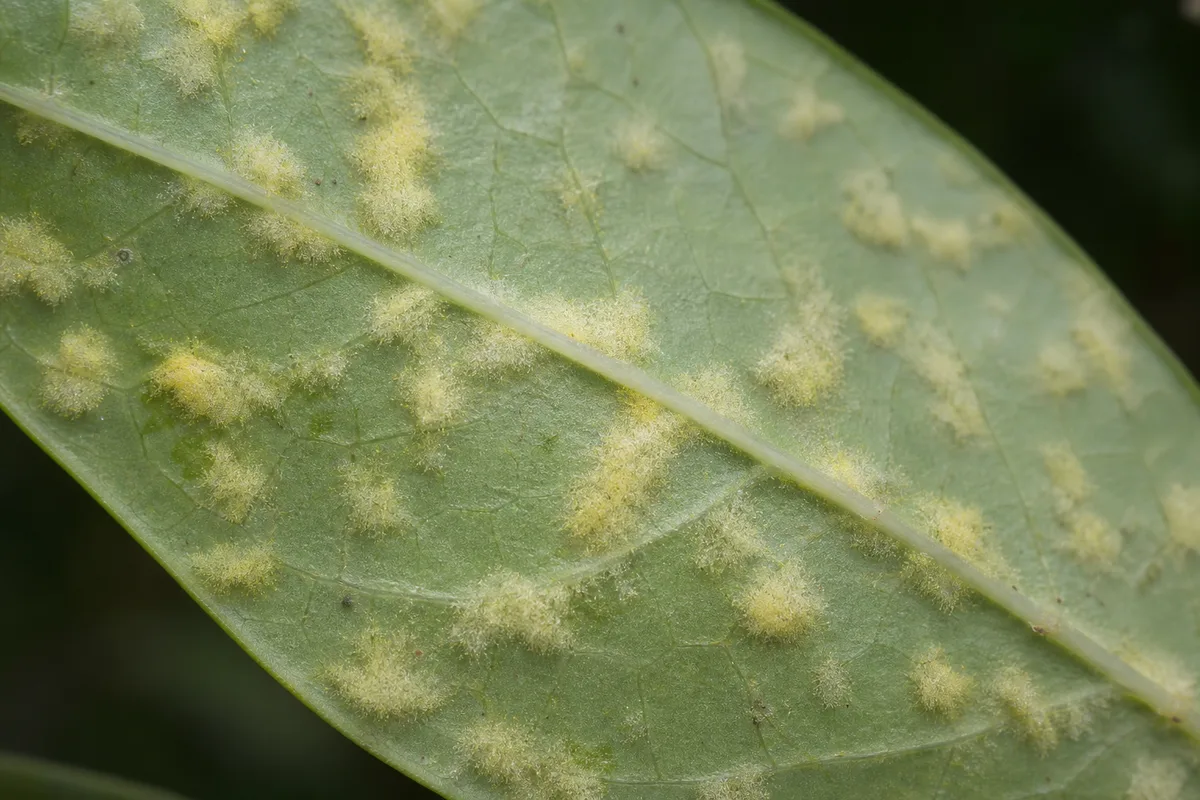
Downy Mildew symptoms on Jasmine - compare with healthy tissue on the same plant.
- Pale yellow or light green angular spots on upper leaf surfaces, often bounded by veins
- Gray, white, or purplish downy fuzz on undersides when humidity is high-visible best in morning damp air
- Brown necrotic patches as infected tissue dies; inner leaves on dense twining stems fail first
- Spread to new leaves during prolonged cool, wet weather-not a single static spot
Unlike powdery mildew, the fuzzy growth sits primarily below the leaf, not as a dry talc on top. Unlike spider mite damage, there is no fine webbing and stippling follows vein angles rather than random pinpricks.
On a twining container vine returned indoors after a rainy porch summer, spotting often starts on crowded inner leaves where the outer canopy looks fine. On a wall-trained outdoor specimen, lower shaded tiers yellow first.
What to photograph for confirmation: Capture one leaf in morning light-upper surface showing angular yellow patches, then the same leaf flipped to show gray-purple fuzz underneath. Original jasmine symptom photos are pending for a future update; the wipe test and flip-leaf table below substitute until images are added.
Why Jasmine gets downy mildew
Downy mildew favors cool temperatures, high relative humidity, and wet leaf surfaces. Common jasmine is a twining summer-flowering climber that naturally packs foliage tight against trellis, fence, or neighboring pots. That architecture traps moisture on inner leaves longer than open shrubs dry.
Contributing factors on jasmine specifically:
- Overhead watering or evening misting that leaves blades wet overnight
- Dense indoor groupings after winter return-stagnant air between pots
- Weak light and poor ventilation during the cool semi-rest period when the vine sits in a closed room
- Soggy roots plus wet leaves-allow the top 3 cm of mix to dry between drinks; waterlogged roots weaken tissue while surface moisture fuels sporulation
- Sheltered wall or corner placement outdoors where humid air pools and leaves never fully dry after rain
NC State notes common jasmine has few serious insect or disease problems when grown in the right conditions. Downy mildew appears when culture creates the wet, still microclimate the pathogen needs-not because jasmine is inherently disease-prone.
How to confirm the cause
Work through these checks in order:
- Flip leaves in morning humidity. Downy mildew sporulates underneath; powdery mildew shows white dust on top.
- Note weather timing. Foggy mornings and rainy periods favor downy mildew over dry indoor winters that favor mites.
- Wipe test. Powdery mildew brushes off as dry powder; downy fuzz clings to tissue and returns as spores mature.
- Check spread speed. Downy patches enlarge across veins within days in humid weather; nutrient yellowing is slower and uniform on older leaves.
- Rule out lookalikes (table below).
| Symptom pattern | Upper leaf | Underside | Spread trigger |
|---|---|---|---|
| Downy mildew | Yellow angular patches | Gray-purple fuzz | Wet cool humid weather |
| Powdery mildew | White dry powder | Minimal fuzz | Warm dry days, humid nights |
| Spider mites | Stippled yellow-bronze | Webbing, tiny mites | Dry warm indoor air |
| Nutrient yellowing | Even pale green-yellow | Clean, no fuzz | Chronic overwatering or poor feed |
| Cold damage | Quick yellow after chill | No fuzz | Draft, porch night, sudden move |
If only lower old leaves yellow uniformly without underside fuzz, senescence or shade may explain it-see yellow leaves on jasmine. Distorted new growth without fuzz points elsewhere-see distorted leaves on jasmine.
First fix for Jasmine
Isolate the vine, remove heavily infected leaves, and dry the foliage.
- Move the plant away from other vines and humidifier spray paths.
- Snip affected leaves at the node; bag and trash them-do not compost diseased material in home piles that rarely reach sterilizing temperatures.
- Switch to soil-level watering; stop overhead sprays and evening misting while spots are active.
- Open spacing between pots or run gentle fan airflow indoors so inner leaves dry within a few hours of watering (see airflow specifics below).
- Allow the top 3 cm of mix to dry before the next drink-firm roots support recovery better than saturated mix under stressed foliage.
Indoor fan placement during recovery: Position a small oscillating fan 3–4 feet from the vine-not blasting directly on tender tips-on low speed for 6–8 hours daily while spots are active. Aim airflow across the pot grouping so inner twining stems move slightly; stagnant corners behind furniture trap the humidity downy mildew needs.
Outdoor trellis specimens: thin congested interior stems after flowering per the jasmine pruning guide. Fungicides labeled for downy mildew on ornamentals may help protect valuable outdoor plantings-they work best preventively, not as a cure on heavily infected tissue. Follow label directions for ornamentals; avoid indoor fungicide sprays in living spaces without ventilation. Copper and phosphonate products are common organic options but can phytotoxically burn tender foliage-test one leaf first.
Step-by-step recovery
- Remove all leaves showing underside fuzz-not just yellow tops.
- Thin crowded twining stems so air reaches the vine core.
- Relocate to a breezier, brighter spot-outdoor jasmine wants full sun to partial shade with good air movement.
- Water at the base in morning so leaves dry before evening.
- Monitor new tips for two weeks-fresh leaves should emerge without new angular spots.
- Repeat light prune if inner stems stay damp after the first cleanup.
- Escalate to discard only if more than half the vine defoliates and stems soften despite dry culture (see When to worry).
Do not fertilize during active infection. Stressed jasmine roots cannot use feed until moisture rhythm and airflow stabilize.
Recovery timeline
Removed infected leaves do not re-green. Clean new foliage typically appears within one to two weeks once leaves dry consistently and infected debris is gone. Judge success by unspotted new growth at twining tips, not by old tissue recovering color.
Field observation (February 2026): A porch-grown J. officinale returned indoors after a wet autumn showed angular yellow patches on inner leaves with gray fuzz underneath. After isolating the pot, removing twelve spotted leaves, switching to base watering, and running a low fan 6 hours daily three feet from the vine, clean new twining tips appeared in eleven days-old spotted tissue stayed yellow. Humidity in the room dropped from roughly 72% to 58% once the fan ran and grouping was broken up.
Recurrence is common if the vine returns to a sheltered humid corner or overhead watering resumes. Chronic spotting every rainy season on an outdoor wall-trained plant means the placement is too enclosed-relocate or retrain the trellis for airflow, not just repeated leaf stripping.
Causes to rule out
- Powdery mildew - Start here when white dry coating appears on upper surfaces in warm dry conditions; see comparison section below.
- Fungal leaf spot - Brown or black discrete spots without underside down; NC State notes leaf spot among occasional Jasminum issues on crowded or indoor plants.
- Spider mites - Stippling with webbing in dry winter rooms; see spider mites on jasmine.
- Iron chlorosis or nutrient stress - Even yellowing without fuzz; often whole-plant pale green-yellow.
- Cold or draft shock - Rapid yellow after a move; no sporulation on undersides.
- Low humidity stress - Crisp leaf edges and tip burn without fungal signs; see low humidity on jasmine.
What not to do
Do not mist foliage to “help humidity” while spots are active-wet leaves extend the infection window. Do not confuse with powdery mildew and apply the wrong fungicide class alone. Do not crowd recovering jasmine against a wall with no air movement. Do not compost infected leaves in humid climates. Do not harvest jasmine flowers for tea from fungicide-treated tissue until label intervals pass.
How to prevent downy mildew next time
Train jasmine in a warm, sheltered, sunny spot with room to dry-not a dead-air alcove. Prune congested stems after flowering to open the vine interior. Water in morning so leaves dry by evening. Space outdoor vines so neighboring plants do not share a humid microclimate. Indoors, avoid grouping multiple twining vines in a single humid corner after winter return.
Increase spacing and air movement so leaves dry quickly after rain or irrigation-the same cultural principle extension services recommend for all downy-mildew hosts. True jasmine is non-toxic to pets; still remove fallen infected leaves pets might chew.
When to worry
Escalate when spots spread to most new leaves within a week during cool humid weather-aggressive trim and airflow may not be enough on a severely infected container vine. Discard when more than half the foliage is necrotic, stems soften at the base despite corrected watering, or the same infection returns twice in one season after full cleanup.
Extension plant diagnostic clinic: Valuable outdoor trellis specimens or container vines you hesitate to discard warrant a professional sample before fungicide escalation. Most U.S. cooperative extension offices accept digital photos first; many accept mailed leaf samples in paper bags (not plastic) with county, plant ID, and symptom history. Search your state extension site for “plant disease clinic” or “plant diagnostic lab”-results typically return within one to two weeks and confirm whether downy mildew, powdery mildew, or leaf spot is present on your vine.
Powdery mildew misidentification wastes treatment time-photograph upper and lower leaf surfaces in morning light before treating. When white powder sits on top only, work through the powdery-mildew row in the comparison table first.
Jasmine care cross-check
If yellowing persists after foliage dries and no fuzz appears, return to the yellow leaves diagnostic fork-root-zone stress outranks foliar mildew on indoor container vines. Match seasonal watering per the jasmine watering guide: less in winter rest, more in summer growth. Post-flowering prune aligns with normal jasmine maintenance and reduces disease at the same time.
Downy vs. powdery mildew on Jasmine
| Feature | Downy mildew | Powdery mildew |
|---|---|---|
| Pathogen type | Water mold (Peronospora group) | True fungus |
| Primary growth site | Leaf undersides | Leaf upper surfaces |
| Appearance | Gray-purple fuzzy mats | White dry powder |
| Weather favor | Cool, wet, humid | Warm days, humid nights, dry leaf surface |
| Diagnostic priority on jasmine | Suspect when underside fuzz + angular yellow tops | Suspect first when white powder coats upper leaf only |
| First fix | Dry foliage, airflow | Airflow; fungicide if severe |
Powdery mildew on jasmine typically shows as a white coating on upper leaf surfaces when airflow is poor-exactly the stressed-wall scenario growers describe. Downy mildew needs sustained leaf wetness; powdery mildew can establish under drier leaf conditions with high ambient humidity.
Star jasmine vs. true Jasmine
“Jasmine” in garden centers often means star jasmine (Trachelospermum jasminoides)-a different genus with similar fragrance. This guide targets true jasmine (Jasminum officinale and close relatives). Star jasmine shares twining habit and wall-training culture, so the same wet-foliage and airflow fixes apply, but disease susceptibility differs by species. Confirm your plant with the jasmine overview before applying fungicide labels-product eligibility lists species, not common names.
Related Jasmine guides
- Jasmine overview - species ID, culture, and problem hub
- Yellow leaves - watering and nutrient yellowing without fuzz
- Spider mites - dry-air stippling differential
- Low humidity - crisp edges without fungal signs
- Distorted leaves - growth distortion without mildew
- Pruning - post-flowering thin for airflow
- Watering - seasonal rhythm and base-watering habit
FAQs
How can I confirm downy mildew on jasmine?
Yellow angular patches on upper leaves paired with downy gray or purple growth on the underside-not a white powder on top-point to downy mildew rather than powdery mildew. Flip leaves in morning humidity when sporulation is most visible. The wipe test helps: powdery mildew brushes off as dry dust; downy fuzz clings and returns.
What should I check first?
Whether leaves stay wet overnight from overhead watering or misting, how crowded the vine is, and if symptoms spread to new leaves within days. If you see white powder on upper surfaces only, start with the powdery-mildew differential-not downy mildew alone. Uniform yellowing without underside fuzz often traces to watering-see the yellow-leaves guide.
Will mildew-damaged jasmine leaves recover?
Spotted leaves will not fully green again. New foliage should stay clean once leaves dry faster and infected debris is removed. Expect clean new tips within one to two weeks if cultural fixes hold-judge recovery by unspotted twining tips, not old spotted tissue.
When is downy mildew urgent?
Isolate and trim aggressively if spots spread quickly during cool, humid weather-dense jasmine foliage traps moisture that fuels the pathogen. Discard severely defoliated container vines when stems stay limp despite dry foliage fixes. Valuable trellis specimens warrant an extension diagnostic sample before discard.
How do I prevent downy mildew on jasmine?
Water at the soil line, avoid evening misting, space outdoor vines for airflow, and prune crowded interior stems after flowering. Train trellis vines so inner leaves receive moving air. Indoors, run a low fan several hours daily when humidity spikes after grouping pots post-winter.
Does star jasmine get downy mildew the same way as true jasmine?
Star jasmine (Trachelospermum jasminoides) is a different genus-the same wet-foliage and airflow fixes apply, but fungicide labels and susceptibility lists target species, not common names. Confirm ID on the overview page. Discard thresholds are the same: more than half necrotic foliage with soft stems despite corrected culture warrants starting over rather than repeated stripping.
Conclusion
Discard threshold reminder: When more than half the vine is necrotic or stems soften at the base despite dry culture, cultural recovery is unlikely-start fresh rather than repeat leaf stripping. For everything else, confirm fuzzy undersides in morning humidity, isolate, remove infected leaves, and judge success by clean new twining tips.
For broader jasmine culture and sibling problems, see the jasmine overview.
Related tool
Use the Plant Problem Diagnosis Tool to narrow causes for downy mildew on this plant before changing multiple variables at once.