Brown Tips on Mogra: Causes, Checks & Fixes
Quick answer
Brown tips on Mogra usually mean dry winter air, inconsistent watering, or salt buildup in the pot-not disease. First step: check humidity at canopy level and whether the top 2–3 cm of mix has been swinging between bone dry and soggy. Move the pot away from heat vents, then raise ambient humidity with a pebble tray or humidifier-do not water more often to fix dry air.
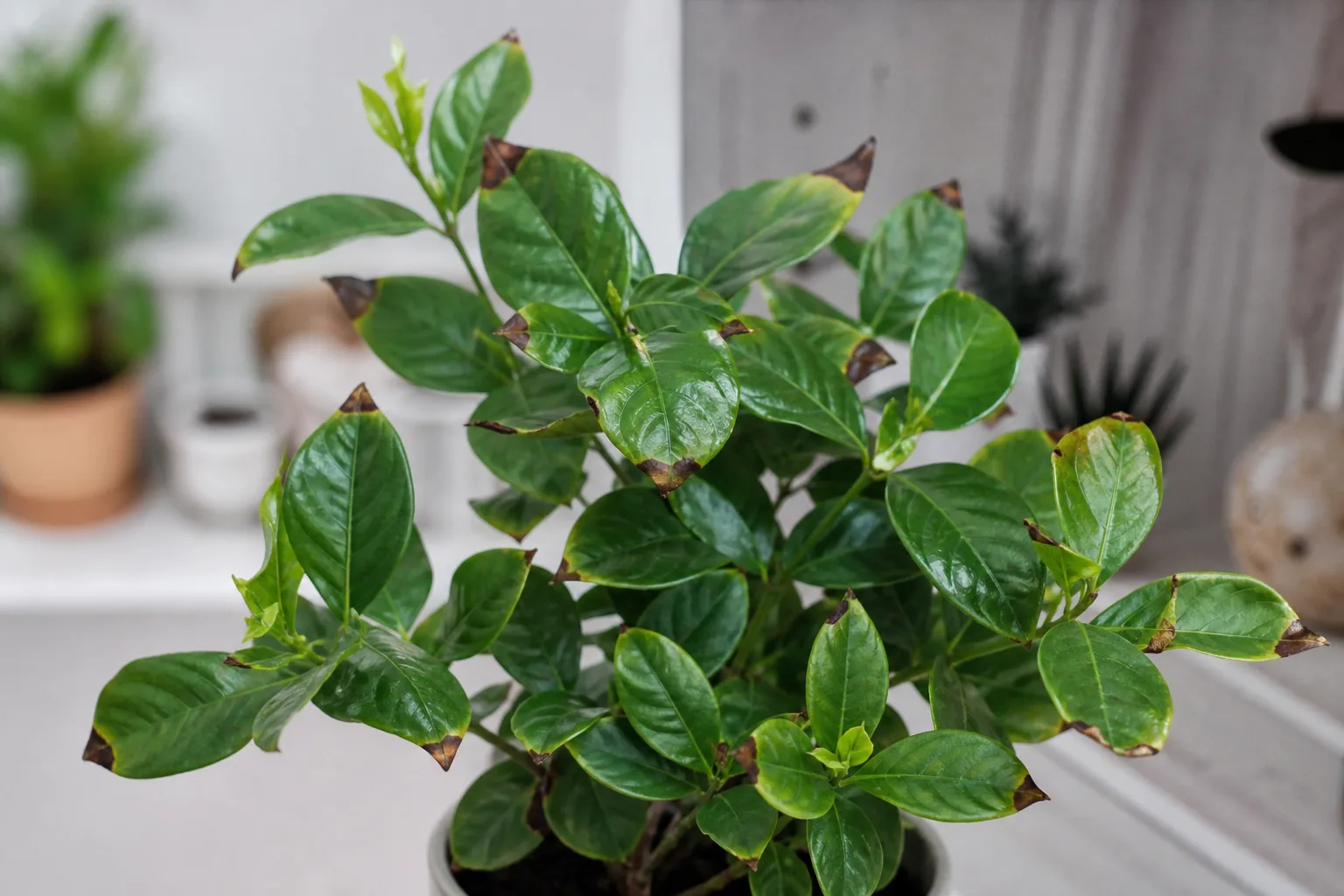
Brown Tips on Mogra: Causes, Checks & Fixes
This guide covers brown tips on Mogra. See also the general Brown Tips guide, watering, and light pages for this plant.
Brown Tips on Mogra: Causes, Checks & Fixes
Quick answer
Brown tips on Mogra (Jasminum sambac - Arabian jasmine, Mallige, Motia) are almost always environmental margin burn, not a fungal infection. This tropical flowering shrub evolved in humid Asian climates and loses moisture fastest at glossy leaf edges and tight bud tips when winter heating, AC, or inconsistent watering pull the plant out of balance.
First step: measure humidity at canopy height and check soil at the top 2–3 cm. If the air reads below 40% beside a heat vent and buds are drying alongside crisp margins, move the pot out of the dry air stream and raise ambient humidity with a pebble tray or room humidifier-without watering more often. Dry air and drought margins look similar on the leaf edge, but the fix differs: humidity problems need better air moisture; drought problems need a thorough soak when the mix is dry at depth.
What brown tips look like on Mogra
On Mogra’s glossy, ovate, almost stalkless leaves, tip burn usually starts as tan or brown crispy edges while the leaf center stays green. The pattern differs from several lookalikes growers confuse on the same shrub:
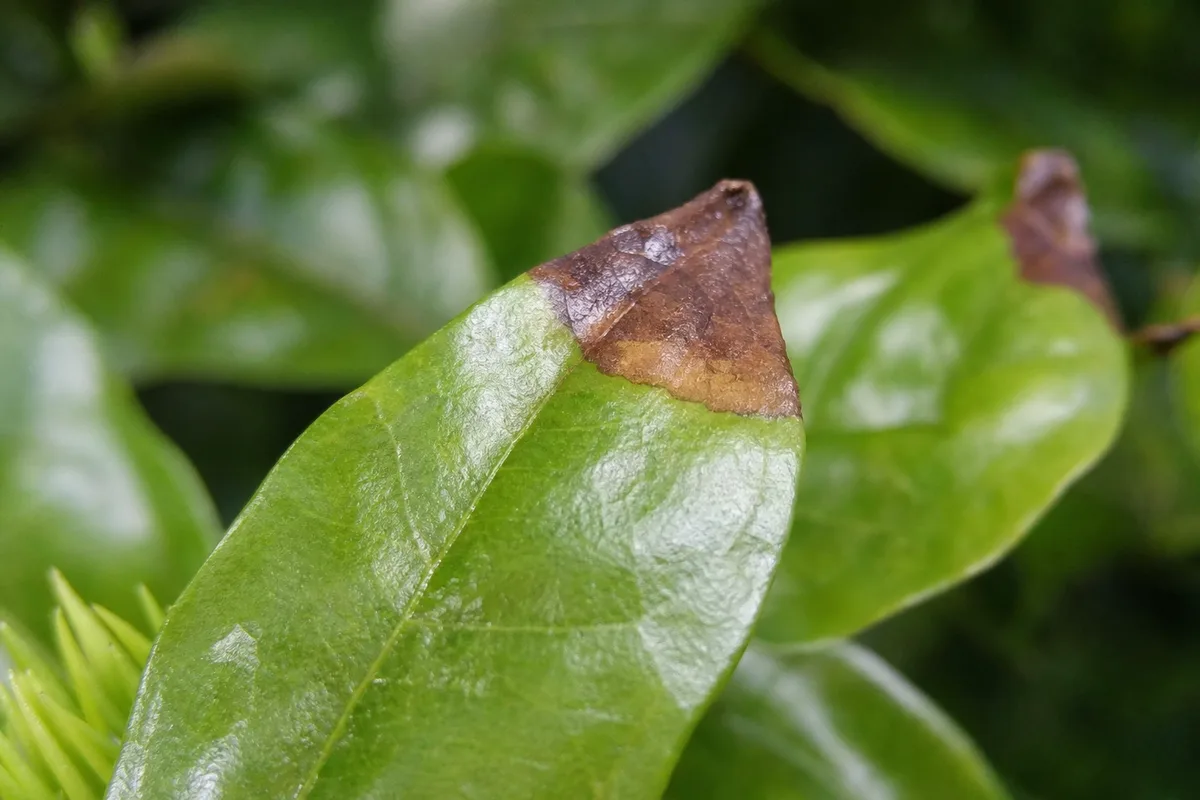
Brown Tips symptoms on Mogra - compare with healthy tissue on the same plant.
- Symmetric margin burn - dryness advances evenly from tips and outer edges on multiple leaves, often on older foliage first during heating season
- Dry texture - affected tissue feels papery and brittle, not soft or water-soaked like overwatering damage
- Bud-tip browning - tight white buds may dry at the tip or abort while stems stay firm, overlapping with low humidity and bud drop
- Salt-band clues - a yellow or pale band just above the brown margin, white crust on the pot rim, or crusty soil surface suggests mineral buildup, not drought alone
- Stippling instead of even margins - tiny yellow dots on the upper surface with fine webbing at leaf bases points to spider mites, not classic tip burn
Unlike fungal leaf spots, margin burn rarely shows dark concentric rings or spreading wet patches. Unlike sun scorch after a sudden window move, humidity-driven burn often appears across several leaves at once when dry forced air starts running.
Why Mogra gets brown tips
Jasminum sambac is a broadleaf evergreen shrub native to tropical Asia that wants evenly moist, well-drained soil and moderate ambient humidity while pushing repeated bloom flushes. Leaf margins brown when transpiration outpaces water uptake-common on container jasmine indoors.
Low humidity and heating-season dry air
Central heating and AC can drop indoor relative humidity to 20–30% in winter-far below the 50–70% range Mogra tolerates best during active growth and budding . A pot beside a radiator or heat register loses leaf-surface moisture faster than roots can replace it, so edges crisp before the whole leaf wilts. Bud clusters abort for the same reason: they transpire heavily and dry in place while stems stay green.
This is the same dry-air DNA behind our low-humidity guide-brown tips are often the leaf-level signal; bud drop is the flower-level signal. Both can appear together after a balcony pot moves indoors for winter.
Inconsistent watering and drought margins
Mogra is not drought-tolerant. UCANR extension guidance recommends watering thoroughly, then letting the mix dry between sessions during growth-the species does not tolerate chronic waterlogging, but it also punishes long dry spells while buds swell. When the top 2–3 cm goes bone dry repeatedly in bright sun, margins crisp from the outside in even if some inner soil still holds moisture.
Growers often overwater to compensate for dry air, which keeps soil wet while leaf edges still burn-a classic path to soggy mix and stressed roots. See underwatering when the pot is light and leaves wilt; see overwatering when soil stays wet and lower leaves yellow.
Salt and mineral buildup in containers
Soluble salts from fertilizer and hard tap water concentrate as water evaporates from the pot. Symptoms include brown leaf tips, reduced growth, and wilting even when you believe watering is correct. Mogra in a small terrace pot fed heavily through summer bloom flushes is especially prone to crusty pot rims and recurring margin burn after several months without leaching.
The RHS lists J. sambac as preferring moist but well-drained loam in neutral pH-salt-heavy mix pushes pH and blocks uptake, showing up as edge burn on glossy leaves before whole-plant yellowing.
How to confirm the cause
Work through these checks in order before repotting, heavy pruning, or stacking fertilizer:
- Hygrometer at canopy height - Log readings for three to five days. Consistent below 40% with crisp margins and bud loss points to dry air. 50–70% with ongoing tip burn shifts suspicion to salts or drought rhythm.
- Draft and vent scan - Feel for heat registers, radiators, AC blasts, or cold window drafts across the foliage. Symptoms worse on the side facing the stream support localized dryness.
- Pot weight and stem firmness - Lift the pot. Light pot + limp leaves + dry mix at 2–3 cm suggests underwatering. Moderately heavy pot + firm stems + crisp attached margins suggests humidity or salt stress, not root drought.
- Dry-down depth - Probe the top 2–3 cm with a finger or skewer. Surface pale while depth is soggy for days points to overwatering. Dust-dry to mid-depth with crispy edges points to drought swings-align with our watering guide.
- Fertilizer and water history - Note heavy feeding on dry soil, softened water, or white crust on the pot rim. Tip burn that worsened after monthly feeding without leaching supports salt injury.
- Pest underside check - Inspect glossy leaf undersides and bud bases with a magnifier. Stippling and silk threads mean spider mites-treat pests before assuming humidity alone caused the damage.
Cause decision table
| What you observe | Most likely cause | Next check |
|---|---|---|
| Crisp margins + bud drop after heat started | Low humidity | Hygrometer below 40%; vent proximity |
| Crisp margins + light pot + dry 2–3 cm | Underwatering | Pot weight; soak response in 24 h |
| Brown tips + white pot rim crust + regular feeding | Salt buildup | Leach test; switch to clear water |
| Brown tips + soggy mix + yellow lower leaves | Overwatering / root stress | Drainage; root firmness |
| Stippling + webbing on undersides | Spider mites | Tap test; rinse undersides |
| One-sided bleached patches after window move | Sun scorch | Which leaves face glass |
If humidity is corrected to 50–70%, watering follows the 2–3 cm dry check, and tips still spread on new growth, leach salts before assuming the problem is solved.
First fix for Mogra
Move the pot out of dry air streams, then raise ambient humidity at the canopy-without increasing watering frequency.
That single step addresses the most common winter indoor cause without inviting root rot from overwatering. Set the pot on a saucer of pebbles with water kept below the drainage holes so evaporation raises local humidity without submerging roots. If the room stays below 40% for days, add a small cool-mist humidifier nearby-not aimed directly at open evening blooms.
Wait one to two weeks and watch the youngest leaves and the next bud cluster. Do not mist open flowers daily; wet blooms brown quickly and misting does not reliably raise room humidity for hours.
Trim dead margins safely
Snip only fully dead brown tissue, following the natural leaf contour with clean scissors. On Mogra’s glossy blades, cut at a slight angle that mimics the leaf tip shape-avoid slicing into green tissue, which creates a larger wound. Cosmetic trimming is optional; old crisp edges can remain until new growth replaces them.
Raise humidity without overwatering
- Relocate away from heating vents and cold window drafts first
- Use pebble tray or humidifier to target 50–70% at canopy level during active growth
- Group with other plants to share transpired moisture-leave air space so foliage does not stay wet overnight
- Keep the 2–3 cm dry-check watering rhythm intact; extra drinks do not replace humid air
Flush accumulated salts
When white crust, fertilizer history, or yellow bands above brown margins suggest salt injury:
- Water slowly from the top with clear water (rainwater, distilled, or tap left to stand) until it runs freely from drainage holes
- Repeat until you have applied at least three times the pot volume of fresh water, letting each application drain fully
- Empty saucers and cachepots; do not let the pot sit in runoff
- Resume normal feeding only after new growth looks clean for two weeks
- Leach every four to six months on heavily fed terrace pots, or when crust returns
Pause fertilizer until margin burn stops spreading on new leaves.
Recovery timeline
Existing brown tissue will not re-green. Judge success by new growth and the next bloom flush:
- Week 1–2 - No new edge browning on the youngest leaves; existing damage stops advancing; bud clusters hold without drying at the tip
- Week 3–4 - New shoots emerge with full-sized glossy leaves and clean margins
- One bloom cycle - Fragrant flowers open on stems that did not abort buds during correction; salt-flush recovery may take longer if many leaves were affected
If tips keep spreading despite 50–70% humidity and stable watering, leach salts and inspect for mites before repotting.
Lookalike symptoms
| What you see | Often confused with | How to tell apart |
|---|---|---|
| Even crisp margins on older leaves | Low humidity | Matches dry heating season; hygrometer below 40%; may co-occur with bud drop |
| Crispy edges + light dry pot | Underwatering | Wilting or limp foliage; dry mix throughout; quick perk-up after thorough soak |
| Brown tips + white soil crust | Salt injury | Follows feeding; leaching improves new growth; pot rim deposits |
| Brown tips + soggy mix | Overwatering | Yellow lower leaves; sour smell; soft stems-see root rot if roots mush |
| Stippling + fine webbing | Spider mites | Damage on undersides; tap test shows moving specks |
| Bleached sun-facing patches | Sun scorch | Follows sudden light increase; asymmetric on window side |
| Buds brown and fall, leaves mostly green | Bud drop | Whole buds abort; margin burn may be secondary-see bud drop |
What not to do
- Do not water more often because tips are brown - Soggy soil suffocates roots while dry air still crisps margins; this is the fastest route to overwatering on a humidity-stressed Mogra
- Do not heavy-feed on dry soil - Concentrated salts burn leaf tips and margins faster on container plants
- Do not mist open blooms to fix humidity - Wet flowers spoil; use tray or humidifier instead
- Do not repot, hard-prune, and fertilize the same week - Stack stress when the plant needs stable air and moisture through bud swell
- Do not assume disease first - Symmetric dry margins on a firm-stemmed shrub with adequate drainage are almost always cultural
How to prevent brown tips on Mogra
Match prevention to how J. sambac actually grows in pots:
- Monitor humidity when heating or AC runs; keep 50–70% at canopy level during active growth and budding
- Water when the top 2–3 cm of mix dries-consistent rhythm prevents drought margins and bud drop without keeping soil soggy
- Leach salts every four to six months on fed terrace pots, or use lower-mineral water if crust returns quickly
- Keep bright light-Mogra needs full sun to part shade for flowering-but move the pot off cold glass and away from heat registers
- Scout leaf undersides weekly in dry indoor winters; spider mites thrive in hot, dry conditions and stipple before margins look classically crisp
- When bringing a humid balcony pot indoors, acclimate over a week rather than placing it straight beside a winter vent
When to worry
Cosmetic crisping on a few lower leaves with firm new shoots and stable soil moisture is manageable-stay consistent rather than repotting immediately.
Treat as more urgent when:
- Widespread tip burn appears right after heavy fertilizer on dry soil or repotting into a mix that stays wet
- Brown margins reach new growth despite 50–70% humidity and correct dry-down watering for three weeks
- Bud clusters abort on every flush alongside advancing margin burn
- Spider mite webbing spreads while humidity stays low
For persistent tip burn after corrective humidity, watering, leaching, and pest checks, consult your local extension office before repeated fertilizer or pesticide use on food-adjacent terrace pots.
Conclusion
Brown tips on Mogra are a humidity, watering, or salt mismatch on a tropical flowering shrub-not a mystery disease. Heating-season dry air crisps glossy margins and bud tips while roots can still be fine; drought and salt buildup produce similar edges through different mechanisms. Move the pot out of dry air streams first, raise ambient humidity without overwatering, and leach accumulated salts when crust or feeding history points that way. New leaves with clean margins and the next open bloom tell you the correction worked; old crisp edges are permanent reminders to keep air and moisture steady through winter indoors.
Related Mogra guides
- Mogra overview - species ID, bloom cycles, and balcony culture
- Low humidity - bud drop and crisp margins from dry air
- Watering - 2–3 cm dry check and bloom-season rhythm
- Underwatering - light pot and drought crisp edges
- Bud drop - when buds abort alongside margin burn
- Spider mites - stippling lookalike in dry heated rooms
- Overwatering - when wet soil yellows lower leaves