Wilting on Mogra: Causes, Checks & Fixes
Quick answer
Wilting on Mogra starts with a soil moisture check at 2–3 cm depth and pot weight-dry soil means thirst; wet soil with wilt usually means damaged roots. Do not water until you know which branch you are on.
Wilting on Mogra: Causes, Checks & Fixes
This guide covers wilting on Mogra. See also the general Wilting guide, watering, and light pages for this plant.
Wilting on Mogra: Causes, Checks & Fixes
Quick answer
Wilting on Mogra (Jasminum sambac, Arabian jasmine) is not solved by watering on reflex. The same limp leaves can mean the plant is too dry or too wet-opposite problems that need opposite fixes.
First step: check soil moisture 2–3 cm down and lift the pot. Dry mix with a light pot means underwatering on Mogra. Wet mix with a heavy pot and limp stems means roots may be failing to move water, even though water is present. Only after that split should you soak or pause watering.
Mogra is a tropical flowering shrub that wants evenly moist, well-drained soil during active growth. It wilts quickly when the surface dries out in summer heat, but it also collapses when roots sit oxygen-starved in soggy mix-especially in winter when growth slows.
What wilting looks like on Mogra
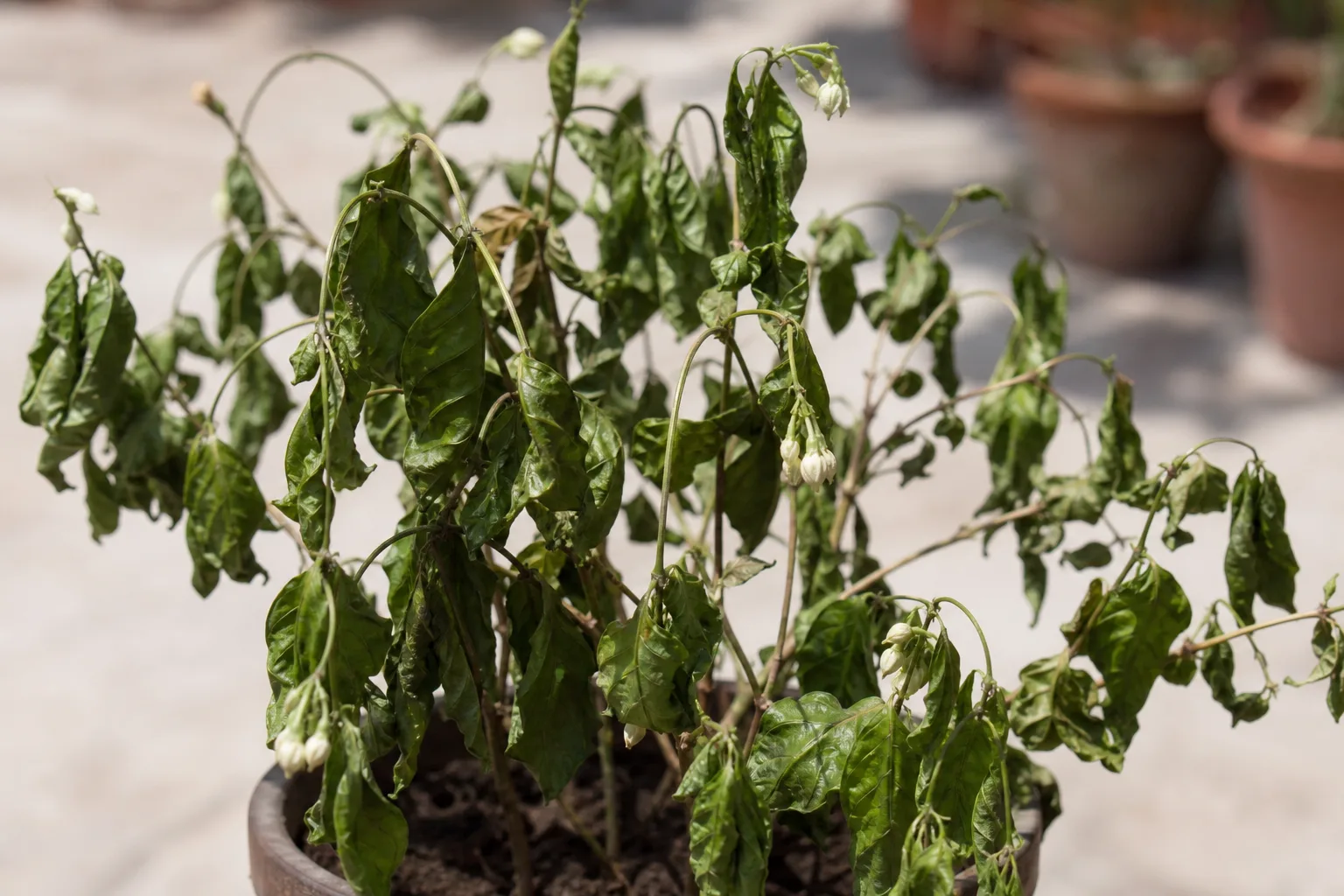
On a healthy Mogra, leaves are glossy, firm, and slightly leathery. Wilting shows as lost turgor: stems and leaf petioles go limp, foliage hangs instead of holding its angle, and open flowers may droop. Buds that were plump can shrivel or drop before opening-a pattern Mogra shows under both drought and root stress.
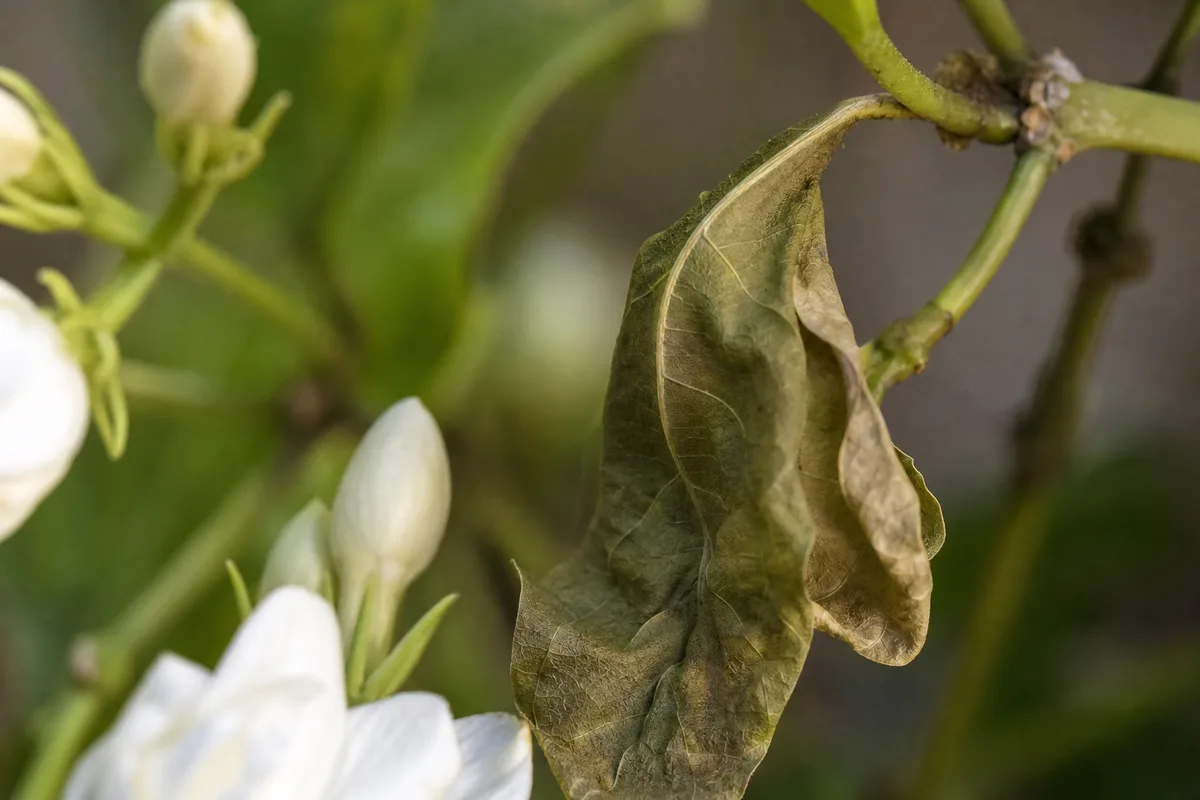
Wilting symptoms on Mogra - compare with healthy tissue on the same plant.
Common patterns to recognize:
- Whole-shoot collapse - several stems on one side or the whole plant go limp at once, often with dry surface soil or a very light pot
- Afternoon limpness, morning recovery - leaves wilt in hot direct sun but firm up overnight; soil may be adequately moist
- Persistent wilt with wet soil - mix stays damp for days, lower leaves may yellow, and new growth stalls despite moisture
- Wilt after a care change - recent Mogra repotting guide, a move to a new window, or a sudden jump in watering can trigger temporary collapse
- Wilt with sticky leaf undersides - sap-feeding pests may be draining the plant; soil moisture can look normal
Fully collapsed leaves that turn brown and papery usually do not regain shape. Judge recovery by new firm leaves and stable buds, not by old tissue springing back.
Why Mogra wilts
Mogra evolved in tropical Asia for warm temperatures, regular moisture, and good drainage. Its fibrous root system drinks steadily during spring–summer flowering but cannot survive waterlogged soil for long. That combination makes wilting a frequent, confusing symptom indoors and on balconies.
Underwatering during active growth
Mogra is watered every 2–4 days in warm weather when the top 2–3 cm of mix dries. In Mogra light guide during peak bloom, a pot can go from fine to visibly limp in a day-especially smaller containers that dry fast. Skipped waterings, vacations, or watering only when leaves already look sad pushes the plant past mild stress into obvious wilt. Bud drop often accompanies drought wilt on Mogra.
overwatering on Mogra and root oxygen loss
The more dangerous branch is wilt with wet soil. Saturated mix drives out air; roots need oxygen to function. Damaged roots cannot transport water upward, so leaves wilt despite abundant moisture-the classic trap that leads owners to water even more.
Mogra’s overwintering rhythm makes this worse. Growth slows in cooler months-container plants overwintered indoors need reduced watering-yet many growers keep a summer watering cadence. Soil that stays wet while the plant barely drinks invites root decay, yellowing, and persistent collapse.
Heat stress and high transpiration
Mogra wants full sun to part shade-roughly 4–6 hours of direct sun-for heavy flowering. In hot afternoons, transpiration can briefly outpace root uptake even when soil is moist-especially right after repotting, in a root-bound pot, or when a heat wave hits a balcony. This temporary afternoon wilt often corrects by evening if soil moisture is even and roots are healthy.
Transplant shock and root disturbance
Mogra dislikes having water, pot size, and placement changed all at once. After repotting or a rough transplant, fine roots underperform for days. The plant may wilt even with correct moisture until new root tips establish. Flowering plants are especially sensitive during bud formation.
Pest-related wilt
Aphids, whiteflies, spider mites, and mealybugs can stress Mogra enough to cause limp growth. Heavy sap loss plus dry indoor air can mimic drought. Check leaf undersides and new tips before assuming the problem is only watering.
How to confirm the cause
Work through these checks in order. The goal is one clear diagnosis before you change anything.
- Soil at 2–3 cm depth - Dry? Proceed toward rehydration. Wet or cool and clammy? Pause watering.
- Pot weight - Light for its size supports thirst. Heavy hours after the last watering supports oversaturation or poor drainage.
- Drainage and saucer - Are holes open? Is standing water sitting underneath? Mogra should never stew in a full saucer.
- Time of day and recovery - If wilt appears at 2 p.m. and leaves are firm by 9 a.m., suspect heat stress first.
- Season and recent watering - Winter semi-rest with frequent soaking fits rot-related wilt. Summer bloom season with missed waterings fits drought.
- Stem base and smell - Soft, dark tissue at the soil line or a sour odor suggests advanced root trouble, not simple thirst.
- Pest scan - Stippling, webbing, whiteflies on disturbance, or cottony clusters on stems can explain wilt without soil extremes.
- New growth - Firm emerging tips and green buds suggest reversible stress. Mushy stems and widespread yellowing with wet mix suggest escalation.
If dry soil, a light pot, and a firm stem base line up, underwatering is the working diagnosis. If wet soil, heavy pot, and yellowing lower leaves align, root uptake failure is more likely until an unpot proves otherwise.
First fix for Mogra
Stop and read the root zone before you water.
Insert your finger 2–3 cm into the mix and lift the pot. That single pause prevents the most common Mogra mistake: soaking a plant whose roots are already drowning.
- If soil is dry and the pot is light: Water thoroughly until water runs from drainage holes, then empty the saucer completely. Do not mist lightly on the surface-that will not reach Mogra’s root ball.
- If soil is wet and the plant is wilted: Do not add water. Move the pot to bright, airy conditions, confirm drainage, and let the top third of the mix dry before the next drink. If wilt persists 48 hours, unpot and inspect roots.
This one decision-soak versus pause-is the correct first fix. Fertilizer, repotting, and pruning come later, after moisture logic is settled.
Step-by-step recovery
When underwatering caused the wilt
Water deeply once, drain fully, and wait. Most thirst wilt on Mogra improves within a few hours to overnight. If the mix repels water and water runs down the pot sides, bottom-soak the container in a basin until the root ball softens and absorbs moisture evenly.
Over the next week, track how fast the top 2–3 cm dries in your sun and pot size. Mogra in small terracotta on a hot balcony may need water every two days; a large plastic pot in moderate indoor light may go longer. Adjust to pot dry-down, not a generic calendar.
When overwatering or root damage caused the wilt
Hold water until the upper mix dries. Improve airflow around the plant and ensure the saucer stays empty. If leaves remain limp while soil stays wet, unpot gently, rinse roots, and cut only mushy brown tissue back to firm white roots. Repot into fresh, well-draining mix with perlite or coarse sand-similar to Mogra’s normal 50% potting mix, 30% compost, 20% sand/perlite blend-and wait several days before watering lightly.
Recovery from root stress is slower: days to weeks, judged by new firm leaves rather than old ones re-inflating.
When heat stress caused afternoon wilt
Shift the pot to filtered afternoon shade during heat waves, or group containers so roots stay cooler. Keep even soil moisture-neither bone dry nor soggy. If wilt is only midday and the plant recovers nightly, avoid radical watering changes; stabilize moisture and shade instead.
When pests contributed
Isolate the plant, rinse leaf undersides with plain water, and confirm live pests before spraying. Treat aphids, mites, or mealybugs on Mogra with repeated horticultural soap or neem applications per label directions. Wilt should ease as pest pressure drops and new growth emerges.
Recovery timeline
| Situation | What to expect |
|---|---|
| Mild thirst wilt | Perk-up within hours after one deep watering |
| Severe drought | 24–72 hours for stems to firm; some leaf edges may brown permanently |
| Heat afternoon wilt | Daily cycle resolves when shade or even moisture returns |
| Early overwatering | Improvement within 3–7 days after drying and drainage fix |
| Advanced root damage | Weeks; some branches may not recover |
Signs you are winning: firm new leaves, stable or reopening buds, soil that dries at a predictable rate, and no spreading soft tissue at the stem base.
Signs the problem is worsening: wilt that deepens after correct soaking, blackening at the soil line, sour smell, most leaves yellowing while mix stays wet, or no new growth after two weeks of corrected care.
Lookalike symptoms
Drooping leaves without full turgor loss on Mogra sometimes mean low humidity or recent bud drop stress rather than full wilt. Check whether leaves are merely soft and downward-angled versus completely limp and unable to support themselves.
Leggy, pale growth in deep shade can look weak and floppy, but the fix is more light-not more water. Soil that stays wet in poor light often produces limp yellow growth that mimics wilt.
Normal lower-leaf yellowing can accompany wilt when roots are failing, but a few fading bottom leaves on an otherwise firm plant may be aging, not an emergency.
Mistakes to avoid
- Watering without checking - the fastest way to turn thirst wilt into rot wilt
- Keeping a saucer full - Mogra roots suffocate quickly in standing water
- Moving a wilted plant into harsh midday sun - increases transpiration load during stress
- Fertilizing a collapsed plant - salts stress roots that are already struggling
- Repotting on day one - necessary only when wet soil and root decay are confirmed; otherwise adds shock
- Misting instead of soaking - surface moisture does not rehydrate a dry root ball
Mogra care cross-check
Wilting often means the wider care rhythm is off. Run this quick audit:
- Light: 4–6 hours of direct sun for flowering plants; weak light slows water use and keeps mix wet too long
- Watering: Top 2–3 cm dry before the next soak; reduce frequency in winter semi-rest
- Soil: Well-draining mix with perlite or sand; pH roughly 6.0–7.5
- Humidity: Moderate to high (50–70%) supports buds; very dry air increases mite risk and bud drop
- Temperature: Comfortable range 20–35°C; protect from cold below about 10°C
When these basics align, Mogra rarely stays wilted for long unless roots are genuinely damaged.
How to prevent wilting next time
Learn your pot’s dry-down speed in each season. In summer bloom, check daily; in winter rest, stretch intervals and let the surface dry more between drinks. Use pots with open drainage, empty saucers after every watering, and avoid oversized containers that hold wet soil around a small root ball.
During heat spells, water the evening before a hot day if the top 2–3 cm is already dry-prevents midday crash without keeping soil soggy. If you travel, use a reliable sitter or self-watering setup that still drains freely; Mogra wilts fast but rots faster in closed, wet systems.
Prune after bloom flushes to keep air moving through stems, and inspect for pests weekly during dry indoor winters when spider mites are common on jasmine.
When to worry
Escalate quickly if:
- Wilt persists more than 48 hours after the correct moisture fix
- Stem base is soft, blackened, or smells sour
- Most leaves yellow while soil remains wet
- Buds abort en masse during an otherwise stable season
- No firm new growth appears within two weeks after correcting care
Mogra can recover from early drought or moderate overwatering if roots remain mostly firm. Once rot climbs the stem, saving the plant becomes unlikely-you may still root healthy cuttings from firm upper growth if tissue is green and pest-free.
Conclusion
Wilting on Mogra always asks the same question first: is the root zone too dry or too wet? The finger test at 2–3 cm and pot weight split those paths in under a minute. Soak dry, thirsty plants thoroughly and drain them; pause and inspect when soil is wet but stems are limp. Match watering to seasonal growth, keep drainage open, and judge success by new firm leaves-not by hoping old collapsed foliage will rise again. Get that moisture logic right and Mogra usually bounces back with the fragrant blooms it is grown for.
When to use this page vs other Mogra guides
- Mogra watering guide - Use for routine moisture checks before assuming wilting is the main issue.
- Mogra problems hub - Browse all 20 common issues on this species.
- Underwatering on Mogra - Different entry point when symptoms overlap with wilting.
- Overwatering on Mogra - Different entry point when symptoms overlap with wilting.
- Root Rot on Mogra - Different entry point when symptoms overlap with wilting.