Drooping Leaves on Mogra: Causes, Checks & Fixes
Quick answer
Drooping leaves on Mogra mean roots are not keeping leaves firm-usually from dry soil, soggy roots, or midday heat. First step: probe the top 2–3 cm of mix and feel the pot weight before watering or repotting.
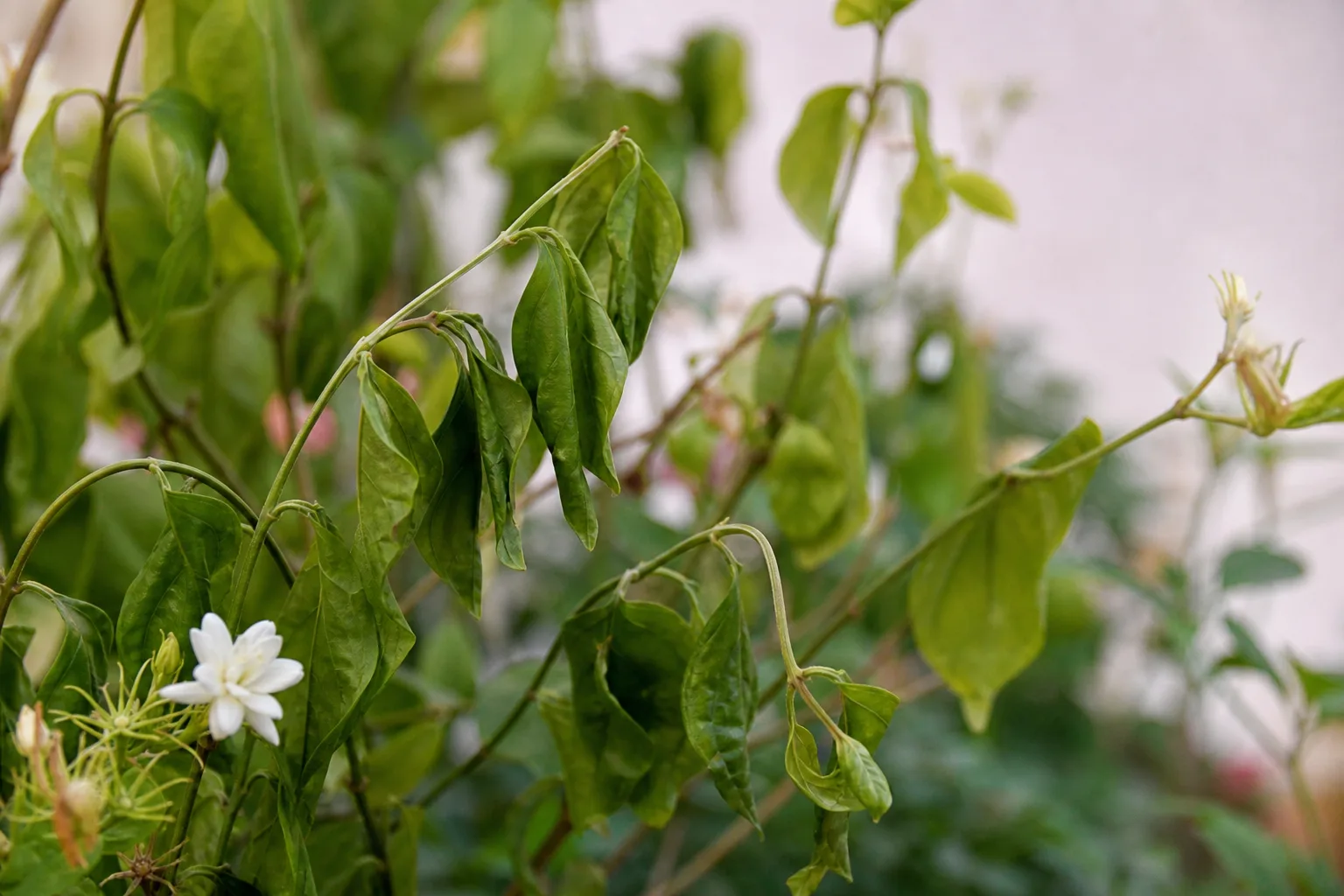
Drooping Leaves on Mogra: Causes, Checks & Fixes
This guide covers drooping leaves on Mogra. See also the general Drooping Leaves guide, watering, and light pages for this plant.
Drooping Leaves on Mogra: Causes, Checks & Fixes
Quick answer
Drooping leaves on Mogra (Jasminum sambac, Arabian jasmine) look alarming, but they are a turgor signal-the plant is losing internal water pressure faster than roots can replace it. On Mogra overview that usually traces to one of three patterns: dry soil, damaged roots in wet soil, or midday heat pulling moisture faster than roots can supply.
First step: probe the top 2–3 cm of mix and lift the pot. Mogra is not a succulent that wants long droughts, and it is not a bog plant that tolerates waterlogging. Adding water to already-soggy mix-or letting a thirsty flowering plant bake dry in afternoon sun-both make droop worse. Read wet versus dry before you act.
What drooping leaves look like on Mogra
Healthy Mogra holds glossy, dark green leaves on fairly stiff stems. When turgor drops, the change is visible across whole shoots rather than one random spot.
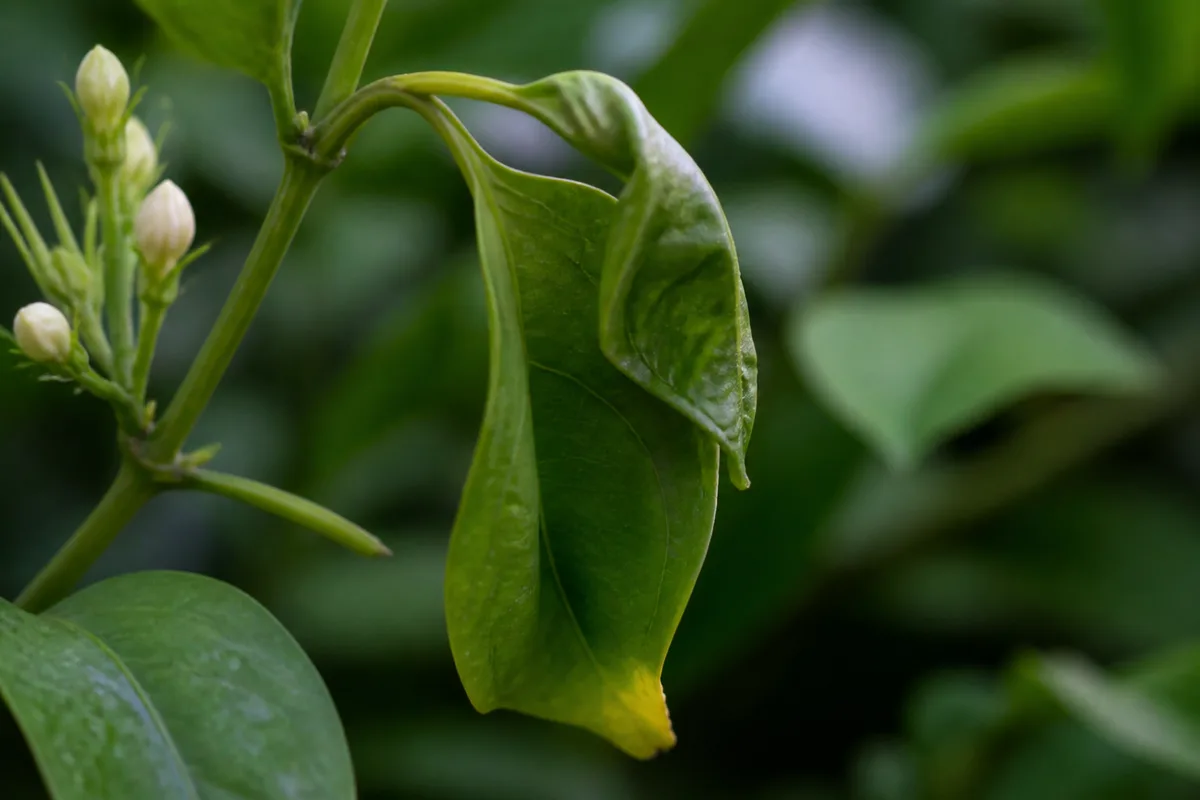
Drooping Leaves symptoms on Mogra - compare with healthy tissue on the same plant.
Typical droop patterns include:
- Petioles and leaf tips hanging downward while color stays green at first
- Soft, limp texture when you touch a leaf-no snap or firmness
- Whole branch sections sagging together, especially on the side that gets the hottest afternoon sun
- Closed or dropping buds alongside limp foliage during bloom season
- Overnight partial recovery in mild thirst cases-firm in the morning, limp again by late afternoon in heat
Droop is not the same as yellow leaves or leggy stretch. Yellowing with wet soil often precedes rot; long bare stems with small pale leaves mean low light. Drooping with green leaves is primarily a water-movement problem until proven otherwise.
Why Mogra gets drooping leaves
Mogra evolved in tropical Asia as an evergreen shrub that expects steady moisture, warm temperatures, and strong light during active growth. Its roots need oxygen as well as water-saturated mix suffocates them, and then leaves droop despite wet soil because uptake fails.
underwatering on Mogra and fast dry-down
This is the most common cause during spring and summer flowering. Mogra in Mogra light guide can use water quickly, especially in:
- Small or root-bound pots that hold less moisture between drinks
- Peak bloom, when buds and open flowers increase transpiration
- Hot, windy balconies where a pot that felt fine yesterday is dust-dry today
- Hydrophobic dry pockets after a skipped watering-the surface looks damp while the root ball below is empty
Leaves lose rigidity when roots cannot pull water from dry mix. The plant may look fine in the cool morning and collapse by afternoon.
overwatering on Mogra and root stress
Mogra does not tolerate waterlogging. Keeping mix soggy for days-common indoors in winter when growth slows-reduces root function. Damaged roots cannot supply leaves even when the pot feels heavy.
Watch for droop paired with:
- Mix wet more than 2–3 cm down for several days
- Sour or swampy smell from the pot
- Yellow lower leaves or soft stems near the soil line
- Fungus gnats or mold on the surface
This pattern mimics thirst visually but more water is the wrong fix.
Heat and light stress
Mogra wants full sun to part shade-roughly four to six hours of direct sun for heavy bloom-but extreme midday heat on a south-facing terrace can cause temporary midday wilt even when soil moisture is adequate. The plant droops to cut water loss, then perks up after sunset if roots are healthy.
Sudden moves-outdoors to indoors, or into harsh afternoon sun without acclimation-can trigger shock droop for several days while roots readjust.
Environmental shifts and Mogra repotting guide
Recent repotting, fertilizer applied to dry roots, or placement beside a heater or AC vent can all cause short-term droop. Mogra is sensitive to inconsistent moisture during bud formation; drought at that stage droops leaves and drops buds together.
How to confirm the cause
Work through these checks in order. Each step narrows the diagnosis before you change watering, repot, or prune.
- Soil at 2–3 cm depth - Insert your finger or a skewer. Dry and warm at that depth with a light pot = thirst. Cool, damp, or waterlogged deep mix = pause watering.
- Pot weight - Lift the container. A dramatically light pot almost always means underwatering on a actively growing Mogra.
- Time of day - If the plant droops only in late afternoon but is firm by morning with moderate soil moisture, suspect heat stress before root rot on Mogra.
- Drainage check - Are saucers empty after watering? Are holes open? Standing water re-saturates roots and causes repeat droop.
- Stem and root clues - Soft black tissue at the base or sour smell means inspect roots. Firm green stems with dry soil mean soak, not surgery.
- Recent care changes - New pot, moved location, heat wave, or skipped waterings in the last week often explain sudden droop without disease.
- Pest scan - Dry indoor air can bring spider mites. Look for fine webbing and stippled leaves; pests weaken foliage but usually follow a visible pattern on undersides.
If soil is dry throughout and stems are firm, underwatering is the working diagnosis. If soil is wet for days and perk-up fails after one careful watering, treat root stress next.
First fix for Mogra
Determine wet versus dry at the top 2–3 cm of mix-then act once.
- If dry: Water slowly at the soil surface until excess drains from the bottom. Empty the saucer. For severely dry, shrunken mix, bottom-soak the pot in a basin for 20–30 minutes, then drain fully.
- If wet: Do not water. Move the plant to brighter air flow if it is in dim, stagnant conditions. Let the top 2–3 cm dry before the next drink. Inspect roots only if droop continues beyond 48 hours or stems soften.
Do not fertilize, repot, or prune heavily on day one. Mogra under stress needs stable conditions, not a stack of interventions.
Step-by-step recovery
Once you know the cause, follow the matching path.
Thirst recovery
- Water thoroughly until runoff, or bottom-soak if mix repels water.
- Keep the plant in bright light but give afternoon shade during a heat wave until leaves firm.
- Check again in 6–12 hours. Most thirst droop improves within a day.
- Adjust your schedule: in active growth, many pots need water every two to four days, but always verify dryness at 2–3 cm rather than watering on autopilot.
Root-stress recovery
- Stop watering until the top 2–3 cm dries.
- Confirm drainage holes are clear and saucers stay empty.
- If droop persists with sour smell or soft stems, unpot and rinse roots. Trim mushy brown tissue; keep firm white roots.
- Repot into well-draining mix with perlite or coarse sand-similar to what Mogra already prefers-only after removing decay.
- Wait until new growth looks stable before resuming fertilizer.
Heat-stress recovery
- Shift the pot to morning sun with filtered midday light, or use shade cloth during peak summer.
- Maintain even moisture-do not let soil swing from flooded to bone dry.
- Mist is optional; fixing root-zone moisture and reducing afternoon scorch matters more.
Recovery timeline
| Cause | What improvement looks like | Typical window |
|---|---|---|
| Mild underwatering | Leaves firm within hours after soak | Same day to 24 hours |
| Severe dry-out / hydrophobic mix | Gradual firming after bottom-soak; buds may still drop | 1–3 days |
| Heat midday wilt | Perks overnight; less afternoon sag after shade | 2–7 days |
| Root stress (early) | No new collapse; top 2–3 cm dries predictably | 1–3 weeks |
| Advanced root damage | New tip growth stays firm; old limp leaves may drop | Weeks; some tissue may not recover |
Judge success by new firm leaves at stem tips, stable bud set, and soil that dries at a predictable rate-not by whether every old drooped leaf re-stiffens. Fully limp leaves that stay collapsed for more than a week can be trimmed once the plant is stable.
Lookalike symptoms
- Wilting vs drooping: on Mogra On Mogra the terms overlap. True wilt from rot often comes with wet mix and yellowing; thirst wilt improves right after water.
- Bud drop without leaf droop: Inconsistent moisture during flowering can drop buds while leaves still look fine-fix the Mogra watering guide before assuming pests.
- Leggy pale growth: Long stems and small leaves mean not enough light, not turgor loss. Move to stronger sun; do not simply water more.
- Spider mites: Stippling and webbing on undersides with dry air-not random limp leaves on an otherwise clean plant.
Mistakes to avoid
- Watering automatically because leaves look limp, without checking whether mix is already wet
- Letting pots sit in full saucers after every drink-Mogra roots need air as well as moisture
- Repotting on day one when the real issue is a missed watering or a heat wave
- Feeding a drooping plant hoping fertilizer will perk it up-salts stress compromised roots
- Moving the pot repeatedly between sun and shade while it is stressed; pick one corrected spot and hold steady
- Pruning all drooped foliage immediately-wait to see what recovers after the root zone is fixed
Mogra care cross-check
Drooping often means the baseline routine slipped. Realign these before chasing exotic causes:
- Light: Four to six hours of direct sun during bloom season; weak indoor light produces soft, thirsty-looking growth that droops easily
- Watering: Top 2–3 cm dry between drinks in active growth; reduce in winter semi-rest but do not keep soggy mix in a cool room
- Soil: Evenly moist but well-drained potting mix with perlite and compost-dense, peat-heavy mix stays wet too long
- Pot size: Slightly root-bound plants flower well but dry faster; increase water checks in peak summer, not necessarily pot size mid-bloom
- Humidity: Moderate to high air (around 50–70%) supports steady transpiration; blasting heat or AC directly on foliage dries pots unevenly
How to prevent drooping leaves
- Water when the top 2–3 cm is dry, not on a fixed calendar
- Empty saucers within 30 minutes of watering
- Give morning sun and afternoon protection during extreme heat
- Avoid skipping multiple waterings during bud formation
- Refresh mix or repot in spring if roots circle densely and pots dry within a day every day
- Keep plants away from heater vents and cold drafts that shock roots
When to worry
Escalate beyond basic fixes if:
- Droop worsens after you water wet soil
- Stems blacken or soften at the soil line
- More than a third of the plant collapses within a few days
- Sour smell persists after you stop watering and improve drainage
- No new firm growth appears within three weeks after correcting thirst or drainage
Mogra can recover from moderate root trimming if firm stem tissue remains. A plant that keeps softening at the base despite dry, airy mix may not be saveable-take healthy cuttings if stems above the damage are still firm.
Conclusion
Drooping leaves on Mogra are a practical diagnostic puzzle, not a mystery disease. The same limp look can mean dry roots, rotting roots, or heat outpacing uptake-and the wrong response makes each worse. Probe moisture at 2–3 cm, feel the pot weight, note the time of day, and fix one condition at a time. When roots are healthy and moisture stays even, this fragrant jasmine usually firms up quickly and returns to setting buds within a few weeks.
When to use this page vs other Mogra guides
- Mogra watering guide - Use for routine moisture checks before assuming drooping leaves is the main issue.
- Mogra problems hub - Browse all 20 common issues on this species.
- Underwatering on Mogra - Different entry point when symptoms overlap with drooping leaves.
- Overwatering on Mogra - Different entry point when symptoms overlap with drooping leaves.
- Root Rot on Mogra - Different entry point when symptoms overlap with drooping leaves.