Not Enough Light on Mogra: Causes, Checks & Fixes
Quick answer
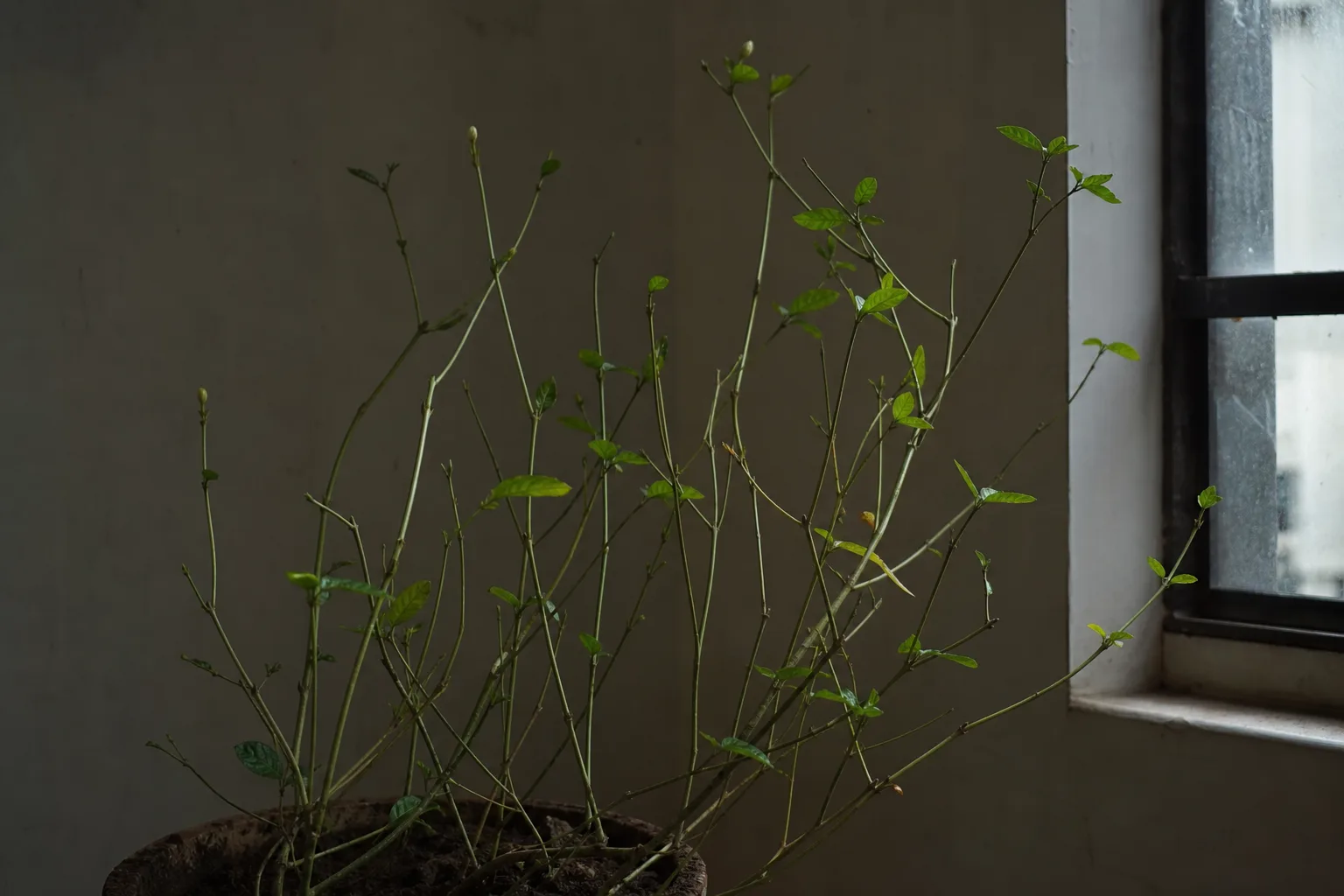
Not enough light on Mogra causes whippy stems, lean toward windows, and empty bud tips on an otherwise green shrub. First step: move the pot to 4–6 hours of direct sun daily-south- or east-facing balcony or window-or run a full-spectrum grow light 12–16 hours.
Not Enough Light on Mogra: Causes, Checks & Fixes
This guide covers not enough light on Mogra. See also the general Not Enough Light guide, watering, and light pages for this plant.
Not Enough Light on Mogra: Causes, Checks & Fixes
Quick answer
Mogra (Jasminum sambac, Arabian jasmine) is a tropical flowering shrub-not a shade-tolerant foliage houseplant. In dim rooms, shaded courtyards, or bright-indirect-only windows, it often stays green while stems stretch, lean toward glass, and terminal shoot tips stay empty of the tight white bud clusters that should become fragrant night-opening flowers.
First step: move the pot today to a spot with 4–6 hours of direct sun on the leaves-a south- or east-facing balcony, unobstructed west window, or very sunny indoor sill. No window delivers that? Place a full-spectrum LED grow light 30–45 cm above the canopy and run it 12–16 hours daily on a timer. Do not fertilize, repot, or soak the plant before you fix light. Our Mogra light guide covers window direction and acclimation; this page focuses on diagnosing and correcting insufficient exposure.
What not enough light looks like on Mogra
Low light on Mogra is easy to misread because the plant can look “healthy” for months-glossy dark green leaves, no obvious wilt-while bloom biology quietly fails. The pattern is structural:
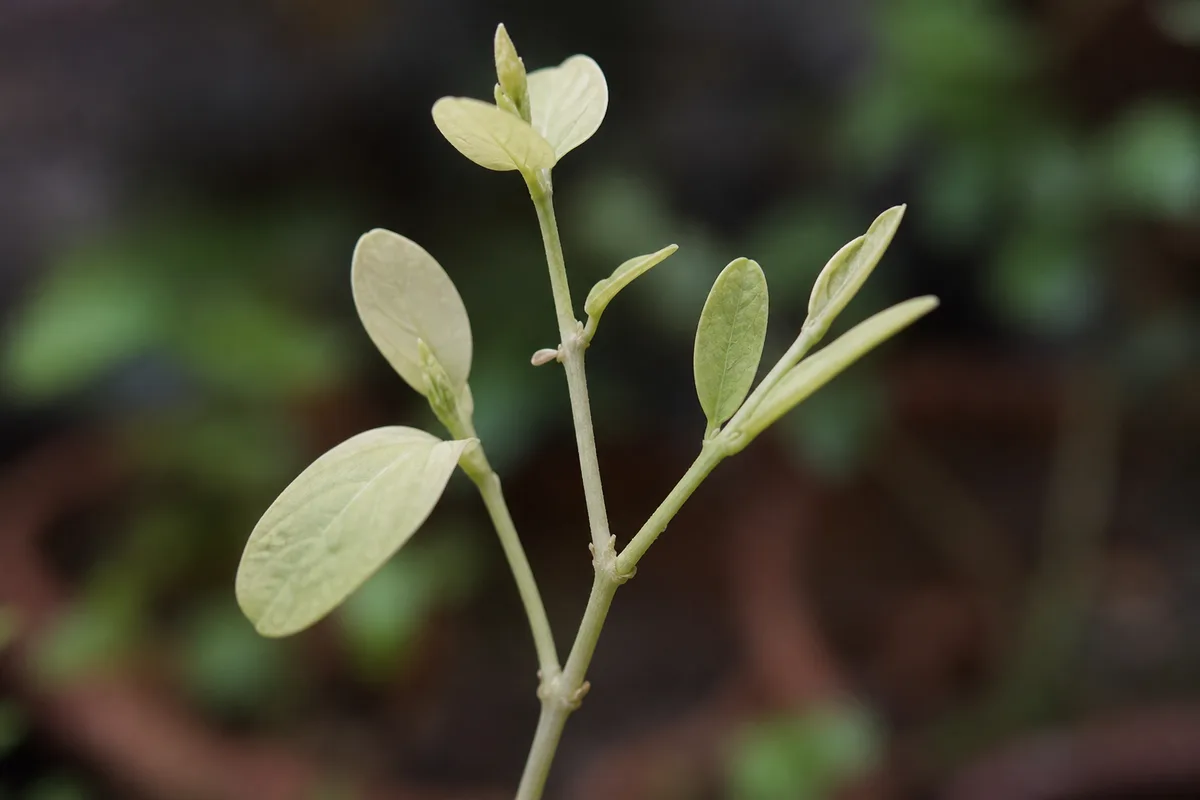
Not Enough Light symptoms on Mogra - compare with healthy tissue on the same plant.
- Whippy, elongated stems with wide gaps between leaf pairs on the newest growth
- Strong lean toward the brightest direction; one side of the pot looks fuller
- Small leaves on stretched shoots compared with compact outdoor or balcony-grown Mogra
- Empty terminal tips-no tight clusters of waxy white buds where flowers should form; see no flowers if buds never appear at all
- Weak or absent evening fragrance even when occasional blooms open on distant wood
- Sparse interior-outer stems reach while inner branches stay bare
These signs differ from sun scorch, which shows as bleached or crisp patches on leaves suddenly moved to harsh afternoon glass without acclimation. Low-light Mogra looks soft and reaching, not burnt. Leaf texture is leathery and glossy, not thin or velvety-sudden hot west sun still needs gradual introduction.
Lower leaves may yellow and drop as the plant sheds tissue it can no longer support in shade. That overlap with overwatering on Mogra is why you confirm soil moisture-not just window direction-before treating light alone.
Why Mogra runs out of light indoors
Mogra evolved in tropical Asia as an evergreen shrub that flowers repeatedly when warm, bright, and evenly moist. It wants full sun to part shade-roughly four to six hours of direct sun daily for prolific flowering-not the bright-indirect placement that suits many foliage houseplants.
Common triggers for Indian and indoor growers:
Dim placement for décor. Mogra lands in temple courtyards, living-room corners, or AC rooms because of fragrance and tradition-not because the spot receives bloom-grade sun. Light intensity drops sharply with distance from the window; what feels bright to you may be medium or low light at the pot.
Bright-indirect-only rooms. Leaves may photosynthesize enough to survive, but bright light is essential for abundant flowering on J. sambac. A north window or plant set deep in a south room rarely drives cyme formation on terminal shoots.
Winter short days and monsoon cloud cover. The same balcony that flowers all summer may deliver fewer effective sun hours in July–August overcast weeks or December–January short days-stretch resumes even if the pot never moved.
Shading from other pots or walls. On crowded balconies and religious-garden beds, taller plants or parapets block morning sun from lower Mogra shrubs. Self-shading also happens when one long stem arches over younger shoots inside the pot.
Indoor overwintering. Container Mogra brought inside before frost often lands in the brightest room available-which still may be far weaker than its outdoor summer spot. Leggy growth and diminished flowering are classic symptoms when light is inadequate.
Mogra tolerates partial shade better than full shade, but survival is not thriving. Too much shade reduces bud production, weakens stems, and leads to sparse flowering-flowers reveal whether the plant truly gets what it needs.
How to confirm the cause (not overwatering or pests)
Work through these checks in order so you do not treat root stress or nitrogen issues as a light problem:
- Hours of direct sun on leaves - Count how many hours unfiltered sun hits the foliage between 10 a.m. and 4 p.m. Fewer than four hours on most days confirms insufficient light for compact, bloom-ready Mogra.
- Rotate test - Turn the pot 180° and mark which side faced the window. After one week, new growth should lean toward the glass. Strong one-sided lean confirms phototropism from low light.
- Internode length - Measure the gap between two leaf pairs on a new stem. Gaps longer than 4–5 cm on a windowsill Mogra usually indicate stretch; compact sun-grown shoots often show gaps under 2–3 cm. Compare with leggy growth if stretch is the main complaint.
- Bud-tip inspection - Look at the newest terminal shoots. Empty tips with long internodes point to light; plump buds that yellow and fall point to bud drop instead.
- Soil moisture and pot weight - Press the top 2–3 cm. Constant wetness with soft lower stems points to overwatering in a dim pot that dries slowly; very dry soil with wilt points to drought. Fix moisture first if either is true.
- Leaf undersides - Fine webbing or stippling suggests spider mites in dry indoor air, not simple low light. Honeydew or distorted tips suggest aphids or thrips on buds.
- Fertilizer review - Heavy nitrogen with lush leaves and no buds may be excess nitrogen, not shade alone. Cross-check the fertilizer guide after light is ruled in or out.
Confirmed low light fits when stretch and empty bud tips match fewer than four hours of direct sun, watering has been reasonable, and a two-week sun upgrade produces tighter new growth.
First fix for Mogra
Move the pot to the brightest location available with 4–6 hours of direct sun on the leaves-south- or east-facing balcony, unobstructed west window with afternoon shade in hot summers, or the sunniest indoor sill you have.
If the plant lived in deep shade indoors or under dense tree cover, acclimate over five to seven days: add one to two hours of stronger sun per day, or pull back from harsh afternoon glass if bleached patches appear. Mogra already receiving some daylight on a balcony can usually move to a sunnier tier in one step.
No suitable outdoor or window spot? Add a full-spectrum LED grow light 30–45 cm above the top of the plant, on a timer for 12–16 hours daily. Limit total daily light to about 16 hours when combining artificial and natural exposure so the plant still receives a dark period.
That single relocation or light upgrade is the first fix. Pruning, rotating, and watering adjustments come after the plant has a brighter baseline-see the light guide for grow-light distance and seasonal moves.
Step-by-step recovery after light improves
Once exposure improves, support compact regrowth in this order:
- Hold position briefly - Avoid shuffling the pot daily for the first two weeks while new shoots read the brighter site. One deliberate move beats repeated rearranging.
- Rotate weekly - A quarter turn every few days keeps stems from leaning hard to one side and exposes more leaf surface to sun.
- Match watering to new light - Brighter exposure dries the pot faster. Water when the top 2–3 cm feels dry-not on the old dim-corner calendar. Wet soil plus weak light invites root decline.
- Prune whippy stems after the next flush - When flowering finishes-or after four weeks of tighter vegetative growth-trim up to one-third of elongated spent stems to encourage bushiness and bud wood closer to the crown. Details in the pruning guide; do not hard-prune while buds are swelling.
- Hold fertilizer - Skip feed until new growth looks firm and green for two weeks. Nitrogen pushes soft stretch when light was the limiter.
- Add humidity in dry AC rooms - Mogra prefers moderate to high humidity; dry air alone will not fix shade but supports bud hold once light is adequate.
If buds still never form after four to six weeks of verified direct sun, read no flowers for maturity, pruning timing, and potassium feeding-not more window shuffling alone.
Recovery timeline
One to two weeks: New tips should show slightly shorter internodes; leaning should slow after rotation and brighter exposure.
Two to four weeks: Side shoots break below healthy nodes; the plant looks less one-sided. Old stretched internodes remain long-they do not shrink.
Two to six weeks (warm active growth): Tight white bud clusters may appear on well-lit terminal shoots. Faster on a summer balcony, slower indoors in winter short days.
Signs the fix is working: Shorter gaps on new nodes, upright side branches, firm dark green new leaves, and eventually fragrant night-opening blooms on fresh wood.
Signs the problem is worsening: Continued stretch despite 4–6 hours sun or 12+ hours under a grow light; yellowing lower leaves with wet soil; soft stems at the base; no tighter growth four weeks after relocation. Those warrant root inspection or pest checks-not assuming “more time” in the same dim spot.
Lookalike symptoms
- Leggy growth in adequate sun - Long stems with occasional blooms on distant tips; often infrequent pruning. See leggy growth and tip-pinching after each flush.
- No flowers despite green leaves - Buds never form; may overlap with low light but also heavy nitrogen or wrong-season pruning. See no flowers.
- Bud drop after buds form - Plump buds yellow and fall; stabilize moisture and humidity first per bud drop.
- Slow growth everywhere - Uniform stalling without strong lean may be cool temperatures, root-bound pot, or winter semi-rest; see slow growth if light hours are already adequate.
- Overwatering in a dim corner - Yellow lower leaves, sour soil, heavy pot that never lightens; reduce water and check roots before moving to full sun with soggy mix.
| Pattern | Likely cause | Key check |
|---|---|---|
| Long stems, empty bud tips, lean | Insufficient direct sun | Fewer than 4 h sun on leaves |
| Lush leaves, no buds, no lean | Nitrogen or pruning timing | Recent high-N feed; pruned in spring |
| Buds form then fall | Bud drop / moisture stress | Swings between dry and wet mix |
| Yellow leaves + wet soil in shade | Overwatering / root stress | Pot stays heavy for days |
What not to do
Do not keep Mogra in a north window hoping for fragrance-that exposure rarely delivers bloom-grade energy for Mogra overview. Do not expect prolific flowering on bright-indirect-only placement; survival foliage is not the same as cyme formation on terminal shoots.
Do not fertilize heavily in a still-dim spot-soft, floppy stretch gets worse. Avoid keeping a dark corner moist on a summer Mogra watering guide; Mogra uses less water when it is not photosynthesizing strongly. Do not jump from deep indoor shade to hot afternoon west glass in one day-acclimate to prevent scorch on glossy leaves.
Do not confuse stretch with bud drop-if buds appeared and fell, fix moisture per the bud drop guide before blaming light alone. Do not discard the plant after one week if only old stems look whippy; judge recovery on new growth after sun improves.
How to prevent low-light stress on Mogra
Place outdoor pots where they receive full sun to part shade-four to six hours of direct sun through the warm season. On Indian balconies, south and east exposures usually outperform shaded courtyards or north-facing parapets; adjust for afternoon heat in peak summer.
Before monsoon overcast weeks and winter short days, identify your sunniest tier or install a grow light on a timer-do not wait until stretch is severe. Rotate the pot weekly when light comes from one direction. Clean glass and open sheers seasonally to recover lost intensity.
Prune after each bloom flush so flowers stay on reachable, well-lit wood rather than only at the ends of long shaded stems-the pruning guide shows cut placement above nodes.
When bringing container Mogra indoors for frost protection, move it to the brightest window or add supplemental light the same week-not a hallway while you find a spot. Cross-check ongoing placement with the Mogra light guide.
When to worry
Low light alone rarely kills established Mogra quickly-roots are tough when soil drains well. Worry when soft stems, sour soil, and widespread yellowing appear together in a dim, wet corner, because root decline progresses faster than stretch alone.
Worry when no tighter new growth appears within four weeks after verified 4–6 hours of direct sun or equivalent grow light-inspect roots for mushy brown tissue before assuming the window is still too dim.
If better light and corrected watering still fail to produce buds through a full warm season, review pruning timing and feeding in no flowers and the overview-chronic bloom failure despite good sun may need a harder reset or division of the healthiest outer shoots.
When to use this page vs other Mogra guides
- Mogra watering guide - Use for routine moisture checks before assuming not enough light is the main issue.
- Mogra problems hub - Browse all 20 common issues on this species.
- Leggy Growth on Mogra - Different entry point when symptoms overlap with not enough light.
- Slow Growth on Mogra - Different entry point when symptoms overlap with not enough light.
- Yellow Leaves on Mogra - Different entry point when symptoms overlap with not enough light.