Faded Flowers on Mogra: Causes, Checks & Fixes
Quick answer
Faded flowers on Mogra are often normal aging-white blooms shift cream or pink over a day or two. If they collapse the same day, first deadhead spent blooms and move the plant out of afternoon heat and dry drafts.
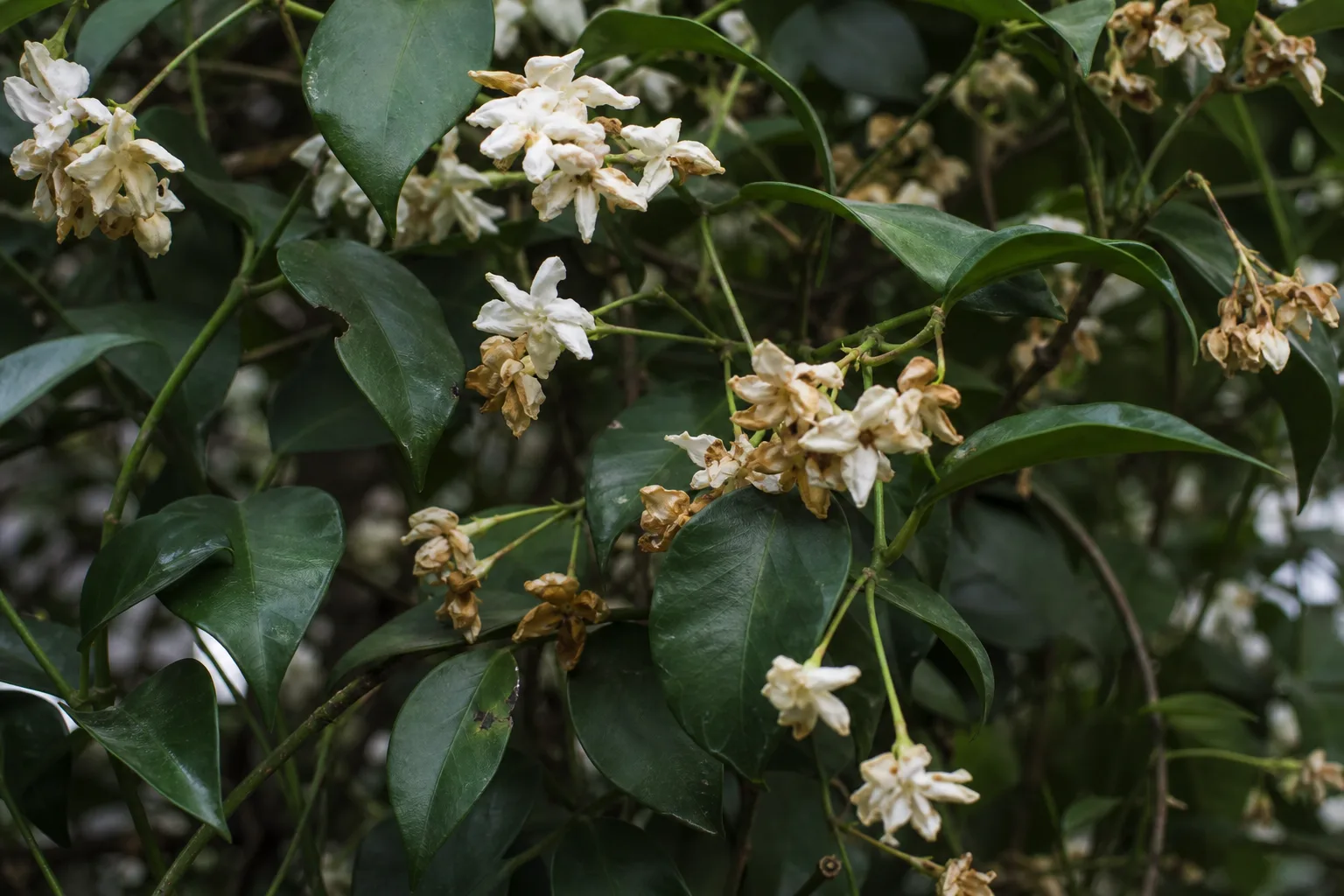
Faded Flowers on Mogra: Causes, Checks & Fixes
This guide covers faded flowers on Mogra. See also the general Faded Flowers guide, watering, and light pages for this plant.
Faded Flowers on Mogra: Causes, Checks & Fixes
Quick answer
Faded flowers on Mogra (Jasminum sambac, Arabian jasmine) are not always a crisis. Fresh blooms open waxy white and highly fragrant; over the next day or two they naturally shift cream, buttery yellow, or a soft pink blush before petals drop. That slow color change is normal senescence on a plant whose individual flowers are short-lived.
First step: deadhead the faded blooms and decide whether fading was gradual or sudden. Pinch or snip spent flowers at the base of the corolla. If blooms went from bright white to dull in a few hours on a hot afternoon, the problem is likely heat, dry air, or ethylene exposure-not a permanent defect. Fix the environment before fertilizing or Mogra repotting guide.
What faded flowers look like on Mogra
On a healthy Mogra, fading usually follows a predictable sequence:
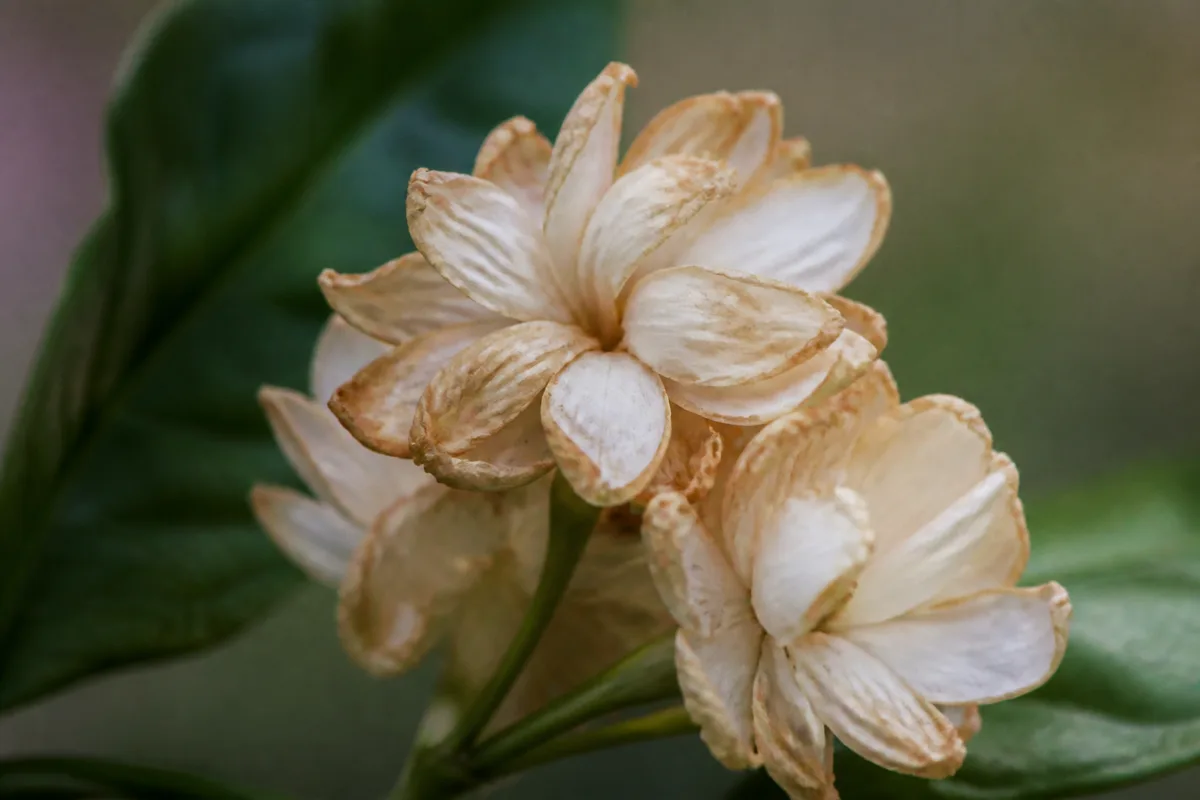
Faded Flowers symptoms on Mogra - compare with healthy tissue on the same plant.
- Tight white buds swell on downy stems in clusters of three to twelve
- Fully open flowers are waxy white, about 2.5 cm across, and intensely fragrant-often strongest at night
- Aging blooms lose brightness, turning cream, pale yellow, or light pink at the centre or along veins
- Spent petals brown at the edges, then dry and fall; the stem may stay green
That pattern fits Mogra’s biology. In warm native climates the species can flower repeatedly through the year; each individual bloom still has a limited display life.
Premature fading looks different. Watch for:
- Open flowers collapsing the same day they open, especially in mid-afternoon heat
- Petals turning brown or translucent at the tips while still fully open
- A whole cluster fading together instead of oldest blooms first
- Fading paired with bud drop, wilting leaves, or sticky residue on stems
If only the oldest flower in a cluster is dull while newer buds stay white, you are probably seeing normal aging. If every open bloom in a flush dulls within hours, treat it as a care or environment problem.
Why Mogra flowers fade
Normal flower aging
Mogra petals contain flavonoid pigments that oxidize as the bloom ages. White corollas commonly develop yellow centres or pink tones before senescence-especially in warm, humid air. Individual flowers often peak in fragrance shortly after opening, then decline as color fades. This is expected; it does not mean the plant is sick.
Heat and direct sun on open blooms
Mogra wants strong light for bud formation-roughly four to six hours of direct sun daily-but open flowers are vulnerable to intense afternoon heat. Prolonged exposure above about 35°C with dry air can bleach petals, speed browning, and shorten display life. Balcony pots against a west-facing wall or inside a parked car are common trouble spots in Indian summers.
Low humidity and dry drafts
Native to tropical Asia, Mogra performs best with moderate to high humidity during bloom. Air conditioning, heater vents, and constant fan drafts pull moisture from delicate petals, making them look dull or papery hours sooner than they should. Dry air during bud swell can also produce smaller, less lustrous flowers that fade quickly once open.
Uneven watering during bloom
Mogra needs consistently moist but well-drained soil while flowering. Letting the root zone go bone dry during an active flush stresses the plant and can accelerate petal browning. Soggy soil is equally harmful-waterlogged roots reduce uptake, so open flowers wilt and discolor even when the surface looks wet.
Ethylene and ripening fruit nearby
Ethylene gas triggers flower senescence in many ornamentals. Ripening bananas, apples, or tomatoes on a kitchen counter near a blooming Mogra, exhaust from poorly vented heaters, or dense overnight packing of cut stems can all hasten fading and petal drop. Mogra also produces ethylene as its own flowers age; leaving large numbers of spent blooms on the plant speeds decline of nearby open flowers.
Pest sap and hidden stress
Aphids, mealybugs, and whiteflies sometimes cluster around buds and young stems. Their feeding and honeydew can weaken developing blooms so petals open small, dull, or off-colour. If fading comes with sticky leaves, distorted buds, or visible insects, pests are part of the diagnosis-not separate from it.
How to confirm the cause
Work through these checks in order:
- Timeline - When did the bloom open, and when did colour fade? Gradual over 12–48 hours suggests normal aging; same-day collapse suggests stress.
- Position in the cluster - Are only the oldest flowers dull, or is the whole cyme fading at once?
- Heat and light - Does the pot receive scorching afternoon sun? Was there a recent heat spike above 35°C?
- Air movement and humidity - Is the plant beside an AC vent, ceiling fan, or open window with hot dry wind?
- Soil moisture - Stick a finger 2–3 cm into the mix. Bone dry or constantly wet both stress blooms during flush.
- Ethylene sources - Any ripening fruit, smoker, or gas heater exhaust near the plant?
- Spent blooms left on plant - A heavy load of old flowers can shorten life of fresh ones in the same cluster.
- Pest signs - Inspect bud bases and leaf undersides for aphids, mealy white fluff, or fine webbing.
If buds are still forming white and only open flowers fade slowly, your culture is probably fine. If buds yellow and drop before opening, or open flowers brown within hours, shift focus to water stability, heat protection, and ethylene-not more fertilizer.
First fix for Mogra
Deadhead all faded blooms now, then move the plant out of afternoon heat and dry drafts.
Use clean fingers or sharp snips to remove spent corollas at their base. Do not yank petals, which can tear stem tissue. Once old flowers are off, place the pot where it gets bright morning sun but shade or filtered light during the hottest part of the day. If indoor air is dry, set the pot on a pebble tray or group it with other plants to raise local humidity-avoid misting open flowers in midday heat.
Hold off on fertilizer, repotting, and heavy pruning until you see whether the next buds open with normal colour. Stacking interventions during bloom usually makes fading worse, not better.
Step-by-step recovery
After deadheading and repositioning, work through these steps based on what you confirmed:
- Stabilize watering - Water when the top 2–3 cm of soil feels dry, then soak until excess drains freely. Empty the saucer. During an active flush, avoid swings between desert-dry and soggy.
- Protect from peak heat - On balconies, shift pots to east exposure or use 30–40% shade cloth during May–June afternoon peaks. Indoors, pull the plant back from west glass that radiates heat.
- Remove ethylene sources - Move ripening fruit bowls, smoking areas, and unvented combustion heaters away from the plant for the rest of the bloom cycle.
- Clear remaining pest pressure - If you find aphids or mealybugs, rinse stems with a firm water spray, then treat with insecticidal soap on leaf undersides and bud joints if insects persist. Confirm live pests before spraying.
- Light feed only after recovery starts - When new buds swell and leaves look firm, a half-strength potassium-forward fertilizer every two weeks during active growth can support the next flush. Skip feed if the plant is wilted or soil has been waterlogged.
- Prune after the flush ends - Trim leggy stems by up to one-third once flowering slows, not while buds are swelling. Post-bloom pruning redirects energy to the next cyme.
Recovery timeline
Spent petals will not regain white colour-that tissue is done. Judge success by what happens next.
- Within one to two weeks, remaining buds in the same cluster should open with normal waxy white colour if stress was mild
- A new bloom flush often appears in two to six weeks during warm spring and summer growth; cooler or indoor winter cycles may take longer
- Fragrance strength usually returns with healthy new opens even if the previous flush faded fast
Signs you are on track: firm green leaves, new white buds forming, gradual-not sudden-fading on the next generation of flowers.
Signs the problem is deepening: buds drop before opening, open flowers brown within hours again, leaves yellow while soil stays wet, or sticky pest residue spreads to new growth.
Lookalike symptoms
- Flowers turning brown - Often water imbalance or heat; brown edges appear faster than simple cream fading. Check drainage and afternoon sun first.
- Bud drop on Mogra - Buds abort before opening; humidity swings and moving the plant during swell are common triggers. Fading may never occur because blooms never open.
- Small flowers - Blooms open but stay tiny and dull; usually insufficient light or weak nutrition during bud formation, not petal senescence alone.
- No flowers - Plant is vegetative or resting; you may be diagnosing fading on last season’s few blooms while the real issue is lack of new buds.
- Spider mite damage - Fine stippling on leaves with dull, dry blooms; webbing on undersides confirms mites, not normal aging.
What not to do
Do not mist open flowers at noon in hot weather-water on petals can increase browning. Avoid leaving large numbers of spent blooms on the plant; they release ethylene and steal energy from new buds. Do not relocate the pot for photos while buds are swelling. Skip high-nitrogen fertilizer during an active flush; it pushes leaves at the expense of bloom quality. Do not repot during peak flowering unless roots are clearly failing-transplant shock commonly drops buds and shortens open bloom life.
Mogra care cross-check
Faded flowers are often the first visible clue that wider culture slipped during bloom:
- Light: Four to six hours of direct sun for heavy flowering; afternoon shade in extreme heat
- Water: Moderately moist mix, top 2–3 cm drying between drinks; reduce in winter rest
- Humidity: Target 50–70% during flowering indoors
- Temperature: Comfortable range roughly 20–35°C; protect from cold below 10°C
- Soil: Well-draining mix with compost and perlite; never waterlogged
- Deadheading: Remove spent blooms promptly after each flush to encourage the next
When these basics are stable, occasional cream or pink aging on individual flowers is normal-not a reason to overhaul the whole routine.
How to prevent faded flowers next time
- Deadhead daily during heavy bloom weeks so ethylene and energy do not accumulate on old corollas
- Harvest or enjoy blooms in the cool of morning if you pick for garlands or tea; open flowers fade faster in midday heat
- Keep ripening fruit and heater exhaust away from blooming plants
- Maintain even soil moisture through bud swell and open bloom-check the pot every day in summer
- Give morning sun and afternoon protection on west-facing balconies
- Inspect for aphids and mealybugs weekly during flush; early rinsing prevents weak, short-lived blooms
- Prune after flowering, not before, so the next cyme forms on healthy wood
When to worry
Normal fading needs no rescue-deadhead and wait for the next bud. Worry when:
- Every open bloom in multiple clusters browns within hours for more than one flush
- Buds drop steadily while few flowers fully open
- Fading comes with yellowing leaves, sour soil smell, or wilting despite wet mix
- Pests coat bud joints and new growth stalls
In those cases, fix water, heat, and pest pressure before expecting fragrance or colour to return. A Mogra with firm leaves and steady new buds will bloom again; individual flowers are simply short-lived by nature.
Conclusion
Faded flowers on Mogra sit on a spectrum. Slow cream-to-pink aging on a fragrant open bloom is the plant doing what it always does. Fast dulling, browning, and collapse mean heat, dry air, water stress, ethylene, or pests are shortening an already brief display. Deadhead first, protect open flowers from afternoon stress, stabilize moisture, and read the next flush-those new white buds tell you whether the fix worked.
When to use this page vs other Mogra guides
- Mogra watering guide - Use for routine moisture checks before assuming faded flowers is the main issue.
- Mogra problems hub - Browse all 20 common issues on this species.