Faded Flowers on Hibiscus: Causes, Checks & Fixes
Quick answer
Faded flowers on tropical hibiscus are usually normal one-day bloom aging, not a care failure. Each Hibiscus rosa-sinensis flower opens vivid, then dulls and wilts within 24–36 hours while new buds keep forming. First step: confirm whether only yesterday's spent blooms look faded while new buds still open bright-if so, deadhead above the next outward-facing node.
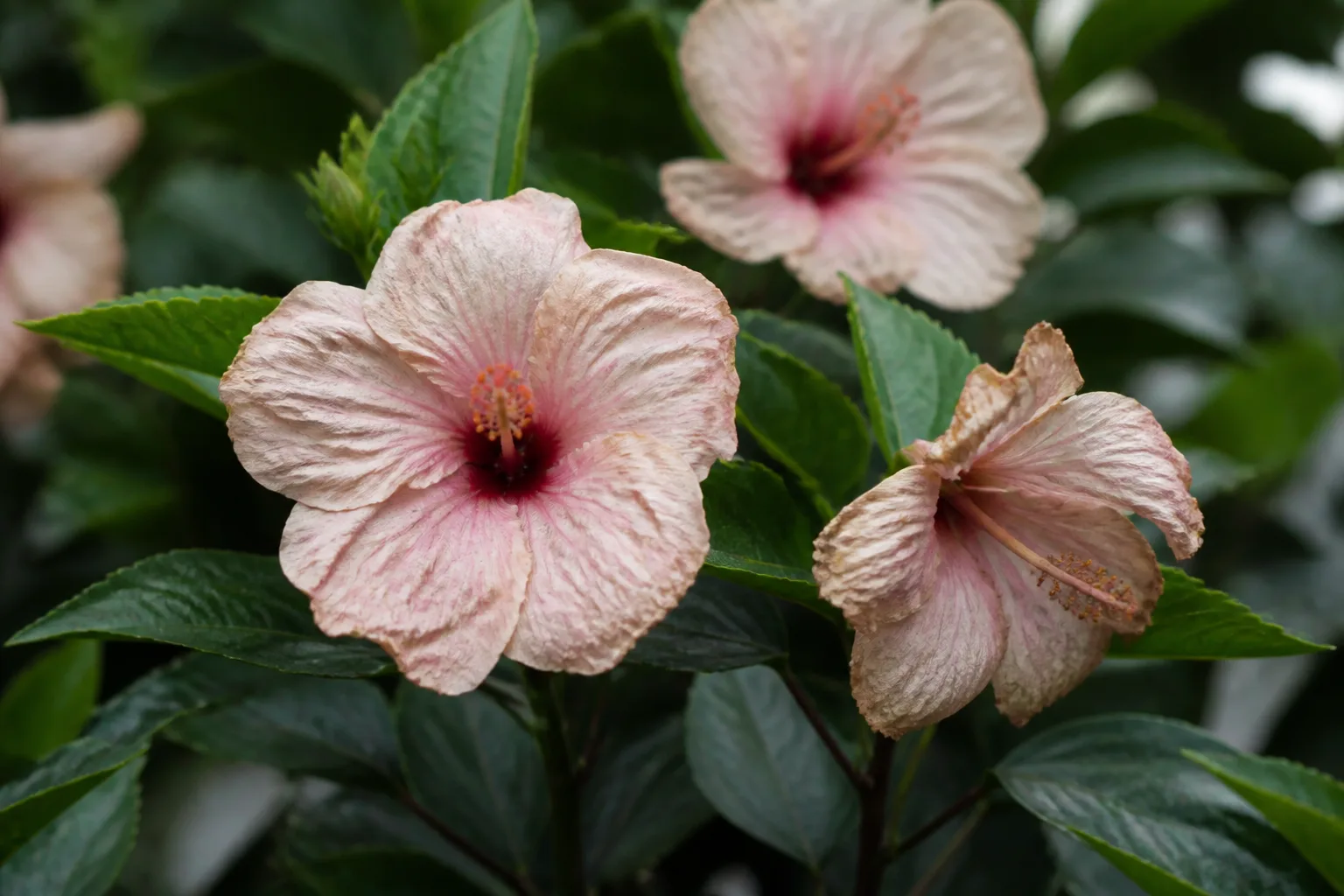
Faded Flowers on Hibiscus: Causes, Checks & Fixes
This guide covers faded flowers on Hibiscus. See also the general Faded Flowers guide, watering, and light pages for this plant.
Faded Flowers on Hibiscus: Causes, Checks & Fixes
Quick answer
On tropical Hibiscus rosa-sinensis-the glossy-leaved patio and container hibiscus most people grow-individual flowers normally last only one day, sometimes two on select cultivars, then petals dull, curl, and wilt. NC State Extension describes these blooms as lasting only one day but appearing seasonally on healthy plants. That rapid turnover is how hibiscus keeps color coming: yesterday’s faded bloom makes room for today’s fresh bud.
First step: decide whether you are seeing normal spent blooms or stressed new flowers. If only blooms that opened yesterday look dull while newer buds on the same plant still open in full color, deadhead the spent flowers just above a healthy outward-facing node and keep your current care rhythm. If new buds open pale or wilted from the start, or fading happens across every bloom before the normal one-day window ends, treat that as a stress signal and work through the checks below.
Full species context: Hibiscus overview.
What faded flowers look like on Hibiscus
Faded flowers on hibiscus fall into two very different patterns. Confusing them is the main reason growers overwater, over-fertilize, or panic when the plant is actually performing normally.
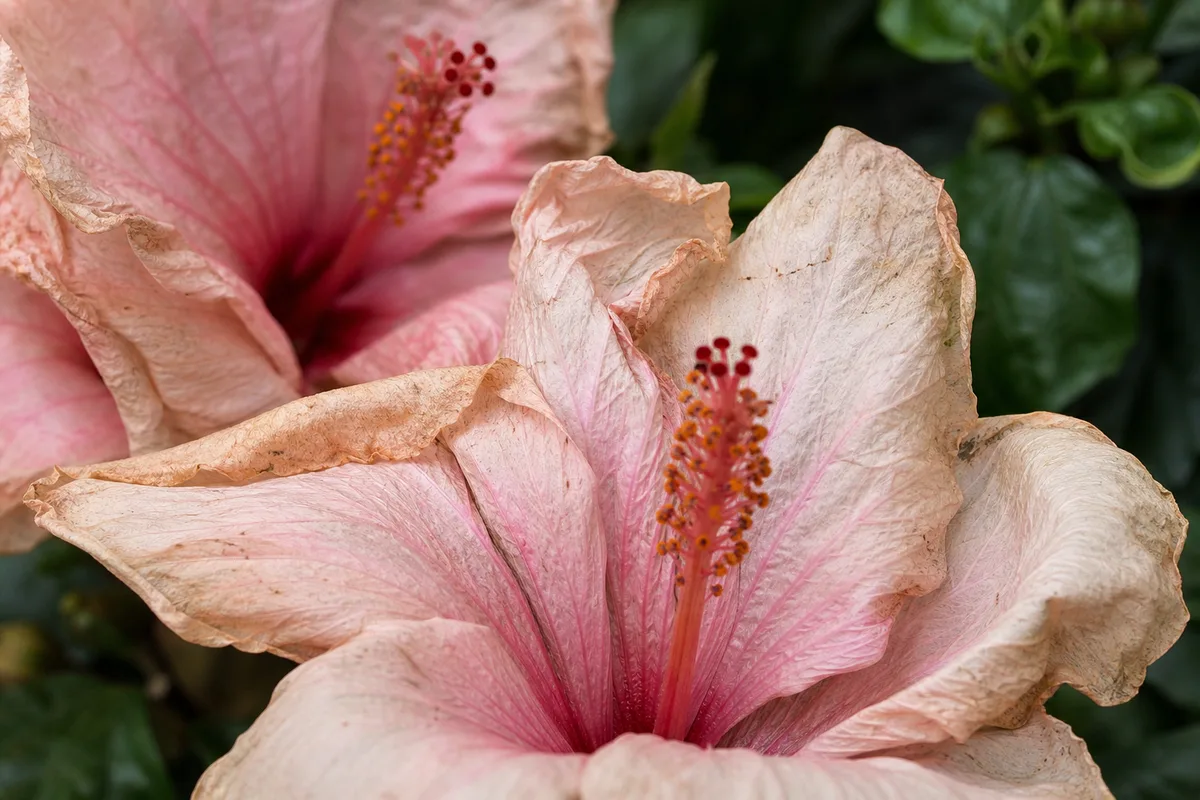
Faded Flowers symptoms on Hibiscus - compare with healthy tissue on the same plant.
Normal aging (most common on tropical hibiscus)
- A bloom that opened bright this morning looks noticeably duller or slightly wilted by afternoon or the next morning
- Only the oldest open flowers on each stem look faded; newer buds on the same plant still show full variety color
- Petals may curl inward, lose saturation, or feel papery; the central staminal tube may still look intact
- The stem stays firm; leaves remain deep green on tropical types
- Fading follows a predictable one-day (sometimes two-day) cycle, then the spent bloom hangs or drops while adjacent buds swell
This is the Malvaceae bloom strategy: short-lived individual flowers with continuous new bud production when light, water, and warmth align.
Stress-related dulling or premature fade
- New buds open washed-out, smaller, or limp from the first petal unfurl-not just the oldest blooms on the stem
- Open flowers wilt in afternoon heat when the pot is dry and feather-light
- Blooms collapse after heavy rain or overhead watering while leaves look otherwise healthy
- Every bud on the plant fades or aborts within hours after a cold night below about 45–50°F (7–10°C)
- Faded blooms come with yellowing lower leaves, bud drop before open, or pest clusters on tender growth
Not the same as bud drop or leaf problems
- Bud drop means green or yellowing buds fall before petals ever open-different from a flower that opened fully and then faded on schedule. See bud drop on hibiscus when unopened buds abort.
- Yellow leaves on Hibiscus trace to watering, light, chill, or pests more often than to spent bloom color. Faded petals alone rarely mean the whole plant is failing.
- Hardy hibiscus (H. moscheutos) and Rose of Sharon (H. syriacus) also have short-lived individual blooms, but their seasonal bloom windows and fade timing differ from everblooming tropical shrubs. Identify your type in Hibiscus overview before applying tropical one-day-fade expectations to a hardy perennial.
Why Hibiscus flowers fade
Normal petal senescence
Tropical hibiscus is engineered for rapid bloom turnover. Individual flowers last about a day on most H. rosa-sinensis cultivars. Pigments break down, petals roll inward, and the flower completes pollination display. Healthy plants compensate by pushing new buds on new growth continuously through the warm season-flowers bloom on new wood-so faded yesterday’s blooms beside bright today’s buds is often a sign of success, not failure.
Heat-accelerated cosmetic fade
Hibiscus wants at least six hours of direct sun daily and tolerates summer heat, but open flowers on the plant can bleach or wilt faster when daytime highs stay in the 90s°F (32°C+). LSU AgCenter notes that some cultivars drop buds in sustained heat while others keep blooming-cosmetic petal fade on otherwise healthy plants in peak afternoon sun is common and not the same as drought collapse.
Rain and overhead watering
Wet open petals lose turgor quickly. Splashing water on blooms in humid weather can make flowers look faded or collapsed within hours even when roots and leaves are fine. This is short-term cosmetic damage on the flower tissue, not a whole-plant crisis-unless wet flowers linger and invite fungal problems on dense double forms.
Drought stress during bloom
Hibiscus is a heavy drinker in full sun. Roots should stay moist and the plant should not be allowed to wilt severely before watering. When the mix stays dry too long, open blooms wilt prematurely and new buds may open dull or small. Container plants on sunny patios can need daily watering in summer. See underwatering on hibiscus when dry soil and light pots accompany dull blooms.
Low light and weak new growth
Insufficient direct sun produces leggy growth and pale, weak flowers. LSU AgCenter lists insufficient light as a leading cause of poor flowering. Hibiscus is not a bright-indirect-light foliage plant-it blooms on direct sun energy. New buds that open faded from the start often trace to placement, not petal aging. Deep dive: not enough light on hibiscus.
Chill and temperature swings
Tropical hibiscus suffers below about 45–50°F (7–10°C). Prolonged chill fades open blooms, aborts developing buds, and yellows leaves. Sudden moves from a warm patio to a cool room-or environmental changes in general-can trigger bud and bloom loss on this sensitive species. NC State notes that Chinese hibiscus is sensitive to environmental changes, including moving the plant.
Overwatering and root stress
Consistently soggy mix suffocates roots and weakens the whole plant. Stressed hibiscus drops buds and may produce fewer, poorer-quality blooms even before obvious crown rot appears. LSU AgCenter warns that keeping plants too wet causes root problems that lead to a sick plant dropping buds. Faded flowers with limp leaves on wet, heavy soil point here-not normal senescence. See overwatering on hibiscus.
How to confirm the cause
Work through these checks in order:
- Bloom age pattern - Are only blooms that opened yesterday (or earlier today) faded while newer buds on the same stem still show strong color? That confirms normal one-day senescence. Deadhead and monitor.
- New bud color at opening - If every fresh bud opens washed-out or smaller than earlier flushes, suspect drought, low light, chill, or root stress-not routine aging.
- Pot moisture and weight - Press into the top inch of mix. Bone-dry soil with a light pot and afternoon wilt suggests drought. Heavy wet soil with yellow lower leaves suggests overwatering. Steady moisture with only spent blooms fading supports normal turnover.
- Direct sun hours - Count hours of direct sun on the leaves in warm months. Tropical hibiscus wants at least six hours; full sun is preferred for best flowering. Fewer hours often explain pale new blooms.
- Recent temperature moves - Did the plant move indoors, sit near a cold window, or experience a night below 45–50°F? Chill fades and aborts blooms faster than normal senescence.
- Weather and watering method - Did petals collapse right after rain or overhead sprinkling on open flowers? That is cosmetic wet-petal fade. Did every bloom on the plant dull simultaneously after a dry spell? That is drought.
- Pest check on buds - Inspect new growth and bud tips for aphids or mealybugs. Sucking pests weaken buds and can cause abort or poor color on opening blooms.
If checks 1 and 2 show old blooms fading on schedule with bright new openings, deadheading is your main task. If new buds open dull, route to the cause-specific fix below and linked sibling guides.
First fix for Hibiscus
If only spent blooms are faded: snip each wilted flower just above a healthy node or outward-facing bud on the stem.
Use clean pruners or a pinch between thumbnail and finger. UF/IFAS recommends maintaining natural form with hand pruners rather than shearing, and light post-flush pruning to redirect energy into new flowering shoots. Cut 5–10 mm (about ¼ inch) above the node-do not leave a long naked stub. Full deadheading technique: How to prune hibiscus.
If new buds open dull or blooms wilt before the normal one-day window: fix the most likely stressor before stacking treatments.
- Dry pot → soak thoroughly until water drains; resume when the top inch dries (hibiscus watering)
- Dim placement → move to the brightest direct-sun spot available; acclimate gradually over one to two weeks (hibiscus light)
- Recent chill or move → stabilize temperature above 50°F (10°C) and stop relocating until buds set again
- Wet heavy soil → let the top inch approach dry before the next deep soak; verify drainage (overwatering)
Make one care correction at a time so you can read the plant’s response over the next one to two weeks. Do not fertilize, repot, and prune hard on the same day.
Step-by-step recovery
After the initial deadhead or care correction:
- Deadhead spent blooms every one to two days during peak bloom season so energy stays in new flowers, not seed pods.
- Water when the top inch of mix dries, then soak until excess drains-often daily for container plants in full summer sun (watering guide).
- Hold placement steady while buds are forming. Hibiscus drops buds when care and environment swing together.
- Give at least six hours of direct sun outdoors or equivalent grow-light intensity indoors.
- Raise humidity modestly indoors if spider mites appear on dry winter air-see low humidity on hibiscus when mites accompany weak blooms.
- Resume balanced high-potassium feeding only after moisture and light are stable and new shoots look firm-not as a first response to faded spent blooms.
Recovery timeline
Normal senescence: Today’s faded bloom is replaced by a new opening within one to three days on a healthy tropical plant in warm active growth. You will not see old petals brighten again-watch the next bud.
After deadheading only: The next flower flush on lightly pruned stems often appears within four to eight weeks on established full-sun plants; UF/IFAS notes that flower production pauses until sufficient new growth forms after pruning. Tip pinching can shorten that cycle on vigorous tropical specimens.
After correcting drought or light stress: New buds may need one to three weeks to open in full color once moisture stays even and sun improves. Chronic drought or a dim winter placement can stall quality blooms for longer.
After chill damage: Bloom recovery waits until temperatures stay consistently warm and the plant stops dropping buds-sometimes several weeks after a cold shock.
Judge recovery by new bud color and steady bud production, not by spent petals regaining saturation.
Lookalike symptoms to rule out
| Pattern | Likely cause | Key difference from normal fade |
|---|---|---|
| Only yesterday’s open blooms look dull; new buds bright | Normal one-day senescence | Timed to bloom age; plant otherwise vigorous |
| Green buds fall before opening | Bud drop from stress | Buds never fully opened-see bud drop |
| New buds open pale from first petal | Low light, drought, or chill | Affects opening color, not just oldest blooms |
| Whole plant wilts in afternoon on dry soil | Underwatering | Soft wilt recovers slowly after soak |
| Limp plant on wet heavy soil | Overwatering / root stress | Yellow leaves, sour mix possible |
| Petals collapse after rain only | Cosmetic wet-petal damage | Roots and new buds otherwise normal |
| Aphids clustered on bud tips | Pest stress | Sticky residue, distorted young growth |
Mistakes to avoid
Do not overwater or pour fertilizer on a healthy hibiscus just because yesterday’s blooms faded overnight-that is normal tropical biology.
Do not treat bright indirect light as enough for bloom quality. Hibiscus needs direct sun for vivid flowers.
Do not deadhead by pulling petals and leaving a long naked stem stub. Cut to a node so the plant can branch cleanly per pruning guidance.
Do not move the plant repeatedly while buds are swelling. Environmental change triggers bud loss on this species.
Do not confuse spent bloom fade with bud drop. Open-then-fade is senescence; abort-before-open is a different problem.
Do not stack Hibiscus repotting guide, hard pruning, and pesticide on the same day after you notice fading. Fix one variable first.
How to prevent premature fading next time
Deadhead on rhythm during peak bloom-not only when the plant looks messy. Removing spent blooms before they linger keeps energy in the next flush.
Site for sun. Give tropical hibiscus at least six hours of direct sun, with eight or more preferred for heaviest bloom.
Keep moisture even. Water when the top inch dries; do not let the plant swing between bone dry and soggy. Container plants in heat often need daily checks-details in hibiscus watering.
Protect from chill. Move containers indoors before nights approach 45–50°F (7–10°C). Avoid cold drafts on indoor budded plants.
Avoid overhead watering on open flowers when you can; direct water at the soil line to reduce cosmetic petal collapse and foliar disease risk.
Feed during active growth with high-potassium, low-phosphorus formulas on moist soil-not as a rescue for normal spent blooms (hibiscus fertilizer).
When to worry
Routine fading on blooms that opened yesterday while new buds still open bright is not urgent. Deadhead and continue.
Escalate when:
- New buds open dull or small for two or more weeks despite full sun and steady deadheading
- Mass bud abort before open across much of the plant
- Open blooms collapse within hours on every flower-not just the oldest-after you ruled out rain splash
- Pests coat tender buds (aphids, mealybugs)
- Stems soften at the base with yellowing on wet soil-possible root rot on Hibiscus
- Chill exposure was followed by widespread bloom and leaf loss
Those patterns need cause-specific fixes on sibling problem pages, not reassurance about one-day senescence alone.
Hibiscus care cross-check
- Hibiscus overview - tropical vs hardy identification, one-day bloom biology, chill thresholds
- How to prune hibiscus - deadheading, node placement, post-flush light pruning
- Hibiscus watering - moisture rhythm, summer daily watering, bud-drop connection
- Hibiscus light requirements - full-sun placement indoors and out
- Underwatering - dry soil, wilt, premature dull blooms
- Bud drop - buds abort before open
- Not enough light - pale new blooms from shade
- Low humidity - indoor dry air and pest stress on buds
Conclusion
Faded hibiscus flowers are usually the natural end of each bloom’s short show-not proof your plant is failing. On tropical H. rosa-sinensis, confirm whether only spent blooms look dull while new buds still open vivid. If so, deadhead above the next node and keep sun and moisture steady. If new buds open washed-out from the start, trace drought, light, chill, or watering stress before reaching for fertilizer or panic treatments. That distinction-yesterday’s fade versus tomorrow’s dull bud-is the diagnostic skill this plant rewards.
When to use this page vs other Hibiscus guides
- Hibiscus watering guide - Use for routine moisture checks before assuming faded flowers is the main issue.
- Hibiscus problems hub - Browse all 20 common issues on this species.