Aphids on Fishbone Cactus: Causes, Checks & Fixes
Quick answer
Aphids on Fishbone Cactus cluster on soft new zigzag segments and flower buds. First step: isolate the plant and rinse stems with lukewarm water until you see live insects move-then treat with insecticidal soap on a repeat schedule.
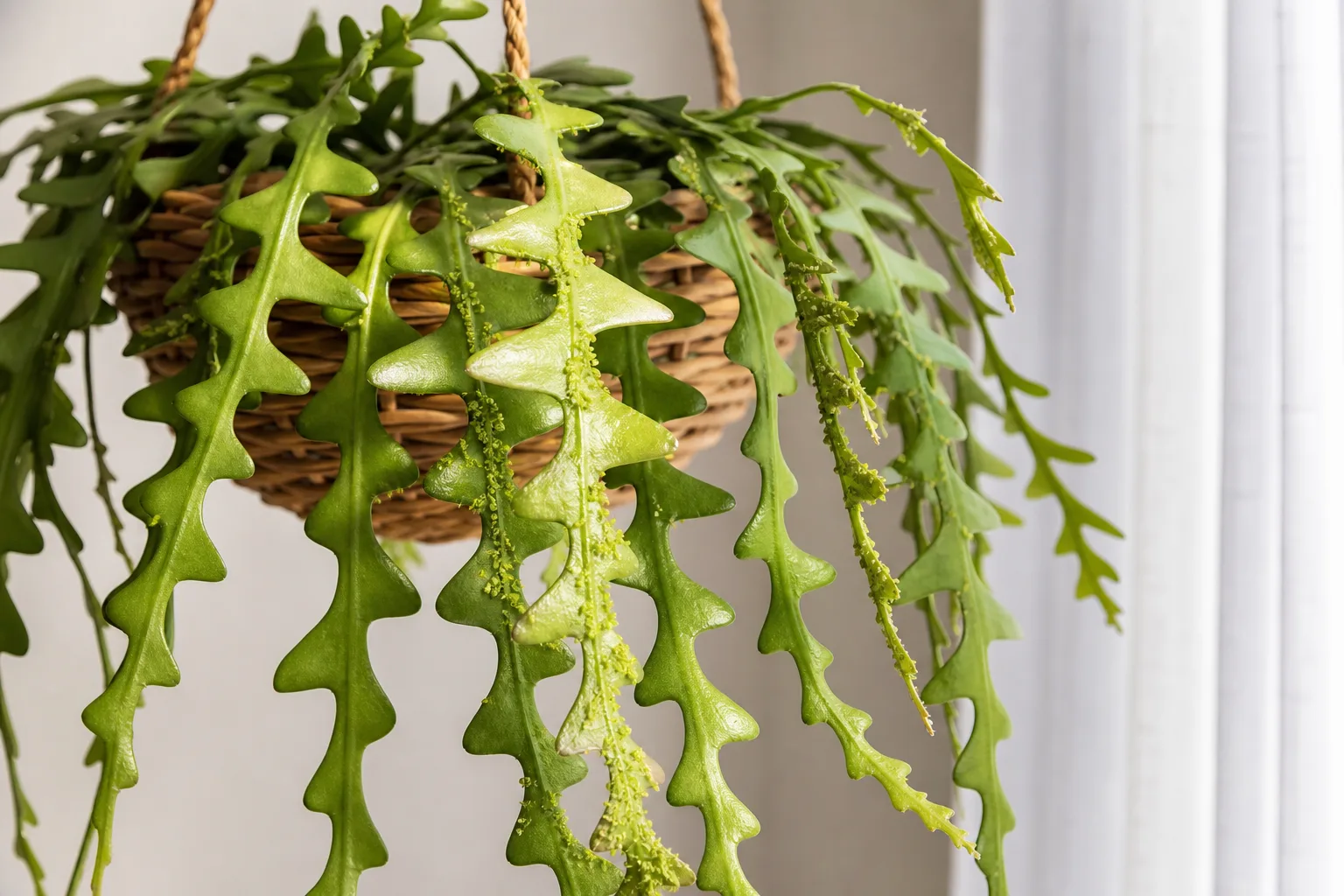
Aphids on Fishbone Cactus: Causes, Checks & Fixes
This guide covers aphids on Fishbone Cactus. See also the general Aphids guide, watering, and light pages for this plant.
Aphids on Fishbone Cactus: Causes, Checks & Fixes
Quick answer
Aphids on Fishbone Cactus (Disocactus anguliger) are small soft-bodied sap feeders that settle on tender new zigzag segments, stem tips, and night-blooming buds. On this trailing epiphyte, the first damage is easy to miss because pests tuck into the angles where flat stems overlap-especially on the side facing the wall or inside a crowded hanger.
First step: isolate the plant and rinse every stem with lukewarm water, working from the top of the trailing growth down so dislodged aphids fall away from clean tissue. You need to see live insects move or leave shiny honeydew before reaching for sprays. Treating a misidentified sticky spot wastes time while colonies multiply on soft spring growth.
What aphids look like on Fishbone Cactus
Unlike desert cacti with round ribs, Fishbone Cactus has flat, deeply lobed segments that create dozens of small shelters. Aphids exploit that architecture on the newest sections, where tissue is still soft and nitrogen-rich.
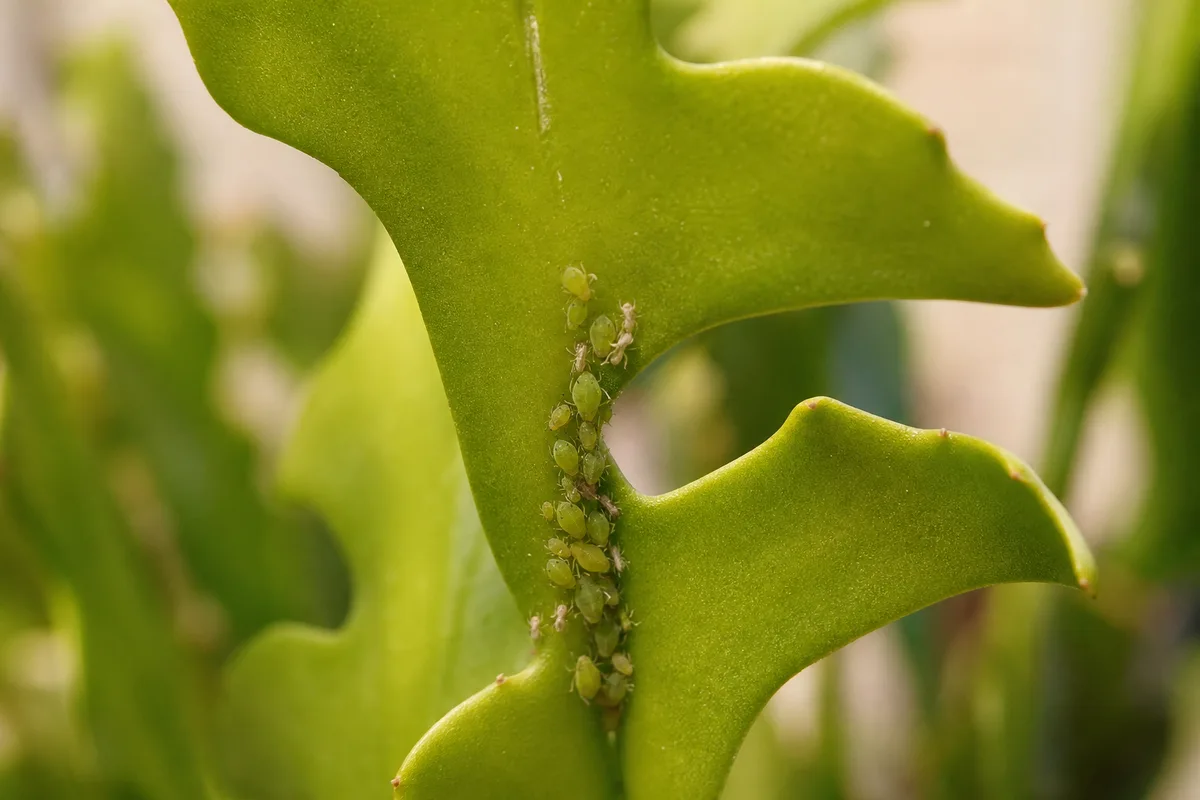
Tiny aphids clustered on a soft new zigzag segment where flat lobes overlap - check stem tips and bud clusters before honeydew spreads.
Typical signs include:
- Clusters of tiny pear-shaped insects along segment edges, areoles, and stem tips-often green, but sometimes black, brown, or gray
- Shiny, sticky honeydew on flat stems or the pot rim below trailing growth
- Ant trails on the hanger or wall behind the basket-ants farm aphids for honeydew and protect them from predators
- Slightly curled or twisted new segments when feeding is heavy; mature zigzag arms may look normal while tips suffer
- Whitish cast skins left behind as nymphs molt-evidence of an active colony even when live insects are sparse
- Sooty black mold growing on honeydew if the infestation sits unchecked
Fishbone Cactus blooms on mature segments, often in autumn. Aphids on flower buds are especially worth catching early-sticky buds attract mold and can abort before the plant’s short nocturnal flower window.
Why Fishbone Cactus gets aphids
Aphids rarely appear from nowhere indoors. They hitchhike on new nursery plants, cuttings from friends, or specimens brought in after summer outdoors. Because Fishbone Cactus is popular in hanging baskets, it often sits near other houseplants where one infested pot can seed a collection.
Several traits of Fishbone Cactus overview make it a comfortable host once aphids arrive:
- Fast spring and summer growth produces the soft shoots aphids prefer. Warm indoor conditions let aphid nymphs reach reproducing adults in about a week, so populations can explode quickly on actively pushing tips.
- Flat, overlapping stems hide colonies from casual top-down watering. The “fishbone” angles shield pests from a quick glance the way tight rosettes do on succulents.
- Humidity in the 40–60% range this plant enjoys matches what many indoor pests tolerate. Humidity alone does not cause aphids, but soft growth plus sheltered crevices plus stable indoor temperatures favor persistence once they land.
- High-nitrogen fertilizer pushes lush, tender segments. Fishbone Cactus needs only modest feeding during active growth; excess nitrogen produces exactly the soft tissue aphids target.
- Stress from the wrong Fishbone Cactus watering guide-chronic wet mix or repeated drought-does not create aphids, but weakened plants recover more slowly after feeding damage.
This is an epiphytic cloud-forest cactus, not a desert species. It wants more water and organic matter than a typical cactus, but good drainage and Fishbone Cactus light guide still matter. A plant in weak light with soggy bark-heavy mix grows slowly and unevenly; aphid damage on stalled new tips then stands out more than on a vigorous specimen.
How to confirm the cause
Work through these checks before committing to sprays:
- Find live insects - Use a 10× hand lens on the newest zigzag segments. Aphids have visible legs and antennae, pear-shaped bodies, and often a pair of small tail pipes (cornicles). They move slowly when disturbed.
- Test stickiness - Honeydew feels tacky and may string between segments. Hard water spots or fertilizer splash dry crusty and do not attract ants.
- Check buds and tips first - Aphids cluster just below opening leaf segments and on flower buds. Mature lower stems may be clean while tips are infested.
- Rule out lookalikes - Mealybugs form white cottony masses in segment joints. Scale looks like fixed brown or tan bumps you can flick with a nail. Thrips leave silvery scrape marks, not round clusters.
- Inspect neighbors - Scan other hanging plants and anything below the basket. Winged aphids can spread when a colony outgrows one stem.
- Note recent history - New plant, open window season, or outdoor summer hang? Each is a common introduction route.
If you see sticky stems but no insects after two careful inspections a week apart, consider dried sap from mechanical damage or old honeydew after predators already cleared the colony. Still isolate until you are sure.
First fix for Fishbone Cactus
Move the plant away from others and rinse all stems thoroughly with lukewarm water.
Place the pot in a sink or shower. Support trailing stems with one hand and spray the undersides and zigzag notches with enough force to knock aphids loose, but not so hard that segments snap. Lukewarm water matches what this epiphyte tolerates better than cold shock from icy tap water.
Let the plant drain completely in bright indirect light. Only after this rinse-and after you confirm live aphids remain-move to insecticidal soap or a plant-labeled horticultural oil, covering every segment surface, especially hidden angles. Soaps and oils work on contact; missed crevices leave survivors.
Do not start with systemic insecticides, Fishbone Cactus repotting guide, or heavy pruning on day one. None of those replace direct removal on a hanging epiphyte whose strength is its stem surface area.
Step-by-step recovery
Once aphids are confirmed, follow this order:
- Isolate - Keep the Fishbone Cactus at least a few feet from other plants until you see no new honeydew or live insects for two weeks after the last treatment.
- Knock down physically - Repeat the lukewarm shower every two to three days for heavy infestations. A forceful water spray is often enough for light colonies on sturdy stems.
- Spot-treat with alcohol - On small clusters, a cotton swab dipped in 70% isopropyl alcohol can kill aphids in tight notches without soaking the whole plant.
- Apply insecticidal soap or neem - Use a product labeled for houseplants. Coat undersides and segment overlaps until runoff. Repeat every five to seven days for at least three cycles to catch nymphs that escaped prior passes.
- Prune only when necessary - Snip off heavily infested bud clusters or distorted tips with clean scissors if you cannot reach every aphid inside curled tissue. Aphids hidden in curled leaves will not be killed by contact sprays alone.
- Wash honeydew - Wipe sticky flat stems with a damp cloth once insects are gone so sooty mold does not take hold.
- Hold fertilizer - Skip feed until new growth looks clean for two weeks. Feeding stressed plants pushes soft shoots while the colony may still be rebounding.
- Watch for ants - If ants are present, block their path to the pot (barrier on the hanger hook, wipe trails). Ants protect aphids from lady beetles and other helpers.
Fishbone Cactus is non-toxic to cats and dogs, which makes thorough rinsing and repeated handling safer than on many toxic ornamentals-but still keep pets from chewing wet stems right after treatment and follow product label precautions.
Recovery timeline
First week: After the initial rinse, live aphid counts should drop noticeably. Honeydew may still feel sticky until you wipe stems.
Weeks two to four: With soap or oil repeats every five to seven days, expect clean new tips and no fresh stickiness. Old distorted segments may not fully flatten; judge success by unblemished growth above the damage.
Bud season: If aphids hit autumn buds, recovery may mean fewer flowers this cycle rather than a dead plant. Next year’s bloom depends on keeping stems clean through the preceding growth season and honoring the cooler, drier rest this species uses to set buds.
Worsening signs: Spreading stickiness despite three treatment cycles, black sooty mold covering large stem areas, or mushy segments at the base point to a separate rot issue or a colony too entrenched for contact sprays alone-prune heavily infested stems or discard the worst sections rather than infecting the whole collection.
Lookalike symptoms
- Mealybugs on Fishbone Cactus - White cottony patches in segment joints; treat with alcohol swabs rather than assuming aphid soap alone will penetrate wax.
- Scale insects - Immobile bumps on older woody segments; need scraping or repeated oil sprays, not just a quick rinse.
- Thrips - Silvery scars on flat stem faces without rounded insect clusters.
- Hard water or fertilizer residue - White crust that does not move and does not attract ants.
- Normal segment edge browning - Usually from low humidity or direct sun, dry and crisp rather than sticky; no live insects.
What not to do
Do not spray insecticidal soap or oil on sun-stressed plants in hot direct sun-Fishbone Cactus scorches easily and contact products can burn wet tissue in heat. Treat in the evening or move the plant to bright shade until dry.
Avoid homemade dish soap mixes; detergents burn flat epiphytic stems more readily than labeled insecticidal soap.
Do not return the plant to its hanging spot near neighbors after a single spray. One pass rarely clears hidden nymphs in zigzag crevices.
Do not overwater after infestation out of sympathy for curled tips. This species rots when mix stays soggy; aphid stress is not fixed by keeping roots wet.
Do not compost pruned infested stems indoors where winged aphids or crawlers can reinfest clean pots.
Fishbone Cactus care cross-check
While treating aphids, keep baseline care stable:
- Light: Bright indirect exposure so new growth is firm, not etiolated and soft.
- Water: Let the top inch or so dry between drinks in active growth; avoid waterlogging bark-heavy mix.
- Airflow: A gentle fan or spaced baskets reduces stagnant pockets where honeydew lingers.
- Feed: Light cactus or orchid fertilizer at half strength during spring–summer only-not while fighting pests.
Fixing aphids without correcting weak light or soggy mix invites the next pest on tender new segments.
How to prevent aphids next time
- Quarantine new Fishbone Cactus and cuttings for at least two weeks before hanging them near other plants.
- Inspect zigzag joints weekly during warm growth; lift trailing stems instead of only looking at the top.
- Rinse dust off flat stems during routine care-clean surfaces make colonies obvious sooner.
- Avoid excess nitrogen that pushes soft, aphid-friendly shoots.
- Check buds in late summer and autumn when this species prepares to bloom; aphids on buds are a common late-season surprise on mature hangers.
When to worry
Escalate if multiple plants show winged aphids, flower buds are coated before opening, or three full treatment cycles fail to stop new honeydew. At that point, remove the most infested stem sections or isolate the plant away from the collection until it is clearly clean.
A handful of aphids on one new tip after a rinse is manageable. Ants, sooty mold, and curled tips on most new growth are not-speed matters on a fast-growing hanging epiphyte.
Conclusion
Aphids on Fishbone Cactus are a contact problem on soft new zigzag growth, not a mystery disease. Confirm live insects in segment notches, isolate and rinse first, then follow with labeled soap or oil on a five-to-seven-day repeat schedule until new stems stay clean. Keep drainage, light, and feeding steady while you treat-this cloud-forest cactus recovers well once pests stop draining its newest stems and buds.
When to use this page vs other Fishbone Cactus guides
- Fishbone Cactus watering guide - Use for routine moisture checks before assuming aphids is the main issue.
- Fishbone Cactus problems hub - Browse all 18 common issues on this species.
- Mealybugs on Fishbone Cactus - Different entry point when symptoms overlap with aphids.
- Spider Mites on Fishbone Cactus - Different entry point when symptoms overlap with aphids.
- Yellow Leaves on Fishbone Cactus - Different entry point when symptoms overlap with aphids.