No Flowers on Fishbone Cactus: Causes, Checks & Fixes
Quick answer
Fishbone cactus (*Disocactus anguliger*) rarely flowers until it is roughly three years old and has received a cool, drier autumn rest. First fix: from September through October, reduce watering and give the plant four to six weeks of bright indirect light with night temperatures around 50–57°F (10–14°C)-not a warm, evenly watered living room all year.
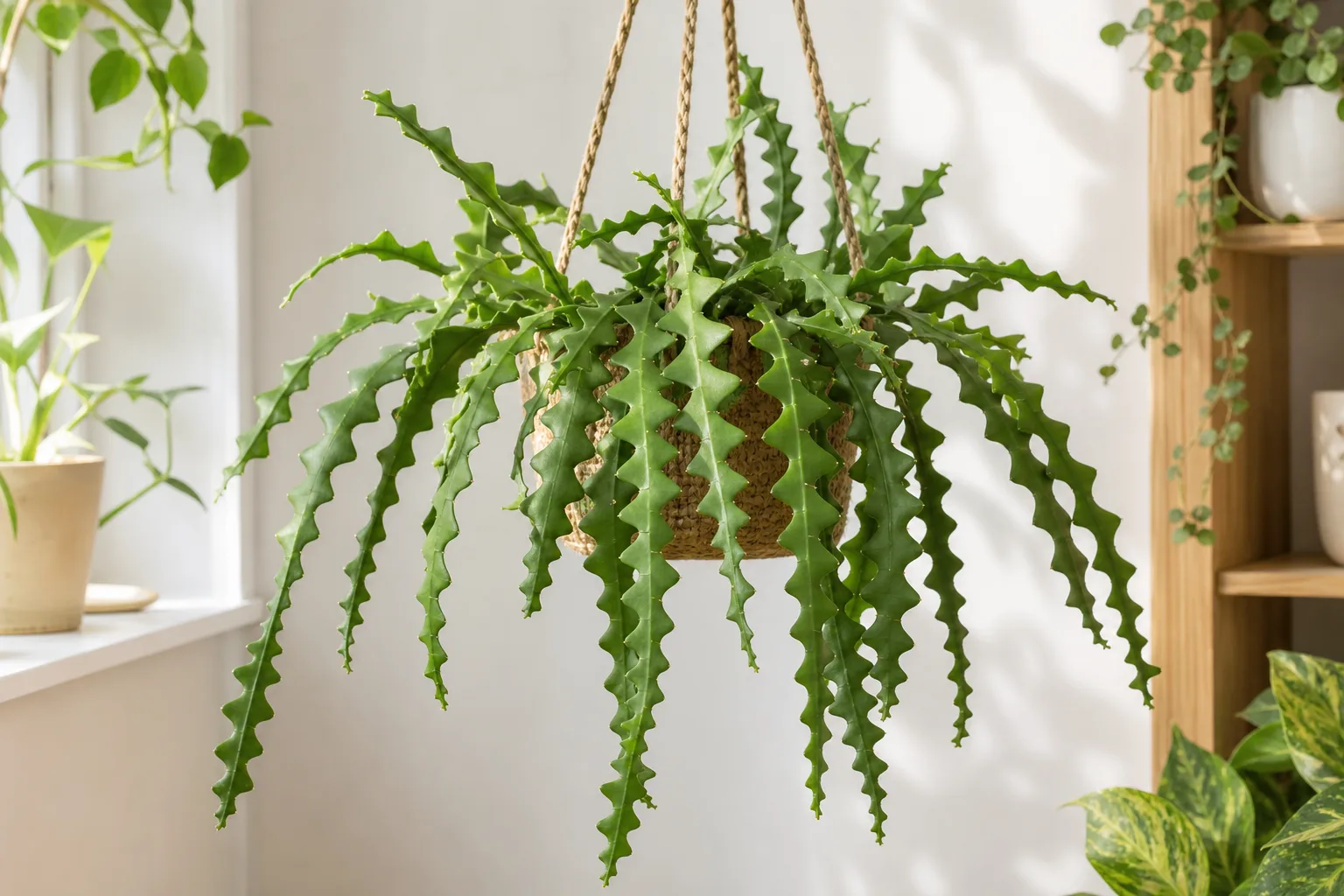
No Flowers on Fishbone Cactus: Causes, Checks & Fixes
This guide covers no flowers on Fishbone Cactus. See also the general No Flowers guide, watering, and light pages for this plant.
No Flowers on Fishbone Cactus: Causes, Checks & Fixes
Quick answer
When a fishbone cactus grows flat zigzag phylloclades but no flower buds by late summer, the problem is rarely “give it more light today.” Disocactus anguliger is a cloud-forest epiphyte whose buds respond to maturity plus a cool, drier autumn rest-not desert-cactus drought or gesneriad feeding habits.
First fix: confirm the plant is roughly three years old or older, then from September through October reduce watering so the bark mix dries more thoroughly between soaks and move the basket-if you can-to a bright room with night temperatures around 50–57°F (10–14°C) for four to six weeks. Hold fertilizer during that rest. Resume normal watering when spring growth appears.
If stems are long, thin, and widely spaced rather than plump and evenly lobed, the bottleneck is light-see not enough light on fishbone cactus. A mature plant with compact green phylloclades and zero bud swelling in August usually skipped cool rest, not light.
What no flowers looks like on Fishbone Cactus
Fishbone cactus has no true leaves. Photosynthesis happens in flat, succulent phylloclades-the zigzag stem segments with rectangular lobes. “No flowers” means those segments look healthy but areoles at the lobe bases stay smooth through late summer when bud initials should swell.
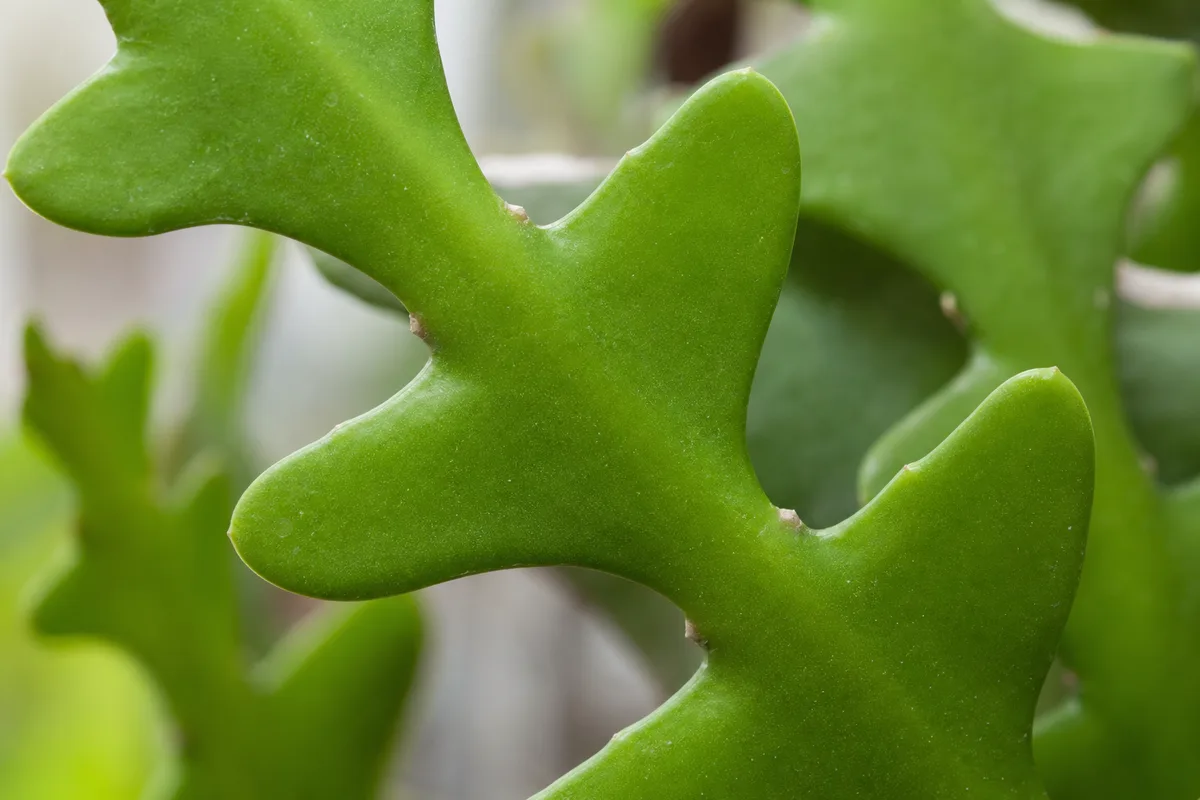
No Flowers symptoms on Fishbone Cactus - compare with healthy tissue on the same plant.
Typical patterns on a budless plant:
- Plump, evenly green phylloclades with no bumps at areoles - energy is stored but the cool-rest signal never arrived
- Multiple trailing stems and woody primary growth - maturity looks present, yet no bud initials by August on a plant that skipped autumn rest
- Long thin segments with wide lobe spacing - etiolation from dim light; blooms are unlikely until placement improves (route to not enough light)
- A basket of small recent cuttings - vegetative growth only; flowers are a maturity reward, not a first-year entitlement
This differs from normal post-bloom fade: nocturnal flowers open at night, perfume the room, and wilt within one to two days-missing a night bloom is not failure. It also differs from bud drop, where buds form and then abort.
Why Fishbone Cactus stops flowering: causes ranked
Bud initiation on epiphytic jungle cacti responds to combined environmental cues, not one heroic trick. Work through causes in this order.
Plant too young (under roughly three years)
Young fishbone cactus and fresh rooted cuttings rarely flower no matter how well you care for them. Expect bloom potential on specimens roughly three years old or older with multiple trailing stems and visible woody base tissue. If your plant is a recent propagation pot, focus on compact growth and root health first-the overview bloom section covers the full maturity timeline.
Skipped cool/dry autumn–winter rest
The most common fixable blocker on mature plants is no distinct cool rest. From roughly September through October, fishbone cactus in nature receives cooler nights, shorter days, and reduced moisture. BBC Gardeners’ World notes that fishbone cactus needs cold winter-to-early-spring exposure around 11–14°C for the best chance of late-summer flowers. Indoors, a basket that stays 65–75°F (18–24°C) all year with steady summer watering rhythm never receives the signal to switch from stem growth to flower buds.
Insufficient bright indirect light year-round (secondary)
Light matters every season, not only during bloom. Dim winter quarters can keep a plant alive while quietly eliminating bud formation for the following autumn. This is secondary to maturity and cool rest-a well-rested plant in a permanently dark corner still will not bloom. See the light guide for placement benchmarks.
Pot too large (energy to roots, not buds)
Oversized hanging baskets hold excess wet mix around roots that cannot use it. The plant channels energy into filling the pot instead of areole buds. Slightly root-bound specimens often outperform freshly upsized ones-see the repotting guide for when to move up one size only.
Excess nitrogen / wrong feeding season
High-nitrogen fertilizer during active growth pushes vegetative phylloclades at the expense of buds. Feeding during the cool rest period also disrupts initiation. Align feeding with the fertilizer guide-light applications during active growth, none during rest, optional higher-potassium feed six to eight weeks before expected bloom on mature plants only.
Repotting or moving during bud set
Fishbone cactus drops buds after sudden repotting, drafty moves, or inconsistent watering once buds are visible. Avoid disturbing the basket while areoles swell. If you must repot, do it in early spring before initiation begins, not in autumn.
Selenicereus anthonyanus misidentification
Selenicereus anthonyanus shares a zigzag look but differs in growth and bloom timing. Confirm the tag reads Disocactus anguliger (synonym Epiphyllum anguliger)-taxonomy details live on the fishbone cactus overview.
How to confirm the cause: bloom-failure checklist
Work through this table before changing fertilizer or pot size:
| Check | Pass? | If no - likely cause |
|---|---|---|
| Plant 3+ years old with woody base and multiple trailing stems | Immaturity - wait and grow | |
| Cool rest given last Sept–Oct (4–6 weeks) | Skipped rest - start protocol next autumn | |
| Nights 50–57°F (10–14°C) during rest, no frost | Too warm year-round | |
| Bright indirect light all seasons, including winter | Insufficient energy - see not enough light | |
| Slightly root-bound or appropriately sized pot | Oversized pot or fresh repot | |
| No high-nitrogen feed during rest; light feed only in active growth | Excess nitrogen | |
| No repot or move while buds were forming | Bud abort from disturbance | |
| Stems plump and lobed, not thin and stretched | Etiolation - light problem first |
Confirmed rest failure: mature plant, compact phylloclades, checklist rows 2–3 fail, light row passes.
Confirmed light failure: thin reaching segments, wide lobe spacing, lean toward window-regardless of rest history.
First fix: the cool/dry rest protocol
If the plant is mature and you have not run autumn rest-or last year’s rest was too warm or too wet-start the protocol next September. Do not repot, fertilize, or blast with bloom booster first.
- Timing - Begin around September through October in the Northern Hemisphere, before buds would appear the following late summer to autumn.
- Water - Reduce frequency so the top half of bark mix dries more thoroughly between soaks. Mix should feel just damp, not summer-wet. Full dry-down rhythm is in the watering guide.
- Temperature - Move the basket to the brightest cool room you have-spare bedroom, enclosed porch, or bright basement stair-targeting night temperatures around 50–57°F (10–14°C) for four to six weeks. Avoid frost; glass sills below freezing are unsafe.
- Light - Keep bright indirect light during rest. Cool and dark together stall photosynthesis; cool and bright triggers buds.
- Fertilizer - Stop feeding entirely until spring growth resumes.
- Stability - Once pea-sized bud swelling appears at areoles, do not move or repot the basket until flowers finish.
If stems are etiolated, fix light placement before next autumn’s rest so the plant enters rest with stored energy.
Recovery timeline: when to expect buds
After a correct cool rest on a mature plant, expect visible bud swelling at areoles during late summer to autumn of the following year-not within two weeks of moving the pot. The bloom cycle spans months, not days.
- Young plants - May wait several years regardless of rest; judge by new phylloclade quality, not flowers.
- Rest started too late - If autumn passed without cool nights, this bloom season is likely lost. Run the full protocol next September.
- Open flowers - Nocturnal, fragrant, white to pale yellow, typically fading within one to two days. Missing a night bloom is normal.
- Multiple buds - May open in succession over several weeks on a well-rested mature specimen.
Worsening signs during the wait: stem bases go soft on wet mix, segments yellow and drop, or pests web stem joints-those need root rot or pest diagnosis, not another rest cycle.
What not to do
Do not repot into a larger basket hoping to force blooms-fresh mix and excess volume delay flowering on epiphytic cacti.
Do not apply full-strength or high-nitrogen fertilizer to a dry or resting plant. Feed only during active growth per the fertilizer guide.
Do not expect blooms on cuttings under three years regardless of how lush they look.
Do not skip cool rest while increasing fertilizer-nutrients cannot replace the temperature and moisture signal.
Do not move the basket after buds form-drafts, repotting, and wet/dry swings abort buds before they open.
Do not confuse cool rest with harmful cold-nights around 50–57°F (10–14°C) initiate buds; frost and freezing glass damage tissue.
How to prevent repeat bloom failure year over year
Build a calendar, not a one-time trick:
- Bright indirect light daily through all seasons - see the light guide
- Deliberate September–October rest - cooler nights, reduced water, no feed, stable bright placement
- Light potassium-boosted feed optional six to eight weeks before expected bloom on mature plants only
- Keep slightly root-bound - repot every one to two years in early spring, not before bloom season
- Stable watering - wet/dry swings during bud set cause drop; follow top-half-dry checks
If you missed rest this year, mark September 1 on the calendar and prepare a bright cool room now so next autumn is not an afterthought.
Related tool
Use the Plant Problem Diagnosis Tool to narrow causes for no flowers on this plant before changing multiple variables at once.
Related guides
- Fishbone cactus overview - full bloom deep-dive and species biology
- Light requirements - year-round bright indirect placement
- Not enough light - etiolated stems vs. budless healthy phylloclades
- Watering guide - autumn dry-down without desiccating roots
- Fertilizer guide - nitrogen vs. potassium through the seasons
Conclusion
No flowers on fishbone cactus is usually a maturity or cool-rest problem, not a missing bloom fertilizer. Confirm the plant is old enough, check whether last autumn included four to six weeks of cool nights and reduced water, and route thin stretched stems to the not enough light guide before you buy another product. Run the September rest protocol once on a mature specimen, keep the basket stable when buds swell, and expect nocturnal blooms late summer to autumn-not instant gratification after one weekend move.
When to use this page vs other Fishbone Cactus guides
- Fishbone Cactus watering guide - Use for routine moisture checks before assuming no flowers is the main issue.
- Fishbone Cactus problems hub - Browse all 18 common issues on this species.