Brown Tips on Fishbone Cactus: Causes, Checks & Fixes
Quick answer
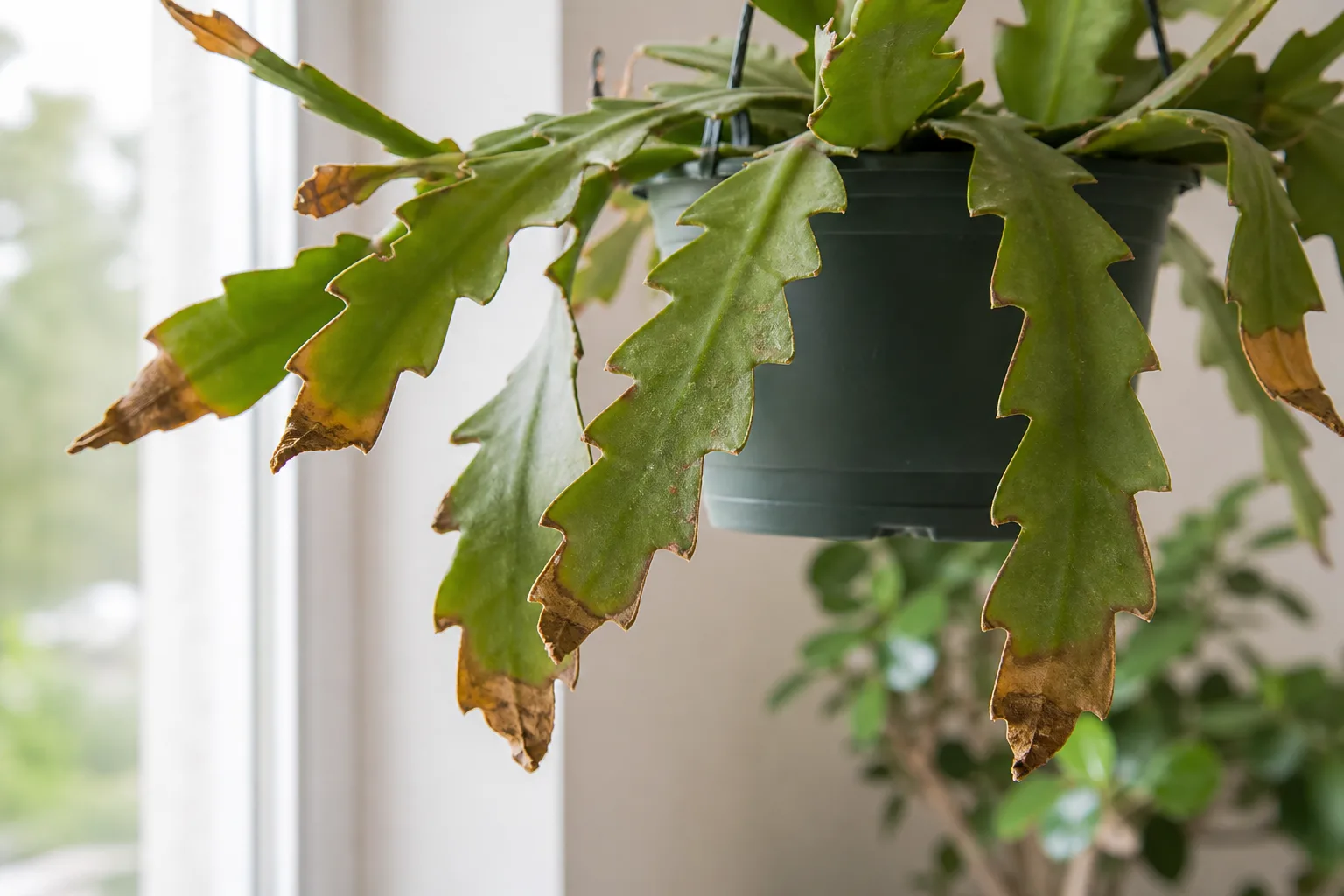
Brown tips on fishbone cactus appear on flat phylloclade stems-not leaves-as crisp tan edges on lobe tips, bleached-brown patches on sun-facing ridges, or spreading brown from a soft base on wet mix. First step: note which segments are affected, check window direction and pot weight, then probe the top 1–2 inches of bark mix before raising humidity or watering.
Brown Tips on Fishbone Cactus: Causes, Checks & Fixes
This guide covers brown tips on Fishbone Cactus. See also the general Brown Tips guide, watering, and light pages for this plant.
Brown Tips on Fishbone Cactus: Causes, Checks & Fixes
Quick answer
Brown tips on fishbone cactus (Disocactus anguliger, ric rac or zigzag cactus) show on flat phylloclade stems, not spiny pads or broad leaves. Owners often search “brown tips,” but this epiphytic jungle cactus signals stress through segment edges and sun-facing ridges-crisp tan lobe tips, bleached-brown patches on the pane side, or brown spreading from a soft base on wet bark mix.
The five most common drivers indoors are direct sun scorch, winter low humidity near heaters, drought tip dieback on a light dry pot, overwatering or root stress climbing from mushy stem bases, and normal aging on the oldest trailing segments. They need different first fixes-pulling back from harsh glass is wrong when the real issue is a bone-dry root zone, and misting fails when afternoon sun is crisping sun-facing tissue.
First step: identify which segments brown, note window direction, lift the basket for pot weight, and probe the top 1–2 inches of mix before you change humidity or watering. One-sided crisp patches on sun-facing ridges → move out of direct sun. Thin shriveled segments with crisp lobe tips on a light pot → one thorough soak. Soft yellow-brown bases on heavy wet mix → stop watering and inspect stem bases. For full care context, see the fishbone cactus overview and light guide.
What brown tips look like on fishbone cactus
Healthy fishbone cactus carries thick, flat zigzag phylloclades with even green color along lobed edges. Brown tips change specific zones on those segments-not random spots without a pattern.
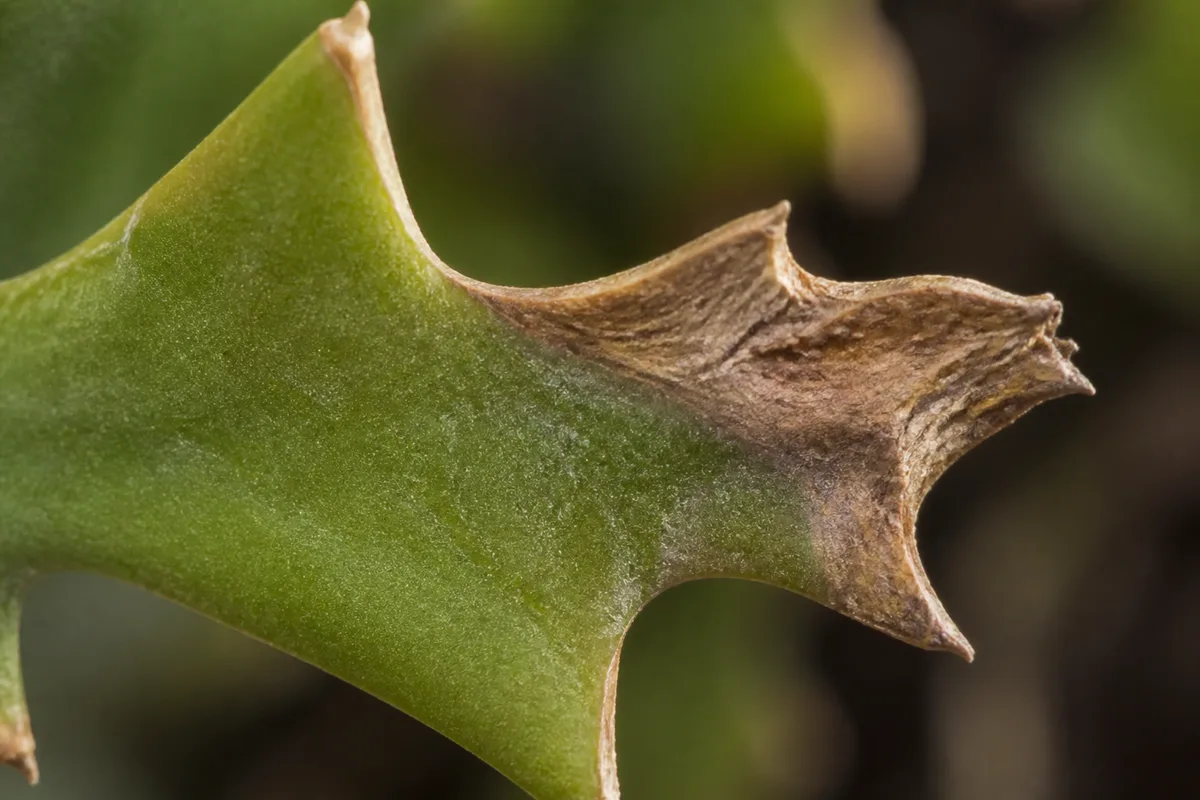
Brown Tips symptoms on Fishbone Cactus - compare with healthy tissue on the same plant.
Sun scorch brown tips and patches:
- Crisp tan or brown dry patches on ridges that faced the window or patio sun-often one-sided while shaded lobes stay green
- Bleached yellow-white zones that later tan to brown on sun-exposed flat faces
- Firm, papery texture on damaged tissue-not mushy
- Often follows west or south glass in late spring, a sudden move from shade to sun, or skipping acclimation
Low-humidity brown margins:
- Dry brown edges along lobe tips or segment margins, sometimes thin and slightly shriveled but bases still firm
- Worsens in heated winter rooms when RH drops into the 20–30% range for weeks
- Mix moisture may look normal because roots still supply water while the large flat stem surface loses moisture to dry air
- Often hits trailing segments nearest heating vents first
Drought crisp tips:
- Brown crisp lobe tips on thin, shriveled segments along the whole stem-not just one sun-facing face
- Pot feels noticeably light; upper mix pale and dry 2–3 inches down
- Segments feel leathery or flattened before you water
- Follows missed waterings, heat spikes, or watering like a desert cactus after an overwatering scare-wrinkled segments often indicate insufficient water on this species
Rot-related browning (urgent):
- Brown or yellow spreading from stem bases where phylloclades meet mix
- Soft, mushy tissue at the base; mix stays dark, cool, and wet; pot feels heavy
- Sour smell when you disturb bark mix
- Upper segments may show brown tips while roots fail below-see overwatering and root rot
Natural aging:
- Oldest trailing segments at the basket rim turn dry brown at lobe tips while new zigzag growth stays firm and green
- No spread to younger segments; pot weight and watering rhythm unchanged
- Safe to trim cosmetic dead tips once you confirm no soft base
The Missouri Botanical Garden classifies Disocactus anguliger as an epiphytic cactus from humid Mexican forest-not arid desert-which explains why both dry air and wet feet show on flat stems before classic cactus owners expect them.
Why fishbone cactus gets brown tips
Owners often treat brown tips as one problem with one fix. On fishbone cactus, the pattern on phylloclades tells you which stress won:
Direct sun scorch - Flat phylloclades have a thin cuticle compared with desert cacti. Harsh midday or afternoon rays through unfiltered south or west glass concentrate on the sun-facing flat face, producing irreversible tan or brown patches. The RHS notes fishbone cactus is more sensitive to full sun than desert species and prefers bright filtered light with partial shade. The BBC Gardeners’ World Magazine warns that a full day of direct sun quickly produces scorch on this species.
Winter low humidity - Heating season pulls indoor RH toward 20–30% while this cloud-forest epiphyte evolved with higher ambient moisture. Even correct watering may not keep lobe edges fully turgid when transpiration from the large flat stem surface outpaces uptake. Trailing segments near radiators crisp first. Full humidity workflow: low humidity on fishbone cactus.
Drought tip dieback - Fishbone cactus stores water in phylloclades but still dies back at lobe edges when the root zone stays dry too long. Unlike humidity margins, drought browning pairs with uniform segment shrivel and a light pot-the opposite first fix from raising humidity.
Overwatering and root stress - Bark-heavy mix can look pale and dry at the surface while staying wet at depth. Saturated roots lose function; stem bases turn yellow-brown and soft while upper lobes may crisp-mimicking tip burn. Roots in saturated soil lose oxygen and cannot move water upward even when mix feels moist.
Salt buildup from overfeeding - Repeated fertilizer without flushing can produce persistent brown stem margins even when watering looks correct. Pause feeding and flush if margins crisp despite good moisture rhythm.
Natural senescence - Oldest segments on long trails age out with dry brown lobe tips while new growth stays healthy. That is not a care failure unless younger segments follow the same pattern.
Brown tips vs. yellow stems vs. full segment browning
Flat phylloclades confuse vocabulary because “tips,” “edges,” and “whole segments” mean different diagnoses:
| Symptom zone | Typical look | Most likely cause | First check |
|---|---|---|---|
| Brown lobe tips only | Crisp tan edges; stem otherwise green and firm | Low humidity, drought, or cosmetic sun on tips | Pot weight, RH near plant, window direction |
| Brown/bleached sun-facing patches | One-sided ridges; shaded side green | Direct sun scorch | Hours in direct beam; recent window move |
| Yellow stems from base up | Soft tissue at soil line; wet heavy pot | Overwatering / root rot | Stem-base firmness; mix depth moisture |
| Whole segment dry brown | Oldest trail only; new tips green | Natural aging | Age of segment; no soft base |
| Uniform shrivel + brown tips | Thin segments; light dry pot | Underwatering | Moisture 2–3 inches down |
Yellow segments with wet mix point to overwatering. Yellow with dry light pot point to underwatering. Bleached sun-facing patches overlap with the sunburn guide when damage is ridge-wide, not tip-only.
How to confirm the cause
Work through this numbered checklist before misting, soaking, or repotting:
- Pattern on phylloclades - Is damage one-sided on sun-facing ridges (scorch), dry margins on many segments (humidity), crisp tips with thin shriveled stems (drought), or brown from soft bases upward (rot)?
- Window direction - Did west or south glass hit flat segments during 11 a.m. to 4 p.m.? East morning sun rarely scorches acclimated plants.
- Pot weight - Light basket with dry mix deep down supports drought; heavy pot that never lightens between waterings supports rot suspicion.
- Top 1–2 inches of mix - Probe with a finger or skewer. Bone dry deep down on a light pot → drought branch. Cool wet surface for many days → overwatering branch. Dry surface, wet depth → classic epiphytic trap-unpot or skewer deeper before soaking.
- Segment texture - Firm papery tan on sun-facing ridges → scorch. Leathery thin lobes on dry mix → drought. Mushy yellow-brown at base → rot urgency.
- Humidity context - Is the basket within 1 m of a radiator during heating season? Chronic 20–30% RH supports dry-air margins when watering rhythm is otherwise normal.
- Segment age - Are only oldest trailing tips brown while new zigzag growth is firm? Likely senescence-trim and monitor.
Indoor plants need appropriate light levels-what looks bright to human eyes may still scorch thin epiphytic tissue when direct rays hit flat surfaces for hours.
Suspected cause: pattern matches one row in the table above. Confirmed cause: after the targeted first fix below, new segments stay green without fresh browning for two to three weeks.
First fix for fishbone cactus (by likely cause)
Make one care change at a time so you can read the plant’s response. Match your checklist result to the branch below:
If sun scorch fits (one-sided crisp or bleached ridges)
Move the basket out of the direct sun beam today-behind a sheer curtain, deeper into the room, or to bright indirect light with optional gentle east morning sun. Do not soak heavily or mist wet surfaces while tissue re-firms. See fishbone cactus light for placement and 7–14 day acclimation when increasing exposure later.
If low humidity fits (dry margins, firm stems, normal pot weight)
Raise ambient RH near the plant-humidifier, pebble tray with pot elevated above the water line, or grouping with other plants-not aggressive misting that leaves flat stems wet in stagnant air. Target roughly 40–50% RH or higher during heating season when margins chronically crisp-the RHS notes this epiphytic cactus appreciates conditions closer to humid forest than desert air. Details: low humidity guide.
If drought fits (thin shriveled segments, light dry pot)
One thorough soak until water runs from drainage holes, then let the top 1–2 inches dry before the next drink. Do not mist instead of watering when the root zone is genuinely dry. Pair with the watering guide rhythm for bark-heavy mix.
If rot fits (soft base, heavy wet pot, sour smell)
Stop all watering immediately. Gently inspect stem bases and roots before repotting or misting. Trim mushy tissue with sterile tools only if firm green phylloclades remain above the damage. Advanced base rot may require salvage cuttings per the propagation guide.
If natural aging fits (oldest tips only)
Trim dry brown lobe tips on old segments for appearance if tissue is firm. No watering or humidity overhaul needed when new growth stays healthy.
Recovery timeline
Sun scorch and humidity margins: New flat zigzag tips should show no fresh crisping or bleaching within 2–3 weeks after light correction or stable higher RH. Old brown phylloclade tissue does not turn green again-judge success by new growth only.
Drought recovery: Segments often re-plump within 24–48 hours after one proper soak if roots are healthy. Crisp tips on old segments may stay brown; watch new lobe edges for stability.
Rot recovery: Timeline depends on how far decay climbed. Early cases with trim and fresh epiphytic mix may show new tips in 2–4 weeks; advanced rot may mean weeks on salvaged cuttings instead of the parent base.
Senescence: Trimming old tips is immediate cosmetic improvement; no further timeline unless younger segments follow.
Damaged stem tissue may not fully recover; judge progress by stable new growth-the same recovery rule applies to phylloclades as to foliage on other houseplants.
What not to do
- Do not mist aggressively when sun scorch is the cause-address light first; wet flat surfaces in poor airflow invite fungal spotting on phylloclades.
- Do not soak a plant with limp segments on heavy wet mix-that worsens rot. Confirm dry-pot versus wet-pot before every drink.
- Do not fertilize stressed fishbone cactus hoping to “green up” brown tips-feeding burned or rot-stressed plants adds salt stress. Pause fertilizer until new growth is firm for several weeks.
- Do not stack repotting, pruning, pesticide, and humidity overhauls on the same day-make one care correction at a time so you can read the response.
- Do not assume brown tips always mean low humidity-winter dry air is common, but afternoon sun and drought produce similar searcher language with opposite fixes.
How to prevent brown tips next time
- Light: Default to bright indirect light; filter south and west glass; acclimate over 7–14 days when moving toward stronger exposure. See fishbone cactus light.
- Water: Water when the top 1–2 inches of bark-heavy mix dry-not on a rigid calendar, and not only when the surface looks pale while depth stays wet.
- Humidity: Monitor RH near the basket during heating season; add a humidifier or pebble tray when margins crisp repeatedly despite correct watering.
- Inspection: Weekly stem check while problems are small-feel lobe thickness, note window sun angle shifts in spring, and lift the pot for weight before brown spreads.
- Fertilizer: Feed lightly during active growth only; flush the pot if brown margins persist despite good moisture-salt buildup mimics tip burn.
When to worry - soft stem base or spreading brown on wet mix
Cosmetic crisp tips on firm segments after sun or dry air are slow urgency. Escalate immediately when:
- Stem bases go soft or mushy where phylloclades meet mix
- Brown or yellow climbs from base upward on multiple stems while mix stays wet
- Sour smell rises from bark mix after you stop watering for several days
- New tips brown and collapse within a week despite pulling back from sun
Those patterns overlap advancing root rot-not a humidity tweak. Stop watering, inspect roots, and follow root rot salvage steps. Pure one-sided sun patches on firm tissue are not emergencies; move the basket and watch new growth.
Related fishbone cactus guides
- Fishbone cactus overview - epiphytic care basics and troubleshooting hub
- Light requirements - window placement and acclimation
- Watering - bark-mix dry-down rhythm
- Low humidity - winter RH fixes for dry margins
- Overwatering - wet-pot limp segments
- Sunburn and scorched stems - full ridge-wide scorch workflow
Related tool
Use the Plant Problem Diagnosis Tool to narrow causes for brown tips on this plant before changing multiple variables at once.