Low Humidity on Fishbone Cactus: Causes, Checks & Fixes
Quick answer
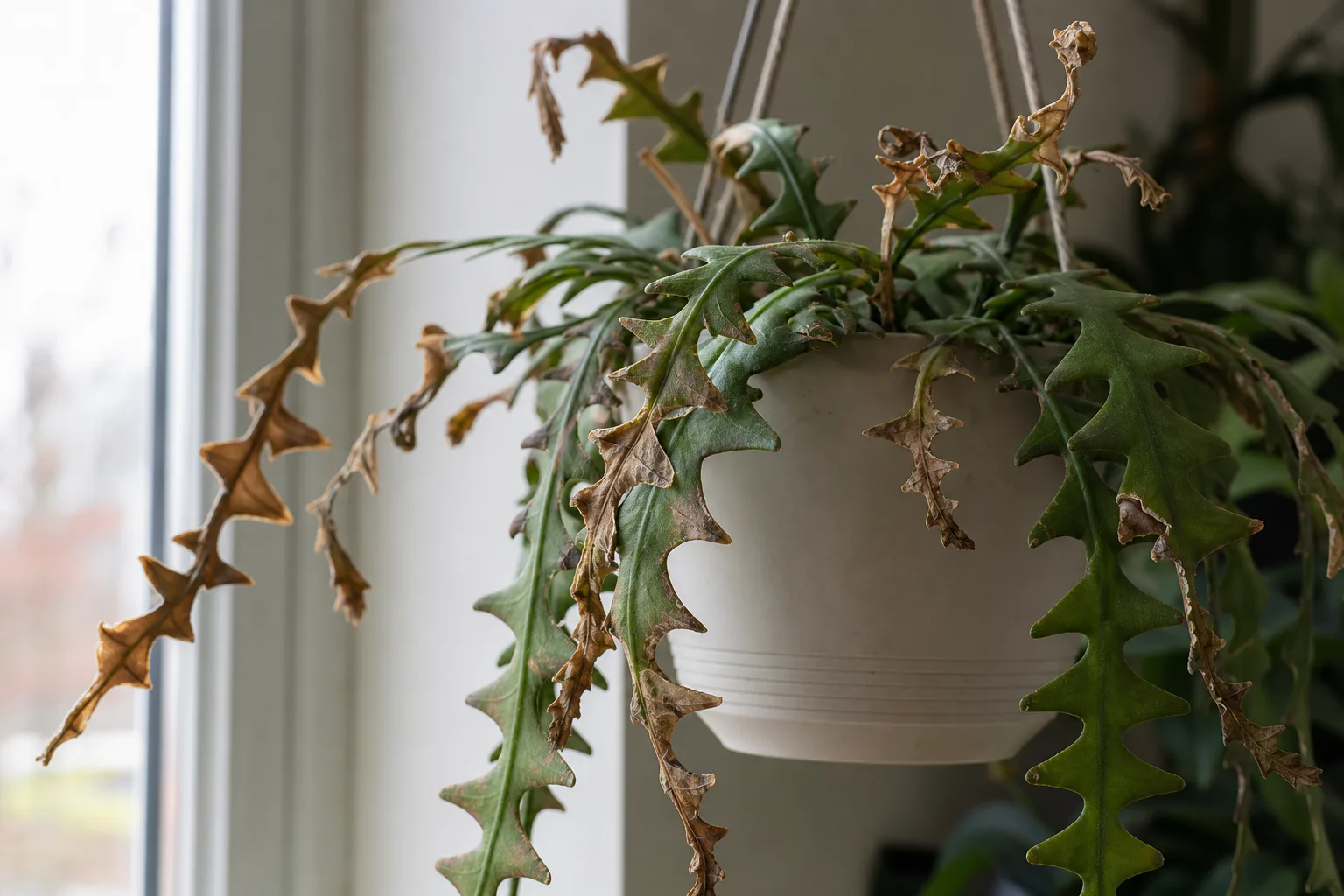
Low humidity on Fishbone Cactus shows as thin, shriveled edges on flat zigzag stems in dry heated rooms-often with moist soil. First step: measure room RH with a hygrometer; if below 40%, run a small humidifier near the hanging basket for several hours daily.
Low Humidity on Fishbone Cactus: Causes, Checks & Fixes
This guide covers low humidity on Fishbone Cactus. See also the general Low Humidity guide, watering, and light pages for this plant.
Low Humidity on Fishbone Cactus: Causes, Checks & Fixes
Quick answer
Low humidity on Fishbone Cactus (Disocactus anguliger, ric rac or zigzag cactus) means the ambient air is too dry for an epiphytic jungle cactus evolved in Mexican cloud forest-not that your watering calendar is necessarily wrong. The classic sign is thin, shriveled edges on flat zigzag phylloclades in a heated winter room, sometimes with moist upper soil because roots are still supplying water while the large flat stem surface loses moisture to dry air.
First step: check relative humidity with a hygrometer placed near the hanging basket at stem height. If readings stay below about 40% for days-common above radiators and forced-air vents-run a small humidifier within a few feet of the plant for several hours daily before you change watering, repot, or prune. Fishbone cactus targets 40–60% RH when practical; average homes often suffice, but sustained air below 30% stresses flat stems and encourages spider mites.
This is not a desert cactus that ignores humidity. It is a cloud-forest epiphyte with wide, photosynthetic stem segments that transpire faster in dry rooms than compact desert species.
What humidity fishbone cactus needs indoors
Fishbone cactus prefers moderate to high humidity similar to its native evergreen forest habitat-not rainforest saturation, but more than the bone-dry air above a winter radiator. In most homes, 40–60% relative humidity supports plump zigzag segments when light and watering are already aligned. Many plants tolerate average indoor RH through spring and summer without extra gear.
Humidity becomes a problem when heating season pulls RH into the 20–30% range for weeks. At that level, even correct watering may not keep flat stems fully turgid because transpiration from the lobed phylloclade surface outpaces root uptake. The Missouri Botanical Garden classifies Fishbone Cactus overview as an epiphytic cactus from humid forest-not arid desert- which explains why dry indoor air shows up on stems before roots fail.
Fishbone cactus is less demanding than a calathea but more sensitive to dry air than a barrel cactus. You do not need a greenhouse; you do need honest awareness of winter RH near the basket.
How low humidity shows up on flat zigzag stems
On this species, dry-air stress appears on stems (phylloclades), not leaves-fishbone cactus has no true foliage.
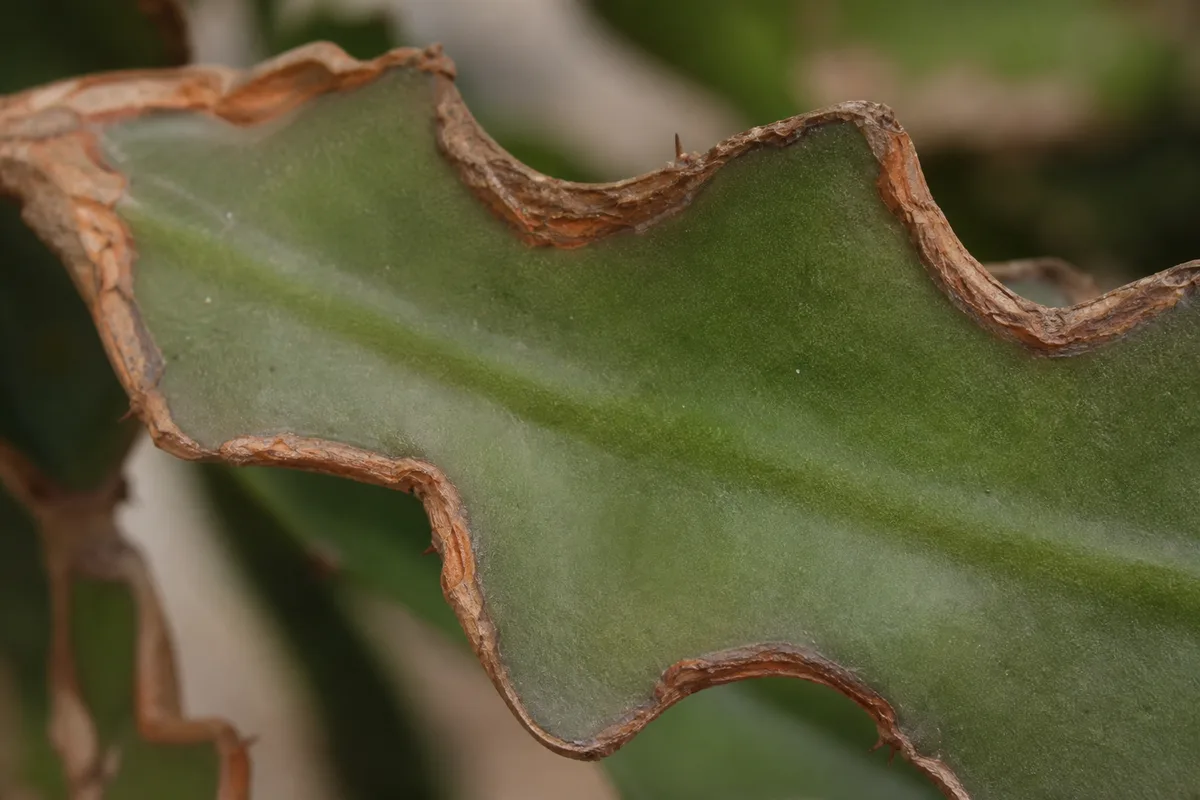
Low Humidity symptoms on Fishbone Cactus - compare with healthy tissue on the same plant.
Watch for:
- Thin, slightly shriveled lobed edges along the zigzag profile while the stem base still feels firm
- Subtle lengthwise wrinkling on outer trailing segments exposed to heater drafts
- Dry brown margins on older segments after repeated dry-air winters
- Slowed new segment formation despite adequate Fishbone Cactus light guide
- Fine stippling or webbing on stem angles when very dry air persists-often a secondary spider-mite flare
The pattern differs from underwatering on Fishbone Cactus in one important way: the upper mix may feel cool and slightly damp while segments still thin out. Roots are working; the plant is losing water through its large flat surface faster than humid air would allow. That overlap is why growers mistakenly soak again and invite rot.
Winter placement matters. A hanging basket directly above a radiator, forced-air register, or unhumidified south window often sees the lowest RH on the plant even when the room average looks acceptable.
Shrivelled segment edges in dry winter air
Healthy fishbone cactus segments look plump and crisp along the fishbone teeth. In low humidity, the outer lobes flatten first-the zigzag depth looks shallow, and a gentle pinch feels leathery rather than succulent. Damage usually starts on longest trailing stems and segments closest to heat sources, then spreads inward if RH stays low.
Old segments that have already thinned may not re-plump fully even after you raise humidity. Judge recovery by new growth at stem tips, not by old scarred tissue.
Spider mites as a secondary dry-air problem
Very dry indoor air-especially below about 30% RH-stresses fishbone cactus and favors spider mite outbreaks on flat stem surfaces. Mites cause fine yellow stippling and, in advanced cases, silken webbing in segment joints. If you see stippling without confirming low RH first, fix humidity and inspect stems before assuming watering alone will solve the problem.
How to confirm low humidity is the cause
Work through these checks before changing your care routine:
- Hygrometer reading - Place an inexpensive digital hygrometer near the basket at stem height for 24–48 hours. Sustained readings below 40% support low humidity as a primary stressor; mid-40s and above suggest looking elsewhere first.
- Stem texture vs. soil moisture - Shrivelled firm segments with moist upper mix and dry air point to transpiration stress. Very light pot weight and bone-dry mix several inches down point to underwatering instead.
- Season and placement - Note whether symptoms appeared or worsened when heating started, or after moving the hanger above a vent or radiator.
- New growth condition - Low humidity slows plump new segments; combined with good light and appropriate watering, stalled tips after a dry winter strengthen the diagnosis.
- Pest inspection - Check segment undersides and joints with a hand lens for mite stippling when RH has been very low.
- Rule out lookalikes - Sun scorch shows bleached or brown patches on the sun-facing side with firm stems and normal moisture. overwatering on Fishbone Cactus brings yellow, mushy bases and sour-smelling wet mix.
If the pot is heavy, soil stays wet for many days, and the stem base is soft, do not add humidity fixes instead of drainage correction-that pattern is not simple dry air.
Hygrometer check and seasonal context
Heated homes often drop from comfortable summer humidity to desert-dry winter air without obvious signs until stems thin. Log RH at the plant, not across the room-a reading by the thermostat can mislead when the basket hangs in a microclimate above a heat source.
Rule out underwatering, sun scorch, and pests
Underwatering - Light pot, dusty dry mix deep down, flattened stems throughout. Fix with one thorough soak, not a humidifier alone.
Sun scorch - Bleached or brown patches on segments facing intense afternoon glass; stems firm; soil moisture normal.
Spider mites - Stippling and webbing with or without shrivel; isolate and treat if confirmed after raising RH.
First fixes for fishbone cactus
Run a small humidifier near the hanging basket when hygrometer readings stay below 40% at the plant. Position it within 3–6 feet (1–2 m), aim for several hours of operation daily during heating season, and empty or clean the reservoir weekly to avoid mold. This single step raises ambient RH sustainably-unlike misting alone, which the RHS lists among humidity boosts but which barely shifts room RH for more than minutes.
That is the entire first fix. Do not also repot, prune shriveled segments, fertilize, or increase watering on day one. Wait one to two weeks at improved RH and reassess stem turgor before any secondary step.
Humidifier placement for hanging baskets
Trailing epiphytes lose moisture along their full stem length. Place the humidifier so rising vapor reaches the lowest hanging segments, not just the pot rim. Avoid blasting mist directly onto cold window glass at night-condensation can chill stems. In open floor plans, a tabletop unit beside the hanger often outperforms a distant room humidifier on max.
If you already own a whole-room humidifier, relocate the basket closer during winter or run it on a higher setting when the plant room is in use.
Pebble trays and plant grouping
A pebble tray-saucer filled with pebbles and water, with the pot elevated above the water line-raises local humidity modestly as water evaporates. It helps as a secondary support, especially under a hanging basket where a tray can sit on a shelf below the plant. Do not let the nursery pot sit in standing water; epiphytic cactus roots rot quickly when saturated.
Grouping plants increases shared transpiration humidity slightly. Pair fishbone cactus with neighbors that enjoy similar bright indirect light, leaving airflow between pots so wet surfaces do not stagnate.
Misting: optional limits on flat phylloclades
Occasional misting is optional, not a substitute for a humidifier when RH chronically sits in the 20s. Mist lasts minutes, misses the bulk of trailing stem length on a hanger, and can leave wet flat surfaces in poor airflow-conditions that invite fungal spotting on phylloclades. If you mist, do it in the morning with good air movement and never mist instead of fixing bone-dry root zones when the plant is actually underwatered.
Recovery timeline
Mild edge shrivel - After one to two weeks at 40–60% RH, new segment growth often looks plumper within 10–14 days during warm active growth. Older thinned lobes may stay visually flat permanently.
Moderate winter stress - Expect three to four weeks of stable humidity before trailing stems feel uniformly firm again. Spider mite stippling, if present, needs separate treatment even after RH improves.
Chronic multi-season damage - Segments that have been paper-thin through repeated dry winters may not fully recover; judge success by fresh zigzag tips, not old margins.
Worsening signs - Shrivel spreads while RH is already adequate, stems soften yellow at the base, or mix stays wet and smells sour. Those point to rot, pests, or underwatering-not more humidity.
Lookalike symptoms
- Underwatering - Very light pot, bone-dry mix deep down, flattened stems throughout. Soak once; humidity alone will not rehydrate a dry root ball.
- Overwatering and root rot on Fishbone Cactus - Limp segments with heavy wet soil and mushy yellow bases. Extra humidity makes this worse.
- Sun scorch - Bleached or brown sun-facing patches with firm stems and normal Fishbone Cactus watering guide.
- Brown segment tips - Often overlap with low humidity or direct sun; confirm RH and window exposure together.
- Spider mites - Stippling and webbing; dry air is a contributing stress, not the only cause.
What not to do
Do not increase watering to compensate for dry air when the upper mix is already moist-check RH first. Wet soil on stressed epiphytic roots invites rot faster than dry air alone damages stems.
Do not mist heavily instead of using a humidifier during sustained sub-30% RH winters; surface moisture does not fix room air and can foster fungal issues on flat stems.
Do not treat fishbone cactus like a desert cactus that ignores humidity; unlike desert cacti, fishbone cactus thrives in humidity as a tropical epiphyte.
Do not fertilize, repot, and run a humidifier on the same day-make one care change, observe stem response for a week or two, then adjust further.
Do not prune all shriveled segments immediately; firm tissue often plumps partially on new growth cycles once RH stabilizes.
How to prevent dry-air damage next winter
Before heating season, place a hygrometer near the basket and note baseline RH. When readings trend below 40%, start the humidifier early rather than waiting for visible shrivel.
Move hangers away from radiators and forced-air vents when possible, or deflect vents with a shield. Bright indirect light still matters-do not trade a humid spot for a dark corner.
Keep a pebble tray or grouped plant island as low-effort backup. Refresh chunky epiphytic mix on schedule so roots can supply water efficiently when transpiration demand rises in dry air.
Inspect segment joints monthly through winter for early mite stippling when RH drops. Stable 40–60% RH, correct watering when the compost begins to dry, and bright filtered light prevent most repeat dry-air damage on fishbone cactus.
Conclusion
Low humidity on Fishbone Cactus is a winter-room problem on a cloud-forest epiphyte, not a mystery watering failure. Confirm it with a hygrometer below 40% at the plant, distinguish firm shriveled stems with moist soil from true drought, and fix it with a humidifier near the hanging basket before you soak again. Old thin edges may not fully recover, but plump new zigzag segments mean the air-and the plant-are back in balance.
When to use this page vs other Fishbone Cactus guides
- Fishbone Cactus watering guide - Use for routine moisture checks before assuming low humidity is the main issue.
- Fishbone Cactus problems hub - Browse all 18 common issues on this species.
- Brown Tips on Fishbone Cactus - Different entry point when symptoms overlap with low humidity.