Underwatering on Fishbone Cactus: Causes, Checks & Fixes
Quick answer
Underwatering on fishbone cactus shows up as flattened, wrinkled zigzag stems and a very light, dusty-dry pot. First step: soak the mix thoroughly until water drains from the bottom, then follow the top-half-dry rhythm on the watering guide - not a desert-cactus calendar.
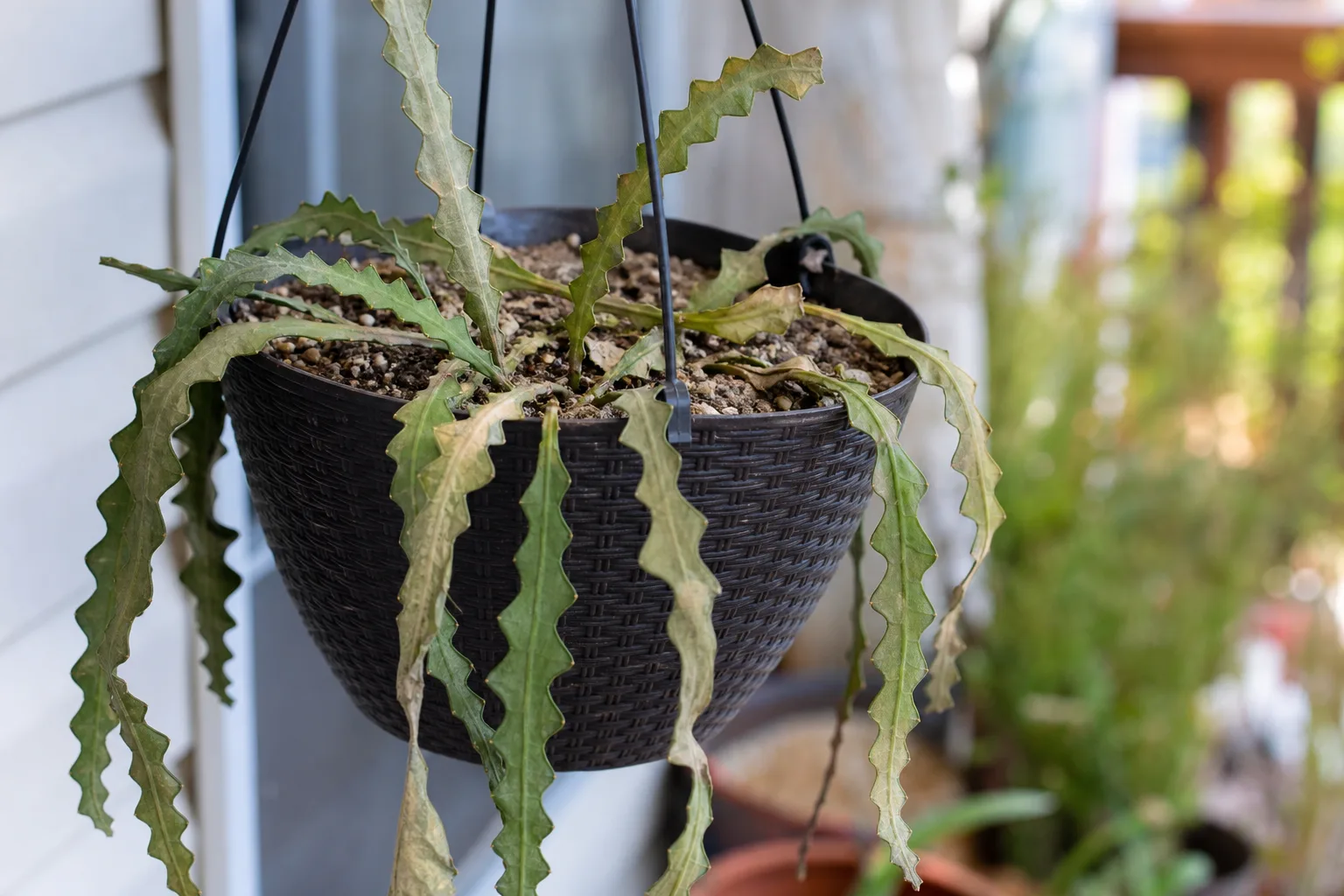
Underwatering on Fishbone Cactus: Causes, Checks & Fixes
This guide covers underwatering on Fishbone Cactus. See also the general Underwatering guide, watering, and light pages for this plant.
Underwatering on Fishbone Cactus: Causes, Checks & Fixes
Quick answer
Underwatering on fishbone cactus (Disocactus anguliger, ric rac or zigzag cactus) means the root zone has stayed too dry for too long during a period when the plant needed moisture. The telltale sign is flattening or shrivelling along the zigzag stem edges - those wide, lobed phylloclades lose their plump profile and feel thin, leathery, or crispy instead of firm and succulent.
First step: give one thorough soak today. Water slowly from the top until excess runs from the drainage holes, or bottom-water in a tray until the surface moistens. Let the pot drain completely. Do not fertilize, repot, or prune until you see how the stems respond over the next 48 hours.
Fishbone cactus is a cloud-forest epiphyte native to Mexican evergreen forests, not a desert cactus. It tolerates short dry spells better than constant sogginess, but it cannot sit bone dry for weeks the way a barrel cactus can. Most underwatering cases come from treating it like a desert plant after a prior overwatering scare.
This page covers dry-pot diagnosis and rescue soak - not the full seasonal watering calendar. For ongoing top-half-dry rhythm, pot-weight checks, and winter reduction, see the fishbone cactus watering guide.
What underwatering looks like on fishbone cactus
On this species, drought stress shows on the stems first, not as classic leaf yellowing. Fishbone cactus has no true leaves - the flattened, fishbone-shaped cladodes are the main photosynthetic tissue. When water reserves drop, they:
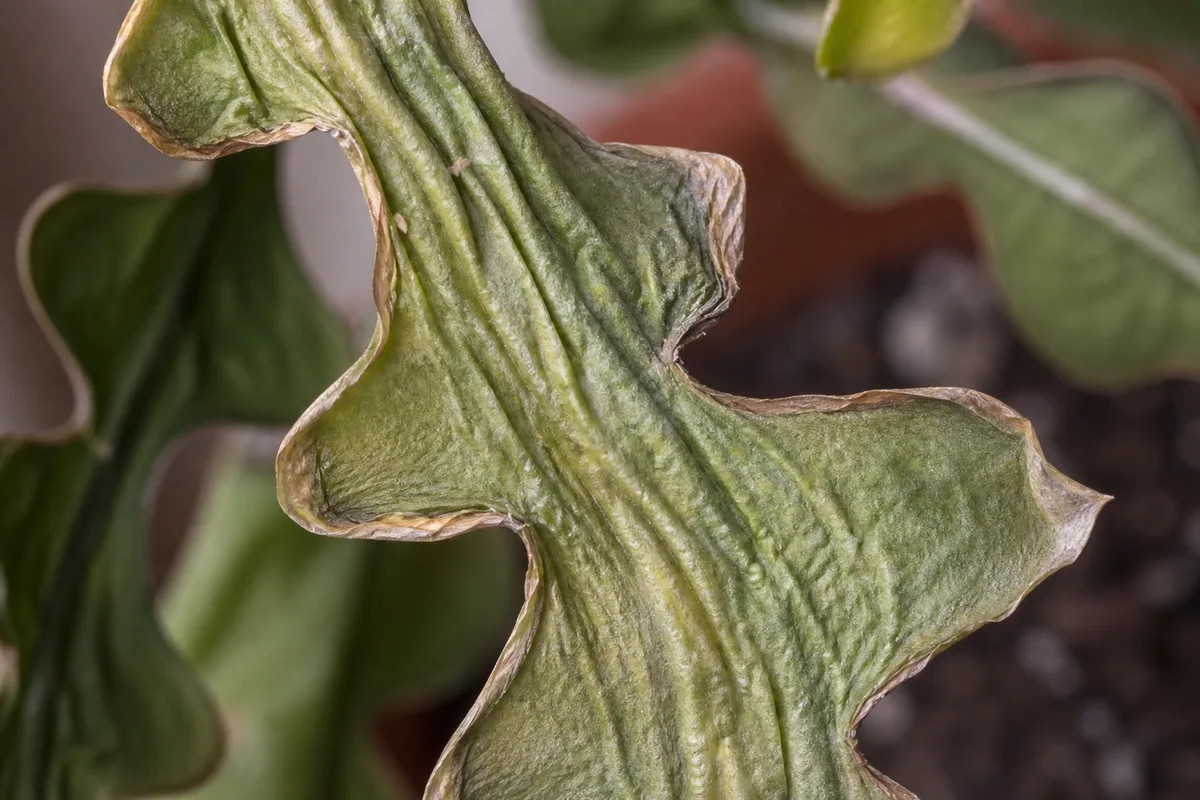
Underwatering symptoms on Fishbone Cactus - compare with healthy tissue on the same plant.
- Flatten along the lobed edges, losing the crisp zigzag depth that healthy plants show
- Wrinkle lengthwise and feel thin or papery between the lobes
- Droop or curl on trailing segments, especially at the outer ends of long stems
- Develop dry brown margins on the oldest segments after repeated dry cycles
- Stop producing new zigzag segments even though light levels seem adequate
Below the soil line, chronic drought may kill fine feeder roots while thicker roots stay pale and firm. The pot feels noticeably light, the mix is pale and dusty several inches down, and dry soil may pull slightly away from the pot wall - media that has pulled away may need several applications of water to rehydrate. Unlike overwatering, there is no sour smell and the base of the stems stays firm rather than yellow and mushy.
In a hanging basket, the top of the mix often dries days before the bottom. A plant can look thirsty at the surface while the lower root zone still holds slight moisture - or the opposite, if you only ever wet the top inch. That uneven drying is why surface color alone misleads you on fishbone cactus.
Dry-pot confirmation checklist
Before you soak, confirm at least three of these dry-pot signals:
| Check | Underwatering signal | Points away from drought |
|---|---|---|
| Pot weight | Very light vs. right after watering | Heavy and cool for many days |
| Upper mix (skewer) | Bone dry 2–3 inches down | Dark wet marks through top half |
| Segment texture | Wrinkled, thin, crispy edges | Limp yellow on wet mix |
| Stem base | Firm green tissue | Soft, mushy, or translucent |
| Smell | None at soil line | Sour or musty odor |
If the pot is heavy and bases are soft, stop here - you likely have root rot or overwatering, not simple thirst.
Why fishbone cactus gets underwatered
The common name “cactus” sends most growers down the wrong path. Disocactus anguliger evolved in the humid cloud forests of southern Mexico, growing on tree bark in filtered light with regular mist and rain. Its stems store some water, but far less than a desert barrel cactus. In a small indoor pot, letting the entire mix go bone dry for weeks during active growth will shrivel the zigzag segments - the BBC Gardeners’ World Magazine notes fishbone cactus needs watering when the top couple of centimetres of compost are dry, not after the whole pot has baked solid for a month.
Typical triggers:
- Desert-cactus habits - waiting until the whole pot is desiccated because “cacti like drought”
- Overcorrection after root rot - cutting water so aggressively after overwatering that the plant never gets a full soak
- Calendar neglect - forgetting a hanging basket for two or three weeks during a warm, bright summer
- Fast-drying conditions - small pots, terracotta, heat vents, south-facing glass, or grow lights that push evaporation faster than your watering rhythm
- Hydrophobic mix - old peat-heavy soil that repels water so liquid runs down the sides while the root ball stays dry inside
- Winter routine carried too far - reducing water for a cool rest is correct, but letting the mix go completely dry for months crosses into harmful drought
There is one intentional dry period: autumn drought helps trigger flowering on fishbone cactus - a cooler, drier winter spell stimulates flower buds when temperatures stay above roughly 15°C (59°F). That is a short, cool, controlled rest - not the same as accidental chronic underwatering during spring and summer growth. If you are deliberately dry-resting for buds, the stems may show slight wrinkling at the cool end of the range; if you are not trying to flower and growth-season stems are shrivelling, you have a care mismatch.
Low humidity can mimic underwatering - in dry indoor air, stems lose moisture through their large flat surface faster than roots can replace it, even when soil moisture is technically adequate. If stems shrivel but the upper mix feels slightly cool and damp, check humidity and airflow before soaking again. See low humidity if edges crisp every winter while the skewer still shows moisture.
How to confirm the cause
Work through these checks in order:
- Stem texture - Wrinkled, thin, and crispy-dry points to drought. Yellow, soft, and mushy at the base with wet mix points to overwatering or root rot.
- Pot weight - Lift the container and compare to right after a thorough watering. A very light pot right after you know you have not watered recently strongly supports underwatering.
- Moisture at depth - Insert a finger or dry wooden skewer into the upper half of the mix. Bone dry several inches down confirms drought. Wet, cold soil deep down with wilted stems suggests root damage, not simple thirst - see wilting for the wet-soil paradox.
- Watering history - How many days since the last thorough soak? Did water run freely from drainage holes, or only dampen the surface?
- Environment - Hot window, heater, or low-humidity winter heating season accelerates drying. Note whether multiple plants in the same spot need water on the same accelerated schedule.
- Root peek (if unsure) - Slide the plant partly from its pot. Firm, pale roots support a drought diagnosis. Brown, mushy, foul-smelling roots mean stop soaking and investigate rot instead.
If the pot is heavy, soil stays dark and cool at the surface for many days, and stems are yellow at the base, do not soak - wilted stems may indicate soil that is too wet, and rotting roots cannot take up water.
Dry-pot vs. wet-pot vs. low humidity
Both drought and root failure can make zigzag segments look unhappy. Pot weight, mix moisture depth, and stem texture tell them apart.
| Pattern | Pot weight | Mix moisture | Segment feel | First action |
|---|---|---|---|---|
| Underwatering | Very light | Upper half bone dry | Wrinkled, flattened, firm base | One thorough soak |
| Overwatering / root rot | Heavy, cool | Upper half still damp | Limp, yellow, soft base | Stop watering; inspect roots |
| Low humidity | Normal | Upper mix slightly cool-damp | Edge shrivel only | Humidity support; confirm skewer before soaking |
Full wet-mix branching lives on overwatering and wilting.
First fix for fishbone cactus
Soak the mix thoroughly once.
Place the nursery pot in a sink or basin (remove any sealed cache pot). Water slowly and evenly across the surface until water runs steadily from the drainage holes. For a very dry root ball, pause when water first runs through, let it absorb for ten minutes, then water again. Alternatively, set the pot in a tray of room-temperature water so the mix wicks moisture upward until the surface darkens - then lift it out and let it drain.
Drain completely before returning the plant to its hanger or shelf. Never leave fishbone cactus standing in a full saucer; let excess drain away and do not leave plants standing in water, even when the plant was previously dry.
That single deep soak is the entire first fix. Do not also fertilize, mist heavily, repot, or prune shrivelled segments on day one. Wait 24 to 48 hours and reassess stem turgor before any secondary step.
Recovery walkthrough: hydrophobic bark mix
Observed case (indoor hanging basket, 6-inch terracotta, bark-heavy epiphytic mix, bright east window, June): Pot felt feather-light after ten days without attention. Skewer dry three inches down. Outer zigzag segments flattened along lobes but bases still firm. First top-water ran straight through channels; mix stayed pale inside. Fix: Bottom-watered 25 minutes until surface darkened, drained fully, repeated once after a ten-minute pause. Result: Segments regained visible turgor within 36 hours; new tip growth plump by day twelve. Lesson: hydrophobic dry-down needs two soak passes, not daily sips.
Step-by-step recovery
If stems firm up after the first soak, rebuild a sustainable rhythm:
- Adopt the top-half-dry rule - Water only after the upper portion of the epiphytic mix has dried. Full skewer, finger, and pot-weight technique lives on the watering guide.
- Soak fully each time - Shallow sips that only wet the surface recreate the cycle of dry roots below and briefly damp soil on top.
- Adjust for season - Active growth needs more frequent drinks; autumn and winter need longer intervals with only just-damp lower mix - not complete desiccation for months.
- Address hydrophobic soil - If water races through channels and the root ball stays pale and dry inside, bottom-water twice in one session or repot into fresh chunky epiphytic mix when the plant stabilizes - not on the same day as the rescue soak.
- Raise humidity if air is very dry - A pebble tray or grouping with other plants helps stem plumpness in heated winter rooms. Fix soil moisture first; humidity is a secondary support, not a substitute for root watering.
- Hold fertilizer - Skip feed until new growth looks turgid for two weeks. Salt stress on drought-damaged roots slows recovery.
If stems stay limp after a proper soak and the mix was genuinely dry, inspect roots. Trim any brown mushy tissue with sterile scissors, let cuts callus, and repot into airy epiphytic mix per the root rot guide before resuming the top-half-dry protocol.
Recovery timeline
Mild dehydration - Stems often regain firmness within 24 to 48 hours after one thorough soak. Plants wilt when roots cannot supply sufficient moisture, and rehydration usually reverses short-term wilting quickly when roots are intact. You may see segments stand up slightly before new growth appears.
Moderate stress - Flattened lobes may stay visually thin on old tissue, but new zigzag tips should look plump within one to three weeks during warm active growth.
Chronic drought with fine root loss - Recovery can take four to eight weeks or longer. Judge success by fresh segments at stem ends, not by old crispy margins greening up.
Worsening signs - Stems continue thinning after correct soaking, the base turns soft and yellow, or the mix stays wet and smells sour. Those point to rot or a different problem, not ongoing simple underwatering.
Lookalike symptoms
- Overwatering and root rot - Limp stems with heavy, wet soil, yellow mushy bases, and sour smell. Root rots can paradoxically cause wilting even when soil is wet. Soaking makes this worse. See overwatering and root rot.
- Low humidity - Shrivelled stems with moist upper soil and very dry indoor air, especially near heaters in winter. See low humidity.
- Not enough light - Long, thin, stringy stems stretching toward a window rather than flattening from drought; the plant etiolates instead of shrivelling uniformly. See not enough light.
- Intentional autumn drought for flowering - Slight stem wrinkling during a cool rest with only just-damp mix; expected if you are triggering buds per RHS flowering guidance, problematic if accidental during warm growth.
- Sun scorch - Bleached or yellow patches on segments facing intense afternoon sun, often with firm stems and normal soil moisture.
- Wilting overlap - Turgor loss from drought and from root failure look similar until you check pot weight. The wilting guide walks the dry-pot versus wet-pot branch in full.
What not to do
Do not drench daily after one dry spell - swinging from chronic drought to constant wetness invites root rot on epiphytic roots. Avoid misting instead of soaking; surface humidity does not rehydrate a dry root ball. Do not fertilize a stressed plant before stems recover.
Skip repotting on day one unless the mix is clearly hydrophobic and water will not penetrate. Do not prune all shrivelled stems immediately - firm segments often plump back, and cut tissue cannot photosynthesize while the plant rebuilds.
Do not assume every wilting cactus needs less water. Fishbone cactus wilts from dryness far more often than from excess moisture in beginner care, but always confirm soil moisture before soaking a plant that might be waterlogged.
How to prevent underwatering next time
Match watering to how fast your pot dries, not a desert-cactus calendar. For most indoor fishbone cacti in active growth, water when the compost begins to dry out in the upper half, then soak until excess drains. Seasonal intervals, pot-weight technique, and winter reduction are covered on the fishbone cactus watering guide.
Use a chunky epiphytic mix - potting compost, perlite, and orchid bark - so the root zone breathes between drinks without baking solid for a month. Keep drainage holes open and empty saucers within 30 minutes of watering.
In winter, reduce frequency but do not forget the plant entirely. A cool rest with only just-damp mix supports flowering; complete desiccation for months still damages roots.
Hang or shelf the plant where you will see and lift the pot regularly - trailing stems hide a light, dry container until segments are already flattened.
When to worry
Escalate if stems are paper-thin and limp with bone-dry mix during active summer growth, or if they stay collapsed 48 hours after a confirmed thorough soak. Inspect roots when rehydration fails.
If more than half the trailing stems are crispy-brown and brittle with no firm tissue remaining, propagation from healthy upper cuttings may be safer than waiting on a severely depleted base - see the propagation guide - but try one proper soak first when any segment still feels firm.
Related fishbone cactus guides
- Fishbone cactus overview - species background and care hub
- Watering guide - top-half-dry rhythm and seasonal checks
- Overwatering - wet mix and limp yellow segments
- Root rot - mushy bases and sour soil
- Wilting - dry-pot versus wet-pot diagnostic path
- Propagation - salvage when base roots are gone
Conclusion
Underwatering on fishbone cactus is a rhythm problem disguised by the word “cactus.” Confirm it with light pot weight, dry upper mix, and flattened zigzag stems, then fix it with one full soak and the top-half-dry schedule on the watering guide. Old crispy edges may not reverse, but plump new segments mean the plant is back on track - and that is the recovery sign worth watching for.