Hoya Plant Care: Light, Water, Soil & Tips
Hoya spp.
Never cut the peduncle - hoyas bloom from the same stem repeatedly. Bright indirect light with seasonal cool/dry rest triggers flowering. Semi-succulent: allow top half to dry between waterings.
Hoya Plant Care: Light, Water, Soil & Tips
Start with wateringThe most common care mistake for HoyaWatering guide →Hoya care essentials
Light
bright indirect light
Water
Allow top half to dry before watering. Every 7–14 days in summer; 21–28 days in winter. Drier winter rest supports flowering.
Soil
Well-draining mix: standard compost 50% + perlite 30% + orchid bark 20%.
Humidity
40–60%
Temperature
18–27°C (65–80°F)
Fertilizer
Use balanced or phosphorus-rich liquid fertilizer at half strength and stop if the plant is stressed, newly repotted, or not actively growing.
About Hoya
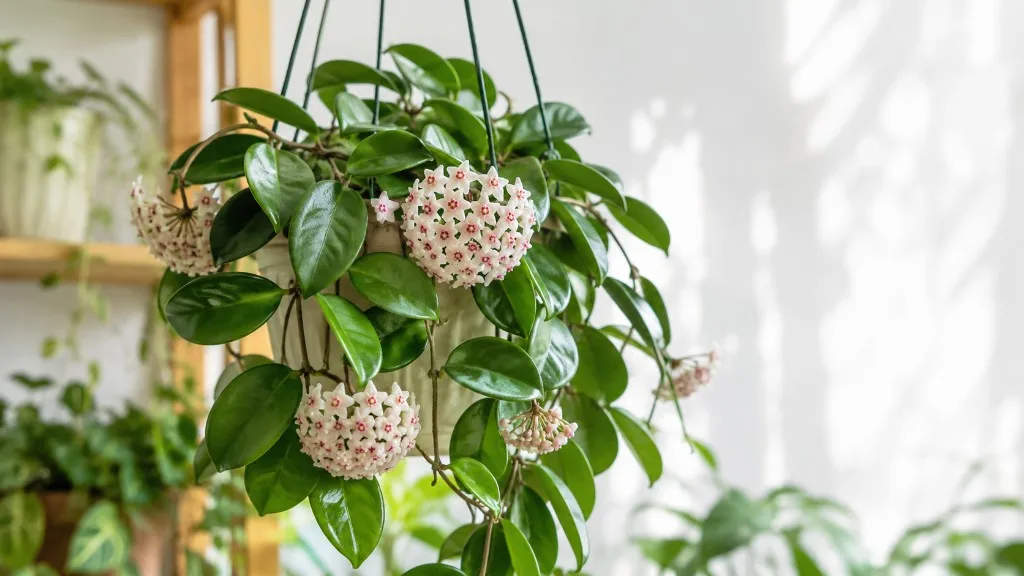
Hoya is native to Asia, Australia, and Pacific Islands (most species from humid tropical and subtropical forests), typically reaches Trails or climbs 2–10 ft depending on species indoors, with slow to moderate growth. Hoya has a trailing growth habit and part of the Apocynaceae family. It is also known as Wax Plant, Porcelain Flower, and Wax Vine.
| Detail | Information |
|---|---|
| Also known as | Wax Plant, Porcelain Flower, Wax Vine |
| Native region | Asia, Australia, and Pacific Islands (most species from humid tropical and subtropical forests) |
| Mature size | Trails or climbs 2–10 ft depending on species |
| Growth rate | Slow to moderate |
| Growth habit | Trailing |
| Scientific name | Hoya spp. |
| Family | Apocynaceae |
Hoya Plant Care: Light, Water, Soil & Tips
What Is Hoya?
Hoya - commonly called wax plant, wax vine, or porcelain flower - is a genus of more than 550 species of evergreen, vining houseplants prized for glossy foliage and clusters of fragrant, star-shaped blooms. The plants belong to the family Apocynaceae (dogbane family) and are native to tropical and subtropical forests across Southeast Asia, Indomalaya, Malesia, northern Australia, and islands of the western Pacific, according to the NC State Extension Gardener Plant Toolbox. In cultivation, most hoyas trail or climb 2 to 10 feet (0.6 to 3 m) depending on species, growing at a slow to moderate pace indoors when light and watering match their native rhythm.
If you are deciding whether hoya fits your home, the honest summary is this: hoya rewards Hoya light guide, a chunky epiphytic mix, and patience - and it punishes soggy roots, dim corners, and impatient Hoya repotting guide. It is easier than a finicky fern and slower than a pothos. The payoff is long-lived vines with waxy leaves that can bloom for years from the same flower spurs, plus propagation simple enough that one mature plant can supply gifts for every plant-loving friend you know. For pet households, hoya is also one of the safer popular houseplants: the ASPCA lists wax plant as non-toxic to cats and dogs, though any chewed plant material can still cause mild stomach upset in sensitive pets.
Botanical Background and Epiphytic Nature
Hoya is named for Thomas Hoy, an 18th-century gardener to the Duke of Northumberland - a reminder that this genus has been cultivated by serious growers for centuries, not just as a recent social-media trend. Botanically, hoyas are epiphytes: in the wild they anchor to tree trunks and branches rather than rooting in heavy ground soil. Their roots expect air circulation, quick drainage, and periodic drying - the opposite of what happens in dense, peat-heavy indoor mix that stays wet for a week.
That epiphytic habit explains almost every common indoor failure. overwatering on Hoya does not just dampen leaves; it suffocates roots that evolved to breathe between rain events. The thick, waxy leaf coating and semi-succulent tissue store water, which is why a healthy hoya can look fine for days after the mix has dried while a thirsty one shows subtle leaf wrinkling before obvious wilt. Flowers emerge from woody peduncles (flower spurs) that persist on the vine for years. Do not cut peduncles after blooms fade - the plant reblooms from the same structures, and removing them resets the clock on flowering for that stem.
Most species grown as houseplants are frost-intolerant perennials suited to USDA Hardiness Zones 10 through 12 outdoors. Everywhere else, hoya lives as an indoor or greenhouse plant. Retail tags may still list the family as Asclepiadaceae; modern taxonomy places hoya firmly in Apocynaceae, but the care advice is the same regardless of which family name appears on an older label.
Why Species and Leaf Type Change the Rules
Two pots labeled “Hoya” at a garden center may contain Hoya carnosa with thick oval leaves, Hoya carnosa ‘Compacta’ (Hindu rope) with twisted foliage, Hoya kerrii with heart-shaped leaves, Hoya obovata with large speckled leaves, Hoya linearis with thin dangling stems, or Hoya lacunosa with smaller fragrant blooms. All share epiphytic roots and a dislike of wet feet, but leaf thickness changes how fast the plant dries out.
Thick-leaved species such as H. carnosa and H. obovata tolerate longer intervals between waterings and forgive occasional neglect better than thin-leaved types like H. linearis, which dry faster and show stress sooner. Variegated cultivars - including popular H. carnosa ‘Tricolor’ and H. carnosa ‘Krimson Princess’ - often need slightly more light than all-green forms to maintain color, and they scorch more easily in unfiltered afternoon sun. If your plant arrived without a species tag, treat it as a thick-leaf hoya until proven otherwise: let the mix dry more thoroughly, avoid heavy feeding, and watch whether new leaves are firm and glossy rather than thin and limp.
Flowering also varies by species and maturity. H. carnosa, H. australis, and H. lacunosa are among the easier bloomers indoors once they receive enough light and a slightly snug pot. H. kerrii single-leaf novelty pots rarely vine or flower without an attached node. Bloom clusters - often pink, white, or red with a sweet fragrance - typically appear on mature vines in spring through fall when light is strong and the plant is not freshly repotted. Expect blooms on a timeline of years, not weeks, especially from a young cutting.
Best Growing Conditions for Hoya
Hoya does best when your space approximates the bright, airy, humid rhythm of a tropical forest canopy edge - not the forest floor, and not a desert windowsill. The four variables that decide almost every outcome are light, water, soil, and temperature. Align those and feeding, trellising, propagation, and flowering become manageable. Misalign one - especially water or light - and the plant stalls for months while you chase symptoms on individual leaves.
Light Requirements
Hoya needs bright indirect light for most of the day to grow compactly and bloom reliably. A practical indoor placement is within a few feet of an east-facing window, or behind a sheer curtain on a south- or west-facing exposure where the plant receives strong ambient light without harsh midday sun on the leaves. Many species tolerate one to two hours of direct morning sun when acclimated gradually - H. carnosa and H. australis handle this better than thin-leaf or heavily variegated types.
The fastest diagnostic for incorrect light is new growth, not old leaves. Compact internodes, firm waxy leaves, and steady vine extension mean the plant is probably happy. Long gaps between leaves, small pale new foliage, and vines reaching toward the window mean the plant wants more light - and insufficient light is the number one reason mature hoyas fail to flower indoors. Bleached patches, brown sun-facing scorch, or midday leaf curling mean reduce direct exposure or acclimate more slowly over one to two weeks when moving from a dim shop shelf to a bright sill.
If natural light is weak - common in winter at northern latitudes - a full-spectrum grow light on a 12 to 14 hour timer, positioned roughly 12 to 18 inches (30 to 45 cm) above the canopy, keeps growth steady without the stretched, slow look that appears on hoyas parked in dim corners. Rotate the pot every week or two so vines do not lean permanently toward the light source.
Temperature and Humidity
Hoya prefers stable indoor temperatures between 65 and 80°F (18 and 27°C) during active growth. It tolerates normal home heat but dislikes cold drafts below about 55°F (13°C), sudden drops near poorly sealed winter windows, and placement directly under blasting AC vents. Sustained cool temperatures slow growth and extend the dry-down interval after watering - adjust moisture checks when you move a plant to a colder room for winter.
Humidity is helpful but secondary compared with light and watering for most species. Average home humidity in the 40 to 60% range suits H. carnosa, H. obovata, and similar thick-leaf types well. Very dry winter air - below about 30% - can stress H. linearis and other thin-leaf species and encourages spider mites. Grouping plants, using a pebble tray with the pot elevated above the water line, or running a small humidifier near the plant all help more than occasional misting, which raises humidity briefly and can leave wet foliage that invites fungal spotting when air circulation is poor.
Soil and Drainage for Epiphytes
Use a chunky, well-draining epiphytic mix - not standard bagged potting soil straight from the shelf. The principle matters more than a single branded recipe: the mix should drain freely, hold air around roots, and dry through much of the volume within days, not weeks. A workable home blend is roughly 50% quality houseplant compost or coco coir, 30% perlite, and 20% orchid bark or coconut husk chips - increase bark and perlite for humid climates or heavy-handed waterers, and reduce bark slightly if you struggle to keep thin-leaf species hydrated in very dry air.
Target a slightly acidic to neutral pH around 6.0 to 7.0. Hobbyists rarely need to meter pH for hoya; the bigger practical issues are compaction and water retention from old mix that has broken down into fine mud. Always plant in a container with a drainage hole. Terracotta dries faster than plastic - useful for beginners who tend to overwater. Many experienced growers keep hoyas slightly root-bound because a snug root zone mimics epiphytic conditions and can encourage flowering; jumping to an oversized pot after every growth spurt often delays blooms and increases rot risk.
How to Water Hoya
The general rule for hoya is water when the mix has dried substantially - not on a fixed calendar. Thick-leaved species often want the top half of the mix dry before the next drink; thin-leaf species may need watering when the top third is dry. A practical starting rhythm in warm, bright conditions is roughly every 10 to 14 days in summer and every 3 to 4 weeks in winter, but your home’s light, pot size, and mix texture will move that interval up or down. Check the pot, not the date.
Use a finger, wooden skewer, or pot-weight check at depth before watering. When the root zone is appropriately dry and the pot feels noticeably lighter, water thoroughly until a small amount runs from the drainage hole, then empty the saucer so roots are not standing in stale water. Healthy leaves should stay firm and glossy; slight wrinkling or a softer feel on thick-leaved types often means the plant is ready for water - but wrinkling on a heavy, wet pot points to root damage, not drought.
Hoya watering guide During Active Growth
During the warm, bright months when vines are extending and new leaves are unfurling, hoya uses water on a predictable dry-down cycle. The goal is a full soak followed by a real dry period - not permanently damp mix that mimics ground soil. Because leaves store moisture, hoya tolerates underwatering on Hoya better than overwatering, and many collectors describe erring on the dry side as the safer default for H. carnosa and similar thick-leaf species.
If you just bought the plant, expect a short adjustment period. Nursery hoyas often arrive in peat-heavy mix with roots accustomed to greenhouse humidity. Do not compensate for transplant shock by watering more frequently unless the pot is genuinely dry; stabilize light first, then refine the interval based on how fast your specific container dries in your actual window.
Seasonal Adjustments
In cooler, dimmer months, growth slows and the pot dries more slowly. Stretch the interval between waterings and reduce or pause fertilizer until new growth resumes in spring. The most common winter failure mode is continuing a midsummer watering schedule in lower light, which keeps the mix waterlogged and leads to yellow leaves, fungus gnats, and root rot on Hoya. Many growers water only once every three to four weeks in winter for mature H. carnosa in moderate light - but a thin-leaf H. linearis under grow lights may still need water every week or two. Let the pot tell you which camp your plant is in.
Common Watering Mistakes
The single most damaging mistake is watering on a schedule without checking the mix. The second is letting the plant sit in a full saucer or decorative cachepot, which suffocates epiphytic roots within days even if the surface looks dry. The third is giving tiny daily sips instead of a thorough soak when the plant is dry - that wets only the top layer while the center stays parched, producing repeated stress cycles that weaken roots over time.
People also misread hoya signals. Wrinkled leaves on a light, dry pot usually mean water. Yellow, mushy leaves on a heavy, wet pot mean stop watering and inspect roots. Firm leaves on dry mix may mean the plant is fine - thick-leaf hoyas often look unaffected long after thinner plants would wilt. Always pair leaf symptoms with a moisture check at depth before adding more water.
How to Feed Hoya
Hoya is a light to moderate feeder during active growth, not a heavy one. A balanced water-soluble fertilizer - for example 10-10-10 or 20-20-20 - diluted to one-quarter to one-half of the label rate is sufficient for most indoor plants. Apply to already-moist soil every four to six weeks from spring through early fall, or monthly if your plant is in very bright light and actively vining. If your potting mix contains a slow-release starter charge, hold off on supplemental feeding for the first month after purchase or repotting.
Hold fertilizer entirely during the cool, low-light months, after a major repot until new growth appears, and while the plant is recovering from root rot or pest damage. Overfeeding produces salt buildup and brown leaf margins that persist even when watering seems correct. If margins crisp despite good moisture, flush the pot with plain water at two to three times the pot volume and pause feeding for six to eight weeks.
Bloom encouragement is mostly about light and maturity, not megadoses of phosphorus. A slightly snug pot, intact peduncles, and six or more hours of bright indirect light daily do more for flowering than bloom-booster products applied to a young plant in a dim corner. When buds appear, avoid moving the plant - hoyas sometimes drop bud clusters after abrupt location or orientation changes.
Repotting and Root Health
Repot hoya roughly every two to three years, or whenever roots circle drainage holes, the mix has compacted into mud, or water runs straight through without soaking in. Unlike fast-growing pothos, hoya does not need frequent upsizing - and repotting too often, especially into a much larger pot, can delay flowering for a season or more. The best timing is early spring as active growth resumes, which gives the plant a full warm season to settle without sitting in excess wet mix.
Choose a pot only one size larger than the current root ball - typically 1 to 2 inches (2.5 to 5 cm) wider. Oversized pots hold excess wet mix around roots that cannot use it, which is the most common trigger for rot after repotting. Use fresh chunky epiphytic mix, keep the vine at the same depth as before, and water lightly for the first week while cut roots heal. Keep the plant in bright indirect light and avoid fertilizer until you see new tip growth.
Signs It Is Time to Repot
Physical signs include roots emerging from drainage holes, mix that smells sour, or water channeling through without absorbing. Performance signs include stalled growth for months during warm weather despite adequate light, or chronic pest issues tied to broken-down mix that never dries. Do not repot a plant that is actively collapsing from overwatering until you have inspected roots, trimmed any brown mushy tissue, and let the root zone dry appropriately. Moving a failing root ball into fresh mix without fixing the moisture problem rarely saves hoya.
If your plant is blooming or covered in peduncles, delay repotting until after the bloom cycle unless root rot makes immediate action necessary. Preserving peduncles and avoiding unnecessary disturbance keeps the plant on a faster path to the next flower cluster.
Propagation Methods for Hoya
The standard home propagation method for hoya is stem cuttings - fast, free, and the easiest way to share species that can be slow to find in shops. Take a 4- to 6-inch (10 to 15 cm) cutting just below a node using clean, sharp shears. Each cutting needs at least one node (the bump where leaves and roots emerge); a leaf alone without a node, common in H. kerrii novelty pots, will not grow into a vine.
Remove leaves from the lower third of the stem, leaving one or two leaf pairs at the top. You can root cuttings in plain water - change the water every few days - or directly in a moist, chunky mix. Water-rooted cuttings transplant into epiphytic mix once roots reach 1 to 2 inches (2.5 to 5 cm) long, usually within three to six weeks at warm room temperatures near 70°F (21°C). If rooting in mix, keep the medium lightly moist and the cutting in bright indirect light until new growth confirms establishment.
Do not propagate stressed, diseased, or heavily pest-infested plants - cuttings inherit the parent’s problems. Mealybugs on a parent vine often hide in the exact leaf axils your cutting carries. Address pests first, then propagate from healthy growth.
Common Hoya Problems
Most hoya problems are environmental, not mysterious diseases. The plant communicates through leaf firmness, vine spacing, and peduncle behavior long before the entire specimen collapses. The useful habit is to check light, moisture, and root health in that order before reaching for extra fertilizer or repotting into a bigger pot.
Yellow Leaves, Wrinkled Foliage, and Pests
Wrinkled or slightly soft leaves on a light, dry pot usually mean underwatering - give a thorough drink and watch firmness return over 24 to 48 hours. Yellow leaves with mushy texture on a wet pot mean overwatering and possible root rot; inspect roots for brown soft tissue, trim damage, repot into fresh chunky mix, and dry out the root zone before resuming a conservative watering rhythm. Yellow lower leaves on an otherwise firm plant may be normal aging - remove them and watch new growth rather than overcorrecting every variable at once.
Leggy, sparse vines with small new leaves almost always mean insufficient light. Move the plant closer to a bright window or add a grow light, then wait for compact new growth before judging success. Brown sun scorch on variegated leaves means reduce direct exposure. Bud drop after moving the plant usually means location change during bloom - keep future budded vines stationary until flowers open.
Watch for mealybugs in leaf axils and along stems - white cottony clusters that recur after wiping. Spider mites leave fine stippling and webbing, especially in dry winter air. Scale appears as immobile brown bumps. Aphids may cluster on tender new growth. Catch pests early with weekly inspection of leaf undersides and peduncles. Isopropyl alcohol on a cotton swab, insecticidal soap applied per label directions, and improving air circulation handle most infestations if you act before the population spreads. Fungus gnats indicate overly wet surface mix; let the top layer dry longer between waterings.
Root rot combined with foul-smelling mix and black mushy roots is advanced overwatering damage. Trim healthy vine sections above the rot and restart from cuttings if the base is compromised - hoya often recovers faster from a clean cutting than from a rotting root ball left in old mix.
Is Hoya Safe for Pets?
Hoya is listed as non-toxic to cats and dogs by the ASPCA wax plant entry, which specifically references Hoya carnosa ‘Krinkle Kurl’ (Hindu rope) under common names including wax plant and porcelain flower. That makes hoya a strong choice compared with popular toxic trailing plants such as pothos, philodendron, and English ivy - all common in the same hanging-basket niche.
Non-toxic does not mean problem-free if eaten. Any plant material can cause mild vomiting or gastrointestinal upset if a pet consumes a large amount, and dangling vines invite batting and chewing. Place pots out of reach if you have a cat that treats houseplants as toys, or hang baskets high enough that stems cannot be pulled down. If you suspect significant ingestion and symptoms persist, contact your veterinarian or the ASPCA Animal Poison Control Center at (888) 426-4435 (a consultation fee may apply). This is general information, not veterinary advice.
For households balancing pet safety with trailing display, hoya offers a rare combination: genuinely attractive vining habit, interesting blooms, and a credible non-toxic listing from a recognized authority. Confirm the plant is actually a Hoya species and not a lookalike on the same shelf before relying on that safety profile.
Conclusion
Hoya is a slow to moderate epiphytic vine from tropical Asia and the Pacific that stores water in waxy leaves and blooms from persistent peduncles on mature, well-lit vines. Give it bright indirect light, a chunky well-draining mix, a real dry-down between waterings, and stable warm temperatures, and it will reward patient growers with glossy foliage and fragrant flower clusters that can return year after year from the same spurs. Take stem cuttings to expand your collection, repot only when roots or mix quality demand it, and never cut flower spurs after blooms fade.
When something looks wrong, read the plant in context: wrinkled firm leaves on a dry pot mean water; yellow mushy leaves on a wet pot mean roots; long bare stems mean light; dropped buds after a move mean stability. Fix the environment first, adjust watering second, and treat pests before they spread through leaf axils and peduncles. Do that, and hoya becomes one of the most durable, pet-friendly vining houseplants you can grow - as long as you respect its epiphytic roots and give it time to bloom on its own schedule.
When to use this page vs other Hoya guides
- Hoya overview - Canonical hub for this species - care topics and problems branch from here.
- Hoya problems - Symptom-first path when you already know something is wrong.
Related Hoya guides
How to care for Hoya?
How much light does Hoya need?
bright indirect light
- bright indirect light - bright indirect light.
When should you water Hoya?
Allow top half to dry before watering. Every 7–14 days in summer; 21–28 days in winter. Drier winter rest supports flowering.
- Water only when soil is completely dry; leaves should still feel firm - Allow top half to dry before watering.
- Drain excess water - Allow top half to dry before watering.
What soil works best for Hoya?
Well-draining mix: standard compost 50% + perlite 30% + orchid bark 20%.
- potting mix - Well-draining mix: standard compost 50% + perlite 30% + orchid bark 20%.
- perlite (30%) - Well-draining mix: standard compost 50% + perlite 30% + orchid bark 20%.
- orchid bark (20%) - Well-draining mix: standard compost 50% + perlite 30% + orchid bark 20%.
Grower notes for Hoya
What matters most with Hoya
Hoya stores more water than it looks like it does. Treat soft leaves, wrinkling, and stalled growth as signals to check both moisture and light before watering again. In practice, the care checkpoint is simple: bright indirect light. Pair that with well-draining mix: standard compost 50% + perlite 30% + orchid bark 20%, and avoid changing water, pot size, and placement all at once.
Best placement in a real home
Hoya belongs where bright indirect light is realistic for most of the day, not only where the pot looks good. Allow top half to dry before watering. Every 7–14 days in summer; 21–28 days in winter. Drier winter rest supports flowering. If the pot stays wet longer than expected, move the plant into better light or reassess the mix before watering again. Humidity target: 40–60%. Temperature comfort zone: 18–27°C (65–80°F).
Before you buy this plant
Choose Hoya with firm new growth, clean leaf undersides, and soil that does not smell sour or feel compacted. Be cautious if you see no-flowers, sticky residue, collapsed crowns, or a pot that is wet in poor light. Cosmetic old-leaf damage is less worrying than weak roots or active pests.
First month after bringing it home
Do not repot Hoya on day one unless the mix is failing or pests are obvious. Quarantine it, learn how fast the pot dries, and keep care boring while it adjusts. Watch especially for no-flowers, yellow-leaves, and mealybugs. If problems appear, correct the condition first rather than stacking fertilizer, repotting, and pruning together.
Pet-aware note for Hoya
Hoya is a better choice for pet-aware homes than toxic ornamentals, but pet safe does not mean the plant should be chewed. Use hanging, shelf, or room placement if pets dig in soil or shred leaves, and choose sturdier plants for high-traffic pet zones.
How to tell Hoya is settling in
Also sold as Wax Plant, Porcelain Flower, and Wax Vine, this plant should be judged by stable new growth rather than label names alone. If you plan to multiply it later, common methods include Stem node cuttings and Air layering. Repot only when you see Roots circling the pot base and extremely rapid drying. If yellow-leaves shows up early, inspect light, watering, and roots before assuming the plant is permanently weak.
Is it pet safe?
Hoya is generally considered non-toxic to cats and dogs.
Non-toxic to cats and dogs per ASPCA.
Watering Hoya
For Hoya, water only when soil is completely dry; leaves should still feel firm and water every 10–14 days in summer; every 3–4 weeks in winter. Minimal water in winter; near-dormant in cool conditions.
| Detail | Information |
|---|---|
| How often | Every 10–14 days in summer; every 3–4 weeks in winter |
| How to check | Water only when soil is completely dry; leaves should still feel firm |
| Seasonal changes | Minimal water in winter; near-dormant in cool conditions |
Signs of overwatering
- Yellow or mushy leaves
- stem blackening at soil level
- root rot
Signs of underwatering
- Slightly wrinkled or rubbery leaves
- lightweight pot
Soil & potting for Hoya
Use a mix of potting mix, perlite (30%), orchid bark (20%) for Hoya. Good drainage essential; never waterlog. Target soil pH around 6.0–7.0. Repot every 2–3 years; Hoya blooms better when slightly pot-bound, ideally in spring.
| Detail | Information |
|---|---|
| Recommended mix | potting mix, perlite (30%), orchid bark (20%) |
| Drainage | Good drainage essential; never waterlog |
| Soil pH | 6.0–7.0 |
| Repotting frequency | Every 2–3 years; Hoya blooms better when slightly pot-bound |
| Best season to repot | Spring |
Signs it needs repotting
- Roots circling the pot base
- extremely rapid drying
Humidity & temperature for Hoya
Hoya prefers 40–60%, though normal home humidity is usually fine. Keep temperatures around 18–27°C (65–80°F).
| Detail | Information |
|---|---|
| Humidity | 40–60% - normal home humidity is fine. |
| Ideal temperature | 18–27°C (65–80°F) |
Fertilizer & pruning for Hoya
Use use balanced or phosphorus-rich liquid fertilizer at half strength and stop if the plant is stressed, newly repotted, or not actively growing. for Hoya.
| Detail | Information |
|---|---|
| Fertilizer type | Use balanced or phosphorus-rich liquid fertilizer at half strength and stop if the plant is stressed, newly repotted, or not actively growing. |
Common problems on Hoya
No Flowers
MediumLikely cause: Hoyas don't bloom without sufficient light and a seasonal cool/dry rest. Removing peduncles eliminates future bloom sites.
Quick fix: Increase light; allow cool dry winter rest; never cut peduncles
Full fix guide →Yellow Leaves
MediumLikely cause: Overwatering causes yellow leaves in hoyas
Quick fix: Allow top half of soil to dry before watering; check drainage
Full fix guide →Mealybugs
MediumLikely cause: Mealybugs colonise hoya leaf axils, protected by dense waxy leaves
Quick fix: 70% alcohol on cotton swab; neem oil; inspect weekly
Full fix guide →Brown Tips
MediumLikely cause: Common on this plant type; confirm with recent watering, light, and root checks.
Quick fix: Inspect the plant and correct the most likely care stressor before stacking treatments.
Full fix guide →Root Rot
MediumLikely cause: Common on this plant type; confirm with recent watering, light, and root checks.
Quick fix: Inspect the plant and correct the most likely care stressor before stacking treatments.
Full fix guide →Overwatering
MediumLikely cause: Common on this plant type; confirm with recent watering, light, and root checks.
Quick fix: Inspect the plant and correct the most likely care stressor before stacking treatments.
Full fix guide →Underwatering
MediumLikely cause: Common on this plant type; confirm with recent watering, light, and root checks.
Quick fix: Inspect the plant and correct the most likely care stressor before stacking treatments.
Full fix guide →Spider Mites
MediumLikely cause: Common on this plant type; confirm with recent watering, light, and root checks.
Quick fix: Inspect the plant and correct the most likely care stressor before stacking treatments.
Full fix guide →Aphids
MediumLikely cause: Common on this plant type; confirm with recent watering, light, and root checks.
Quick fix: Inspect the plant and correct the most likely care stressor before stacking treatments.
Full fix guide →Leggy Growth
MediumLikely cause: Common on this plant type; confirm with recent watering, light, and root checks.
Quick fix: Inspect the plant and correct the most likely care stressor before stacking treatments.
Full fix guide →Slow Growth
MediumLikely cause: Common on this plant type; confirm with recent watering, light, and root checks.
Quick fix: Inspect the plant and correct the most likely care stressor before stacking treatments.
Full fix guide →Wilting
MediumLikely cause: Common on this plant type; confirm with recent watering, light, and root checks.
Quick fix: Inspect the plant and correct the most likely care stressor before stacking treatments.
Full fix guide →Drooping Leaves
MediumLikely cause: Common on this plant type; confirm with recent watering, light, and root checks.
Quick fix: Inspect the plant and correct the most likely care stressor before stacking treatments.
Full fix guide →Low Humidity
MediumLikely cause: Common on this plant type; confirm with recent watering, light, and root checks.
Quick fix: Inspect the plant and correct the most likely care stressor before stacking treatments.
Full fix guide →Not Enough Light
MediumLikely cause: Common on this plant type; confirm with recent watering, light, and root checks.
Quick fix: Inspect the plant and correct the most likely care stressor before stacking treatments.
Full fix guide →Fungus Gnats
MediumLikely cause: Common on this plant type; confirm with recent watering, light, and root checks.
Quick fix: Inspect the plant and correct the most likely care stressor before stacking treatments.
Full fix guide →Mold on Soil
MediumLikely cause: Common on this plant type; confirm with recent watering, light, and root checks.
Quick fix: Inspect the plant and correct the most likely care stressor before stacking treatments.
Full fix guide →Curling Leaves
MediumLikely cause: Common curling leaves pattern on Hoya under indoor care stress.
Quick fix: Inspect roots, watering, light, and pests; adjust one variable and monitor new growth.
Full fix guide →Brown Leaves
MediumLikely cause: Common brown leaves pattern on Hoya under indoor care stress.
Quick fix: Inspect roots, watering, light, and pests; adjust one variable and monitor new growth.
Full fix guide →Black Spots
MediumLikely cause: Common black spots pattern on Hoya under indoor care stress.
Quick fix: Inspect roots, watering, light, and pests; adjust one variable and monitor new growth.
Full fix guide →Holes in Leaves
MediumLikely cause: Common holes in leaves pattern on Hoya under indoor care stress.
Quick fix: Inspect roots, watering, light, and pests; adjust one variable and monitor new growth.
Full fix guide →Pale Leaves
MediumLikely cause: Common pale leaves pattern on Hoya under indoor care stress.
Quick fix: Inspect roots, watering, light, and pests; adjust one variable and monitor new growth.
Full fix guide →Distorted Leaves
MediumLikely cause: Common distorted leaves pattern on Hoya under indoor care stress.
Quick fix: Inspect roots, watering, light, and pests; adjust one variable and monitor new growth.
Full fix guide →Scale Insects
MediumLikely cause: Common scale insects pattern on Hoya under indoor care stress.
Quick fix: Inspect roots, watering, light, and pests; adjust one variable and monitor new growth.
Full fix guide →Thrips
MediumLikely cause: Common thrips pattern on Hoya under indoor care stress.
Quick fix: Inspect roots, watering, light, and pests; adjust one variable and monitor new growth.
Full fix guide →Whiteflies
MediumLikely cause: Common whiteflies pattern on Hoya under indoor care stress.
Quick fix: Inspect roots, watering, light, and pests; adjust one variable and monitor new growth.
Full fix guide →Leaf Miners
MediumLikely cause: Common leaf miners pattern on Hoya under indoor care stress.
Quick fix: Inspect roots, watering, light, and pests; adjust one variable and monitor new growth.
Full fix guide →Caterpillars
MediumLikely cause: Common caterpillars pattern on Hoya under indoor care stress.
Quick fix: Inspect roots, watering, light, and pests; adjust one variable and monitor new growth.
Full fix guide →Nitrogen Deficiency
MediumLikely cause: Common nitrogen deficiency pattern on Hoya under indoor care stress.
Quick fix: Inspect roots, watering, light, and pests; adjust one variable and monitor new growth.
Full fix guide →Iron Deficiency
MediumLikely cause: Common iron deficiency pattern on Hoya under indoor care stress.
Quick fix: Inspect roots, watering, light, and pests; adjust one variable and monitor new growth.
Full fix guide →Magnesium Deficiency
MediumLikely cause: Common magnesium deficiency pattern on Hoya under indoor care stress.
Quick fix: Inspect roots, watering, light, and pests; adjust one variable and monitor new growth.
Full fix guide →Potassium Deficiency
MediumLikely cause: Common potassium deficiency pattern on Hoya under indoor care stress.
Quick fix: Inspect roots, watering, light, and pests; adjust one variable and monitor new growth.
Full fix guide →Calcium Deficiency
MediumLikely cause: Common calcium deficiency pattern on Hoya under indoor care stress.
Quick fix: Inspect roots, watering, light, and pests; adjust one variable and monitor new growth.
Full fix guide →