Overwatering on Hoya: Causes, Checks & Fixes
Quick answer
Overwatering on Hoya means the root zone stayed wet too long for epiphytic roots that need air between drinks. The signature trap is soft or wrinkled waxy leaves while the mix is still damp-not dry soil. First step: stop watering, check moisture at the top half of the mix, and lift the pot. Do not add water because leaves look thirsty on wet soil.
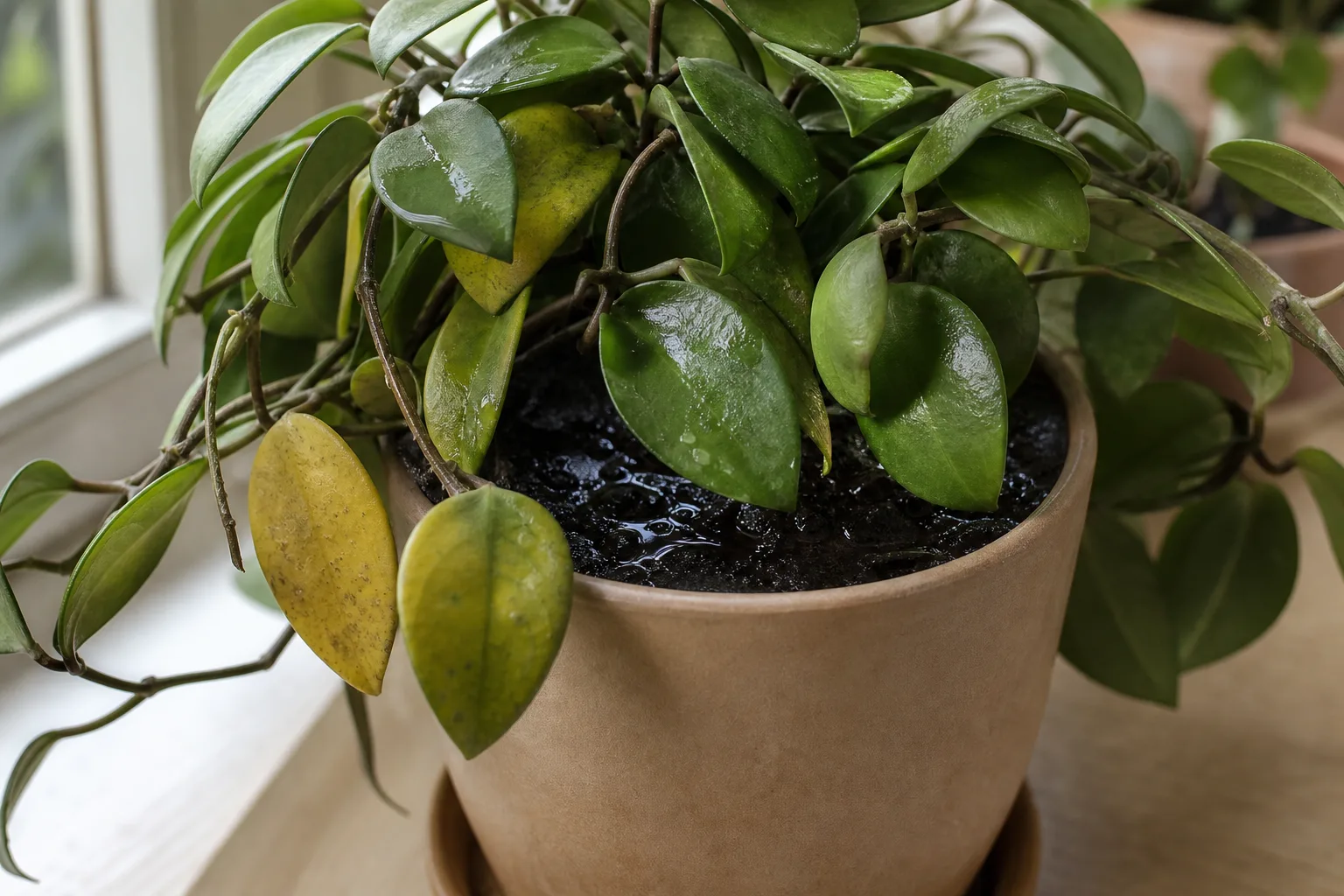
Overwatering on Hoya: Causes, Checks & Fixes
This guide covers overwatering on Hoya. See also the general Overwatering guide, watering, and light pages for this plant.
Overwatering on Hoya: Causes, Checks & Fixes
Quick answer
Overwatering on Hoya (Hoya spp., wax plant) means the root zone stayed wet and oxygen-poor too long for a plant whose wild ancestors grew as epiphytes on tree branches with quick drainage between rain bursts. The central diagnostic trap is soft, limp, or wrinkled waxy leaves while the mix is still damp-that pattern looks like thirst but usually means damaged roots cannot absorb water even when the soil is wet.
First step: stop watering immediately and confirm moisture at depth. Lift the pot (heavy and staying heavy is a red flag), push a skewer into the top half of the mix, and note whether soil clings cool and dark for days. Do not water because leaves wrinkle on wet soil-that deepens the failure loop. If stems at the soil line are firm and roots are pale when you peek, a dry-down pause may be enough. Mushy stems or sour odor mean escalate to a root inspection today.
For prevention rhythm and the full wet-dry cycle, see the Hoya watering guide. To separate drought from rot, see underwatering on Hoya.
What overwatering looks on Hoya
Hoya stores water in thick, waxy leaves-so when uptake fails, foliage loses turgor before many houseplants show obvious stress. Overwatering signs build in stages:
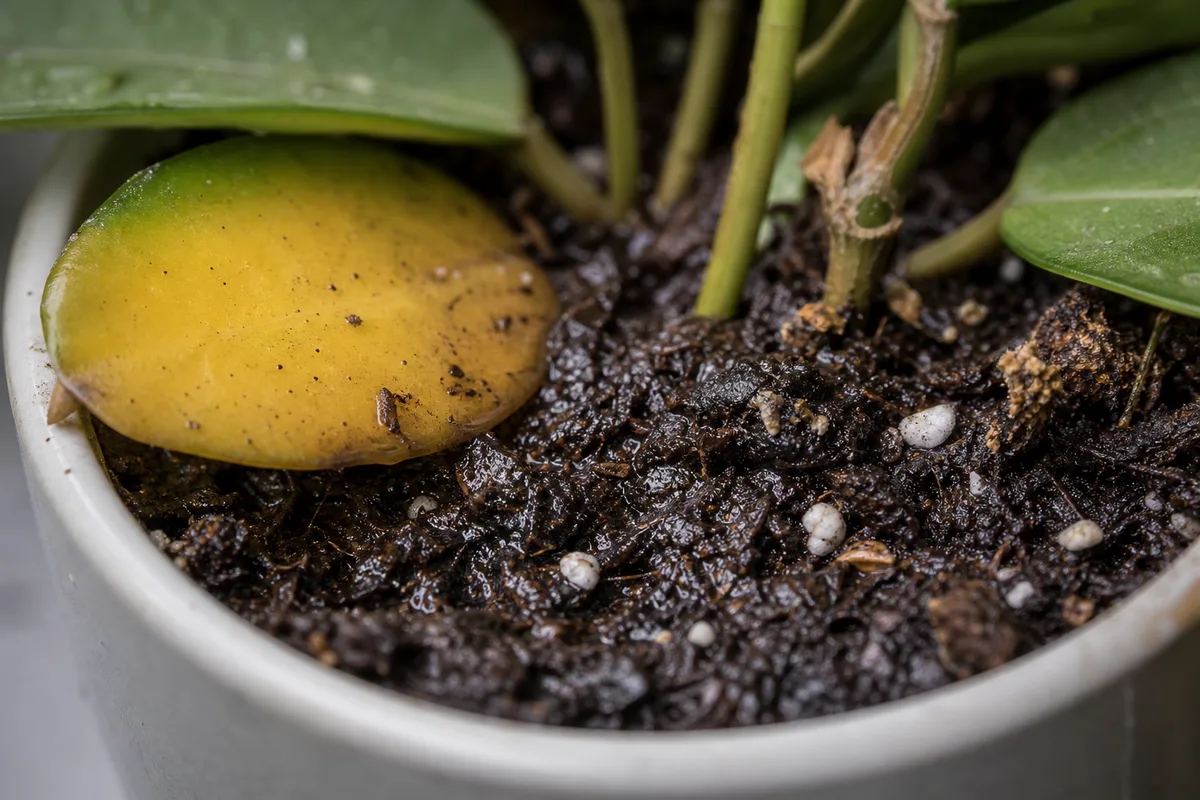
Overwatering symptoms on Hoya - compare with healthy tissue on the same plant.
Early signs
- Wrinkled, puckered, or limp leaves on damp mix-the dehydration paradox; foliage looks thirsty while roots sit in water they cannot use
- Yellowing lower leaves that feel soft rather than crispy, often dropping with light pressure
- Soil that stays wet for more than a few days after what felt like a normal watering
- Fungus gnats hovering near the pot-wet organic mix attracts them
- Stalled new growth or tips that shrivel despite “adequate” care
- Bud blast-flower buds yellow and fall before opening when roots shift to cold, soggy conditions
Advanced signs
- Stem darkening or softening at the soil line where oxygen is lowest
- Sour, swampy smell from anaerobic conditions below the surface
- Mushy leaves near the base that detach easily
- Peduncles aborting after a sudden move to a wet cachepot or winter overwatering
- No new vine nodes for weeks even after you “fixed” watering-roots may still be failing
What overwatering usually is not on Hoya:
- Firm, thin, wrinkled leaves on light, dusty dry mix-that is underwatering
- One or two older yellow leaves on an otherwise firm plant with a properly drying pot-may be normal senescence
- Crispy brown tips only, with firm leaves and moderate soil moisture-often humidity or salt, not rot
Thick-leaved H. carnosa and Hindu rope tolerate brief wet spells better than thin-leaved H. kerrii or H. lanceolata subsp. bella, but wet soil plus soft leaves is the same diagnostic thread across species.
Why Hoya gets overwatered
Hoya is epiphytic. In nature it anchors to branches and absorbs intermittent rain that drains within hours-not constant moisture in dense potting soil. Overwatering in poorly drained potting soil is the quickest path to root decline indoors.
Common Hoya-specific triggers:
Calendar watering through winter rest. Growth slows in cool, short-day months, but many growers keep a summer schedule. The mix stays wet longer while roots sit cold and oxygen-starved. Lower leaves yellow in clusters; peduncles may hold but new buds are unlikely until spring.
Oversized plastic pots and cachepots. Hoya flowers better slightly pot-bound; an oversized container holds excess wet soil with no roots to drink it. Decorative outer pots that trap runoff keep the bottom third of the root zone stewing for days-the most common hidden rot path.
Heavy peat-heavy mix without bark or perlite. Standard moisture-retentive potting soil compacts and suffocates epiphytic roots. Water lingers in pore spaces that should hold air between drinks.
Fear-of-underwatering overcompensation. After one dry spell, some growers water weekly regardless of pot weight. Hoya forgives a missed drink more than a soggy week-swinging to constant moisture damages fine feeder roots.
Dim light plus generous watering. A Hoya in a north window uses water slowly. The same volume that worked in bright indirect light keeps soil damp for two weeks and invites rot.
Post-repot soaking. Fresh repot into a larger pot plus an immediate deep soak can leave the root ball wet too long, especially if the new mix is denser than the old.
Recent “rescue” drowning. Seeing wrinkled leaves, many owners pour again-accelerating decline when roots are already damaged on wet mix.
How to confirm the cause
Work through these checks before changing anything beyond stopping water:
- Pot weight - Lift the container. Heavy for many days after watering, with no noticeable lightening, confirms the mix is not drying at depth.
- Moisture at depth - Insert a finger, skewer, or chopstick into the top half of the mix. Cool, clinging, dark soil that never opens up points to overwatering. Dusty dry soil at the same depth points away from it.
- Leaf feel on wet vs. dry soil - Soft, limp, or wrinkled leaves on damp mix strongly suggest root uptake failure. Firm wrinkled leaves on dry mix suggest drought instead.
- Stem base - Gently press the stem at the soil line. Firm is reassuring; soft, dark, or hollow tissue is urgent.
- Smell and pests - Sour odor or persistent fungus gnats support chronic wet conditions.
- Peduncle and bud clues - Yellowing buds on a heavy wet pot after a recent watering change or cachepot mistake fit overwatering stress.
- Root spot-check (if unsure) - Slide the plant out. Healthy Hoya roots are pale cream to white and firm. Brown, black, slimy roots on damp mix mean stop and treat for rot-not another soak.
If soil is dry and leaves are soft, do not stop watering-that is likely underwatering. If soil is wet and leaves are soft, do not water-inspect roots first.
First fix for Hoya
After confirming wet soil with stressed foliage, the first action is one clear pause: stop all watering.
Do not repot, fertilize, or mist on day one unless stems are already mushy (see severe branch below).
Mild overwatering (firm stems, no sour smell)
- Stop watering until the top half of the mix dries-often one to three weeks depending on pot size, season, and light.
- Move to brighter indirect light if the plant sits in deep shade-faster evaporation helps, but avoid harsh direct sun on a stressed vine.
- Empty cachepots and saucers after any future watering; never let the pot sit in standing water.
- Lift the pot daily until weight drops noticeably. Resume watering only when depth checks say dry enough for a full soak-see the watering guide.
Moderate overwatering (yellowing lower leaves, lingering wet mix, early wrinkling)
- Complete the mild steps above.
- If leaves keep declining after the top half has clearly dried, unpot and inspect roots.
- Trim only obviously mushy tissue with clean scissors. Leave firm pale roots intact.
- If more than roughly one-third of roots are dead, repot into fresh chunky, airy mix in a pot sized to the remaining root mass-not a larger decorative container. See Hoya soil and repotting.
- Withhold water three to seven days after repot, then one cautious soak. Let the full dry-down return before the next drink.
Severe overwatering (soft stem at soil line, sour smell, mostly mushy roots)
- Unpot today. Rinse away old wet mix gently.
- Trim all brown, black, slimy roots. If the stem base is hollow, salvage may be limited-honest triage matters.
- Repot into fresh airy mix in the smallest pot that fits remaining healthy roots.
- No fertilizer until new firm growth appears.
- Follow the full root rot on Hoya protocol if decline spreads after repot.
After any branch, wait. Judge success by new firm leaves and vine nodes, not by old yellow tissue re-greening.
Recovery timeline
Mild case - Once the mix dries and oxygen returns, limp leaves often firm within several days to two weeks. Some lower yellow leaves may drop as the plant rebalances.
Moderate root stress - Expect two to four weeks before stable new growth. Leaves that yellowed heavily rarely return to green; new tips should look glossy and thick.
Severe rot trimmed back - Recovery can take four to eight weeks or longer if most feeder roots were lost. Some vines may not resume; focus on firm stems and new nodes on surviving sections.
Signs recovery is working: pot weight cycles normally after rewater, leaves feel thick again, new stems emerge, no spreading stem blackening, peduncles hold without aborting new buds.
Signs the problem is worsening: soft leaves on wet soil after a dry-down attempt, sour smell returns, stem softening climbs upward, or continued wilt 72 hours after confirmed dry soil on a plant you have not rewatered.
Lookalike symptoms
| Pattern | Likely cause | What to check |
|---|---|---|
| Wrinkled leaves + dry, light pot | Underwatering | Soak once after confirming dry depth-see underwatering |
| Wrinkled leaves + wet mix | Overwatering / root damage | Stop water; inspect roots |
| Yellow lower leaves + wet mix | Overwatering | Dry-down or root rescue |
| Firm leaves + dry mix in winter | Normal rest slowdown | Stretch interval; do not panic-water |
| Soft leaves + mushy stem + sour smell | Advanced root rot | Root rot protocol same day |
| Crispy tips only, firm leaves | Low humidity or salts | Not primary overwatering |
Underwatering also causes wrinkled waxy leaves-but on dry, light soil with firm thin foliage. The moisture split is the whole diagnosis.
Normal winter rest slows growth and extends dry intervals. A firm plant in a light pot with dusty dry mix in January may simply need water on a longer rhythm, not a rot rescue.
Low humidity can crisp edges without the thin, pliable feel of drought-stressed leaves on dry mix.
Mistakes to avoid
- Watering because leaves wrinkle on wet soil - Feeds the failure loop when roots are damaged.
- Swinging to drought after a scare - Hoya needs recovery rhythm (full soak, then real dry-down), not weeks of bone-dry punishment.
- Fertilizing a waterlogged plant - Burns stressed roots; rehydrate and stabilize first.
- Repotting into a larger pot “to help drying” - More wet soil volume worsens the problem.
- Misting leaves instead of fixing soil - Surface moisture does not aerate a soggy root zone.
- Keeping a cachepot full of runoff - Hidden standing water at the bottom is a common rot trigger.
- Pruning peduncles after bud blast - Those spurs rebloom; only remove spent flowers naturally.
How to prevent overwatering next time
Build prevention around epiphytic dry-down, not calendar guesses:
- Water only when the top half of the mix has dried-allow the soil to dry out between watering, often letting the entire root zone approach dry before the next deep soak. See the Hoya watering guide for seasonal intervals.
- Lift the pot each check. Heavy means wait; light means consider watering if depth agrees.
- Use chunky, well-draining mix with orchid bark and perlite in a pot with drainage holes-see Hoya soil.
- Size pots conservatively. Slightly tight roots flower better and dry faster than an oversized plastic container.
- Empty saucers and cachepots within 30 minutes of every watering.
- In winter, stretch checks to every three to four weeks or longer in cool dim rooms-growth is slow and mix stays wet longer.
- Pair watering with bright indirect light-dim placement slows drying unpredictably.
Hoya stores water in its leaves, so it tolerates a real dry window between drinks better than constant sogginess. The goal is full soak, then genuine drying-not “evenly moist” forever.
When to worry
Simple overwatering caught early is fixable with a dry-down pause. Escalate same day if:
- Stems soften or darken at the soil line while mix is wet
- Mix smells sour or anaerobic
- Leaves stay limp 72 hours after you stopped watering on confirmed wet soil
- More than half the root mass is mushy when you unpot
- Bud blast repeats every cycle on a chronically heavy pot
If fine roots are mostly gone but firm stems and some white roots remain, trim dead tissue, repot into fresh airy mix, and water sparingly until new growth shows. Complete collapse from chronic wet soil is uncommon on established Hoya if caught before the stem base hollows-but weeks of wet cold roots in winter can kill otherwise healthy collections.
Related guides: watering, underwatering, soil, repotting, root rot, fungus gnats, wilting, yellow leaves, drooping leaves, light.
When to use this page vs other Hoya guides
- Hoya watering guide - Use for routine moisture checks before assuming overwatering is the main issue.
- Hoya problems hub - Browse all 17 common issues on this species.
- Root Rot on Hoya - Different entry point when symptoms overlap with overwatering.
- Yellow Leaves on Hoya - Different entry point when symptoms overlap with overwatering.
- Wilting on Hoya - Different entry point when symptoms overlap with overwatering.