Fungus Gnats on Hoya: Causes, Checks & Fixes
Quick answer
Fungus gnats on Hoya mean the soil surface stays wet too long-usually from overwatering or slow-drying mix in low light. First step: let the top inch of mix dry before watering again and set yellow sticky traps to monitor adults.
Fungus Gnats on Hoya: Causes, Checks & Fixes
This guide covers fungus gnats on Hoya. See also the general Fungus Gnats guide, watering, and light pages for this plant.
Fungus Gnats on Hoya: Causes, Checks & Fixes
Quick answer
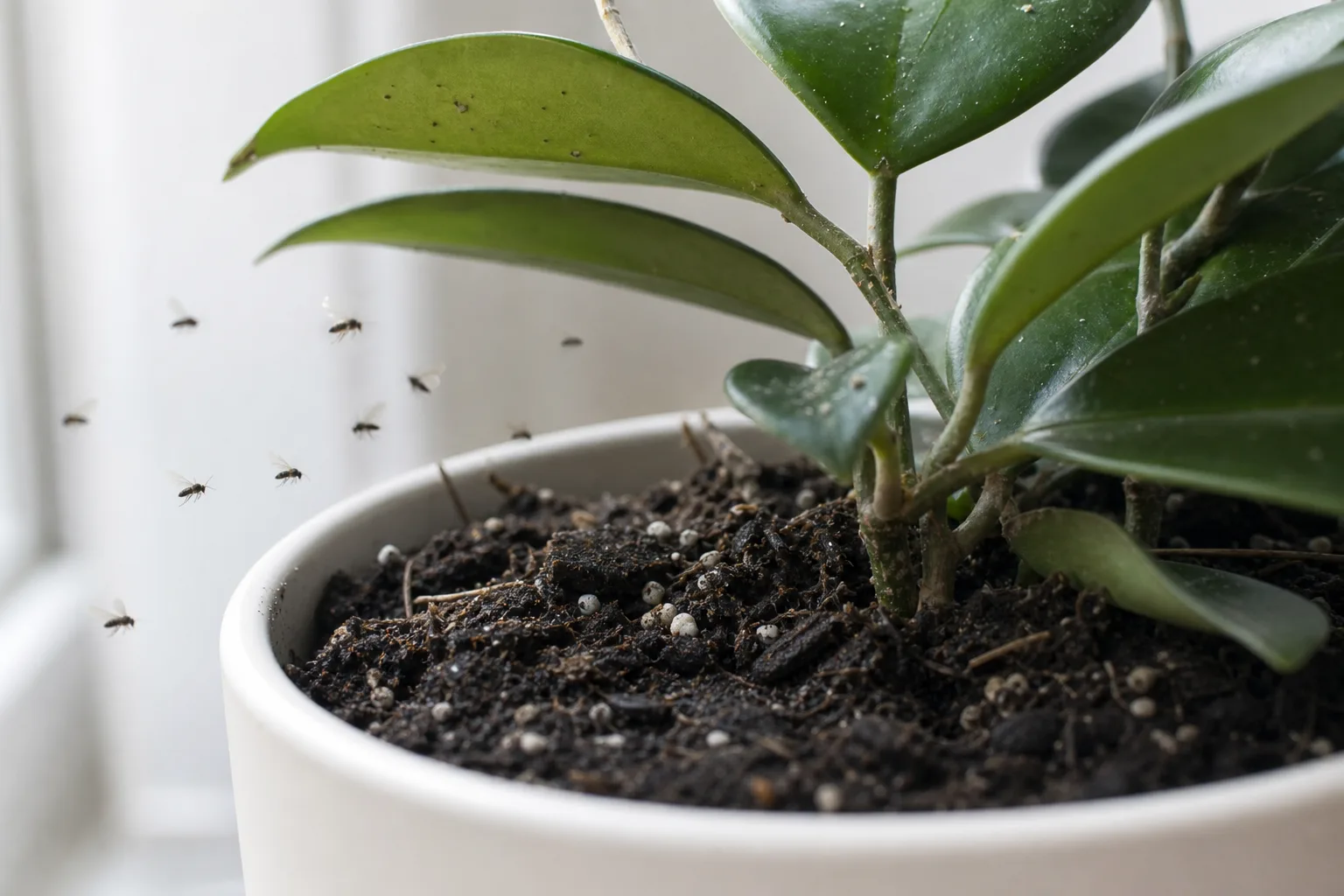
Hoya (Hoya spp.) are waxy-leaved tropical vines that store some water in thick foliage but still rot if mix stays wet. Fungus gnats on Hoya are a moisture signal, not a random pest invasion. Adult flies lay eggs in consistently moist organic soil; larvae feed on fungi and fine roots in the top inch of mix. Fungus gnats thrive in wet potting soil-especially when Hoya is watered frequently in dim corners where the surface never dries.
First step: let the top inch of mix dry before the next watering. Skip the next scheduled drink until a finger probe shows dry crumbly soil at one inch. Set yellow sticky traps near the pot to catch adults and track progress. Do not soak a gnat-infested Hoya hoping to “flush” larvae-that extends the wet cycle gnats need.
What fungus gnats look like on Hoya
Gnats announce themselves through flight timing and soil moisture, not leaf spots.
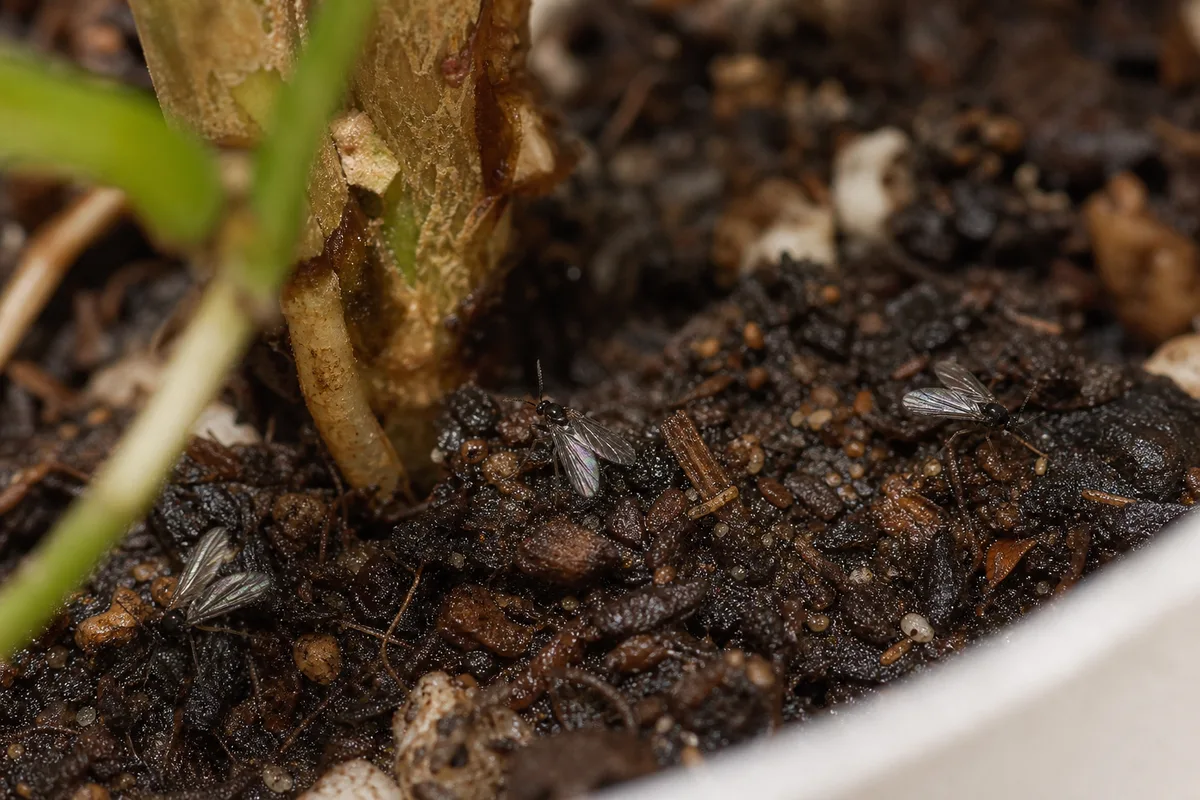
Fungus Gnats symptoms on Hoya - compare with healthy tissue on the same plant.
Adult flies:
- Tiny black mosquitoes hovering over the pot-not fruit flies at the kitchen counter
- Most visible right after watering or when you brush the soil surface
- Weak fliers; often caught on yellow sticky traps
Larvae in mix:
- Translucent worm-like larvae in the top quarter-inch of soil
- Visible when you scrape the surface gently with a spoon
- Feed on organic matter and fine root hairs
Plant symptoms (when overwatering pairs with gnats):
- Yellow lower leaves on wet mix
- Slowed new vine growth despite apparent moisture
- Limp leaves on damp soil-see overwatering and root rot
- Gnats alone rarely defoliate a healthy Hoya; chronic wet mix does
Why Hoya gets fungus gnats
Overwatering and slow dry-down. Hoya in north windows or crowded shelves uses less water but receives the same weekly soak. The top inch stays damp for gnats to complete their life cycle.
Dense peat-heavy mix. Organic potting soil that holds moisture supports algae and fungi larvae eat. Hoyas prefer airy epiphytic-style mix that dries faster.
Bottom-watering without surface dry-down. Constant bottom-watering can keep the top layer moist if you never let the surface dry between sessions.
Decorative cachepots. Outer pots trap runoff and keep the bottom of the root ball anaerobic-gnats breed at the surface while roots struggle below.
New bagged soil. Sometimes gnats arrive in wet bagged mix before they ever indicate your watering habits-still fix moisture so they do not persist.
How to confirm the cause
- Flight test - Flies appear within a day of watering and fade when the surface stays dry for seven to ten days.
- Larva check - Scrape top inch; worms confirm breeding in your pot, not nearby drains.
- Moisture log - Note how many days until one inch dries. More than seven to ten days indoors suggests overwatering or poor drainage.
- Root cross-check - Firm stems and white roots mean gnats are mostly nuisance. Mushy roots mean overwatering is the primary problem.
- Rule out shore flies and fruit flies - Gnats stay at the plant pot; fruit flies prefer kitchen waste.
| Sign | Fungus gnats | Fruit flies | Overwatering alone |
|---|---|---|---|
| Location | Plant soil surface | Kitchen/trash | Wet mix |
| Timing | After watering | Near food | Persistent damp |
| Larvae in mix | Yes | No | Maybe root damage |
First fix for Hoya
Dry the soil surface and break the life cycle.
- Let the top inch dry before every watering-often extending the interval one to two weeks initially.
- Yellow sticky traps at soil level catch adults; replace when full.
- Bacillus thuringiensis israelensis (BTI) soil drench per label if larvae persist after two weeks of dry-down-BTI targets fungus gnat larvae without harming Hoya roots when used as directed.
- Empty saucers; confirm drain holes are open.
Do not spray harsh pesticides on waxy Hoya leaves-water spots and phytotoxicity mark foliage permanently. Fix moisture first.
Step-by-step recovery
Weeks 1–2: Dry-down phase
- Skip watering until top inch is dry.
- Deploy sticky traps; count daily catch-numbers should fall.
- Remove dead leaves and algae from the soil surface.
Weeks 2–4: Larval control if needed
- Apply BTI drench; repeat per product label for overlapping generations.
- Top-dress with dry coarse sand or horticultural grit to speed surface drying-avoid burying the stem.
- Improve light so the plant uses water faster-see the light guide.
If roots are compromised
- Unpot, trim mushy roots, repot into fresh airy Hoya mix.
- Resume conservative watering only after new growth appears.
Recovery timeline
- Adult counts drop within one to two weeks once the surface stays dry.
- Full larval control takes three to four weeks because generations overlap.
- Plant vigor improves over four to six weeks if rot had not started.
Judge success by fewer flies on traps and firm new vine tips.
Mistakes to avoid
- Do not keep soil moist to “help” a stressed Hoya-gnats and rot both worsen.
- Do not rely on traps alone without drying soil-traps catch adults, not larvae in mix.
- Do not mist soil surface daily; Hoya prefers humidity in air, not wet peat.
- Do not repot into an oversized pot-extra wet soil extends gnat habitat.
How to prevent fungus gnats next time
Water when the top inch of mix dries. Use well-drained epiphytic mix per the soil guide. Empty saucers within 30 minutes. Quarantine new plants with sticky traps for two weeks. Avoid overwatering houseplants in dim corners. See the Hoya overview.
When to use this page vs other Hoya guides
- Hoya watering guide - Use for routine moisture checks before assuming fungus gnats is the main issue.
- Hoya problems hub - Browse all 17 common issues on this species.
- Overwatering on Hoya - Different entry point when symptoms overlap with fungus gnats.
- Mold on Soil on Hoya - Different entry point when symptoms overlap with fungus gnats.
- Root Rot on Hoya - Different entry point when symptoms overlap with fungus gnats.