Slow Growth on Hoya: Causes, Checks & Fixes
Quick answer
Slow growth on Hoya is often normal: epiphytic wax plants grow at a slow to moderate pace indoors, especially in winter. A true stall shows tiny pale new leaves, long bare stems, wet soil with yellow lower leaves, or no new nodes for months after repot. First step: inspect the newest node-leaf size, color, and internode spacing-then compare light placement to your window before changing water or fertilizer.
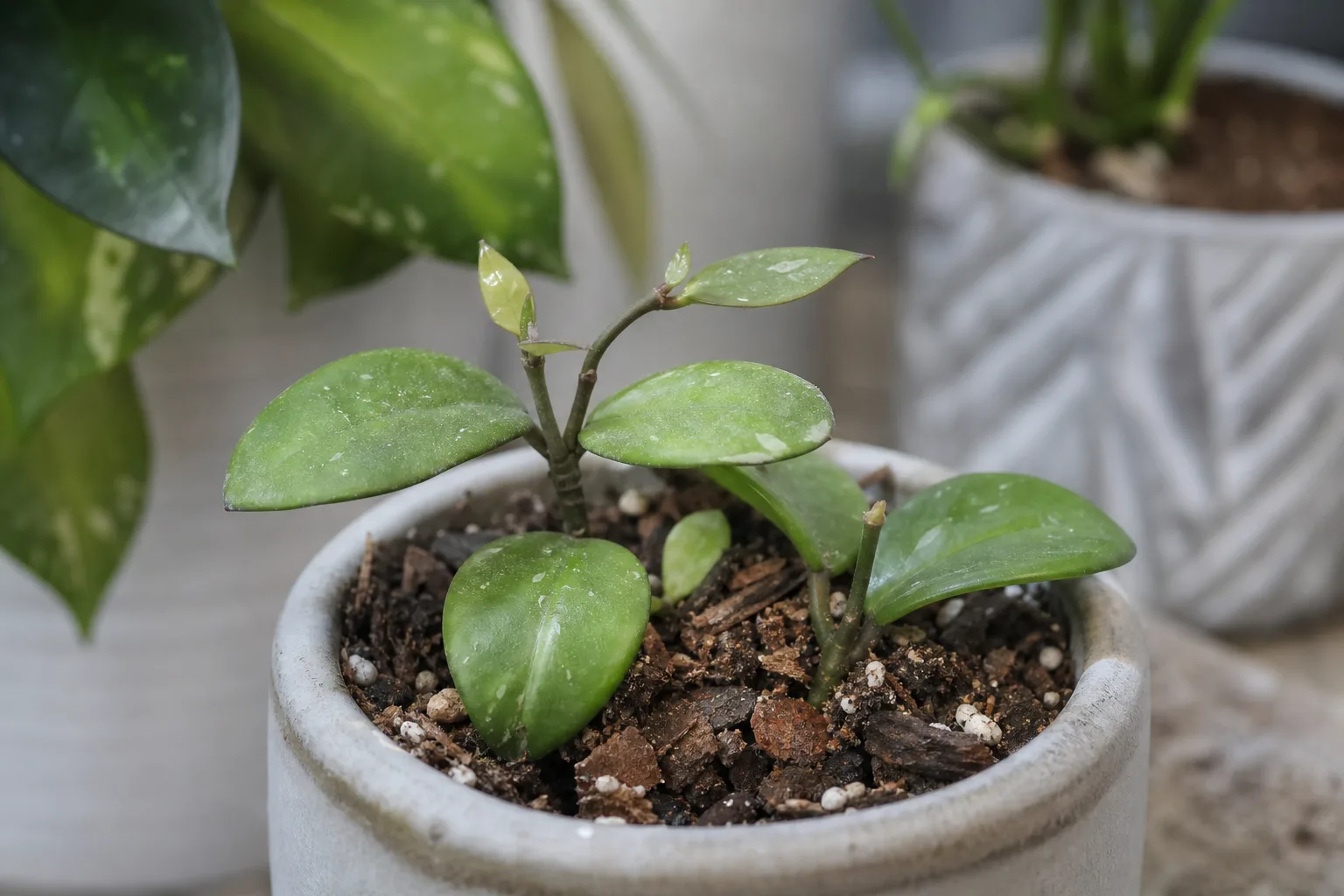
Slow Growth on Hoya: Causes, Checks & Fixes
This guide covers slow growth on Hoya. See also the general Slow Growth guide, watering, and light pages for this plant.
Slow Growth on Hoya: Causes, Checks & Fixes
Quick answer
Slow growth on Hoya (Hoya spp., wax plant) splits into two very different situations: normal slow pace versus abnormal stall. Hoya is epiphytic and semi-succulent-it will never match a pothos or philodendron for speed. In bright indirect light during active months, healthy vines push firm, glossy new leaves at moderate intervals. In cool, dim winter, no new nodes for several weeks while you water less often is expected rest.
A true stall looks different: tiny pale new leaves spaced far apart on long bare stems, no new growth for months after an unnecessary repot, yellow lower leaves on persistently wet mix, or a single heart-shaped leaf in a novelty pot that never vines. Those patterns point to fixable care stress-not the plant’s natural rhythm.
First step: inspect the newest node, not the oldest vine. Check internode spacing (gap between leaves), new leaf size and color, and whether the plant sits in bright filtered light for most of the day. Light fixes more Hoya stalls than fertilizer ever will. Only after light and moisture rhythm look correct should you consider repotting, feeding, or pest treatment.
Is slow growth normal for Hoya?
Yes-and misreading normal pace as a problem is one of the most common reasons owners overwater, repot, or fertilize a perfectly healthy wax plant.
Hoya belongs to a genus of epiphytic tropical vines that evolved for bright, filtered canopy light and dry intervals between rain events. NC State Extension describes cultivated Hoya as needing bright light and a free-draining mix that dries between waterings-conditions that favor steady, unhurried growth over rapid extension. Iowa State Extension notes that low light leads to thin, stretched growth and little flowering, which confirms that pace and light are tightly linked on this genus.
Healthy slow pace indoors
In a well-lit home during spring through early fall, expect:
- New nodes every one to four weeks on vigorous species such as H. carnosa, H. pubicalyx, or H. australis in bright east or filtered south windows
- Short internodes (roughly 2–5 cm between leaves) when light is adequate
- Firm, waxy, full-size new foliage matching the species- not thin, pale mini-leaves
- Slower but still visible extension on compact cultivars such as Hindu rope (H. carnosa ‘Compacta’)
Compare your plant to how it grew last summer in the same window, not to a fast-growing neighbor on the shelf. Hoya rewards patience; a vine that adds six nodes in a warm season and rests in winter is succeeding.
When slow growth is actually a problem
Treat growth as abnormally stalled when newest-node quality degrades or the pause lasts through returning spring warmth and light:
- Long bare stems with small, pale, thin new leaves far from the window
- No new nodes for eight or more weeks after an unnecessary spring repot
- Yellowing lower leaves while mix stays damp for days
- Soft stems at the soil line or sour smell from the pot
- White cottony patches or stippling on new tips (mealybugs or spider mites)
- A single H. kerrii leaf in a decorative pot with no attached node-that product will not vine regardless of care
If only total vine length bothers you but newest leaves look firm and normal-sized, the plant may simply be growing at Hoya speed. If newest leaves look wrong, you have a stall to diagnose.
What slow growth looks like on Hoya
Slow growth is a pace problem, not always a wilt or color problem. Use these visual patterns to decide which branch fits.
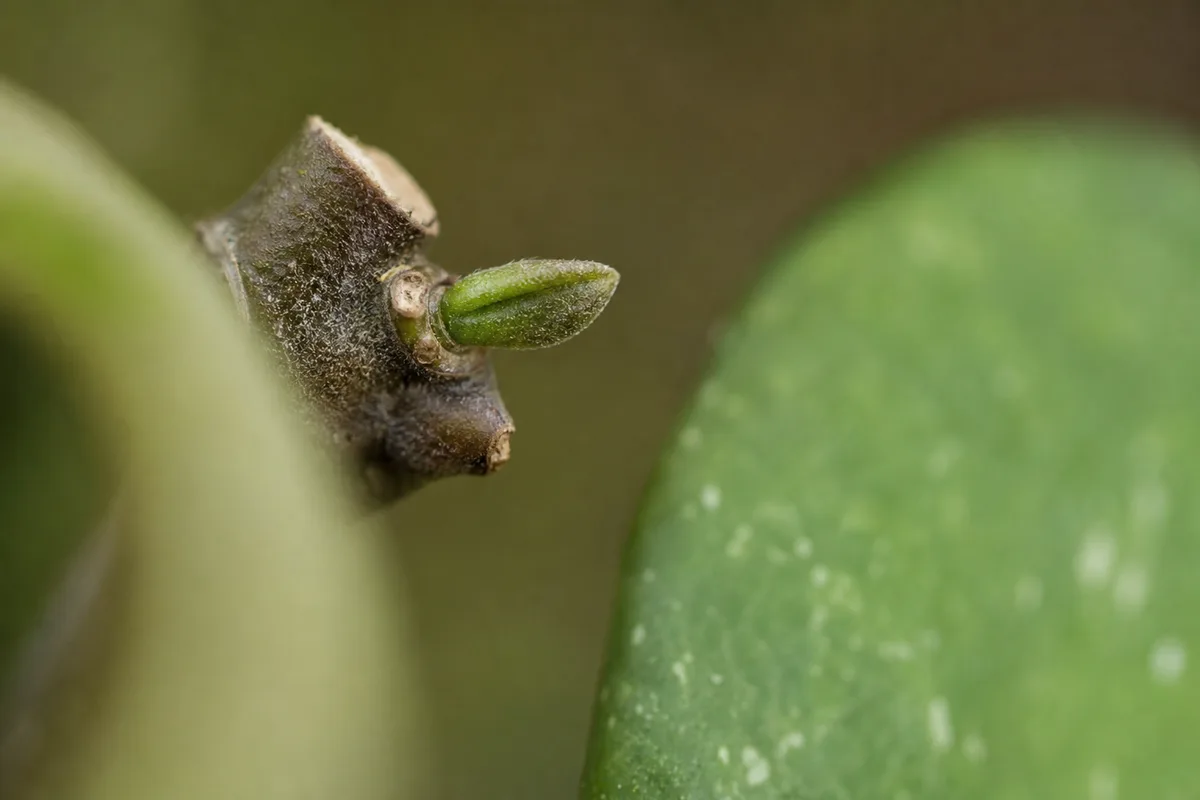
Slow Growth symptoms on Hoya - compare with healthy tissue on the same plant.
Compact vine with firm glossy new leaves (normal in good light)
The plant adds nodes slowly but steadily. New leaves open at full size for the species, feel thick when pinched, and sit on relatively short internodes. The pot dries on a predictable rhythm-often every 7–14 days in summer and every 3–4 weeks in winter for thick-leaf types. This is healthy slow Hoya, especially compared with fast-growing tropicals.
Long bare stems with tiny pale new leaves (insufficient light)
Vines reach toward the glass; gaps between leaves stretch to 10–20 cm or more. New foliage emerges smaller and lighter green than older leaves. Total length may increase while the plant looks sparse. This is light-starved stretch, overlapping with leggy growth on Hoya and not enough light. Growth is slow because the plant lacks energy-not because Hoya is “lazy.”
No new nodes for months after repot (repot shock)
You repotted into a much larger pot or refreshed mix in early spring; vines sat idle through summer despite adequate light. Roots were disturbed and the plant redirected energy to recovery. Hoya dislikes frequent repotting-Iowa State Extension notes that hoyas flower better slightly pot-bound and that oversized containers stay wet too long. Unnecessary disturbance is a hidden stall cause.
Stalled growth on wet mix with yellow lower leaves (root health)
Surface may look dry while the center stays damp in old peat-heavy mix. Lower leaves yellow and drop; new tips stay small or stop entirely. Fine roots may have rotted from chronic overwatering. This overlaps with overwatering and root rot-not a light problem alone.
Winter rest with cool temps and reduced watering (normal seasonal pause)
Short days, cooler room temperatures (especially below 65°F / 18°C), and less frequent watering produce little or no new growth for four to eight weeks. Leaves stay firm; soil dries slowly. Iowa State Extension recommends reducing water in winter to match slower growth. Do not panic-repot or force-feed through this rest.
H. kerrii single-leaf pot that never vines (product limitation)
Sweetheart hoya is often sold as a rooted leaf without a stem node. Iowa State Extension is explicit: a leaf without a node may root but will not develop into a vining plant-it remains a single, nearly unchanging leaf. That is not slow growth; it is the wrong product for anyone expecting a trailing vine.
Slow growth vs. leggy growth on Hoya
Use this page when the main question is “Why isn’t my Hoya growing faster?” or “Is this pace normal?”
Use the leggy growth guide when the main question is “Why are the stems so bare between leaves?” The two overlap: insufficient light causes both slow node production and long internodes. The diagnostic split is newest-node quality:
| Pattern | Internodes | New leaf size/color | Likely meaning |
|---|---|---|---|
| Normal slow growth | Short to moderate | Full size, deep green, firm | Healthy Hoya pace in adequate light |
| Light-starved stall | Long, bare sections | Small, pale, thin | Move brighter-see Hoya light guide |
| Repot shock | Any | Stunted or absent for months post-repot | Leave roots alone; avoid repeat disturbance |
| Root-health stall | Any | Tiny or stopped; lower leaves yellow | Check moisture and roots-see overwatering |
| Winter rest | Stable | No new nodes; old leaves firm | Normal; resume checks in spring |
Why Hoya growth stalls
Insufficient light (most common correctable cause)
Hoya needs bright indirect light for most of the day to grow compactly and eventually bloom. NC State Extension lists bright light among core requirements; Iowa State Extension states that if you have healthy growth but no flowers, the solution is usually more light-and the same light deficit that blocks blooms also thins and slows foliage.
Dim shelves, north windows without supplementation, and plants moved away from glass for aesthetics produce slow extension with poor new leaves. This outranks fertilizer as a fix because photosynthesis drives every new node.
Overwatering and root decline
Epiphytic roots expect air between drinks. Mix that stays wet suffocates fine roots; the plant cannot support new growth even though old leaves may look fine for weeks. NC State Extension notes hoyas are intolerant of a soggy potting mix and wet roots-chronic soggy soil is a common hidden stall after owners increase watering hoping to “push” growth.
Unnecessary or oversized repotting
Fresh disturbance redirects energy. Jumping to a pot several sizes larger keeps mix wet longer and delays both growth and flowering. Many experienced growers keep hoyas slightly root-bound on purpose.
Cold stress
Iowa State Extension notes hoyas do not tolerate temperatures below 55°F (13°C); cool window sills in winter slow metabolism sharply. Growth may pause until warmth returns even if light is adequate.
Chronic underwatering
Hoya tolerates drought better than soggy soil, but months of bone-dry mix in hot bright windows kills fine roots and stalls new tips. Wrinkled leaves on a light pot point to underwatering, not normal rest.
Pests on new growth
Mealybugs in leaf axils and spider mites in dry air weaken new tips first. Inspect before assuming the plant needs repot or feed.
Wrong baseline expectations
Comparing Hoya to pothos guarantees disappointment. Hindu rope and H. kerrii are inherently slower than H. carnosa even in identical care.
How to confirm the cause
Work through this checklist in order-do not skip to repot or fertilizer.
- Newest node - Size, color, firmness, and spacing from the previous leaf. Pale and tiny with long gaps strongly suggests light.
- Window placement - Is the canopy within 30–90 cm of bright filtered glass for most of the day? Can you read comfortably at the plant at midday without a lamp?
- Season - Cool room plus short days in winter explains pause without other stress signs.
- Soil moisture rhythm - Probe the top half of mix. Heavy wet pot with yellow lower leaves means root issue, not drought.
- Repot history - Any repot in the last three months? Oversized new pot?
- Pot size vs. roots - Slide the plant out if unsure. White firm roots in snug pot differ from brown mush on damp mix.
- Pests - Check leaf axils and undersides for cottony clusters, stippling, or fine webbing.
- Product type - Single H. kerrii leaf without node will not vine; no checklist fixes that.
If light is weak and internodes are long, fix light first before any other variable.
First fix for Hoya
Move to the brightest filtered spot you can offer-or add a grow light-and wait three to four weeks before stacking other changes.
That single step addresses the majority of abnormal stalls. Place the plant within about 30–90 cm of an east window or behind a sheer curtain on south or west glass. If natural light is insufficient, use a full-spectrum LED 12–14 hours daily, roughly 30–45 cm above the canopy. Details and lux targets live in the Hoya light guide.
After light is corrected, branch by confirmed cause:
If newest leaves are small and pale with long internodes
Keep the brighter placement. Rotate the pot weekly. Do not fertilize yet-see not enough light if stretch persists after four weeks.
If the plant was recently repotted
Stop repotting. Water on dry-down only; avoid oversized saucers sitting in runoff. Expect one to three months before new nodes resume. Do not “help” with extra feed.
If mix stays wet and lower leaves yellow
Hold water. Inspect roots when soil is damp-trim mush, refresh only if necessary. Follow overwatering recovery paths.
If winter rest with firm leaves and appropriate dry-down
Reduce watering frequency; skip fertilizer until spring growth returns. Do not move to a cold window sill below 55°F (13°C).
If chronic dry mix and soft wrinkled leaves
One thorough soak after confirming dry soil-see underwatering on Hoya. Adjust interval; do not daily sip.
If pests coat new growth tips
Isolate and treat pests before optimizing light or feed. Stalled tips often resume after infestation clears.
If mix is exhausted but roots are healthy
Repot in early spring into one size up with chunky bark-perlite mix only when roots circle heavily-see repotting guide and soil guide.
Recovery timeline
Light correction - Newest leaves often show improved size and color within three to six weeks after a meaningful brightness increase. Old stretched internodes do not compress; judge by new nodes only.
Repot shock - One to three months of pause is common after unnecessary disturbance. Resume feeding only after stable new growth.
Root recovery from overwatering - Several weeks to a few months depending on rot extent. New tips stay small until roots regenerate.
Winter rest - Growth resumes as days lengthen and temperatures rise above 65°F (18°C) with brighter light-often four to eight weeks into spring.
Signs recovery is working: shorter internodes on new sections, firmer full-size leaves, predictable dry-down cycle, no spreading yellowing on wet soil.
Signs the stall is worsening: stem softening at base, sour pot smell, new tips browning, or continued tiny pale leaves eight weeks after a confirmed light upgrade.
What not to do
- Do not repot a stalled Hoya on guesswork - repot shock worsens many stalls.
- Do not fertilize stressed plants or wet soggy mix hoping to force speed-see Hoya fertilizer guide for timing during active growth only.
- Do not confuse winter rest with failure and pile on water, heat, and feed in December.
- Do not expect a single H. kerrii leaf to vine-that requires a stem cutting with a node.
- Do not stack repot, prune, and pesticide the same week-change one variable at a time.
- Do not compare to pothos and conclude your Hoya is dying.
How to prevent slow growth next time
Build expectations and care around Hoya biology:
- Keep bright indirect light year-round-the overview and light guide set placement baselines.
- Water on dry-down, not calendar-watering guide for seasonal rhythm.
- Repot conservatively every two to three years or when mix fails; stay slightly snug for bloom potential.
- Feed lightly spring through early fall only when actively vining.
- Inspect newest nodes monthly-they warn before the whole vine looks wrong.
- Accept winter pause as part of the cycle.
When to worry
Escalate beyond light and moisture tweaks when:
- Stems soften or blacken at the soil line on wet mix
- More than half the roots are brown and mushy when you unpot
- New tips collapse after eight weeks of corrected bright light and appropriate watering
- Pest colonies spread despite isolation and treatment
- Every leaf yellows while soil stays waterlogged
Those patterns point to root rot, advanced pest damage, or cold injury-not normal Hoya slowness. Trim healthy cuttings and restart only if the base is lost but firm nodes remain on upper stems.
Hoya care cross-check
When growth stalls, align the basics from your hub guides:
| Variable | Target for steady growth | Stall signal |
|---|---|---|
| Light | Bright indirect, 6+ hours daily; east or filtered south/west | Long internodes, pale tiny new leaves |
| Water | Top half dry before soak; longer interval in winter | Wet heavy pot + yellow lowers, or chronic dry + wrinkled leaves |
| Soil | Chunky bark-perlite mix, drainage hole | Mud-like old peat that never dries |
| Pot | Slightly snug; one size up at repot max | Oversized pot staying wet; unnecessary recent repot |
| Temperature | 65–80°F (18–27°C) active; avoid below 55°F (13°C) | Winter sill stall, limp cold leaves |
| Feed | Dilute balanced feed in active growth only | Brown leaf margins from salt or feed on dry roots |
Normal slow Hoya in good conditions is firm new leaves on a predictable rhythm-not fast length alone.
When to use this page vs other Hoya guides
- Hoya watering guide - Use for routine moisture checks before assuming slow growth is the main issue.
- Hoya problems hub - Browse all 17 common issues on this species.
- Not Enough Light on Hoya - Different entry point when symptoms overlap with slow growth.
- Leggy Growth on Hoya - Different entry point when symptoms overlap with slow growth.
- Yellow Leaves on Hoya - Different entry point when symptoms overlap with slow growth.