Underwatering on Hoya: Causes, Checks & Fixes
Quick answer
Underwatering on Hoya shows as soft or wrinkled waxy leaves and a very light pot while the mix is dry through the top half. First step: confirm bone-dry soil, then bottom-water or soak until water drains freely-do not mist leaves or pour daily sips.
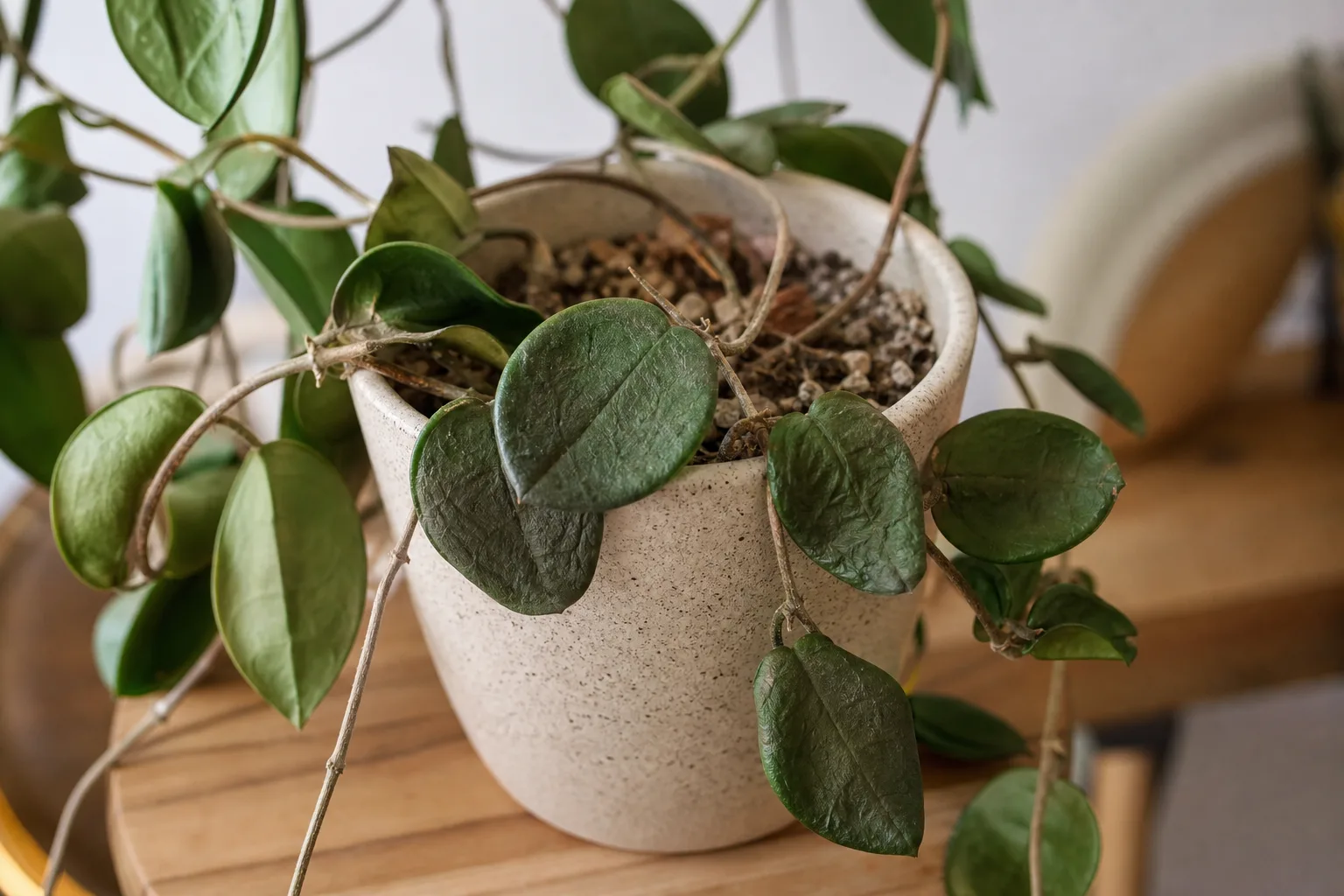
Underwatering on Hoya: Causes, Checks & Fixes
This guide covers underwatering on Hoya. See also the general Underwatering guide, watering, and light pages for this plant.
Underwatering on Hoya: Causes, Checks & Fixes
Quick answer
You noticed soft, puckered, or rubbery waxy leaves on a trailing vine while the pot feels feather-light-that combination across any Hoya species usually means the root zone stayed dry too long, not that your plant suddenly needs rot rescue.
Underwatering on Hoya (Hoya spp., wax plant) means uptake fell behind water lost through thick, waxy foliage. The classic signal is soft or wrinkled leaves paired with dry mix and a light pot-not yellow mushy leaves on wet soil. For the opposite pattern, see overwatering on Hoya.
First step: confirm the mix is dry through the top half, then give one thorough soak. Bottom-water in a sink or tray until the surface moistens, or water from the top until excess runs from the drainage holes. Empty the saucer afterward. Do not mist leaves, sprinkle daily, or fertilize a dry plant.
Wet soil vs. dry soil - is it really underwatering?
Wrinkled Hoya leaves confuse collectors because damaged roots cannot supply water fast enough even when soil is wet-the same wilt you see on a drought-stressed plant. The moisture split is the whole diagnosis.
| Check | Underwatering (this page) | Overwatering / root rot | Low humidity | Recent repot |
|---|---|---|---|---|
| Soil at top half | Dusty, loose, pulls from pot edge | Cool, clinging, wet for days | Moist to dry; not the main driver | Evenly moist after disturbance |
| Pot weight | Very light | Heavy, stays heavy | Normal for your schedule | Moderate; may feel unsettled |
| Leaf feel | Thin, soft, wrinkled on dry mix | Soft or limp on wet mix | Firm leaves; crispy edges only | Temporary wilt; firm when mix is OK |
| Stem base | Firm | May soften, darken, smell sour | Firm | Firm unless roots were damaged |
| First action | One full soak, then dry-down | Stop water; inspect roots - see root rot | Humidity tray or group plants - see low humidity | Wait 5–7 days unless mix is clearly dry |
If soil is wet and leaves are still soft, do not water. Inspect roots and compare with overwatering on Hoya before soaking again.
When to use this page vs. other Hoya guides
| Your situation | Best page |
|---|---|
| Learning normal soak-and-dry rhythm for epiphytic roots | Hoya watering guide |
| Wrinkled or soft leaves right now; need confirm-fix-recover steps | This page |
| Wet soil plus limp leaves; sour smell or gnats | Overwatering and root rot |
| General wilting without a clear dry-soil story | Wilting on Hoya |
| You grow H. carnosa, Hindu Rope, or Krimson cultivars | Carnosa underwatering |
| You grow H. kerrii sweetheart or coin leaves | Kerrii underwatering |
| Species ID, hub links, and care overview | Hoya overview |
What underwatering looks like on Hoya
Hoya is semi-succulent. Its fleshy leaves store water, so when uptake falls behind loss, leaves lose turgor before many other houseplants show stress.
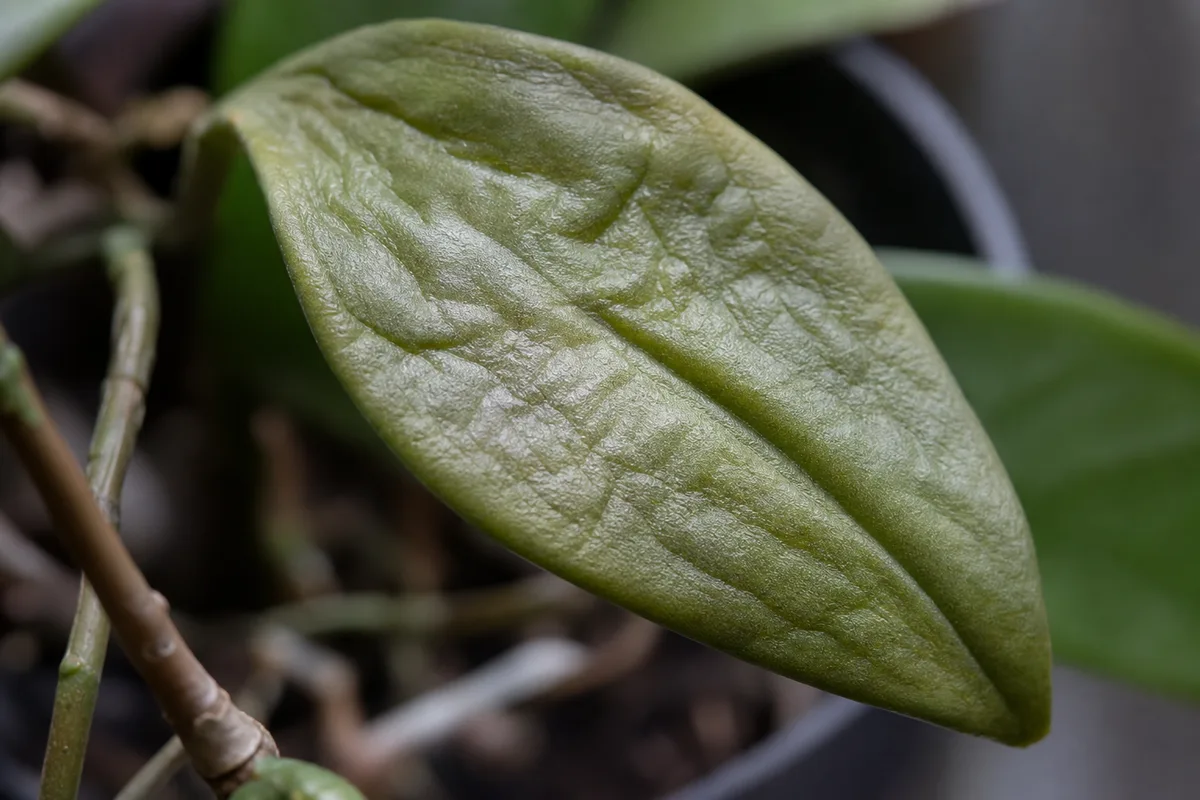
Underwatering symptoms on Hoya - compare with healthy tissue on the same plant.
Typical underwatering signs:
- Wrinkled, puckered, or soft leaves that feel thin or pliable when you gently squeeze them-wilted leaves may indicate soil that is too dry; healthy Hoya foliage is firm and leathery
- Slightly rubbery stems on trailing vines, especially on the oldest leaves first
- Dry, dusty soil well below the surface; mix may pull away from the pot edge
- A very lightweight pot when lifted
- Slowed or stalled growth and dry, papery leaf tips on long dry spells
- Leaves that perk up within hours after a deep soak-if roots are still alive
What underwatering usually is not on Hoya:
- Yellow leaves that drop while soil stays damp for days
- Blackening at the soil line or mushy stems
- A sour smell from the pot
- Wrinkled leaves on wet mix-that pattern fits root damage from overwatering more often than simple drought
Thick-leaved vs. thin-leaved species
Variegated and thin-leaved species (for example Hoya kerrii, H. lanceolata subsp. bella, and H. linearis) show drought stress faster than thick-leaved H. carnosa, but the dry-soil plus soft-leaf combination is the same diagnostic thread. Variegated cultivars (Krimson Queen, Krimson Princess) may show stress on white or pink sections first-the green tissue still holds more water, so pale patches wrinkle or crisp before the whole leaf softens.
In a documented indoor recovery (June 2026), a trailing H. carnosa in a 10 cm terracotta pot sat dry for twelve days in a bright west window; leaves went soft but not brown. A 40-minute bottom soak rewet hydrophobic peat; foliage felt firm again within 48 hours. A H. bella on the same shelf, in a smaller plastic pot, wrinkled after only five dry days and needed a second light top-up on day three before new tips looked glossy-thin leaves are the early-warning system in a mixed collection.
Why Hoya gets underwatered
Hoya tolerates drought better than soggy soil, so many growers under-correct after overwatering scares-stretching the dry window until leaves wrinkle. Wrinkling is a distress signal, not a reliable watering reminder. The watering guide explains the full soak-and-dry cycle; this section covers why collectors still miss the dry-down window.
Common Hoya-specific triggers:
Misreading the “dry between waterings” rule. Hoya wants the top half of the mix to dry before the next drink, not the entire root ball to stay bone dry for weeks. Allow the soil to dry out between watering, but in bright indirect light and warm rooms, a small pot can pass that threshold in just a few days.
Seasonal rhythm mismatch. Hoya needs less water in winter, but heated indoor air still pulls moisture from small pots. Cutting back to monthly checks without lifting the pot is a frequent winter underwatering path.
Fast-drying containers and placement. Terracotta, small nursery pots, hanging baskets near sunny windows, or heating vents dry unevenly. Epiphytic roots in chunky bark mixes drink well when moist but lose water quickly once the mix opens up.
Mounted specimens and cache pots. A Hoya mounted on cork or in a open basket dries from all sides in hours under grow lights-faster than the same species in a plastic nursery pot. A decorative cache pot without drainage can hide a dry inner liner: the outer pot feels heavy from old runoff while the root ball inside is dust-dry. Lift the inner pot, not just the sleeve.
Hydrophobic, peat-heavy mix. Old potting soil that has dried completely can repel water. The surface looks briefly damp after a quick pour while the center stays dry-classic underwatering with a “I watered yesterday” alibi.
Root-bound pots in active growth. Hoya blooms better slightly tight in its pot, but a dense root mass in summer can dry the whole container in 48 hours. That is normal for the season, not a sign to wait another week.
Fear of root rot. Because overwatering may cause root rot in wet peat, some growers wait until leaves shrivel. By then fine roots may already have died back, making the plant slower to absorb the next soak.
How to confirm the cause
Work through these checks before soaking:
- Pot weight - Lift the pot. Very light compared with your memory of it after watering strongly suggests dry soil.
- Moisture at depth - Push a finger, skewer, or chopstick into the top half of the mix. Dusty and loose all the way down confirms drought; cool, clinging soil does not.
- Leaf feel - Pinch a mature leaf. Firm and thick points away from urgent underwatering; soft or wrinkled on dry soil confirms it.
- Recent watering history - If the plant has received only sips, or nothing for three-plus weeks in summer, underwatering is more likely than rot.
- Soil line and roots (if unsure) - Slide the plant out. Dry underwatered roots are pale and firm. Brown, mushy roots on damp mix mean stop and treat for root rot instead of soaking again.
- Environment - Bright light, small pot, terracotta, cache pot, or a heat vent accelerates drying. Adjust your schedule to the pot, not a generic calendar.
Cross-check the table in Wet soil vs. dry soil if wilt persists after you thought you watered-hydrophobic mix and root dieback both mimic simple thirst.
First fix for Hoya
After confirming dry soil, give one full rehydration-not repeated splashes.
Option A: Bottom soak (best for hydrophobic or very dry mix)
- Fill a sink or basin with 5–8 cm (2–3 in) of room-temperature water.
- Set the pot in the water without the saucer and let it absorb for 30–45 minutes (smaller 8–10 cm pots often suffice at 30 minutes; dense root balls in 15 cm pots may need the full 45).
- Check the surface. If still dry, leave it longer or add a small top pour.
- Drain fully, then return the plant to its spot. Never leave the pot sitting in standing water.
Option B: Top soak (fast-draining mix)
- Use room-temperature water-cold water can shock this plant.
- Water slowly until it runs freely from the drainage holes.
- If water races through without wetting the mix, switch to bottom soaking or poke shallow aeration holes in the dry surface first.
- Empty the saucer within 30 minutes.
After this single correction, wait. Let the top half dry again before the next drink. Do not water daily “to catch up”-that swings toward overwatering.
If leaves remain soft 48 hours after a confirmed good soak on previously dry soil, unpot and inspect roots. You may be dealing with prior root death from extended drought or hidden rot, not a simple dry spell.
Recovery timeline
Mild dehydration - Leaves that wrinkled only in the last few days often plump within 24–48 hours after a proper soak. Judge success by firmer leaves and turgid new tips, not by old blemishes fading.
Moderate stress - A vine that was dry for one to two weeks may need one to two weeks to push stable new growth. Some lower leaves may yellow and drop as the plant rebalances.
Severe or repeated drought - Fine root dieback slows recovery to several weeks. Leaves that stayed creased more than two weeks may keep a textured scar even after turgor returns. New leaves should look normal; if they emerge wrinkled, the root zone is still not getting consistent moisture.
Signs recovery is working: pot weight stays moderate for several days after watering, leaves feel thick again, new stems look glossy, no spreading stem blackening.
Signs the problem is worsening: soft leaves on wet soil, sour smell, stem softening at the base, or continued wilt 72 hours after a confirmed thorough soak on dry mix-see wilting on Hoya and escalate to root inspection.
Lookalike symptoms
Overwatering and root rot - Also cause soft, wilted leaves because damaged roots cannot transport water upward even when soil is wet. The split is soil moisture: wet mix plus soft leaves means inspect roots before adding water. Rot adds yellowing, mushy stems, and foul odor. Full contrast: overwatering on Hoya.
Low humidity - Can crisp leaf edges on Hoya, especially in winter, but leaves usually stay firm, not thin and wrinkled. Dry soil confirms underwatering; moist soil with crispy tips points to low humidity or salt buildup.
Recent repot or root disturbance - Temporary wilt after repotting is common even with adequate moisture. Wait five to seven days unless soil is clearly dry and the pot is light.
Pest stress - Mealybugs in leaf axils weaken vines over time. Sticky residue or white cottony patches mean inspect pests, not only the watering can.
Mistakes to avoid
- Misting instead of soaking - Surface humidity does not rehydrate roots in dry soil.
- Daily small sips - Shallow watering never rewets a dry root ball and encourages weak surface roots.
- Waiting for wrinkled leaves as your only cue - By the time thick H. carnosa leaves shrivel, the plant has already been stressed; use pot weight and soil depth earlier.
- Soaking without checking soil - Flooding wet roots accelerates rot on an epiphytic plant.
- Cold tap water - Can shock Hoya; room temperature is safer.
- Fertilizing to “perk it up” - Rehydrate first; fertilizer on dry roots burns fine tissue.
- Repotting immediately - Only repot if mix is hydrophobic, roots are dead, or the pot is absurdly small. Fresh stress is unnecessary when a soak fixes simple drought.
- Moving a drought-stressed Hoya into direct sun for “recovery” - Rehydrate in the same bright indirect spot; sudden harsh sun scorches soft leaves.
How to prevent underwatering next time
Build a rhythm around how the pot dries in your home, not a fixed weekday. The Hoya watering guide covers seasonal intervals; use these checks as your drought early-warning system:
- Check when the top half of the mix is dry-allowing soils to become nearly dry between water applications, roughly every 7–14 days in spring and summer, every 3–4 weeks in winter rest, faster for small terracotta pots in bright light.
- Lift the pot each check. Light means water soon; heavy means wait.
- Use a chunky, well-draining mix (compost, perlite, orchid bark) in a pot with drainage holes so you can soak confidently when dry.
- In winter, reduce frequency but do not ignore a bone-dry pot for a full month in a heated room.
- Refresh or repot hydrophobic old soil so water penetrates evenly.
- For mounted or cache-pot setups, check the actual root zone daily in summer-outer containers lie about moisture.
When to worry
Simple underwatering on dry soil is fixable the same day. Escalate if:
- The plant remains limp 72 hours after a confirmed full soak on previously dry soil
- Stems soften or darken at the soil line
- More than half the roots are brown and mushy when you unpot - follow root rot on Hoya
- Every leaf is crisp and brown after a long vacation dry-out-recovery may be partial at best
If fine roots are mostly gone but stems and some firm roots remain, trim dead material, repot into fresh airy mix, and water sparingly until new growth shows. Complete vine collapse from dehydration alone is uncommon on established Hoya, but months of neglect in hot sun can kill plants that looked “fine because Hoya is drought tolerant.”
Related Hoya guides
- Hoya overview - species hub and care links
- Hoya watering guide - normal soak-and-dry rhythm for epiphytic roots
- Overwatering on Hoya - wrinkled leaves on wet soil
- Root rot on Hoya - mushy roots after chronic wet or drought dieback
- Wilting on Hoya - when wilt cause is unclear
- Low humidity on Hoya - firm leaves with crispy edges
- Underwatering on Hoya carnosa - carnosa and Hindu Rope specifics
- Underwatering on Hoya kerrii - sweetheart and coin-leaf behavior
Related tool
Use the Plant Watering Calculator to narrow causes for underwatering on this plant before changing multiple variables at once.