Hoya Light Needs: Best Window, Sun & Warning Signs
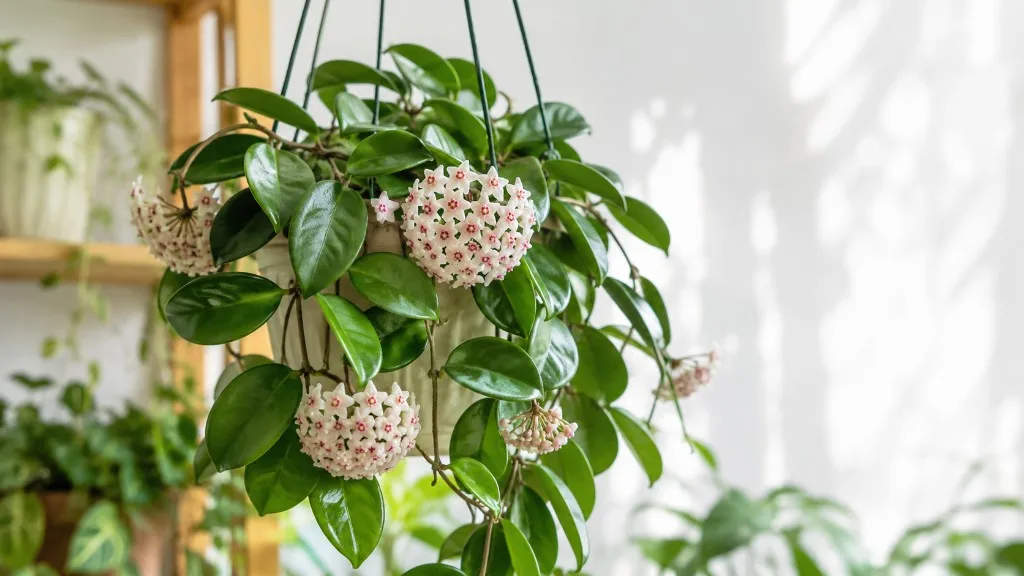
Hoya Light Needs: Best Window, Sun & Warning Signs
Hoya Light Needs: Best Window, Sun & Warning Signs
Why Light Is the Lever That Makes Everything Else Work
Hoya - the wax plant genus beloved for thick, often fragrant flower clusters and trailing or climbing vines - looks deceptively low-maintenance in a bright nursery and frustratingly slow in a dim corner. The difference is almost always light. Hoya light requirements center on bright indirect light: strong enough to fuel compact growth and eventual blooms, filtered enough that harsh direct sun never cooks the leaves through glass. Get that balance right and watering, soil, and humidity become predictable. Get it wrong and the same care routine that works for a friend’s plant stalls yours - leaves stretch, peduncles never form, or sun-facing foliage bleaches to a papery yellow.
Light controls photosynthesis, which controls how fast the plant grows and how quickly the pot dries. A Hoya in a well-lit filtered window drinks on a steady rhythm, pushes firm new leaves at moderate intervals, and - once mature - has the energy to produce the umbels collectors wait years to see. The same plant three meters back in a living room may sit wet for weeks, grow thin leaves on long bare stems, and never flower despite perfect watering. Experienced Hoya growers fix light first because every other variable reads cleaner once intensity is correct.
The practical goal is not the brightest spot in the house. It is the brightest filtered spot - a location where the room feels well lit all day but where hot sunbeams do not park on the leaf surface for hours. Once you understand that distinction, window choice, grow-light supplementation, and leaf-based diagnosis become straightforward instead of guesswork.
What Epiphytic Forest Origin Tells You About Placement
Hoya (Hoya spp.) belongs to Apocynaceae and grows naturally across Asia, Australia, and Pacific Islands, where most species live as epiphytes in humid tropical and subtropical forests. They cling to tree branches and receive bright, diffuse light filtered through canopy overhead - not the dark forest floor and not open blazing sun. NC State Extension and Iowa State Extension both describe cultivated Hoya as needing bright indirect light - light bright enough to cast a shadow or comfortably read a book by, but not in direct sun.
That ecology explains what “bright” means indoors. Canopy-filtered forest light is abundant but never punishing. A healthy indoor Hoya should look like a plant that receives strong ambient illumination for most of the day without sitting in a hot afternoon sun cone. The waxy leaf coating that gives wax plants their common name offers some protection, but it is not armor against unfiltered midday sun through glass, which adds heat and intensifies UV exposure beyond what the plant evolved to handle on a tree limb.
Species matter at the margins. Hoya carnosa and Hoya pubicalyx are relatively forgiving of brighter exposures once acclimated. Hoya linearis and some thin-leaved species scorch faster and often prefer gentler, more diffused light. If your tag only says “Hoya,” treat the plant as a generalist: start with bright indirect placement and adjust based on new growth, not on assumptions about a cultivar you cannot confirm.
The Practical Target: Bright Indirect Light for Hoya
“Bright indirect light” sounds vague until you attach a practical field test. For Hoya, bright indirect means a spot where you can read comfortably at midday without turning on a lamp, where the plant casts a soft but visible shadow on a white surface, and where direct sunbeams do not land on leaves for more than brief gentle morning minutes.
Horticultural grower benchmarks often place Hoya in about 1,500–2,000 foot-candles (FC) - roughly 8,000–15,000 lux - during peak daylight hours. That translates to a comfortable indoor target of 1,500–3,000 lux (about 150–300 FC) at the leaf for steady foliage growth, with the upper band supporting bloom potential in mature plants. Below roughly 800–1,000 lux (80–100 FC) at the canopy, Hoya may persist but will stretch, produce thinner leaves, and rarely flower. NC State Extension notes that most species need bright light but do not need full sun all day - unfiltered direct midday sun through glass can scorch leaves.
Duration matters as much as peak intensity. Hoya generally needs at least six hours of useful bright indirect light daily for healthy growth, and six to eight hours is the practical minimum many growers target when flowering is the goal. Missouri Botanical Garden recommends at least a half day of direct or curtain-filtered sun for flower production indoors.
How Much Daily Light Hoya Uses for Foliage and Flowers
Think of light in two parts: intensity at the leaf and hours of delivery. A location that spikes to 3,000 lux for two hours and then falls to 300 lux for the rest of the day is weaker than one that holds 2,000 lux for eight hours. Hoya responds to the daily total usable light - what horticulturists sometimes frame as daily light integral - not to a single noon reading taken once and forgotten.
For window-grown plants, aim for peak midday readings at the top leaves in the 1,500–3,000 lux range during the growing season, with the spot never dropping below roughly 500–800 lux during daylight hours. For grow-light supplementation, a full-spectrum LED delivering moderate intensity at the canopy for 12–14 hours daily usually compensates for a weak winter window or a north-facing room. Run lights on a timer; irregular schedules make it harder to interpret whether new growth is responding to the change you made.
Light and watering are tightly linked on Hoya because the leaves and stems store moisture. Brighter light increases transpiration and growth rate, so the pot dries faster and the plant uses water more predictably. Dimmer light slows everything down, which means the same watering interval that worked near the window will keep the mix wet too long after you move the plant deeper into the room. Always adjust moisture checks after a light change, and judge success by new growth and peduncle formation, not by whether old damaged foliage repairs itself - it will not.
Best Window Placement for Hoya
The best window is the one that delivers filtered brightness for most of the day without hot afternoon sun on the leaves. Compass direction is a starting point, not a guarantee. Trees, neighboring buildings, tinted glass, overhangs, and latitude all change the result. A south window in a cloudy northern city behaves differently from a south window in a sunny subtropical climate. Place the Hoya where it receives real photons at the canopy, not where the pot looks best on a shelf.
Start close enough to the glass that light reaches the foliage - typically within 30–90 cm (1–3 feet) for east and filtered south or west windows. Farther back, intensity falls off quickly. Hoya is more tolerant of moderate light than a finicky calathea, but it is not a snake plant; it needs to sit in the bright zone of the room. Rotate the pot a quarter turn every one to two weeks when light comes mainly from one direction so vines do not lean hard toward the glass. If the plant still reaches despite rotation, the spot is too dim overall - rotation evens growth but cannot replace insufficient intensity.
East, South, and West Windows: Which Works Best
East-facing windows are the most reliable default for Hoya. They deliver cool morning sun for two to four hours, then shift to bright indirect light for the rest of the day. Morning sun is lower in intensity and heat load than afternoon sun, which makes it the safest direct exposure if you want to experiment. Place the plant within about 30 cm (12 inches) of the glass on a typical east sill unless leaves show pale patches on the window-facing side - in that case, pull it back slightly or add a sheer curtain for the first hour of sun.
South-facing windows can produce excellent Hoya growth and flowering when filtered. Unfiltered south sun through glass often exceeds the plant’s comfort zone in summer, especially at midday. Three strategies keep south exposures usable: hang a sheer curtain to cut intensity by roughly 40–60%, move the plant 1–1.5 m (3–5 feet) back from the glass so it sits in bright ambient light rather than the direct beam, or place it beside the window where it catches strong reflected light without direct sun on the leaves. Many growers move Hoya closer to an unfiltered south window in winter when the sun is weaker and pull it back or filter in summer - seasonal adjustment beats a fixed placement that scorches in July and starves in December.
West-facing windows deliver strong afternoon brightness with hotter, more intense sun. Direct west sun is one of the most common causes of bleached or crispy patches on Hoya leaves. The plant can still thrive near a west window if you filter the afternoon beam with a sheer curtain, set the pot 1–2 m (3–6 feet) back from the glass, or position it beside the window so it receives bright ambient light without sitting in the sun cone. Watch the spot between 2 p.m. and 5 p.m. in summer; that is when west exposures most often cross from “bright indirect” into “scorch.”
Healthy growth near east or filtered south or west windows looks like this: new leaves open at full size for the species, internodes stay relatively short, leaf color stays deep and waxy rather than pale and thin, and vines gain length steadily during the warm season without looking bare between leaves.
North Windows and Dim Interiors
North-facing windows are the gentlest and often the weakest. In a bright, white-walled room with minimal outdoor obstruction, a north window may deliver enough light for slow foliage growth on Hoya carnosa and similar adaptable species. In many homes, north light falls below the range needed for compact growth and flowering - Iowa State Extension is direct that bright light is the primary driver of flowering indoors, and a north window alone rarely supplies the intensity blooms require.
Treat north windows as supplemental-light locations unless you measure and confirm adequate lux at the leaf. Pair the window with a full-spectrum LED on a 12–14 hour timer rather than expecting the plant to thrive on ambient north exposure alone. Without supplementation, expect stretching, smaller new leaves, long bare stems between nodes, and no blooms even if the plant stays alive for years. If a north window is your only option, prioritize a grow light over fertilizer, Hoya repotting guide, or other fixes - those do not compensate for chronic low light.
Can Hoya Take Direct Sun?
Short answer: gentle, acclimated morning sun sometimes; harsh midday or afternoon direct sun, no. Hoya is not a desert succulent. Its thick leaves store water and tolerate more brightness than a fern, but they lack the heavy cuticle and pigment defenses of true full-sun plants. Direct sun through glass also adds heat, which accelerates water loss and produces the bleached, papery patches people blame on underwatering on Hoya.
That said, a healthy Hoya that grew in bright indirect light can often tolerate a short period of soft early-morning sun after gradual acclimation. Some growers successfully keep pots in an east window where the first one to two hours of sun are gentle. The line between helpful morning brightness and damaging exposure depends on season, latitude, window tint, and whether the plant was recently moved from a dim shop shelf. If you try direct morning sun, increase exposure over two weeks and stop immediately if window-facing leaves bleach, curl, or develop tan crisp patches.
Never interpret “Hoya loves bright light” as permission for unfiltered afternoon sun. Bright indirect and direct sun are different categories. A plant that thrives one foot back from a sheer-curtained south window may scorch within days on the same sill without the curtain.
Morning Sun vs. Afternoon Sun for Wax Plants
Morning sun is cooler, comes at a lower angle, and carries less heat load than afternoon sun. For Hoya, morning sun is the only direct exposure worth experimenting with, and only after acclimation. Even then, watch the newest leaves and the window-facing side of older leaves - they are the most sensitive indicators.
Afternoon sun, especially from west or south windows in warm months, is where scorch happens fastest. Damage often appears first on the portions of leaves that face the window while shaded parts of the same leaf stay greener - an asymmetric pattern that helps distinguish sun stress from uniform yellowing caused by overwatering on Hoya. Scorched tissue does not repair; only new growth under corrected light restores the plant’s appearance, and that can take months on a slow-growing Hoya.
If you only have a hot south or west window, filter the light or move the plant back rather than testing tolerance with optimism. Acclimate gradually when increasing light: over 10–14 days, shift the pot closer to the window or remove a layer of curtain for an hour longer each morning, and pause if you see stress. When decreasing light, move back in one step - Hoya tolerates light reduction better than a sudden jump into stronger sun.
Light and Blooming: What Bright Indirect Actually Delivers
Collectors grow Hoya for flowers - waxy umbels with star-shaped blooms and, on many species, evening fragrance. Light is the primary environmental trigger you control indoors. Iowa State Extension notes that if you have healthy growth but no flowers, the solution is usually more light, patience, and consistent care.
Blooming also requires maturity, appropriate seasonal rhythm, and - for many species - a slightly rootbound pot and a drier winter rest period. Light alone does not force flowers on a cutting rooted last year. Most Hoya carnosa grown from cuttings need two to three years of steady growth before they have the reserves to bloom. But among growers who wait that long and still see no umbels, insufficient light is the most common indoor cause, ahead of overpotting, overwatering, or premature peduncle removal.
When a Hoya does form buds, protect the light environment. Missouri Botanical Garden warns that pots should not be rotated or moved after flower buds appear - doing so often causes bud drop. Pick a bright spot, commit to it through the flowering cycle, and resist rearranging the shelf for aesthetics until blooms finish.
Why Insufficient Light Is the Main Reason Hoyas Never Flower
Iowa State Extension identifies insufficient light as the most common reason Hoyas fail to flower indoors. A plant that survives in a medium-lit corner may look healthy enough by casual standards - green leaves, slow vine growth, no obvious pests - while never allocating energy to reproduction.
North windows, interior rooms far from glass, and winter placement without seasonal adjustment are the usual culprits. If your Hoya is mature, rootbound, watered correctly, and still bloomless after years, move it to the brightest filtered spot available - typically an east window or a filtered south window - and hold it there through a full growing season before concluding the species is shy. Supplement with a grow light if natural light cannot reach the target range.
Do not remove spent flower stalks called peduncles. Hoya reblooms from the same peduncle sites repeatedly, and cutting them resets the clock. Light enables the first peduncle; keeping peduncles enables the second and third cycles once the plant starts.
How to Measure Light Without Guessing
Human eyes adapt to room brightness, which makes them unreliable light meters. A corner that feels “bright enough” may deliver less than 500 lux at plant level - far below what Hoya needs for compact growth and blooms. Measuring once or twice per year at the leaf removes most placement guesswork.
A free smartphone lux meter app is accurate enough for houseplant decisions. Measure at the top of the foliage at the brightest time of day, typically late morning to early afternoon. Divide lux by 10.76 to approximate foot-candles. For Hoya, target 1,500–3,000 lux (150–300 FC) at the leaf during peak hours for active growth and bloom potential. If peak readings stay under 800 lux even at noon in summer, plan supplemental lighting or a brighter window. If readings exceed 8,000–10,000 lux on the leaf surface without filtering, scorch is a matter of when, not if.
Measure across seasons. A window that passes in June may fail in December when day length and sun angle both drop. Hoya owners who see stalled growth or leaf drop in winter are often facing a light-collapse problem that started in October, not a mysterious change in the plant’s temperament.
Shadow Tests, Lux Meters, and Readable Benchmarks
If you have no app, use the hand-shadow test. Hold your hand about 30 cm (12 inches) above a white sheet of paper in the spot you are evaluating at midday. A sharp, dark shadow with crisp edges means direct sun - too harsh unless heavily filtered or experienced with morning-only exposure. A soft but clearly defined shadow means bright indirect light - your target zone for Hoya. A faint, blurry shadow or no shadow means low light; the plant will stretch and unlikely bloom over time.
Run the test in the morning, at midday, and in late afternoon. The worst moment of the day determines whether leaves scorch. A spot that looks perfect at 10 a.m. may become a sun trap at 3 p.m. on a west window. The shadow test catches that difference faster than guessing from window direction alone.
When phone readings and shadow tests disagree, trust the meter at leaf level and the plant’s new growth over the next three to four weeks. Numbers tell you what the spot delivers; new leaves and vine spacing tell you whether the plant can use it well. Compact nodes and firm waxy leaves confirm success. Long bare stretches between leaves mean move brighter, even if the room looks fine to you.
Warning Signs Your Hoya Needs More Light
Low light fails slowly on Hoya, which tricks owners into blaming water or fertilizer first. The plant may stay green for months while internodes lengthen and new leaves shrink. By the time vines look sparse, the fix requires a brighter spot and patience while new compact growth replaces the stretched section - or acceptance that the bare stem will remain unless you propagate a topped cutting.
The fastest diagnostic is new growth, not old leaves. Old foliage will not un-stretch. New leaves and the spacing between new nodes tell you whether the current spot works. If the plant leans hard toward the window, reaches with aerial roots toward the glass, or produces leaves noticeably smaller than older ones lower on the vine, light is limiting growth.
Stretching, Thin Leaves, and Slow Growth
Etiolation - botanically stretched growth from insufficient light - shows up on Hoya as long internodes (bare stem between leaves), smaller new leaves, and paler, thinner foliage than older leaves formed in better light. Vines may grow in length without gaining the full, waxy look that defines a well-grown plant. Growth rate may feel glacial even in summer because the plant lacks the energy budget to push both leaves and roots aggressively.
Low light also increases overwatering risk. A dim Hoya transpires slowly and dries its mix slowly. Owners who water on a calendar built for a bright-window plant keep the roots wet too long, which produces yellow leaves that mimic nutrient deficiency or disease. Before repotting or fertilizing, move the plant brighter and adjust watering to match the new drying rate.
If blooms are the goal, chronic low light produces a healthy-looking but flowerless Hoya indefinitely. No bloom booster replaces adequate daily light. Move to the brightest filtered location, supplement if needed, and allow a full season before evaluating.
Warning Signs Your Hoya Is Getting Too Much Sun
Too much sun fails fast on Hoya. Damage can appear within days of a sudden move from a shop to an unfiltered west sill, especially in summer. The symptoms are distinct from underwatering once you know what to look for: bleached or yellow-white patches on the sun-facing leaf surface, crisp brown edges that feel dry rather than soft, upward curling during the brightest hours, and sometimes sudden leaf drop on the most exposed stems.
If you see these signs, move the plant back from the window or add a sheer curtain the same day. Further acclimation can wait until active damage stops. Leaves with bleached tissue will not revert to green; only new growth under softer light restores appearance.
Scorch, Bleaching, and Leaf Drop After a Move
Sun scorch on Hoya often presents asymmetrically: the side facing the window bleaches or crisps while the shaded half of the same leaf stays darker green. That pattern distinguishes sun from root rot on Hoya, which typically yellows leaves from the base up with soft stems, and from underwatering, which causes wrinkled, slightly puckered leaves that plump after a thorough drink - a normal Hoya drought signal, not a light problem.
Sudden light increases after purchase are the most common scorch scenario. Nursery Hoyas often grow under shade cloth or bright but diffused greenhouse light. Your south window in July is a different universe. Acclimate over two weeks, or start one to two feet back from the glass and approach only if new growth stays firm and evenly colored.
Heat matters as much as photons. Glass intensifies temperature. A leaf that feels warm to the touch at midday is receiving more stress than a light meter alone suggests. If scorch appears despite moderate meter readings, heat may be the driver - add curtain diffusion or increase distance from the glass.
Grow Lights for Hoya
When natural light cannot hit the 1,500–3,000 lux target at the canopy - common in north rooms, basement apartments, and winter at northern latitudes - a full-spectrum LED grow light is the most reliable fix. Hoya responds well to artificial light when intensity, distance, and photoperiod are consistent.
Position a full-spectrum fixture 30–45 cm (12–18 inches) above the top of the foliage. Closer increases intensity but also heat; farther reduces output quickly. Run the light 12–14 hours daily on a timer to approximate a long bright day. Many growers use 10–12 hours for foliage maintenance and extend toward 14 hours when trying to support flowering on a mature plant, though photoperiod alone does not replace adequate intensity.
Watch leaf temperature and color after installation. Leaves should stay cool and develop normal waxy texture. Pale new growth under a light that is too close may indicate stress; dark green but stretched growth under a weak light too far away means move the fixture closer or upgrade wattage. Combine a grow light with a bright window when possible - the window supplies spectral quality and seasonal cues while the lamp fills the winter gap.
Martha Stewart’s Hoya guidance recommends moving plants to the brightest available spot in winter and using supplemental light as daylight hours shorten - the same seasonal logic applies whether you use a dedicated grow lamp or relocate the pot to a filtered south window for the darker months.
Conclusion
Hoya light requirements boil down to a single practical band: bright indirect light for at least six hours daily, with filtered south or east windows as the usual best placements and harsh direct afternoon sun avoided. Bright indirect is strong enough to keep vines compact, leaves waxy, and - on mature plants - peduncles forming; it is soft enough that leaves do not bleach through glass. Measure if you are unsure, using a phone lux app or the hand-shadow test at the leaf, and trust new growth over old damage when judging a spot.
Move gradually when increasing light, protect peduncles once they appear, and pair every light change with an adjusted watering check because brighter Hoya drinks faster and dimmer Hoya sits wet longer. If you remember only three rules, make them these: east or filtered bright windows beat dim corners, morning sun is negotiable but afternoon sun is dangerous without filtration, and no bloom booster replaces adequate daily light. Get the window or grow light right, hold the placement steady, and the rest of Hoya care becomes far easier to read from the leaves.
When to use this page vs other Hoya guides
- Hoya overview - Start here for whole-plant context before deep-diving this topic.
- Hoya problems hub - Jump to symptom-specific fix guides when this care topic does not resolve the issue.
- Not Enough Light on Hoya - Escalate here when light adjustments are not enough.
- Leggy Growth on Hoya - Escalate here when light adjustments are not enough.
Related Hoya guides
- Hoya overview
- Hoya watering
- Hoya soil
- Hoya propagation
- Hoya fertilizer
- Hoya repotting
- Not Enough Light on Hoya
- Leggy Growth on Hoya
- Hoya problems
Related tool
Try the Plant Problem Diagnosis Tool with hoya pre-selected to estimate needs for your setup.