Root Rot on Hoya: Causes, Checks & Fixes
Quick answer
Root rot on Hoya means epiphytic roots sat wet and oxygen-starved until tissue decayed. The signature trap is wrinkled or limp waxy leaves while the mix is still damp-not dry soil. First step: stop watering, unpot the plant, and inspect roots. Trim brown mushy tissue only after you confirm rot; do not water wilted leaves on wet soil.
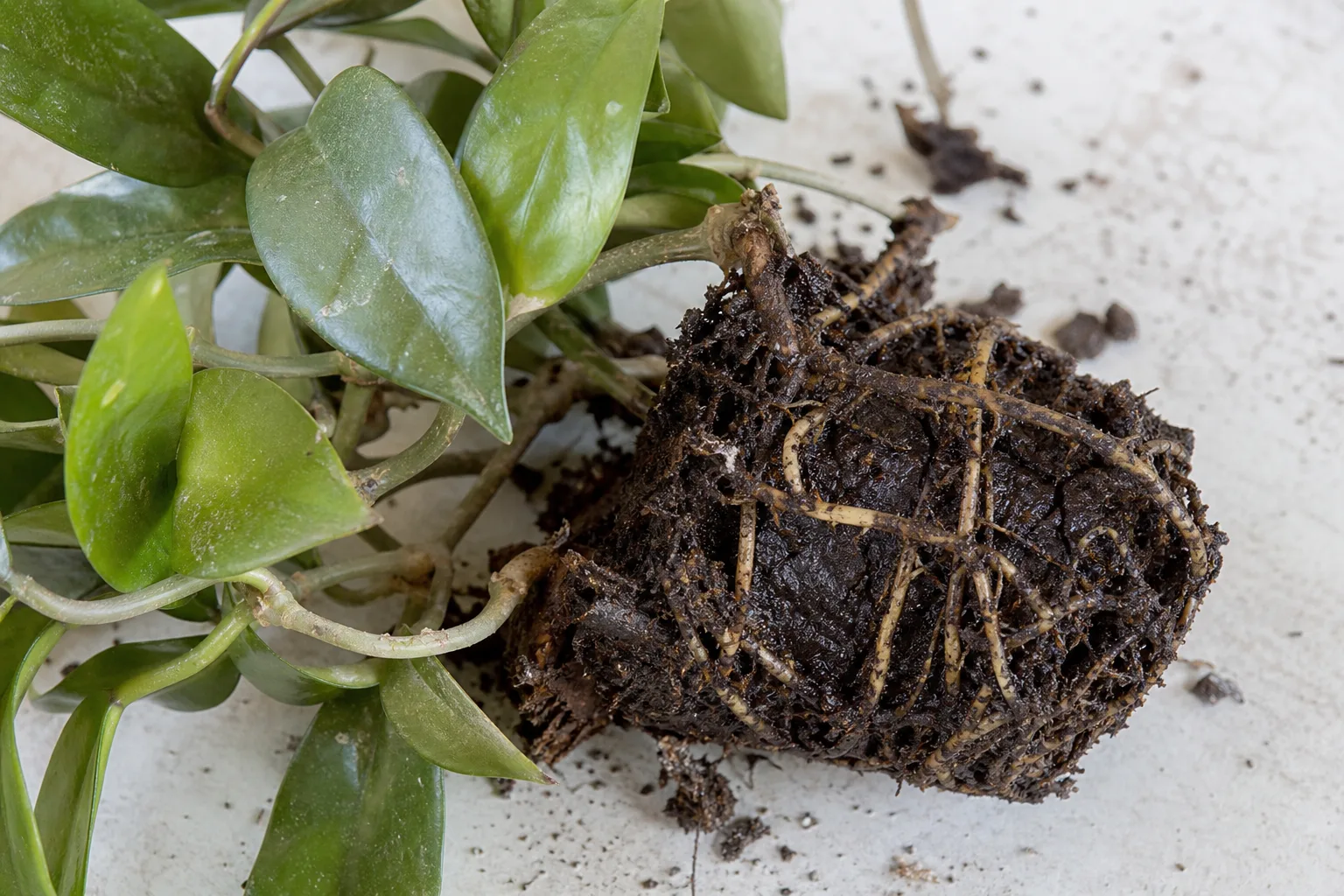
Root Rot on Hoya: Causes, Checks & Fixes
This guide covers root rot on Hoya. See also the general Root Rot guide, watering, and light pages for this plant.
Root Rot on Hoya: Causes, Checks & Fixes
Quick answer
Root rot on Hoya (Hoya spp., wax plant) means epiphytic roots sat wet and oxygen-starved until tissue decayed-not a mysterious airborne disease on a healthy dry pot. Most indoor cases trace to dense mix, blocked drainage, oversized plastic pots, or calendar watering through winter rest on a trailing vine that evolved on tree branches.
The signature trap is wrinkled, limp, or puckered waxy leaves while the mix is still damp. Damaged roots cannot absorb water even when surrounded by moisture, so foliage looks thirsty while rot deepens below. Wrinkled or soft leaves with wet soil can signal roots that are no longer functioning properly because of overwatering.
First step: stop watering immediately and unpot the plant to inspect roots. Do not add water because leaves wilt on wet soil-that accelerates decay. Healthy Hoya roots are firm and pale cream to white; rotted roots are brown, black, translucent, or slimy and may smell sour. If only a fraction of roots are mushy and nodes above the soil line are firm, trim, air-dry, and repot into fresh chunky mix. If the stem base is hollow, propagate from the highest firm node instead.
For early wet-soil triage before you confirm mushy roots, see overwatering on Hoya. For drought lookalikes, see underwatering on Hoya.
What root rot looks like on Hoya
Hoya is a semi-succulent epiphyte with thick, waxy leaves that store water-so visible collapse often arrives after fine feeder roots have already failed. Root rot signs build in stages on trailing vines and hanging baskets alike.
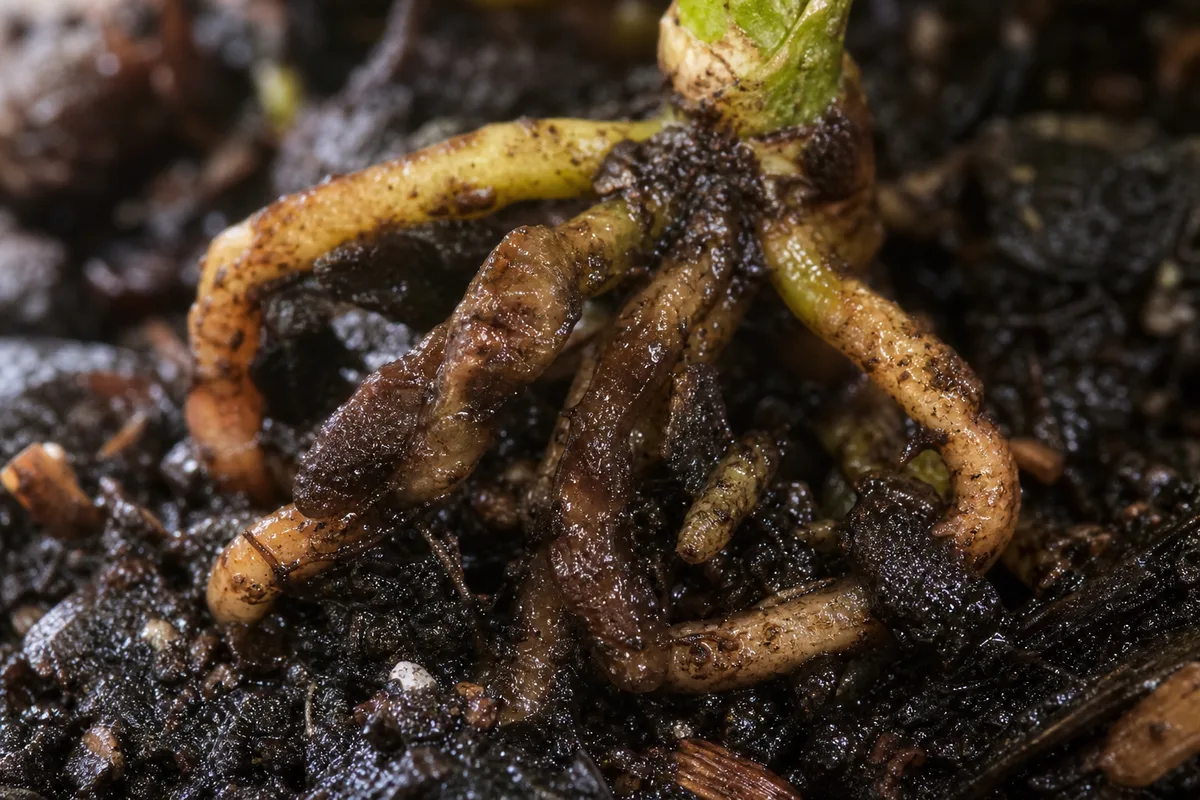
Root Rot symptoms on Hoya - compare with healthy tissue on the same plant.
Early signs
- Wrinkled, soft, or limp leaves on damp mix-the dehydration paradox; foliage looks thirsty while roots cannot drink
- Yellowing lower leaves that feel mushy rather than crispy, sometimes dropping with light pressure
- Soil that stays wet for many days after what felt like a normal watering
- Sour or swampy smell from anaerobic conditions below the surface
- Stalled new growth or vine tips that shrivel despite “adequate” care
- Peduncle or bud abort when soggy roots shift to cold, wet conditions-sudden watering changes can cause bud drop
Advanced signs
- Brown or black mushy roots when you slide the plant out-healthy tissue snaps clean; rot squishes and may pull away in strings
- Stem softening or darkening at the soil line-squeeze nodes gently; firm woody tissue is hope, hollow jelly is not
- Leaves that collapse despite moist soil and a heavy pot
- Spreading blackening up the vine from the base
- Fungus gnats in persistently wet organic mix-companion signal, not the primary cause
What root rot usually is not on Hoya:
- Firm, thin, wrinkled leaves on light, dusty dry mix-underwatering; see underwatering
- One or two older yellow leaves on an otherwise firm plant with a properly drying pot-may be normal senescence
- Temporary wilt five to seven days after repotting with moderate moisture-transplant adjustment unless smell or mush appears
Thick-leaved H. carnosa and Hindu rope may tolerate brief wet spells longer than thin-leaved H. kerrii or H. lanceolata subsp. bella, but wet soil plus soft leaves plus sour odor is the same rescue thread across species. On trailing vines, node firmness at the soil line often appears before every leaf yellows.
Why Hoya gets root rot
Hoya roots evolved for air, quick dry-down, and intermittent deep soaking-not for sitting in dense, moisture-holding potting soil. Many hoyas grow as epiphytes on tree branches where rain drains within hours. Indoors, overwatering in poorly drained potting soil is the quickest path to root decline.
Epiphytic roots and oxygen
Fine feeder roots absorb water fast when moisture is available; thicker storage roots hold reserves between drinks. Neither tolerates constant saturation. When pore spaces in the substrate stay filled with stagnant water, oxygen disappears and roots suffocate before pathogens finish the job. The plant looks surrounded by water it cannot use.
Dense mix and oversized plastic pots
Standard peat-heavy potting soil compacts and holds water far longer than bark on a tree branch. An oversized plastic pot-especially inside a decorative cachepot that traps runoff-keeps the bottom third of the root zone stewing for days. Hoya flowers better slightly pot-bound; extra wet soil with no roots to drink it is a common rot trap.
Calendar watering vs. real dry-down
Hoya wants a wet-dry cycle: water thoroughly, then allow the mix to dry almost completely before watering again. Watering every Sunday because the calendar says so-especially in winter when growth slows-stacks suffocation on top of hydration. Cool room plus damp mix is one of the highest-risk combinations for repeat rot.
Winter rest and cool indoor air
In autumn and winter, most Hoyas slow dramatically. The same pot that dried in ten summer days may stay wet for three weeks in a dim, cool room. Roots sit cold and oxygen-poor while the grower keeps a summer schedule. Lower leaves yellow in clusters; peduncles may hold but new buds are unlikely until spring.
Root rot vs. underwatering vs. transplant shock
| Pattern | Most likely cause | Pot weight | Soil at top half | Leaf feel | First fix |
|---|---|---|---|---|---|
| Wrinkled leaves + dry, light pot | Underwatering | Very light | Dusty, loose | Thin, firm wrinkle | Confirm dry depth, then one full soak |
| Wrinkled leaves + wet, heavy pot | Root rot / advanced overwatering | Heavy, stays heavy | Cool, clinging | Soft, limp | Stop water; unpot and inspect roots |
| Mild wilt 5–7 days after repot | Transplant shock | Moderate | Evenly moist, not swampy | Soft but stems firm | Wait; no extra soaks unless clearly dry |
| Yellow lower leaves + sour smell | Confirmed root rot | Heavy | Wet, anaerobic | Mushy near base | Trim mush; air-dry; repot chunky mix |
| Soft leaves + mushy stem + black roots | Severe rot | Heavy or moderate | Wet | Collapsing | Propagate from highest firm node |
The row that resolves most emergency texts: dry soil + soft leaves = drought; wet soil + soft leaves = inspect roots before any water.
How to confirm the cause
Work through this inspection checklist before repotting or trimming:
- Stop watering - Do not add moisture because leaves wilt; that deepens rot on wet mix.
- Pot weight - A heavy pot that stays heavy many days after watering confirms excess retention; a light pot points to drought instead.
- Moisture at depth - Push a skewer into the top half. Cool, clinging soil that never dries supports rot suspicion; dusty dry mix does not.
- Smell - Sour, swampy odor from the drainage hole or surface strongly suggests anaerobic decay.
- Leaf pattern - Yellow mushy lower leaves plus limp upper foliage on damp mix fits rot better than crispy tips on firm leaves.
- Node squeeze - On trailing vines, gently pinch the stem at the soil line. Firm woody tissue above mushy roots is salvageable; hollow jelly at the base is not.
- Unpot and inspect roots - Slide the plant out. Healthy roots are firm and pale; rotted roots are brown, black, slimy, or translucent and may smell musty.
- Peduncle check - Bud blast on an otherwise healthy-looking vine with wet soil can accompany root failure-note whether care shifted to constant moisture recently.
If more than a small fraction of roots are mushy, treat root rot as confirmed and move to the severity ladder-not a dry-down pause alone.
Severity ladder
Mild - partial root loss, firm nodes above soil
Roughly less than one-third of roots are brown and mushy; stems and nodes above the soil line feel firm; smell is faint or absent. Trim dead roots, air-dry cut surfaces 24–48 hours, repot into fresh chunky mix in the same or slightly smaller pot, withhold water 3–7 days, then one cautious soak. Recovery often stabilizes within one to two watering cycles if you fix the wet cycle.
Moderate - majority mushy roots, firm upper vine
More than half the root mass is dead, but several inches of firm stem with healthy leaves remain above the soil line. Aggressive trim of all mushy tissue back to firm white root or stem, longer air-dry (up to 48 hours in a warm, airy spot out of direct sun), repot into a downsized pot with excellent drainage-terracotta can help the remaining root mass dry evenly. Expect several weeks before stable new growth; some lower leaves will yellow and drop.
Severe - mushy nodes, hollow stem base, or total root loss
Stem softens at or above the soil line; roots are mostly gone; vine collapses despite damp mix. Do not keep watering. Salvage by stem cuttings with at least one or two nodes from the highest firm tissue-never from below rotted sections. Root cuttings in water, moist sphagnum, or light propagation mix; pot up only after roots form. Mature specimens with peduncles may take years to rebloom from a cutting-honest limit.
First fix for Hoya
After you stop watering, unpot and look at roots the same day you suspect rot-especially if the mix smells sour or stems soften at the base. Waiting while soil stays wet rarely improves outcomes.
If roots are mostly firm and pale with only a few brown tips and no sour smell, you may be in early overwatering rather than advanced rot. A dry-down pause can suffice-see overwatering on Hoya. Once tissue is clearly mushy, dry-down alone is not enough.
When rot is confirmed, the first corrective action is trim all dead root tissue with clean scissors or pruners-not fertilizer, not misting, not “a little drink to perk it up.”
Step-by-step recovery
- Unpot gently - Knock the root ball out or slide the plant free. Brush away wet mix so you can see root color and texture clearly.
- Trim all mush - Cut brown, black, slimy, or hollow roots back to firm white tissue. If stem base is affected, cut back to firm green or woody stem. Sterilize blades between cuts on badly infected plants.
- Air-dry - Let trimmed roots and stem cuts sit in a warm, airy spot out of direct sun for 24–48 hours so wounds callus. Longer if humidity is high; shorter if cuts are small and airflow is strong.
- Repot into fresh chunky mix - Use a blend of potting soil, orchid bark, and perlite or pumice in a pot sized to the remaining root mass with open drainage holes. See Hoya soil for mix ratios and repotting for technique.
- Withhold water initially - Wait 3–7 days after repot so fresh cuts are not plunged into saturation.
- First cautious soak - Water slowly until excess drains freely; empty saucer and cachepot within 30 minutes. Never leave the pot sitting in runoff.
- Resume wet-dry rhythm - Let the top half of the mix dry before the next drink-see the Hoya watering guide for seasonal intervals and pot-weight checks.
- Monitor nodes and new growth - Judge recovery by firm leaves on new stems and stable peduncles, not by old yellow foliage re-greening.
Recovery timeline
Mild rot after proper trim and repot - The plant may stabilize within one to two watering cycles (often two to four weeks indoors) once the wet cycle stops and remaining roots breathe in airy mix. Lower leaves may still yellow and drop as the plant rebalances.
Moderate rot with major root loss - Expect several weeks to a few months before consistent new vine growth. Some creased or yellow leaves never recover cosmetically; new glossy leaves and firm nodes are the success markers.
Severe crown involvement - Hollow stem base or mush through multiple nodes often means propagation salvage only-timeline shifts to rooting cuttings over weeks, then months to establish a new plant.
Signs recovery is working: pot weight cycles normally after watering, new tips look glossy and firm, nodes above soil stay woody, no spreading blackening, peduncles hold if present.
Signs the problem is worsening: stem softening climbs the vine, smell returns within days of repot, leaves stay limp on wet fresh mix, or new growth shrivels immediately-re-inspect roots or pivot to propagation.
Propagation salvage when roots are lost
When the root ball is gone but firm vine with leaves remains above rotted tissue, propagate rather than keep watering a corpse.
- Identify the highest healthy node with firm stem and at least one leaf-include one or two nodes per cutting.
- Cut above firm tissue; never include slimy or blackened sections.
- Remove lowest leaves so nodes can contact medium.
- Root in water, moist sphagnum, or light propagation mix per Hoya propagation guidance-warmth and Hoya light guide speed rooting.
- Pot into small containers with chunky mix only after roots are several centimetres long.
Leaf-only cuttings without nodes may root but will not vine-always keep nodes on salvage cuts.
What not to do
- Water because leaves wilt on wet soil - Damaged roots cannot absorb water; more moisture deepens rot.
- Repot into dense garden soil or a pot without drainage - Epiphytic roots need air between drinks.
- Keep the same oversized plastic pot after major root loss - excess wet soil overwhelms what remains.
- Fertilize a stressed rotting plant - Re-establish roots first; fertilizer on damaged tissue burns fine roots.
- Propagate from cuttings below rotted tissue - Infection travels; cuttings fail or rot in propagation.
- Prune peduncles - Hoyas rebloom from persistent peduncles; removing spurs delays flowers even after recovery.
- Assume fungicide replaces drainage fixes - Culture change and airy mix matter more than sprays for typical indoor rot.
How to prevent root rot next time
Build prevention around how your specific pot dries, not a fixed calendar:
- Water only when the top half of the mix has dried-often letting the entire root zone approach dry before the next deep soak. See the Hoya watering guide.
- Use chunky, well-draining mix with orchid bark and perlite in a pot with drainage holes-wax plants prefer a chunky, airy substrate that drains rapidly. Details in Hoya soil.
- Avoid oversized containers and cachepots that hold runoff; empty saucers within 30 minutes of watering.
- Reduce frequency in winter when growth slows-cool damp roots are high risk.
- Lift the pot each check; heavy means wait, light means consider watering if depth agrees.
- Treat early wet-soil warning signs on the overwatering page before rot is confirmed-yellow lower leaves on damp mix, gnats, or bud blast are earlier than mushy roots.
Hoya forgives a missed drink more than a soggy week. The goal is steady cycles of full soak, then real drying-not chronic moisture because the leaves look thick.
When to worry
Escalate same day if:
- Stems soften or darken at or above the soil line
- More than half the roots are mushy on inspection
- Mix smells sour and leaves stay limp 72 hours after you stopped watering
- Blackening spreads up the vine from the base
- Every node at the soil line is hollow-propagate immediately from firm tissue higher up
If fine roots are mostly gone but firm stem and leaves remain higher on the vine, propagation salvage is realistic. Complete collapse from rot alone on a long-established plant is possible when calendar watering in dense mix continues through winter-honest discard is better than weeks of water on a hollow stem.
For wet-soil triage before confirmed mush, start with overwatering on Hoya. For drought confusion, see underwatering. Persistent wet mix without rot may attract fungus gnats.
Related guides: watering, underwatering, overwatering, soil, repotting, propagation, fungus gnats, wilting, yellow leaves, drooping leaves.
When to use this page vs other Hoya guides
- Hoya watering guide - Use for routine moisture checks before assuming root rot is the main issue.
- Hoya problems hub - Browse all 17 common issues on this species.
- Overwatering on Hoya - Different entry point when symptoms overlap with root rot.
- Yellow Leaves on Hoya - Different entry point when symptoms overlap with root rot.
- Wilting on Hoya - Different entry point when symptoms overlap with root rot.